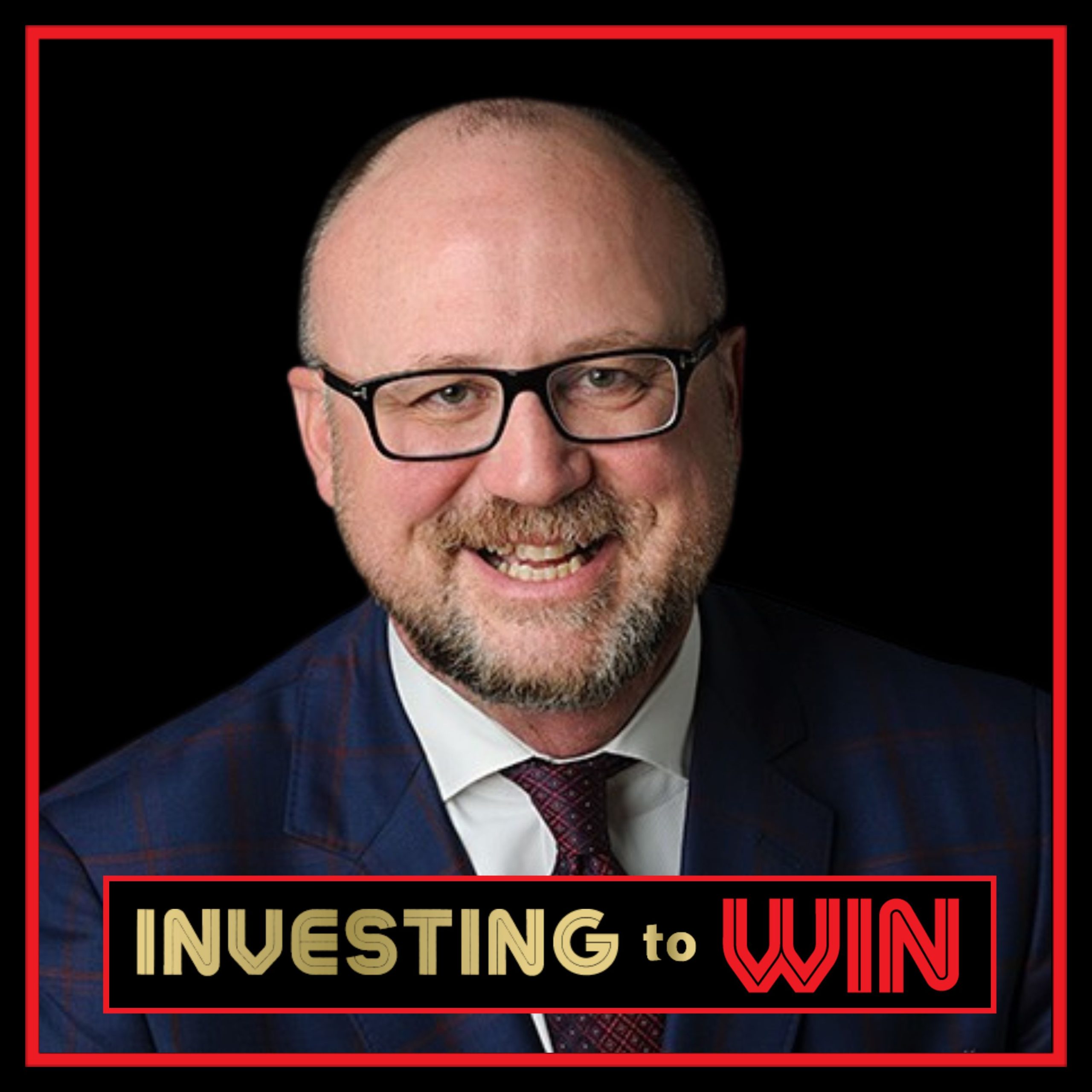
Investing to WIN #024 — Real Estate vs Traditional Investments: How to Choose the Right Mix (with Doug Blaylock)
Many investors feel stuck choosing between real estate and traditional investments, unsure which path actually builds long-term wealth. Headlines, interest rates, and past losses often cloud what should be a clear decision.
In this conversation, Doug Blaylock explains how to evaluate investments based on goals, cash flow, risk tolerance, and tax efficiency — and why there is no single “best” strategy for everyone.



Duration: 50:00
Date: Jul 25, 2023
Guest: Doug Blaylock - Financial Planner and Senior Financial Consultant at IG Wealth Management
WATCH THE FULL EPISODE:
Want the full experience? Watch directly on YouTube to support the channel and get recommendations for similar episodes.
What You’ll Learn
• How to compare real estate and traditional investments using goals, not hype
• Where stocks, bonds, GICs, and real estate actually sit on the risk spectrum
• Why cash flow matters more than asset value for long-term planning
• The tax differences most investors overlook when comparing investment types
• When real estate funds make sense — and when they can create liquidity risk
• How comfort level and personality influence better investment decisions
Memorable Moments
“I don’t care what it’s worth — I care what it pays.”
“There is no silver bullet in investing.”
“Cash flow is always king.”
Episode Summary
This episode tackles one of the most common investor dilemmas: choosing between real estate and traditional investments. Many people compare returns without understanding risk, cash flow, taxes, or how each investment fits into an actual financial plan.
Doug Blaylock challenges the idea that one strategy is superior, explaining why both real estate and traditional investments can work — or fail — depending on goals, time horizon, and personal comfort with risk. He also highlights common misconceptions around bonds, leverage, and real estate funds that investors often misunderstand.
This episode is ideal for investors trying to build a balanced strategy. Viewers will leave with a clearer framework for evaluating opportunities and making decisions based on net income, not assumptions.
Chapter Timestamps
[00:00] – Doug’s background and path into financial planning
[02:15] – Defining traditional investments: stocks, bonds, and GICs
[04:45] – Risk, reward, and time horizons explained
[07:20] – How taxes impact investment returns
[10:30] – Real estate vs equity growth over time
[18:20] – Where real estate fits on the risk spectrum
[21:10] – Real estate funds, liquidity, and redemption risks
[41:00] – Choosing investments based on goals and lifestyle
About Doug Blaylock
Doug Blaylock is a Financial Planner and Senior Financial Consultant at IG Wealth Management. He has worked with clients since 2004, helping individuals and families align investments with long-term goals. Doug specializes in retirement planning, tax efficiency, and portfolio construction across traditional and alternative assets.
Full Episode Transcript
00:00.00
wongga
There we go county testing 1 2 3 testing. Okay, let's just do this welcome. My name is Garret Wong host of the investing to win podcast. Today I am pleased to welcome Doug Blalock to our recording studio doug how are you very good garret. Thanks for having me. Yeah, so um, a little bit of background here Doug and I actually met playing hockey believe it or not and me being a real estate guy and Doug's a financial guy. I actually thought it would be really cool to debate the pros and cons of real estate versus quote unquote traditional investments. But let's back up a little bit doug. Why don't you tell us a little bit about yourself. What's your story and your background well I like to tell people I've got grade 9 no french but um. Actually I have grade 9 no french there's my background actually no I joined investor group in 2004 I got my certified financial planer designation a couple years after that and um, our practice is with Ig Wealth Management and our practice name is actually beer blay lock and associates I g private wealth. Okay, so have you always been in finances. No actually my first career I was a funeral director. Wow. So my my dentist likes to say that I read the book of life backwards I did death that now I do taxes. So.
01:26.10
wongga
But to certainties in life. Exactly yeah, so let's ah, let's get right into it then I mean being like this is a real estate podcast. We're always talking about you know rental properties and flipping. But what in your definition being a financial planner is a traditional investment I think when it comes to traditional investments I think right away people would start to think about stocks bonds and maybe giccs guaranteed investment certificates and maybe I'll just break down a little bit about about each 1 so a stock are often referred to as equity um is going to be a ownership of a fraction of a company so we're both having Starbucks coffees right now. So if I own Starbucks stock if I have 10 shares of Starbucks. Um. Whatever percentage of that is of the total shares issued by Starbuck. That's my pro rata ownership so I will get dividends or or equity growth on those 10 shares. So it's ownership. The other part is bonds. And typically most people when they hear about bonds. They think of oh manitobah hydro bonds or governments Canada savings bonds and really that's just a way for the country municipality or even a corporation to raise money example gm could issue a bond so they'll say okay, we're not going to issue any more stock because that.
02:49.63
wongga
Waters down the ownership of all shareholders. We're going to issue a bond so you're going to then say okay I'm going to give you $100000. There's a predetermined rate that you're going to get and as long as that company make pays their bills. You're going to get that your principal and that rate back. Gics are a guaranteed investment certificate that in canada falls under typically financial institutions or a lot of credit unions will offer this. You're going to offer. You're going to put $50000 in a gic. They're going to say okay, you're going to keep it there for 1 3 or 5 years and at the end of that term you're going to get your principal back and then typically interest on a gic is paid are accrued monthly and then you'll get that principle plus interest back. Okay, would you? Okay, so that's 3 things stocks bonds gi sees in that order is is there a. And order of risk with those as well. Absolutely so risk reward is huge right? And maybe I'll back up a little bit and talk about any of our clients money always has a purpose so it's what is your goal. To achieve things right? So maybe it could be retirement. It could be to leave a legacy. It could be a child's education could be a vacation could be to purchase a rental property then there's going to be a timeframe in which you want to accomplish that I want to buy a rental property in 5 years right I want to retire in 20 years on my my child's education in 18 years
04:17.47
wongga
There's a timeframe and then there's what acceptable risk am I willing to take to achieve my goal so when you have an equity position in a company. You're going to assume more risk so you're in that boat together with that company. Whether a's Starbucks or Coca-cola or or Gm so that is going to give you the best. Chance of a growth now stock. There's all different types of stock in the sense of all types of company and everybody's got Microsoft I'm pretty shri you know Microsoft logo on your computer when Microsoft started out. It was considered venture capital. Who in the heck is going to buy a computer what in the heck is software. What does Microsoft's soft stand for fast forwardward twenty thirty or so years you know Bill gates is one of the richest people in the world. Um, everybody's got almost everybody's got Microsoft something on their phone or computer or wristwatch or something. Now. That's a mature stock so it's gone its way through the cycle as far as we in venture capital kind of be in a bland of venture growth capital and now it's a mature company and you when you think of it. Their stock is probably not going to appreciate and value a whole bunch. But because you're getting residuals. you're paying your service fee. or you're paying your licensing fee you're paying your upgrade well they've got a kazillion subscribers or a kazillion people using their product. It's a good trickle effect income very much like rental income right? Okay so stock has different risk bonds.
05:50.85
wongga
Bonds also have very different risk and and a lot of consumers out there really aren't aware of the risk that comes with a bond a very good friend of mine is a huge gm motors fan and general motors years ago was having some issues and my buddy said he said I would never buy gm stock. And I'm like well okay, that's kind of a rash thing to say but okay I said would you buy a g on bond. He goes. Oh absolutely I says well hang on you actually are protected better when you own an equity portion of the company versus you're just a lender to the company. This is a bond is a bond is a lender right right. Giccs are guaranteed investment certificates are actually very very secure and in Canada we have cdicc canadian deposit insurance corporation. So when you have investments gic investments or high interest savings investments under the $100000 limit those are then guaranteed and there's certain stipulations to each type or institution. But there are but you think in an equity return you you have the much more upside, but there is risk more risk bond dependent upon the type of bond less risk less upside. And then if you look at gics typically I mean primes now 7 point two typically they didn't yield very well. They are now. But then historically you'll start to see the equities take over as far as fixed income and taxation is a big thing.
07:22.67
wongga
Capital appreciation on a equity when you dispose of it. You only pay tax on half your profit. Okay capital gains right? interest on bonds and gics is 100% taxable. So I always when we talk with clients. What is the net income result you want to receive so let's do it with your acceptable risk. And let's see if we could make it taxation friendly. Okay risk reward I get it. So when you're talking about that's what like when I think about a gicc I know my parents were in those quite a bit you hear about that 2% 3% 4% versus a venture capital stock or somebody you know. Looks into the future and they're like oh I double triple quadrupled my money on stocks. But again that company could only be two or three years old that's the risk absolutely and there was one stat I wanted to look at and I went back to 1980 now I know that. We were both very very young in 1980 and but I went and and I went on the mls I think is where I was looking ah an average price of a home in Winnipeg was under $100000 in 1980 as of May Twenty Twenty three the average is just slightly now over three fifty and I didn't want to use Toronto and Vancouver shares and stuff to skew things. Well the toronto stock exchange which is the canadian equity index right in 1980 ah, it was at nineteen one thousand seven eighty nine was its low. Okay.
08:59.19
wongga
And in may of 20023 19500 that's an increase of over a thousand percent right and that doesn't include neither one includes reinvested dividends or income. Okay things like that apples to apples though. Yeah yeah, so I think it's very interesting. But then you can get into say okay well what kind of income stream am I getting and that's the important thing to look at when you look at and you know this when you look at rental properties is what what What am I getting for it and ah any of my clients that have rental properties. It's like. Does it really matter if the Sydney whinipeg on your assessment says. It's worth three hundred thousand or four hundred thousand and they say no doug I'm getting $2500 a month from it right? And really as my dad used to say I don't care what it's worth It's only worth what somebody's willing to pay for it exactly right. Exactly. But I mean I've been actually pushing especially in these high interest rate environments the concept of cash flow versus equity because on a single- family home. You're only getting a couple hundred bucks a month we're not talking big 3 story walkups or high-rises. So what is the purpose of owning a rental property. I've always said it's that capital appreciation. That fact that the tenant is paying down the mortgage a little bit and then that is your quote unquote profit. But when you talk about a factor of a thousand percent just again apples to apples while that's almost appearing to be a checkmark in the category for.
10:29.10
wongga
Traditional investments for sure. But then I think it's comfort level right? Both of you. Both of us got here in vehicles. We both had different vehicles right? Both of us are wearing jackets and shirts with a collar and and things but they both look different I think at the end of the day. It's all about comfort level. There are people that absolutely love tangible assets. And if you've got the castle to support that it's huge um I think one of the scariest things and I think we're so um I think we're so biased recency bias I've I've heard that term used a lot and we go oh my god 7.2% prime is high.
11:06.32
wongga
It's funny. A very good friend of mine and a client sent me a clip from 1981 when interest rates went up to 15 points something? yep and they were interviewing everybody. They didn't look as good as arssons do today but they were interviewing these guys in the news and they said you know 15% like if you have a fourteen thirteen percent mortgage you're so lucky you're so lucky and they said 13% will never happen again. It's only going up. It's a very recency bias when you look at what the government can do and they can only do 1 thing. They don't create jobs they want to do 1 thing they can control and they try they can control interest rates. Which in turn control inflation. Yeah and interest rates have to go up and I mean right now they they've definitely high if you've got a variable rate mortgage but they have to go up because in times of trouble. The only thing a government can do is bring rates down. So they have to build stimulate. Yeah, the economy they have to build some cushion room and you'll know more about this than I will I mean I read a couple of articles. But I mean right now from what I understand and when to big inventory is down. Yes, so when there's less to purchase it pushes a price up correct. And that means that typically there's fewer people that it can afford to buy so. It's kind of until there's more inventory I think we'll still see higher prices even though interest rates are high but typically the people that are buying those properties aren't really concerned about borrowing money.
12:36.72
wongga
Well, it's it's interesting because was that a pun interesting sorry I'm a dad um is this live. No seriously though, like when you have a higher interest rate what's happening right? now is the house prices are actually going down because there's more inventory. There's more It's basic supply and demand. So now there's cheaper prices now there's more inventory and actually there is more people leaving the home ownership market and coming into the rental market which is then accelerating the inventory. So just by the government increasing interest rates now they're creating more. More supply and demand and I think what's really neat what you just said is that I live in Osborn Village area and it's been amazing. The transformation of how many more rental units have been built. Yes, the condo I'm in a condo downtown or Osborn Village and originally that was built as a rental. I think it was built in the sixty s I think it was converted to a condo in the 80 s and that's just I think the cycle that those buildings are on and I think if we live long enough. We'll see some of those rental properties that have been built convert to condos down the road as well. But there doing exactly what you said? Oh I can't afford this. Home ownership thing but I can't afford a rental so. It's created a entire different economy within the housing structure. Well and I mean I could go on and on like that's almost an entire podcast on its own because as a property manager we see a lot of younger people not.
14:09.55
wongga
Agreeing or maybe not being vested in the concept of equity so they they become purposeful almost longtime lifetime renters because again when you do those calculations on the interest long-term not paying down your mortgage over 25 30 years arguably you would be better off to just rent and not have a roof that goes or a furnace so. That's that's the mentality. But that's starting to be out there. Yeah and I think the more I'm going to use the word more global but let's just stay within our own country. The more. People travel more people that have access to news more we're doing podcasts. This wasn't done twenty years ago um we now know what housing prices are in Vancouver we know what they are in Montreal. We know what they are in Toronto and it's it's. Some younger people go home ownership is just not in the book. It's it's just not in the cards for me, it's just not going to be possible and they might think $400000 home is expensive right? and it's I mean unfortunately or fortunately it's not and it's just that's kind of that's that's the way it is. So people are picking and choosing and it's the same with careers. you know people now it you know it used to be 7 years was how long you're in your existing career. Yeah now it might be seven months I don't know it's.
15:28.79
wongga
Or you could become a youtuber right right out of high. No I mean that's that's the persona. That's the impression with their young people exactly so it's a different mindset. It's ah it's a different world but I think at the end of the day we talk about building net worth There's multiple ways to build net worth. And it can be through real estate. It can be through traditional investments. The 1 thing that if I could say I really really notice especially recently with interest rates going up is because interest is deductible on a mortgage that you're using as a rental property right? So example. I take a mortgage I buy a property I use it to generate income that mortgage interest is is tax deductible the rental income that I receive is taxable if you borrowed money to invest in a mutual fund or a stock etc. That's also tax deductible. Sure. Hope for capital appreciation in your in your traditional investments but you also hope for capital appreciation in your in your rental property as well. Now, it's the income portion of it but where I see so many people kind of go on sideways is that they're not able to. They don't have the cash flow to service that debt. And that's like anything and if you can't service your debt people think whether it's a stock or an Etf or a rental property or whatever they think there's some silver bullet out there. There isn't you need to have a plan.
16:56.33
wongga
But a plan is including a rental property whether the plan is including you know a mutual fund or gi or whatever the case may be you have to have a plan and that's what to me is what so many people lack all money is less expensive to borrow. Let's go borrow it well rang on right? because if you borrow money at. Again I'm just going to throw a number out there maybe two years ago at 3 or 4 and now you put it into a stock mutual gic. Whatever it's going to be and you're getting 10 percent so great your spread is 6 but you still have to pay for the initial loan for the 4 yeah right. Yeah, and then you have to pay tax and then you have to look at inflation and what does that really mean and and that's that's the fallacy. Yeah I always talk about any time I build a financial plan. It's net income how much money a month. Do you need whether it's let's say it's retirement how much money a month. Do you need for retirement. Let's calculate a way to get that. Let's look at oas. Let's look a cpp. Let's look at your pension plan now. Let's look at your individual investments is it non registergistered. Is it a rental property generating you income those types of things to get that net net income. Don't tell me about the gross stuff. Well, us's talk about net stuff right? That's your spendable money. Okay, so stocks. Bonds g ics in terms of that risk pyramid listed. There. Let's add real estate to and um, a lot of people don't want to get into real estate because it's associated with risky things tenants pulling midnight runs fires. Um.
18:30.20
wongga
You know midnight things that happen on Fridays are hot water tanks and our furnaces and in this company seem to always go on a Friday night at 2 in the morning but where would you slot in real estate in terms of that pyramid of risk stocks bonds g I see yeah well great question and. Very good friend of mine talked in real estate talked about location location location any of my clients that have rental property. Their 3 words are tenant tenant tenant. It's all about the tenant and it could be like ah any relationship. It's about your partner. It's about your spouse. It's about financial relationships. It's about your banker. It's about your financial planner and I really think anybody that gets into rental properties if they have the right mindset and they work with the right professionals they work with them I really believe that you have to deal with the proper. Property management and I'm not just saying that because I'm sitting with you like you have to work with professionals I know very few people I live in a condo for a reason I don't want to cut grass I grew up on a farm I've done cutting grass I'm done cleaning eve troughs I'm done washing my windows. Um.
19:42.54
wongga
You got to work with a professional I don't know how many guys on a Friday night want to leave their family to go fix a hot water tank right? or the neighbor of your rental properties is calling because there's a u-haul pulled up on a Thursday night right? like I don't know how many people want to deal with that I'm assuming maybe you could insure against it I mean. For fire or theft or different things like that. Maybe you can but I really think it come down right down to the tenant and I think that probably come down to the type of property that you have yeah I mean I don't want to get into a rabbit hole there because we're trying to debate the merits of traditional versus real estate investments. But. Like you hit the nail on the head right? there I always have a saying do you want to invest in real estate or do you want to be a real estate investor. Yeah and being a real estate investor that's fine. You go to all of the clubs you read the books you know the rich dad poor dads and and you're completely happy. To get that call on Thursday night and find that your door swinging open and all your plants are stolen and oh by the way a squatter you know, ah for drugs also came in ripped out all of your plumbing and electrical. Yeah, right? Yeah um or you want to invest in in real estate passively. So that could be again with my company. It could be buying a property having a professional manage it or it could be investing in a fund that I guess buys and sells real estate. Why don't you tell us a little bit about.
21:12.36
wongga
Funds that yeah are more slated towards real estate so most most financial planning companies have access. We call them real property funds because they actually invest in real property I'll speak of the one I know of the best at Ig Wealth management there's a mackenzie real property fund here in Winnipeg It's easy to pick it out. Tuxedo mall is is owned by that fund. They're actually removed the shell gas station and are building a high-rise apartment. Yeah, they saw that there. Yeah now. Yeah you have to actually and look at the prospectus. So the underlying sort of guidelines of that fund that fund will not take on debt. So an example would be let's say for fund they buy property abc it has ah whatever five hundred Thousand a million dollar mortgage on it. They'll look at paying it out. But if the pen lay is very substantive. They'll say just just keep it. We'll pay it off because it's all about cash flow. So an example you have a client they have. Money in the real property fund they want exposure to real estate in all different parts of Canada and some is business. Some is a business like commercial some is residential. Some might be industrial. Well, that's a good way to get exposure. But then you also want liquidity. Because in a lot of real estate properties. There's not the liquidity so with a real estate fund when you don't have debt then they can. They've got enough cash and reserve to give clients their money when they want it if a real property fund has too much debt and people start to want money. There's ah, a run on cash call.
22:44.77
wongga
Then they have to put a freeze on that fund because then you got to start to sell properties and typically it's a depressed market. So it just doesn't work. Well for anybody so again. Cash flow is cash is always King. So let's unpack that for a second because I mean I went to a real estate conference in Toronto last month and. A ton of companies with syndication funds and I mean that's not even what we're talking about here. That's a private individual giving fifty seventy five one hundred thousand dollars for ah, not a guaranteed return but a proposed return of 15 twenty twenty five percent so they so they say.
23:23.79
wongga
But I know those companies are taking on debt. They're taking your money they're going to secure a property they're going to get a real mortgage and then they're going to either renovate I mean pick your flavor not all funds that you just talked about real property funds. In fact, that sounds like an exception to me would go dead free in order to make sure they have that flexibility. Yeah, yeah, it's I if I remember if I remember correctly the the one that I'm most familiar with um has never had a freeze on redemptions because their policy has always been don't take on debt. Okay, so let me ask ah a corresponding question then on a lot of these real property funds that and and anecdotally right? You don't have to give me hard data in the world in North America is it very common to hear of these freezes on redemption. Yes, okay. Especially in a down market because typically in a down market. let's go back to let's go back to September Two Thousand and eight oh my goodness it was a it was the boogie man financial crisis that was happening United States yeah and oh you know the the apocalypse the 4 horsemen or whatever you want to call that the world is coming to an end and housing prices in the states just went down and if remember the us government had a policy. Everyone should own a home. Not everyone's qualified to be a homeowner.
24:49.47
wongga
But then what they did is they set up these special loans. We call them ninja loans no job. No income. You get a loan. Yeah, and again, follow the money these people handing out these loans got paid really really well the more you did. So there was people that had 2 3 4 homes possible rental properties as well that were paying interest only with some balloon payments kicked down the road. Okay well that doesn't bode well for anyone long term now we've voted well for some canadians because our canadian when the americans had some trouble. Canadian Dollar went well over one us dollar and oh my goodness a lot of our friends in Canada I ended up buying homes in either parts of California or parts of Arizona and parts of Florida because of a suppressed price. But what happens typically when um, when an equity market starts to come down.
25:44.34
wongga
People typically go oh my goodness I got a head for the hills we're gonna start to trade shiny rocks eventually I want my cash and that's typically when a real property fund will have a hard time answering the cash call that people want. Okay, oh. Okay, so we're talking now risk reward and that's very interesting. What you said there because when somebody wants to invest in real estate. They can a go to the realtor do a ton of like we just said and they can buy a property and just. Rent it out I mean everybody knows 1 person that seems to have a rental property number 2 they can have it professionally managed number 3 they can buy into a syndication fund number 4 they can buy real property into a real property fund but then there's 2 different. Flavors that your talk absolutely right? yeah um yeah I think it's buyer beware and make sure that you have an advisor that can yeah and I was I was just I was just gonna say gar is that's why you work with professionals. That's we don't pull our own teeth. We don't check our own eyes like. I don't change I don't fix my car like we each have a profession that we do and that's why we rely on other people. It's I think it's critically important none of us could do everything and I think it's very very important that when you work with a professional.
27:12.97
wongga
Is that they understand the marketplace they understand your item or your product or your position. That's absolutely critical. So one of the questions I wanted to ask you was you know misperceptions of real estate versus traditional investments. what what is what do you see with your clients because you said you have clients that invest in both. Yeah I think that the biggest misconception is that there's a silver bullet that oh my goodness I buy these 4 properties or I buy a fourplex and my my my all my worries are done I can retire in 20 minutes and oh my goodness is going to be wonderful. Yeah. Or um, I'm going to use I mean marijuana became legal in Canada a number of years ago and I was with some clients out in the Vancouver area and it was like Doug. we got to get into pot we got to get into paw we got to get into pot and I says you know I don't care what you're doing in your free time. Ah. Um, and this client was in her seventy s I said you're not investing in pot just because it's legal doesn't mean it makes any money I said typewriters are still legal and nobody owns a typewriter. Why don't we get a track record on where let let's see them make some money. And it's amazing I still like to watch certain um investments from the from the sidewalk and um, yeah, it's there's there's there's no profit you can brag about revenue. All you want tell me where the profit is right? There's lots of dot com showed us that there's lots of places that have revenue.
28:46.40
wongga
Yeah, show be profit. Yeah profit margins is everything right? Yeah, yeah, yeah, so diversification is a really really big word in financial planning. Um, and that's why we're debating I'd like to say we're debating real estate Although you're you're showing me a different perspective but you know speak to me about. Diversification and do you even recommend adding real estate to portfolio. Um or you know I guess everybody's different What would you say to that? Yeah, so I'm going to go right back to whenever I sit down with a client understand what their goals are I understand what do they want to accomplish. Then you take it like I'll use the word polaroid bolt to say take a picture of where you are today. What do you have for fixed assets typically your home maybe a cottage maybe a vacation property downelf and then let's look at what do you have for investments and then I always like to ask how did you get here. You must have done something right? You've got something to count like well how did you get here and then I start to dig more into comfort level. You know did somebody inherit a bunch of money did somebody work and save save really really hard because saving and investing are 2 different things right. And then I start to say. Okay, if you've got all this cash or do you think you're ever going to use it. Some people say no yeah I'm gonna I'm going to give that to my kids is there a way that you can make that make something for your children or grandchildren can you make it bigger. Can you make it bigger through property. Can you make it bigger through an insurance policy.
30:16.31
wongga
Can you make it is there something that we can do so 1 thing that's nice I mean rental properties or even insurance. But let's use rental property. As an example, you take whatever 2 3 $ $400000 and you buy a property then you go okay, well I'm no longer paying tax on that money. I'm actually going to depreciate it get a bit of a deduction on it. My rental income's going to come in. Maybe you end up taking a mortgage against that property later. So now that interest is taxedductible so there are dependent upon the client situation some clients go oh my goodness Doug no like. I've just I worked on my life to pay off my house I'm not gonna take a loan oh and buy another one or oh my god Doug I don't clean my own windows. Why would I go clean and a rental properties windows and then I said okay, but if you think the investment's good. Let's talk to a real estate development. So let's talk to someone who manages properties and kind of. Out of sight out of mind so mindset. Do you find that somebody who is in traditional investments shies away from real estate and that's why they're in traditional or have you seen people that do both and sorry to keep Daisy chain in the questions. But if you have somebody who. Chooses to invest in real estate you find that they're more risk. Friendly. Yes, yes, yeah, you know what? I think I think I could say unequivocally yes and the clients that I have that have real estate properties or rental properties. Um, they enjoy it.
31:49.18
wongga
They absolutely enjoy it. Um, they're okay with that Friday night phone call. They're okay, you know what? they've remodeled their house 15 times. It's like okay now this is another project that I get to work on kind of thing or get their kids involved with some of the things. So.
32:08.76
wongga
I think they're willing to take on more risk I don't know if I'd say more I'd say different doified risk diversified. Yeah right? Yeah yeah, I completely agree and you know I'm I'm going to go back even to people that say oh my god I ah my sister or I lost money in stocks you know and. 21 or whatever it was or oh my god I lost money in a mutual fund in 1947 or something I mean my next question is oh well, what stock but mutual fund they don't know right? like say oh my goodness I got bit by a dog. Great. Well where yeah, did you poke it with a stick like There's got to be more to it. It's not just a a 1 phrase thing. It's like let's look at things. Yeah, my neighbors, best friends Uncle's nieces neighbor had a tenant break in and blah blah blah happened right? Well what city was in it I don't know but I don't want it I don't want real estate because of it right? exactly. Exactly I think typically a comment like that is either 1 they don't know what to say so it's got to be bad again because as kids even so don't say no say no say no kind of idea but also to I think it's just like okay if I say that this is terrible. This guy's going to stop talking about it or it's not even a choice right? And and. we how do you want to say we don't we don't know what we don't know and I can tell you just through different aspects of my life is that I've learned more because I've had a couple more years under my belt I mean ah this is something that's taught not only wrong topic. But.
33:40.15
wongga
I had and I knew nothing about organ transplants nothing well my partner on may the fourth donated her kidney wow so that really what she did it took about almost two years to do but over that process. Wow. We're lucky for where we live in the air that what we live in so I don't care if it's organ donation I don't care if it's real estate or it's traditional or non-traditional investing I just think we have to learn more about it. But you have to go to a true professional and get the answers. Not my uncle Bob who's a mechanic. Read a mutual fund magazine in 1974 right? But do you find that the people your clients who are in real estate investment are more likely to invest in the.comsofventure capital in terms of risk profile like are they no no I would say no. Because they're they're their concern about talk about physical investment property and the income that property generate they what did Warren Buffett made a comment he says I'll never buy Microsoft because I don't understand it and yet bill gates is his best friend right? right. I understand people pour hot ketch up on hot dogs. You know I understand people like Kickcat candy bars right? I understand how we have to put put things on trains and get them a certain place i' at pineapple pizza I must love. Go.
35:11.50
wongga
Okay, so let's let's talk about analysis right? because when when a client comes to you and they say okay Doug I I love what you've done for me I want to get into a little bit of real estate. What what can I do? What should I do? what? What are the first steps. What are those risks that you you try to analyze for them. So typically what I like to do if it's a couple I want to look both of them in the eyes and say okay who here cuts a grass at your house who here fixes the you know the hot water tank at midnight who here who knows where home people is like who knows these things and both of them look like a deer in the headlights. I'll say okay we got to talk to somebody else in the room. No but I mean that's that's your typical landlord scenario but I mean like we said level 2 of that is okay, you've got x amount of dollars of capital I'll set you up the realtor we'll talk to your accountants. Know a good property manager and this is another way that you can get into this or maybe it's just let's go the fund route. Yeah, no way? Well I mean for my clients. It's whatever avenue they want to go and let's let's hook them I'm not a real estate professional. So. That's where I had hooked them up with a person like yourself or a real estate investor that would say okay well here's some properties that are for sale now what about managing them right? and I think that that's really really critical, but it's understanding kind of we can all talk about the good days I like to talk to my clients about the bad days first it will rainign.
36:36.17
wongga
There will be potholes in the road there possibly there will be a hot water tank that fails are you okay with that because we're we're all okay with good days. We're all okay with making money we're all okay with great tenants. What if we don't have a great tenant and so absolutely the clients of mine that do have rental properties. Again, like you said before they they enjoy it. They really like you're talking about active investors right? Yeah absolutely yeah, yeah, absolutely I do have a very good friend of mine who has properties. He's lived all over the world. He still has properties around the world. He has a management company that looks after them. And part of his retirement plan is that income stream from his rental properties and he said if it wasn't for the property manager he would not have those properties right? Of course I mean especially if you're not in that region. Yeah, um, no I know that we touched touched on this very early in terms of. Comparing both when you put that income stream into it and maybe you know the the end goal for myself is you know to get you know let's say 10 properties and pay them off. So now you know, even now you have real cash flow coming in right now. It's really working for you. How do you How do you temper that against. Traditional investments then I mean it's a tough 1 right because to get there is very risky. You could have had 10 tenants that blew the house up 10 times you you could have but I think and you can correct me if I'm wrong I think the higher quality properties you have.
38:10.43
wongga
Attract a higher quality tenant in a general sense. Yes, yeah, and and ah and I think a higher quality tenant will give you less turnover give maybe you less headaches and help you along that way I think that diminishes your risk. Okay, so this is this is really interesting because what you're what you're really talking about here is very similar to your profile of stocks and bonds and mutuals because a higher end property that's going to attract a higher end tenant is going to cost more? Yeah, so therefore. Returns are less in the beginning. Yes or whatever you're going to say so if your returns are less You're okay with that because you have a more stable investment. Yeah, and you probably have and you're probably a more mature investor. So that means that you've got either more borrowing power. You have more equity. Have a better understanding of what you're getting into and you're at that higher end of real estate and that would have meant you've worked with professionals to get you to that point in my understanding. Well I'll tell you I mean I I started out in real estate 9097 most people know this story first rental property the corner of selker can Maine um, plumbing was ripped out furnace was gone.
39:32.38
wongga
And that's what I did I cut my teeth in there and I was in those c-class properties for years but I was also in my late twenty s I don't want to do that anymore, right? and now when I you know when I try to I think everybody has to start somewhere. But when you you know I say to people add up. What you would have spent on the property versus a higher end property over 5 years but calculate in vacancy loss squatting stolen things insurance claims and the fact that a lower end property in ah in a poor neighborhood is not going to appreciate as fast. I believe after 5 years it would be at least equal if not that the higher end property if you're able to have the resources to get it is going to help perform for sure. But I think what you've learned in those 5 years is probably. Better than any kind of degree you could get when it comes to property management hundred percent yeah Yeah understanding um under understanding kind of like on the ground floor. You're walking in on the ground floor if you're having to replace pipe you're potentially that area you in might even be uninsurable. Yeah, so that brings a whole other level of risk to it right? Yeah, but I think that you're you're absolutely right? You got to start somewhere and we both didn't start driving the vehicles we have when we were ninth or at least I didn't when I was 16 or seven years old um
41:02.23
wongga
I think that everything that we do in life is baby steps. We'll never reach perfection. But if we can every year every month. Whatever every decade can we make an improvement not just to ourselves but our family and the communities that we live in I think that we can okay well let me let me ask you this then? Um. With respect to advice for investors. What general advice would you give to somebody trying to decide between traditional investments and real estate investments now another good question I think understanding the client's goals first and foremost is going to help pick. And then when you find out where they are right now and kind of what they're I guess kind of what kind of what their mindset is I'll give you a class example. Um we have clients um just retired and this guy can fix anything. His home was like a swiss watch. It's perfect like perfect. They want to buy some renttro properties so they went and they bought 3 and we ended up they they ended up switching some debt so they got debt on their home to purchase these properties. The debt's now tax abuc to all all of those things. This guy went and bought ah a new truck or Lisa Sorryi a new truck and he loves it. He loves this more than he loved his professional job.
42:26.49
wongga
She run it around likeing red aroundtown fixing the loose doorknobs and absolutely now was tenants might not like him pop a bile time but he loves it so there's almost like a situation where their entire life. They've been in traditional investments. When you ask someone? Okay, now you're retired what are you going to do you got to do something we're meant to do something right? as human right? His number 1 goal was to keep working on the house and his wife said you're done. Yeah, you're done working on this house. Yeah, he goes well let's go buy some so I can have something to do and they're going to generate an income stream for us. Yeah, no, you know it's quite funny. We're almost ah out of time here and when I when I envisioned you and I talking about traditional investments versus real estate I thought you know oh it's gonna be a hockey fight right? Um I'm just scared you. You'll be yeah yeah, right? But keep your head up. No, but. But what we're really talking about here is everybody's different your situation at that present time both personal and financially and professionally could be different just like your client who's a little bit older now and he wants to putter. That's really what it is and he has a financial wherewithal to do that and because he's handy. His version of risk is very very low. Yeah, right? Yeah, so everybody's different speak to you your professionals absolutely and make an informed decision. absolutely yeah absolutely and I think that's almost with anything. It's funny. People will go and they're going to go on a vacation and it might be a week or a 10 day vacation
44:01.56
wongga
They'll do research for six months and then it comes to retirement or buying a rental property. They go oh my goodness interest rates are down. We should buy something. Yeah one week yeah Yeah a week of research and it's just it's just mind boggling and and you meet someone for the first time cover retirement planning. And I ask a silly question like so how much money a month would you like in retirement they go I max up my Rs piece. That's great, but how much money a month. Do you want in retirement right? to me. It's we all do things and those things cost money. What are some investments whether it's real estate whether it's traditional funds. Whatever the case may be how do we generate that type of an income for you to enjoy your retirement choose a goal and reverse engineer how to get absolutely yeah, absolutely yeah, okay, well that's a great place to stop. However. I do have 1 question and I prepped you for this because you know it's coming so I ask every guest on the podcast and I want to hear what you have to say so this is the investing twin podcast. How do you define success and what does winning look like for you. Wow how do I how do I define success. Well success as a financial planner I think right up front is having my clients meet their goals that's number one I'm blessed I love my career I love my clients.
45:24.61
wongga
Um, I'm I'm very very fortunate. So I think success for me is happy clients number 1 um, and I've also said on a personal style. The reflection of my success is definitely my friends and my family that are around me they make me who I am so I'm very very fortunate that way. Um I forgot the last part of that just how do you How do you? Define success. Yeah, you were just saying professionally and but personally you know there's there's a lot of answers there yeah there is you know what? I guess personally and Garrett you know me because you've seen me ah in ah in a hockey dressing room I like to laugh. And I really believe laughter is the best medicine I get a chuckle every time I look in the mirror to shave in the morning. It's um I look funny. So here. We go? Um, but I like to have fun. 1 thing I could say that I brought over from my other career. Um, life can be short. We should enjoy it 100% we need to plan for it and not just our lives and for our children nieces nephews our community we need to plan for it but success personally is making sure that the people that ah that I'm around or that or that hang out with me that we're compatible and I think that that's. Critical I want to say compatible. We can laugh together. We can have a beer. We can have a cup of coffee. We can have a conversation and everybody's respectful and I yeah I think that that's how I would define my success just surround yourself with positive people. Positivity. Yeah absolutely I think we're blessed.
46:57.70
wongga
I think we live in a phenomenal city I'm bias I think we live in a phenomenal country um I think there's way more good than bad and I think we're very very fortunate. So yeah, amazing. I don't that's a cool answer. But that's my answer. That's a great answer and that's a great answer. Well thank you so much for stopping by the studio today um might have you on in the future see what interest rates do. But I think it's been really educational really eye-opening for myself as well. So thank you very much for stopping by? Oh thanks for having me Garrett appreciate. It have a wonderful weekend. Yeah, Youtube place.
Want more episodes like this?
Join my email list and I’ll send the best insights from real estate + business + investing.