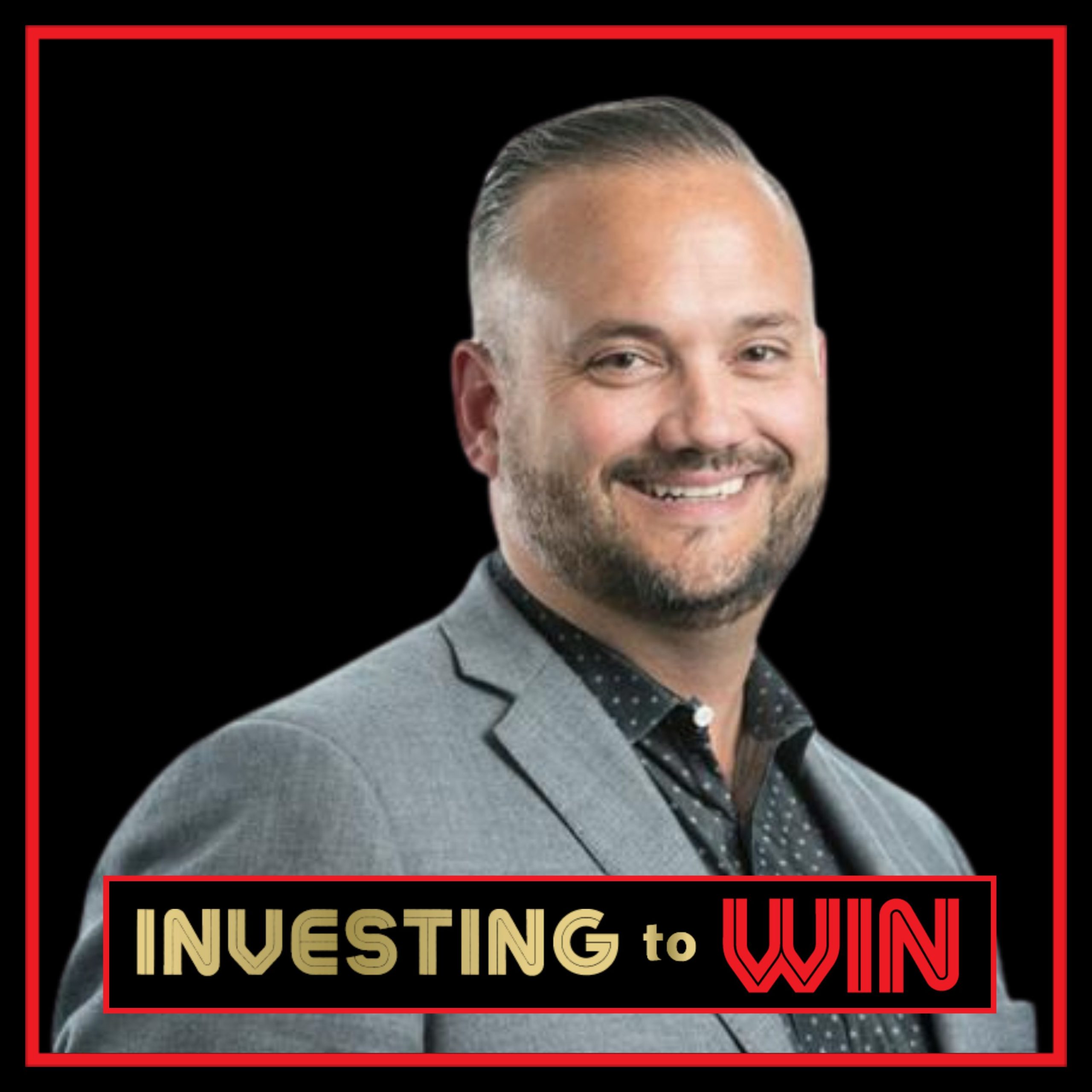
Investing to WIN #030 — How 3D Concrete Printing Is Disrupting Construction and Real Estate Development (with Jeff Olafson)
Construction hasn’t fundamentally changed in decades. Rising costs, labor shortages, environmental pressure, and rigid building codes are forcing developers and investors to rethink how buildings get built.
In this episode, Jeff Olafson explains why 3D concrete printing isn’t a futuristic concept anymore—and how it’s already reshaping housing, sustainability, and construction economics in real-world projects.



Duration: 57:00
Date: Sep 5, 2023
Guest: Jeff Olafson – Founder and CEO of NeoADMC 3D
WATCH THE FULL EPISODE:
Want the full experience? Watch directly on YouTube to support the channel and get recommendations for similar episodes.
What You’ll Learn
• Why traditional construction methods are hitting a breaking point
• How 3D concrete printing actually works at building scale
• What types of structures can already be printed today
• How automation changes labor, safety, and project timelines
• The real environmental tradeoffs of concrete versus wood framing
• Why building codes and standards are the biggest bottleneck
• Where early adopters gain long-term cost and design advantages
Memorable Moments
“There hasn’t been real construction innovation in over 100 years.”
“We can print walls without scaffolding, ladders, or formwork.”
“This technology replaces labor shortages with precision.”
Episode Summary
This episode tackles one of the biggest challenges in real estate and development today: construction methods that are expensive, slow, labor-dependent, and increasingly unsustainable. Most investors and builders assume these problems are unavoidable.
Jeff Olafson challenges that assumption by walking through how 3D concrete printing changes the entire construction workflow—from design and materials to labor, safety, and environmental impact. What sounds experimental is already being tested, standardized, and deployed.
This conversation is especially relevant for real estate investors, developers, and builders who want to understand where construction is headed next—and how early adoption could reshape cost structures, timelines, and long-term asset performance.
Chapter Timestamps
[00:00] – Jeff’s background and construction experience
[08:45] – Why traditional construction struggles to adapt
[12:20] – What 3D concrete printing actually is
[16:10] – How printed concrete cures and supports itself
[22:05] – Height limits and real-world building constraints
[29:50] – Why Guardon invested in additive manufacturing
[37:40] – On-site printing vs factory-built components
[45:00] – Codes, adoption barriers, and the future of housing
About Jeff Olafson
Jeff Olafson is the Founder and CEO of NeoADMC 3D and a second-generation construction leader. He brings over 30 years of experience in commercial construction, project management, and building innovation. Jeff is actively pioneering 3D concrete printing in Canada, focusing on sustainable housing, automation, and next-generation construction methods.
Full Episode Transcript
00:00.00
wongga
Welcome investors this is Garrett your host of the investing to win podcast today I have a guest Jeff Olson Jeff how are you I'm good in the pre-show audience we were just discussing how we don't actually know each other and introduced.
00:08.20
Jeff Olafson
I am very well how you doing gar it.
00:19.37
wongga
Through a mutual friend. Um, just because my friend mike knows that I have a real estate podcast and he thought that Jeff would make an interesting guest so without spoiling it Jeff why don't you tell us a little bit about yourself and your story and your background.
00:35.39
Jeff Olafson
Well sure. Um I think first of all I'd like to you know? Thank thank you for having me on your podcast. This is kind of always a a new environment for me very active in the construction community. But. Always find myself in board meetings and and never really find myself in these digital interviewing spaces. So this this is kind of up first for me. Um, but yeah, no, my name is Jeff Olson I am the Ceo of operations at guard on construction. We are a second generational family enterprise here in Winnipeg manitopa. Um, we've been pretty well operating the last almost forty years now in Manitoba as well as across western canada into the arctic regions as well. Basically my ah my responsibilities as Ceo of operations for guardon are.
01:29.30
Jeff Olafson
Pretty much to see the every overseeing the day-to-day objectives of ah activities of the company. Um, a lot of collaboration with our leadership team that being our project managers and our supervisors out in the field. Um, and the big thing is just again me being responsible for the strategic initiatives of the company looking always to evolve our business model as we continue to move in as this second generational family. My work experience. Ah my professional or my academic experience I'm a certified building construction technician I'm also a certified gold seal project manager with the canadian construction association and have been project managing for almost. We'll say well actually over thirty years now and again completely dedicated to our family's business which is of course general contracting in in Manitilba so that's a little bit about us.
02:31.70
wongga
Wow. Ah, that is that is quite the resume. Um, what is the operation look like I mean guard on construction I've I've sort of heard of it but give us a little bit of perspective you said work up north like how. How many employees are there and what what types of projects. Do you guys mainly work on.
02:47.70
Jeff Olafson
Um, well yeah, we're ah we're a small to medium size enterprise family business again like I've said going into a second or second succession of ownership. Um our focuses have been primarily on construction management. General contracting servicing the commercial industry. What I mean by that would be institutional contracts in nature. So that's all 3 levels of government ah working with municipalities. Also private sector does involve working with property managers. Um, a big niche part of our business is actually building envelope reconstruction as well. We expanded our services into concrete restoration rehabilitation to again, extend our profile and customers sort of that our customer. Customer service profile pardon me and to include restoration to assist clients that have property that need whether it be balcony Repairs Plaza decks parkades um we try to keep you know a complete suite and of course now with our most recent. Endeavor moving into three d concrete printing additive manufacturing just again to you know, build on our our portfolio. What in terms of services we can offer to our customers.
04:15.64
wongga
Okay, so um, so building from the ground up you you mentioned right.
04:17.89
Jeff Olafson
Pretty much. Yeah, it's it's you know it we it. It's kind of we we we have been flow it depends it if everything is cyclical. We find in terms of where we find our services again a lot of our northern work has involved. You know we've participated in construction projects that may have included water treatment plants waste treatment plants ems facilities for a lot of rural communities meti communities reserve community a lot of our arctic participation. We. We did a very. Ah, long stint in the Churchill region servicing all of the provincial housing and the reconstruction rebuild of a lot of the infrastructure there as well as their main facility. Um, you know we've we've always participated whether it's the. Health authority up at the time we we've worked with them as well as the town in terms of their I guess they've had ah a city or town center a big big facility. So yeah, we've we've just kind of go where the where the where the work is and as of late. We've noticed in the last five years big and a lot of initiatives with a lot of property management companies focusing on their portfolio or their inventory of of facilities. Their stock. We we facilitate we we do collaborate a lot with.
05:52.68
Jeff Olafson
1 of the premier engineering firms in in Winnipeg who really focused their business on helping pretty much bring thermal enhancements to to their to their to their properties or to their portfolios of of building and. Yeah, we've just kind of foundd ourselves now just really focusing on focusing on those construction that can tight type coverage. Yeah that's okay.
06:15.21
wongga
So building envelope stuff sorry to interrupt but building envelope I mean that's um, like installulation siding that type of thing on apartment buildings or.
06:23.83
Jeff Olafson
Well, yeah, a lot of emphasis. Yeah, a lot of the vertical space. So when I say vertical we do a lot of apartments condominiums where clients are now looking to capture their um. You know there's a lot of Grant incentive out there for ownership to enhance windows patio doors as well as expanding on if depending on the thermal design enhancing the thermal designs of these facilities putting in Rainscreen Applications New roof. Prove complete. Um, we just found that we've leaned leant into that work and and that's been really a driving What we're seeing as a driving factor for ourselves to to really keep the side that side of the commercial business going and and that's why we've stepped into. Concrete Restoration rehabilitation because we find that there was overlapping services that dealt with the infrastructure of you know, particularly those owners facility owners that had say precast balconies As an example that need Restoration. We found a lot of the service was. Was needed ah and we wanted to be that onestop Shot. So So yeah, it it. It. You know we don't we we conch you know for our we'll say the best way to describe it are self-performed Work. We focus primarily on the window.
07:54.18
Jeff Olafson
A window and kind of balcony Door Applications. We subcontract a lot of our envelope work with our teams that we prefer to work with and then of course we have our In-house Restoration team that focuses all on the concrete Restoration rehabilitation. So It's it. Seems to so far work but it it seems to be that there's big demand for our service just knowing the the property stock that's out there right now that is needing a lot of rework to say the least.
08:25.51
wongga
Okay, okay, yeah, that's a long time to be in business. One of the questions I wanted to ask you because yes through the last few years with covid some small you know small construction companies have thrived you know lots of people had expendable cash. But how have you managed to adapt over those you know 2 generations like things have changed so much and yet you guys are still still here and and successful.
08:58.40
Jeff Olafson
You know I think what one being a family business I think you always work with different intentions. Um, we we as a family have built a very strong culture and we've kind of let that culture. You know. Extend into we'll say non-family members. But I think the biggest thing was being a small to medium-sized Enterprise Um, being agile for first and foremost we we in a lot of cases were especially during the the pandemic. We were able to pivot our services and again bear in mind the type of work that we do was kind of work that really was essential for a lot of our clients. It was important for them especially in the space of envelope reconstruction. To get get the work done I mean it did pose some challenges for us. There was a lot of stop construction going on stop work orders were issued with some of our clients because of course these were all occupied facilities. But you know, um. I Think Also I mean really it was it was it was family ownership really did prepare um to deal with a contingency plan if in the event and what we'll call operating reserves.
10:28.38
Jeff Olafson
Um, that we always did have an operating reserve to ensure at minimum. The essential workers in this case are office staff were able to continue to work full time. It was unfortunate that our hourly staff and that wasn't of our doing but the challenges of. And that comfort level of bringing construction workers back into occupied spaces. Um, you know during during the pandemic was was challenging but I think you know as we were able to overcome those those challenges. Um, again I benefit to the resilience of our team. Our ability of always wanting to continue to expand our knowledge base. You know again being small and agile we don't have those big corporate overheads that potentially could deal with. Maybe some board members or shareholders challenges because of course Guardon is independently owned family owned so it it doesn't really require the rigorous ra removal of ah of ah, an advisory board or ah.
11:41.92
Jeff Olafson
Ah, board of of representatives that are dictating the direction in which we go. So I think in those in those times it it really has allowed us to to allow us to thrive and and Succeed. So I think we've been fortunate fortunate in a lot of a lot of ways. That way.
12:01.42
wongga
Okay, no, um, the pivot I mean that's ah, that's why I brought you on the show. Um Mike said yeah, my buddy Jeff's getting into 3 d concrete printing and I went oh 3 d printing and I went wait. What.
12:16.56
Jeff Olafson
Um, yeah.
12:16.61
wongga
So why? Yeah, let's let's get into it. That's what the audience has been waiting for um, tell me about this ah unique 3 d printing technique.
12:24.91
Jeff Olafson
So if I guess we could start 3 d printing I mean let's maybe talk about what it is 3 d printing really is for us is is is we feel as it like it's an exciting innovation that now we want to incorporate. With our with our customer offerings but the technology itself also known as additive manufacturing and construction is pretty much it's it's just a construction technique that involves utilizing special designed three t we'll say 3 d. Ah, printers that print concrete materials that are pretty much high performing ultra performing materials so they they they work outside the realm of your typical ready crete. Um, and what these materials allow us. Ah the opportunity to do. Is be very creative in a threedimensional space that allows us to to pretty much print, unique objects and structures again utilizing the three d printed equipment. The application is basically a layer uponlaer approach of material. That is placed in accordance to the 3 d modeling and then of course it once that model is been properly evaluated and that model has been properly simulated and tested it affords us the opportunity to the outcome is.
13:59.90
Jeff Olafson
The the intended structure or whether it's the element. It could be a a structural element. Whether as an example as ah, a girder or beam to you know, unique things What we call kind of on-demand prints which would be typical. You know your patio furnitures to your outdoor kitchens to you name it. You know? what's so unique about this space is that it gives us that creativity to be whoever we want to be but our focus really is going to be on the residential community and being. Ah, provider a builder in that space for customers who want to move into kind of next generation Facility. So That's kind of what it's all about.
14:47.20
wongga
Okay, so I mean I think the average person kind of has heard of 3 d printing to me being un and you know uninitiated I just think of plastic is this pretty well the same thing except you're doing it with layer upon layer of concrete.
14:59.20
Jeff Olafson
Um, yeah, correct I mean the the application or the theory of the 3 D printing is is all one and the same right? you you model? Whatever it is that you're trying to create. In 3 D modeling softwares. Um from those models you want to ensure that the object is refined which goes through a process of ensuring that. From Ah, what we'll call building information modeling environment into just a additional software modeling environment that allows us the ability to refine it to ensure that it really works with the the limitations of the printer. Um, so all of that three D will say digital compiled information is then reduced down into two D elevation which then moves itself down into a what they call a a slicer or the. Software That's needed to print or program into our printer. So. It's this step of of workflow which is going to be new to industry and this is this is why I think.
16:24.73
Jeff Olafson
What's so unique about what we're experiencing and what we're working with is that this is a true innovation that we have not seen in the construction industry for probably 100 years if not greater to a point that yes, we've. Framed a way and we've laid masonry block a way and we've installed our veneers and our stuckc was a way all through all those kind of disciplines I mean we've had advancements and modernizations. But what 3 d printing is ultimately doing is is. Adding a new process of assembly um that is using automation and programming which is you know, um, different than what the industry is is accustomed to. And so when you think about 3 d printing. Yes, it's very similar to these little Resin printers you you see on your desk I just say that these are big boy toys now kind of like kids and their little tonkas this is now. The printer that actually will print and and again the the type of technology that we are embracing um is robotic arm. But there are different systems and and anyone who's paying attention to 3 d concrete printing out there. Um, they will know they'll see all these different forms of 3 d printers. There's what is referred to as a gantry.
17:49.12
Jeff Olafson
Printer which is a very complex frame which is like almost like a large scale desktop printer. Um, you know it has its frame with its gantry beam and it it prints it it in elevation and it does the full scale print and then there's the segmented approach which we like which we think is more. Um, adaptive to a lot of the challenges and that's you know urbanization is ah is a big piece so it doesn't need a lot. Ah a lot of equipment So We we like the idea of the robotic arm. But then again the process of it all the how you design how you program. All of very similar to what you would do with a normal resin printer just to keep the conversation Simple I mean different softwares but ultimately the workflow is is the same.
18:39.79
wongga
I'm I'm fascinated because for a resin printer I mean again I know nothing about 3 D printing other than to know that it exists so with a resin printer is that Resin Wet does it have to dry is it spitting it out in a semi. You know, solid state like how how does that work with the resin like the desktop Resin printers.
19:00.18
Jeff Olafson
Well with that I'm not. You know we're not our skill set. My skill set isn't definitely three like that type of printing I would imagine you know that you're dealing with extruded materials that go through a process of you know. Meltdown and and again when it melts itself down it. It. It reapplies itself in a very liquid form to to layout. So when you think about concrete and how does it really apply to concrete So What we say is that you know these materials are seentitious in nature. But. What's so unique about these materials that differ from ready mix is that the the additive materials that are in there these materials in Essence don't cure in hours these these materials that we are working with cure in minutes. Um, and what's so unique about The. Innovation of the cement mortar material or the aggregated design material is that it has the ability to structurally support itself layer upon layer upon layer and ultimately that's you know the 3 D process is that every subsequent layer has to be strong enough to hold its. Its own strength or its own weight part of me not own strength but its own weight. So when you think about Concrete Masonry Block is an example and and they use their mortars. Their mortars are very low structural designed in nature and with concrete Masonry Block. You can only go so high as an example.
20:18.77
wongga
Here.
20:36.98
Jeff Olafson
Without ah the need to lose um in essence the wall because what happens is that the weight of the assembly over time will just push the border out at the bottom. So if you think about a 3 d printer a concrete printer now that it's printing a structural layer. Just imagine that as you extrude that layer of material that layer is already curing and it cures at an accelerated rate faster than we can I mean it's not to say that our ready mixes don't develop for high early concretes but this material is pretty much already actively curing. The minute it comes out of the printer head. So as we say print our singular layer before we go to the secondary layer and typically that what we you know when we think about when is your material cured like we said we we deal with minutes. Ultimately the recommendations right now. Um, is that providing that that layer has had 2 minutes to set it is structurally safe enough to print another layer on top of it. So as long as we work with that 2 minute set times between layers. Ultimately we can stack as many layers providing that go as long and high as we want. Um. As long as we stay within that parameter of of it of of an of installation where we start to accelerate is is.
22:00.98
wongga
Yeah, ah give me give me a little bit of context here size height height like how big of a a structure can you typically build with 3 d concrete printing.
22:10.83
Jeff Olafson
Okay, so right now with the robotic technology that we use we have the capacity in a single level to print up to fourteen feet safely we've our partners have tested a seven foot elevation
22:20.35
wongga
Wow.
22:30.46
Jeff Olafson
Um, and safely but like to be true, genuinely safe and and this will be our practice at first is to probably you know print no more than 40 to forty eight inches and and just again to learn the behaviors of the material because this again is still pioneering. This is still frontier work. Ah.
22:50.34
Jeff Olafson
Again, you're we are in an industry right now that doesn't have standards or practices those are just in the process right now where institutions like like Nist. Again, Nist being in the United States the national institute of standards and technology and that falls under the us department of commerce they are taking leadership on standardization as well as. Astm and Iso so there's there's a lot of activity going on right now knowing that this technology is evolving but as we start to standardize. We will certainly certainly know if a four foot seven foot Fourteen Foot wall can be built. To an acceptable standard that engineers are going to be you know content with the known highest so far right now is cobot international with their cobo two gantry printer and it's a customized gantry printer that they have specifically developed for general electric. Can print up to seventy feet and they're using now this technology to develop all ge's wind tunnel for their wind tunnel technology and innovation research and.
24:16.27
Jeff Olafson
Now they're moving to 3 d printing and using 3 d printing as as the the base materials for all future wind tunnel labs. So it. It has its possibilities ah to in time um achieve some pretty incredible things. So it's ah. But then again for us. It's robotic. We're working with the technology company Rick technology is who we collaborate with um, they're looking to push to an eighteen foot twenty foot you know robotic arm that can print from ground level to that height which. We're excited if they do reach and achieve that innovation because then of course that would be a real big solution for us when it comes to second story housing and and what does that look for ah for our opportunities in the future. So.
25:09.88
wongga
Yeah I'm I'm blown away I mean I can't you you mentioned innovation I would use the word disruption I mean Wow you know I mean.
25:19.30
Jeff Olafson
There is disruption. There is disruption in this Absolutely there There is disruption in this is.
25:26.10
wongga
Fourteen Foot whatever you want to build I mean typically you have to what you have to get a form right? It's going to be. It's going to be flat on top I mean unless you're going to be I don't know anything about concrete. Do they have pressurized vessels that you can actually build a form and then break that form up so it it has different.
25:29.51
Jeff Olafson
Correct Yeah correct.
25:42.83
Jeff Olafson
Take the dance.
25:44.76
wongga
Shapes to it or is it typically just rectangles and squares and whatever you can build out of out of the forms is what the shape of the concrete takes right.
25:51.55
Jeff Olafson
Well and you have to understand because you are in an environment now that is that is 3 D in nature right? So when I say that the minute you enter into that 3 D world right now we don't I mean we don't necessarily build. Truly I mean there is software out there building information modeling or bim that I think everybody understands um that technology is out there but it's not fully embraced by the design community. They do it for very unique renderings and you know you can get some very good presentations. But. Does the does does the design community and the engineering community truly embrace the the modeled environment and and that's where there's the great debate They they kind of play in both Worlds Nobody has really truly embraced a 3 D modeled environment. With our new incorporated company that is that is going to be our kind of mantra or our our push to to create a different preconstruction design development environment for builder and Designer. Ah, which is truly what we're saying is we truly want to embrace the the 3 D digital environment and when that happens but you know there's a lot of benefit that comes out of it. So the architecture when you start thinking about resins. You know you think about your little resin or your little 3 D printers. They can create unique objects.
27:23.35
Jeff Olafson
We equally have the capacity like our printer does have the capacity to print in a 7 to 9 axis environment without changing a beat and this is where we feel that we're going to push beyond conventional construction because conventional construction can only go so far before they have to pivot. Um, so you can only build as an example, a wall to a certain height and then there's a readjustment and then you have to reset your crew up. No different than a concrete beam is an example you can only build so high and then as you're starting to bring in angle or you're starting to bring in shape or form you almost have to stop and let the. Lower level construction kind of cure out you kind of strip your assemblies and then you reset up your assemblies again and try to form the next level assembly. So what? What we're seeing now is because of the advancement of the material. It's free for me. So. Based on the layers of the thickness layer. So typically ah a layer is about twenty millimeters but if we start dialing down that that that layer design which makes for a longer print but the level of detail increases and what we're ultimately saying is that there's really going going to be no change in cost. So when I build a wall in a house that could have curves or I could build a wall in a house that could have alcoves I could and as long as we've simulated we've designed it we've simulated it we've tested for me at no cost extra cost and this is this is where that cost even comes into the client. We don't.
28:56.51
Jeff Olafson
We we don't have to charge extra for it right? So we just allow the automation to take control and again that automation is replacing the workforce that you know we're so desperately fighting for and creating the fact that we have elevation of fourteen feet eliminates our need for scaffolding and ladders and and fall fall protection followers. So we we even got this safety component which helped keeps our construction down so you know we see the possibilities of of many things and it's it's quite exciting with what is. You know, really in the future for for this technology. It. It definitely is something something remarkable say the least.
29:41.94
wongga
Yeah, well I mean speak to me about why the why of garden construction 40 year company. Why are you? what motivated you or inspired you to go into 3 d printing.
29:56.41
Jeff Olafson
You know the funny thing it was to be honest I mean we've always I've you know I've always seen guard on construction. We've always been ah, an adapter of technology. We. We have been on our digital journey now for I would say 12 to 13 years Um, we've always looked to try to use technology and the automation through technology to help us with our work our tasks at hand because I'm a firm believer that in a lot of these platforms that we work with there's a lot of automation and there's a lot of intelligence. Um, that that are in these softwares that help us do better and we can coordinate better and so access to information was a very vital port. So we've always believed into that in that tech space but coming out of the the pandemic what we've noticed. Um. Was this unique challenge of supply chain. Um the unique challenge of of freight. Um, we we saw and we are still seeing the impacts of those that have decided ah a different career path and and those that. We're on the cusp of retirement or retiring we we found ourselves as a small to medium size enterprise in a little bit of a difficult place to compete with the bigger firms. The likes. You know the big boys will say.
31:30.36
Jeff Olafson
Where you know we were getting out Bid. We were all fighting. It. It seemed we it the industry ah commercially has has got really nasty. Um, where you know we're stealing employees from each other. Um. Workers from each other and and all these are really are lateral moves. They don't really gain anything. Maybe it helps one company succeed and and their mission to keep their revenues and their profits alive. But in the end are they really building the culture that is necessary and and we're seeing change in government. Government's attitude towards the environment and the government's attitude towards social social governance. Um, and then a real big piece was the supply chain or the tendering procurement of these very government agencies that are making things very difficult. For commercial business to Compete. We've kind of gone down a path of which I feel is a very dangerous path of of competitive bidding and this manipulation with taxpayers' money. Um, and. Something that you know we may have had as a construction management Services. We're finding that you know the procurement industry or the the tendering industry is is this push to drive. They want the absolute most from you and it's this push to the drive to the bottom.
33:04.46
Jeff Olafson
So we kind of looked at it and said hey you know this is disruptive enough that you know what we could say you know forget this and forget this commercial industry and and all it's what seem to be increasingly bad habits and actually start. And look as you know as you look to Asia -pacific and you look to the middle east and you look to europe and you look to the uk what you're seeing is their full adaption of industry 4.0 and and we're moving into this fourth industrial revolution right? before our eyes and yet here we are coming out a pandemic. In manitoba and we're actually taking backward steps. You know our government is even reduced our sustainable ah criteria requirements when it comes to commercial build to make things more affordable and yet everywhere else in the world. Everybody is going the other direction. But why? Why in manitoba we're going in the opposite direction. We just didn't want to participate in that in anymore I mean we are going to continue to support our commercial business and support our clients and those that see you know that want to build on efficiency and energy efficiency. But with the new our new endeavor and and our push into additive manufacturing or 3 d printing. We are actually starting to see extreme adjustments when it comes to construction you know pollution when it comes to true environmental stewardship.
34:33.73
Jeff Olafson
And some will argue. Well hey you're using concrete which is the biggest violator of materials when it comes to carbon emission and its contribution to carbon emission but I would preface and I would ask those people to be patient because what's coming out of it is innovation of decarbonized materials and it is coming very. Very fast where there is going to be low base. No base cement materials that are going to be um, available soon where you know those that want to speak about carbon emissions and the disasters and and how bad cement can be. Um, we are trying to embrace that challenge and we're trying to really look at can we you know use recycled materials. The very materials that we test with can we create aggregates from those materials you know so we want to look at ah, almost like a circular economy. Of How can we what we use in our ways can we we put back So what we found with 3 D printing is that it was lending into all these challenges that you know everyone wants to ignore um and it started to speak so it was moving us in the right direction and moving us away from our competition moving us into our own space. Where we could be the professional and actually start to meet the needs whether it's environmental whether it's social or whether it's governance. Um, we could start to meet the needs. Ah that are truly important. You know, Ah, the big thing for me is thinking about what.
36:05.76
Jeff Olafson
Mother nature and and the environment in which we're dealing with a lot of this environmental change. A lot of our business model is to push into the rural and indigenous communities because these high risk areas especially with forest Fires. We're seeing art. Go to design Woodf framed facilities cannot bear nor are they the right structures in these high risk communities. Um, you know we're starting to see the advent and the benefit of just you know start looking at building with. Right? mindset right? You know start looking at building and developing with with purpose you know and and start thinking about multiple generational ownership when we start thinking about sustainable communities. But we're thinking that we can be a solution for people. We're not going to say we want it all. But for those that. Have challenged that maybe want to live in these high risk areas but they they can't get the right builder to build for them if we think that 3 D printing will be that.
37:14.98
wongga
Okay, um, wow I honestly Jeff it's like you're answering all the questions I was actually going to ask you about the environmental impact. So thank you so much for that thorough explanation? Um, but I just. Can you give me some case examples of where you see this like are we talking walls. Are we talking staircases. Are we talking like foundational building structures and then are these built on site and do they need to be delivered. Sorry built in the factory and then do they need to be delivered on site like what? what are the applications here.
37:46.58
Jeff Olafson
Well with the technology that we have invested and that was one of the big pieces like it took us a year to study that because you just don't go into 3 d printing concrete 3 d printing and saying let's acquire a printer I mean and let's start printing. What. Those that are going to want to step into this market space are going to really have to understand what the the process is with robotics again. It's more of a minimalized approach. Ah, which we see is beneficial for for moving and the the unit that we've invested in is a mobile unit so because we only can ultimately work six months out of the year we have the opportunity to bring our printer to the job site and we could manufacture the walls rate there in continuous. Monolithic karma you know monolithic poor rate on the site and in the winters we just bring our printer in and for those projects that say we want to precast because then we again depending on the client and what their preferences are. So we're finding ourselves as a builder now that we have the opportunity to build on site like a conventioner could build and we have also have the manufacturing capabilities to create precast elements to assemble and print deliver it and and and or print deliver and assemble.
39:19.50
Jeff Olafson
At a later date. So the model for us is to to be both available on site and to be available in the warehouse and then again these can be walls. These can be. We've seen little packages for. Whether we call them. You know utility sheds or even examples of disaster relief structures some of our what we call pre-manufactured products that we're looking at or of course are all structural. Element nature. Whether it's beams or girders. We're also seeing staircases that can be printed staircases landings patio furnitures you know. So if we decide to shift and this is what's so unique about this market space for us is that we can pivot and it's very agile. Which kind of leads into who we are as a company is always trying to be agile so depending on the demand and where we need to go this technology lends itself to doing whatever the customer wants I mean if customers want to customize a 1 ne-off we can.
40:14.99
wongga
Here.
40:31.80
Jeff Olafson
We can create that environment and service for them. Um, we can create that facility for them. We got a customer that wants 10 of um, we can create that where it's printable. You know floor plans that all follow the 1 design again. At the end of the day what we are creating. This is all computative. This is all computative design or what they call is paramedic parametric design. Um, ultimately through all that hard work and preconstruction it really you know Gary it boils down to a Usb stick that all that. Work and data is loaded and all we need to do at the end of the day is just put it into the printer and let it print so it's it's crazy even how when we really start looking at as builts and and and providing maintenance data for our clients and. It. It really is going to lend to a revolutionized industry and we we really are excited that this is the direction that we see it can go and and we want to build. We want to be that leader in that space to to build the right kind of environment that I think not just. The the signers but the customer will be happy with.
41:48.63
wongga
Yeah, um I mean you mentioned some challenges Obviously I imagine there's adoption. You mentioned engineering what other types of challenges. Um, do you see in the near future before you're fully able to get the industry to embrace this.
42:01.24
Jeff Olafson
Well there's there definitely is the the code of the the codes the code authority is is is 1 thing that we're really focusing on our strategy is to really bring them on as a partner and not. Present these projects to them last minute but we want them to be part of the whole design process. What we've done at guard on as because of we know we know it's challenging and the materials are going to be the big thing right. The concepts of the build are very similar to whether we say it's concrete masonry block or it's a kind of inverted Icf right? You know if you think of icf design and construction. It's insulation insulation concrete in the mental. The 3 d printing is just the reverse of that it's.
42:39.80
wongga
He.
42:48.70
Jeff Olafson
Structural layer on the outside structural layer on the inside insulation in the mill and though where that leads to is thermal mass design. What's exciting about what could come out of it through these collaborations with our with the code and the authorities having jurisdiction. A better understanding of of wall assembly and its performances. So you know our push today with a lot of the wall assemblies that we are building is our wall assemblies are getting way too complicated like when you think about our push for energy efficiency and high efficiency walls. I mean you could have anywhere from 4 to 6 trade contractors in on a build which to me is is becoming ridiculous now. Just imagine if a 3 d printer and the wall design was accepted. We were talking about a wall exterior already extruded and finished and accepted an interior wall. Which has the same extrusion the same build and the same finish and is accepted. You just got your mechanical electrical to rough in your insulator to put in your walls your windows and your doors and your paint finish and you're done and you probably have a higher performing wall. Um. Less ah you know and in terms of less impact of error when it when when you start to look at your quality assurance. So what we're seeing is that we can deconstruct and yet still be highly efficient and highly energy, efficient and highly cost effective even though we're going into and using a stronger material.
44:25.00
Jeff Olafson
Because again we have to bear in mind these prescriptive wall assemblies Drywall Poly Wood framing insulations air Barriers Secondary rain screens. You know, build out attachments of sorts veneers of different types. You know you start to look at that wall assembly compared to. But we're just gonna print this wall and that's really it. It's It's the print. It's just the except. But then again, it's there's gonna have to be a shift. There's gonna have to be consumer Education. You know our customers going to embrace ah concrete printed wall assemblies right? This is this is what's new to us. So This is what I think.
44:48.49
wongga
Um, a.
45:03.63
Jeff Olafson
You know, a lot of education. A lot of open houses. That's why we've actually partnered with all of the academic institutions here in Winnipeg the university of Manitoba under the civil engineering department under the faculty of architecture we partnered with when it comes to red river. Um, we're talking with the group's tacca which is of course aerospace and and manufacturing and then bte which is of course building efficiencies. You know these are going to be our stakeholders because part of this is learning from what we can do. Then creating micro credential programming and and next generation worker because that's what also has to happen in the space as well. So there's just lots going on to say the least. Yeah lots going on. Yeah, so.
45:52.50
wongga
Yeah wow. Um I just I think it's I actually thought when Mike introduced us I thought hey okay, you're bringing this technique to Winnipeg but like literally this is like you're on the forefront of the wave I mean.
46:06.40
Jeff Olafson
This yeah, we're pioneering this is Silicon Valley of the seventy s this is where this is where we are and this is what's unique about it and it's finally great that our stakeholders the the institutional the academic community is listening.
46:09.28
wongga
Yeah, yeah.
46:21.83
Jeff Olafson
We have strong partners in in national research council of Canada because of course they've been pushing towards decarcarbonization now we can introduce the automated or the additive manufacturing component because some of this to statisticsxikerick that we're seeing is that globally. This industry maybe in 2020. We'll say twenty eighteen was maybe a $20000000 industry. You know when you look at the you do any market research on it. The reports that we're seeing the global reports that we're seeing is that they'reicipating by 2030 this is going to be a one hundred and forty five billion dollars industry which is going to suggest a compound annual growth whether that's in investment or sales and whether you believe the numbers or not and we're actually trying to leverage those numbers down because we think those numbers are are high but if they do prove then that be pretty remarkable, but we're looking at an 85% potentially 95% compound annual growth year over year for the next five years in the space. So it. It's bigger than even us at the end of the day and that's yeah.
47:27.89
wongga
Well yeah I mean I'm thinking the trickle-down effect I mean you you said workers you said materials would forms safety, environment, government adaption and not to mention you know the detractors out there because they don't want to give up a piece of their market share.
47:46.15
Jeff Olafson
Yeah, well and that's what we're seeing right? We're we're going to see the ready mix industry here in Manitova I think is they're gonna be challenged because their bread and butter is really a housing industry which I think there's a place for both you know, um.
47:47.59
wongga
Right.
48:03.98
Jeff Olafson
Because again how we look and and and again the look and feel of these facilities are going to be different than your typical residential build facility. You're going to see a change in in our approach to design one of the big moves for us is that you're not going to see a lot of these units with.
48:11.43
wongga
Here.
48:22.87
Jeff Olafson
Basements. Um, we we're not a believer in basements and I don't know why anybody would but want to be building a basement here in Manitoba but we continue to build basements and that becomes an added feature and now we've got them as you know hey look we can develop the space but we create all these problems with this developed space. So we want to really push the level of architecture here in Manitoba to to a different to a different height and what's so unique is that you know custom builders are on ah, they're all on a based on ah on a subcontract model. Um I don't think you're going to find a lot of subcontractors are going to want to invest in. Half a million million dollar printers to to create this space for themselves so it will be disruptive right? and I think as we start to again what we're preparing for as a company and our next gen company is to look to the fact that we have these. Environmental targets right? We have this this carbon or this reduction of carbon or net zero target of 2030 to be fully implemented by 2050. We have to change. There's just no question about it. We have to change if we. We don't like I mean then it's just we're giving you know, just a bunch of lip service to a probagnate problem like again we we are the biggest violators when it comes to landfill contribution. We are the biggest violators. You know when it comes to greenhouse gas emission I think they I know the.
49:57.13
Jeff Olafson
Forecast or the prediction was that I think we contribute to 8% of the the greenhouse gases in in in Canada and you know how do you How do you move from that you know so when we think about bringing the manufacturing in essence to the job site. We're limiting our transportation right. We're bringing the quality control rate to the job site and we believe that using automation will bring a high level precision a lot more predictability bringing a safer construction site forward. Um, and you know just dream. You know play with creativity and design that conventional construction will not be able to compete against they will not be able to compete with it. So not to say that they can't build it but I just don't think in the degree in the vein of how we see our workflows we don't see the industry. Ah, being able to compete in time and then especially if we work with clients even with ourselves as we developed ten of 20 of 30 of of really repetitive designs. That's where value is going to start to present itself because we will get faster with the the innovation.
51:07.60
wongga
Oh sure, pull 1 out pull the design out of the shelf and just redo it right? I mean yeah.
51:10.62
Jeff Olafson
And the materials right? Well, it's printable right? We just customize it change it for the floor plan whether this is a forward leaning or a backward setting. You know whether this is a right hand left hand. Um, everything's going to be on a little stick a little bit of you bit Usb drive and just.
51:29.26
wongga
Um, yeah, incredible. Yeah, don't understell it right? Yeah, yeah, no I think our listeners are getting more out of this than just a Usb stick.
51:30.33
Jeff Olafson
Plug it into the printer and let go I mean it's a little but but it's It's a little bit more complicated. It's not that easy, but it's it's but generally speaking. Ah yeah I don't generally speaking That's ah it's a yeah yeah.
51:44.83
wongga
But you know you you warned me Jeff in the in the pre-show that you're pretty passionate about this stuff and it it comes through it's it's super exciting. Um I'm going to be following you guys and this industry I just can't I love this kind of stuff I love disruption and software and automation. So I wish you best of luck with that. Um.
51:49.91
Jeff Olafson
Um, yeah.
52:00.60
Jeff Olafson
Absolutely.
52:03.88
wongga
But yeah, before we before we end here I always ask every guest this question and I'm going to ask you as well. Um, this is the investing to win podcast. How do you Define success and what does winning look like for you.
52:16.97
Jeff Olafson
You know I had to have to think about that one a little bit but I I could say that I see success like for us is is it's It's a combination of factors. It's about. For us delivering exceptional quality and value to our clients. You know, fostering a dynamic and and innovative team culture and then pretty much attributing to the positivity of our industry. And and and I guess the communities we serve when we think about the win or or winning We It's almost like I would say winning is is is not is. It's more. Winning I Guess not only that we met our clients expectations but that we exceeded them and and when we provided our team with the opportunity to grow and Strive. We believe will leave a lasting positive impact on the project. That we undertake. So I think that for me would would be the win win side of things. So I hope.
53:35.12
wongga
Well clearly with the technique that you're choosing to invest in um, your you know you and and Guardon is if I can paraphrase what you just said you just want it to be a win-win for everybody in all all aspects very like efficiency. It's basically efficiency and success right.
53:50.50
Jeff Olafson
Absolutely and and and we're so close to it right? where we have the ways and means we just have to figure out that process right? It's it's there. It's it's it's in front of us you know and that's what's really exciting.
53:52.94
wongga
Yeah.
54:06.10
Jeff Olafson
About it and as we adapt and if we can recognize that we are in this well call- forth Industrial revolution. Um I think we will start to understand what our future pathways are going to really look like and and I think are what we think are challenges I think we're going to see them as as opportunities. Forward for sure.
54:25.98
wongga
Great Well ah myself and the audience we will be watching and yeah, can't wait to see what's in the future. So I wish you guys best of luck.
54:35.15
Jeff Olafson
Well thanks for having me and thanks for listening me ramble. Thanks a lot. Thanks.
54:39.80
wongga
Yeah, no worries at all. Thanks Jeff take care.
Want more episodes like this?
Join my email list and I’ll send the best insights from real estate + business + investing.