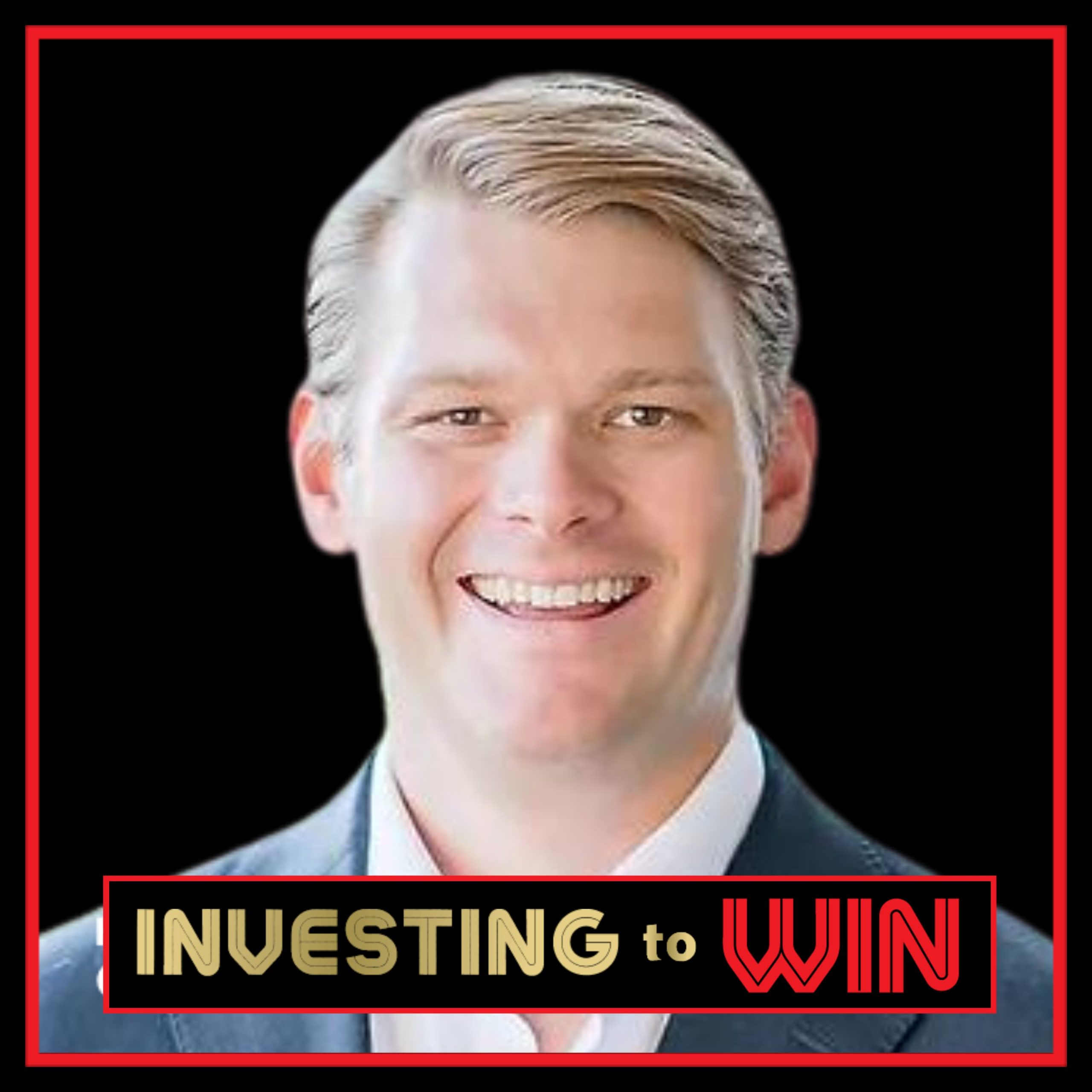
Investing to WIN #063 -How Flex Industrial Real Estate Creates Scalable, High-Upside Investment Returns (with Grant Reaves)
Most investors default to multifamily or self-storage without questioning whether those assets still offer meaningful upside. This episode breaks down why that thinking may be outdated in today’s market.
Grant Reaves explains how flex industrial properties are quietly outperforming, where the real opportunities are, and how disciplined underwriting separates strong deals from average ones.



Duration: 47:00
Date: Jul 22, 2024
Guest: Grant Reaves - Co-Founder and Managing Director of Stoic Equity Partners
WATCH THE FULL EPISODE:
Want the full experience? Watch directly on YouTube to support the channel and get recommendations for similar episodes.
What You’ll Learn
• Why flex industrial is structurally undersupplied—and what that means for rent growth
• How to identify real value-add opportunities beyond surface-level metrics
• The importance of lease rollover timing in commercial deal performance
• How to align different investor profiles with the right deal structures
• What most investors misunderstand about underwriting and deal selection
Memorable Moments
"I wasn’t making decisions based on emotion anymore."
"We probably underwrote 150 deals to find one."
"It’s really just a supply and demand play."
Episode Summary
Many real estate investors focus on popular asset classes without fully understanding where the real opportunity lies. This episode challenges that approach by breaking down how overlooked sectors like flex industrial can offer stronger fundamentals and long-term upside.
Grant Reaves shares why flex industrial stands out in today’s market, highlighting its limited supply, growing demand, and insulation from trends like remote work. He also explains how disciplined underwriting—especially around rent growth and lease structures—drives performance more than broad market trends.
This conversation is especially valuable for investors looking to diversify beyond traditional assets. By the end, you’ll have a clearer framework for evaluating deals, aligning investments with your goals, and identifying where the next wave of opportunity is forming.
Chapter Timestamps
[00:00] – Grant’s path into commercial real estate
[05:22] – Why commercial beats residential for analytical investors
[08:10] – How hotel acquisitions and underwriting work
[12:18] – Moving to a larger brokerage and focusing on one niche
[14:06] – Starting Stoic Equity Partners during COVID
[16:48] – Why flex industrial became the core investment strategy
[21:36] – How lease structure impacts deal viability
[27:34] – Exit strategies and why most deals target five-year holds
About Grant Reaves
Grant Reaves is the Co-Founder and Managing Director of Stoic Equity Partners, a private equity real estate firm focused on value-add investments. He began his career in commercial brokerage, specializing in hospitality assets across the Southeast.
Over time, he transitioned to the principal side, building a portfolio of self-storage and flex industrial properties. Today, he leads acquisitions, underwriting, and investor strategy, with a focus on scaling a long-term real estate platform.
Full Episode Transcript
Garret (00:00.078)
go.
Grant, welcome to my podcast.
Grant Reaves (00:05.359)
Thank you for having me today.
Garret (00:07.246)
Yeah, no, my pleasure's all mine. Thanks for jumping on. We're gonna be diving into a lot of really interesting and cool topics. I've always been really fascinated with acquisition. You've done so much, but why don't we back up a little bit and maybe explain to the audience your background and how you got here.
Grant Reaves (00:24.879)
Yeah, so got started high level, got started in commercial real estate right out of college at the age of around 21. And then later transitioned over into the principal side, kind of digging more into that. Got into real estate originally, kind of, I almost fell in it to be honest. I was in school and wanted to kind of do more of an entrepreneurial type route. My family had been running their own companies from aunts, uncles, my father, grandfather, everyone kind of had a family business.
that family business around this time wasn't really a viable option for me to go work in. So I knew I wanted to do something on my own, but didn't really know what that was. So to be frank, wasn't really doing a great job in school. It was kind of spending more time having fun than I was studying. And so about halfway through my junior year, my parents were like, let's go try to figure out something else. And so it came back down to South Alabama. It was not where I grew up, but that's where my parents were living at that time. I grew up in Columbus, Georgia.
So got to South Alabama, didn't know anybody, didn't grow up here, had no real connections, but, found a home builder that I started working for. This was coming out of the, GFC. So he was sitting on a decent amount of spec home still from, from that time. So I was mowing grass and checking on spec homes and doing that kind of thing. Nothing, nothing crazy. I guess I was around, yeah, again, 2021 at this point. And his wife was a real estate agent, just a residential real estate agent in the area. And he was like, well, you know, you might want to do that and be able to sell some houses and.
It's not a bad, bad income stream. So got my real estate license, sold houses as 21 year old for about six months. was not necessarily the right fit for me. found commercial real estate through that though, and kind of figured out more of, of what commercial brokers were doing. And I always really liked numbers, liked performance, like, just numbers in general has made sense for me, right? Like residential real estate is a lot more about emotions and just kind of the feel and just wasn't the right fit as a 21 year old guy in South Alabama, sling houses anyway.
But it worked out really well for me in the commercial real estate side. I really liked that. Found a mentor to work under. And so through that, he kind of taught me kind of the overview of commercial real estate from a leasing standpoint, sales side, tenant route, landlord route. And so we did a little bit of generalist everything, but found my way into hospitality brokerage. So working on limited service hotel owners throughout the Southeast. Continued to do that for many years. And then I guess in 2017,
Grant Reaves (02:48.879)
2018 kind of time frame removed under Marcus Miller chat just have a little bit bigger reach a little bit bigger card national firm that kind of thing Continued working with owner operators, but also was able to work a little bit more like reads sub institutional Private equity funds that kind of thing which is really where I found out more about how to underwrite how to structure LPGP relationships Different debt structures outside of just bank debt, you know figure out life co CNBS the different options there which is kind of what
gave me the idea to get on the principal side and start Stowe it in 2020. So we started Stowe it through COVID and then started doing deals at 21. But we dig further into that, but that's kind of the overview of how I got to Stowe it equity partners.
Garret (03:31.854)
so much for me to unpack there. Let's, and you're speaking so fast. My audience is like, wait, I can't keep up. So let's back up a little bit. No, no, it's completely fine. I'm just teasing you. So I find it interesting. what you said first about the journey into commercial real estate. I mean, I was a realtor for a few years as well, before I really branched out into real estate development and property management. What about commercial really kind of whet your appetite for bigger things?
Grant Reaves (03:34.255)
You're shirt.
Yeah, not bad, I'll slow down. Yeah, for sure.
Grant Reaves (04:03.215)
First off, it's bigger deals, right? And that's just fun. It's fun to do large transactions. The other piece of things is just, I'm kind of a logical thinker. If the numbers make sense, it kind of makes sense to me. Emotions, making decisions wise doesn't really speak to me. So in the residential real estate, especially selling single family homes to owners, not investors or anything like that, a lot of it's on emotion, a lot of it's on the feeling, a lot of it's on the...
Perception of feeling or the emotion that they feel about that house. It's not necessarily a logical decision And so that always really bothered me just because as a logical numbers type person It's hard for me not to yet say someone's budget was 500 grand and we showed a house in the neighborhood They said they wanted to be in for 500 grand, but they were like, well, I don't like the countertops Well, you can change this like well, I don't want to deal with that. It's like, okay, so I'm not gonna make a commission for an illogical decision
So that always kind of bothered me to be frank. But also to play to your strong suits. Like I wasn't, I was not the right age to be really selling homes to 40 and 50 year olds at that point. So I needed to kind of be more on the analyst and kind of sub agent kind of side anyway. So it kind of worked out either way. But yeah, that was kind of my experience of residential rules.
Garret (05:22.83)
Okay. And then can you define commercial as it was back then for you? Are we talking office buildings, residential apartment blocks?
Grant Reaves (05:29.807)
So at Bellator, we're kind of all generalists for the most part. So like we did some industrial sales and leasing, some office sales and leasing, land sales and leasing, did some small multi. But then really specialized in hotels is really what I found to be my specialty there while I was at Bellator.
Garret (05:49.774)
Interesting. So that's when you said that's what you define as hospitality as a brokerage.
Grant Reaves (05:55.215)
Correct, correct. And so got into that primarily through my senior broker at Bellator, David. We were kind of trying to find specialties. He had come out of some large shops in Atlanta. It's like CBRE, JLL, that kind of size groups. And so the larger national firms, everyone is very specialized. And so he kind of brought that same kind of idea to our team.
And at that point, there wasn't really a whole lot of local hospitality brokers selling. And when I say hot limited service hotels, we're talking about like comfort suites, Hampton Inn, Holiday Inn Expresses, that type property. And so at that point, a lot of the brokerage instilled at this day, a lot of the brokerage in that space comes out of maybe South Florida, Atlanta, Dallas, New York, the big hubs. And they'll come into smaller markets like the Gulf Coast.
but they're not really based here. They can sell something here, but it's not really where they're based. So we did a good job of really tying in with the owner -occupant, owner -operators here on the Gulf Coast and being able to really service that clientele by selling them hotels.
Garret (07:03.15)
Okay, and you said the broker at Marcus, sorry, I guess before Bellator, was it your mentor that specialized or was it the brokerage that specialized into the hospitality or was it kind of subset?
Grant Reaves (07:09.583)
Delta.
Grant Reaves (07:16.111)
So he was actually the broker of the commercial group under that. So Bellator has a large residential side and then had a small commercial team and he was the broker of the commercial team as well as my boss. That was my mentor that I worked for. So I was his junior agent.
Garret (07:29.806)
Okay. And what appealed, what appealed to you about hotels of that, of that size?
Grant Reaves (07:35.599)
there were, it was very niche. I mean, there was no, not anybody really specializing that locally. There was a good sales pitch of like, Hey, we're on the Gulf coast. We understand the I -10 corridor and the Florida panhandle better than anyone because we're here located. Yeah, personally. So for us at a small shop like Bellator to be able to do average deal sizes of five to 10 million, that was really exciting. especially the age that was that, I mean, that was one of the only larger asset classes that I felt like we could really.
have a competitive advantage on of being able to sell location over just access.
Garret (08:10.222)
Okay, and then in terms of maybe, I find this very fascinating. I wanna kinda unpack this a little bit just because I'm a real estate guy, obviously apartment blocks, underwriting of that type of thing. What does the acquisition process look like for a hotel?
Grant Reaves (08:17.167)
Yeah, all good.
Grant Reaves (08:28.687)
So not that similar from industrial or apartments or whatever it may be. But it's a lot more on the operation side, obviously. I mean, these deals, the hotel is as much operating business as it is a real estate play.
to a certain degree, right? And so, especially working with owner operators, it was really interesting because I feel like on other asset classes that I've worked in, whether that's, let's just use industrial, for instance, like you're kind of relying on the broker a lot for their underwriting and you're making your own assumptions, but you're kind of relying a lot on them.
For us at Bellator specifically, we were working kind of more hand in hand with the buyers because of the fact that they knew the operations better than we did, really. I mean, they were owner occupied. They knew how much a housekeeper was going to cost in Paluxy, Mississippi more than I did. They understood, you know, how to really work that P &L, which is kind of an interesting thing about owner occupied or owner operated hotels is that are primarily sold on gross revenue multipliers, not NOI cap rates.
and that's primarily due to the fact that every owner is going to operate their hotel a little bit differently, but the owner kind of knows what they're dealing with and what their overhead is going to look like to operate that, that property. And so what they look at is more of, of just the gross revenue top line, and then they can kind of figure out the P and L later. So.
Garret (09:31.694)
Okay.
Garret (09:53.294)
Yeah, no, I'm kind of, so what comes to mind is in any business, you have that lift portion, right? Apartment blocks, obviously we're going in, we're renovating, we're trying to get the rents up. So you're looking at a hotel just on gross revenue and that's for a large part like dictating the purchase price.
Grant Reaves (10:15.311)
Yeah, so depending on the quality of the asset, I mean, it might be somewhere around three times gross revenue. So if you had a hotel doing 1 .5 million, maybe like comfort suites or something, the property is around 4 .5 in value. It's kind of the old school rule of thumb. Now it got more up as the market got hotter into 2018, 2019, it was more like three and a half times. So that probably would be low fives at that point.
Garret (10:39.566)
Okay, so if the suites are all pretty dated, lots of peeling wallpaper, that type of thing, I guess, I mean, again, I'm putting words in your mouth, but so the lift, so to speak, on the gross revenue would be directly related to how nice the suites are gonna be, how desirable, your occupancy, that type of thing.
Grant Reaves (10:48.079)
There you go.
Grant Reaves (10:56.879)
Yeah, and so the industry also uses what's called Star Reports, which is actually owned by Coast Star now, but they do all the brands, all the flags, like, you know, all the Choice brand and Windham brand and whatever, all report to Star so that you can see at the market what the market revenue is per available unit, ref bar.
You can see what the average occupancy is. You can also see what the average rates are. And so by looking at that, you can kind of see where the low hanging fruit is. So to your point, if there's a property that needs to go through a property improvement plan, which is a hotel word for capex lift, you'd be going in, putting new furniture, FF &E, new bathrooms, updating the amenities, that kind of thing. You can look at the star report and say, okay, we're currently running, just making up numbers here, but 50 % occupancy on average at a rate of...
$85 a night. Well, if the market's trending at $95 a night, 60 % occupancy, then you can kind of know that there is that much more room in the market to be able to push up. And that's kind of how you run your proformas, to be able to get it to market essentially.
Garret (11:58.797)
I see. Okay. Okay. Well, thanks for that. And then speak to me about the transition to the bigger brokerage at Marcus and why you did it, what you gained from that.
Grant Reaves (12:13.455)
So it was something I thought long and kind of hard about, but it is interesting. I guess the biggest thing that made me want to move over is kind of the 80 -20 rule. I found that at Bellator sometimes, because I had the ability to kind of work on anything, I would sometimes be working on stuff that was not the highest and best use of my time. So maybe, like again, my specialty was hotels, but you know, it's...
If you're a real estate deal junkie, when something comes across your desk, you kind of want to do everything a little bit. Or I really struggled with that, especially at 25, 26. So say a little million dollar office building comes across my desk that somebody wanted to sell. I would find myself over there really focusing on that when I really should have just been focusing on, you know, five to $10 million hotels, which I'm bank five to 10 times the amount of money. Right. And so going to Marcus was a good, good step for me because it really put me in a box.
to where I was like, this is what you do, this is all you do, and you're gonna be really good at it. And really kind of showed me the benefits to focusing on one thing and doing one thing really well. But it was a good transition. I mean, the amount of kind of support you can get at those large firms is really nice. I mean, as a small firm, if you wanna put together a new offering memorandum and kind of redo your offer memorandum, well, you're gonna go have to find a marketing person or find...
what information you want to be put in there, that kind of thing. With those large shops, they have all that put together for you. So I mean, your only job is to get on the phone, get properties and transact. So again, kind of just still putting you in a box, kind of putting you more focused on what actually makes you money and what makes you be successful. Focus on that, don't focus on the ancillary stuff. But it's been good. that was good.
Garret (13:57.262)
Yeah. Okay. Beautiful. So let's walk through starting a business during COVID. Walk me through that.
Grant Reaves (14:06.799)
Yeah. So, in 2019 is really when I decided I wanted to get onto the principal side. Started reading a lot of books, going on YouTube videos, just anything I could find about how to underwrite a LPGP, kind of like promote waterfall structure, what typical fee load is, just what that looks like to raise capital to do real estate deals. and then in 2020, I had come across a small apartment deal. I hear locally that I was thinking I could raise a few hundred thousand dollars for it and kind of be my first deal that I could.
You know, raise some LP money for, and so I called Jeremy, I'm now a business partner and who is a broker with me at Bellator as well. Sorry. That's how we knew each other. And, and he had a construction background as well. So I started asking him, you know, how much this capex would be or how much, you know, this HVAC would cost, what I should underwrite. And it kind of came down to, well, what are you doing? And I was like, well, I'm going to try to raise some money. And, you know, I've been spending a lot of time figuring this out. And he came back to like, well, don't buy that. I have this way better deal. Let's go do this one instead.
And so that's kind of how Stoic got started. It was really through COVID. It was around March, I guess, 2020 when we had that conversation. So COVID really started to lock in around that time. And there was that weird like 60, 90 days where no one knew what was really going on, especially in hotels, because hotels went completely to zero. So that was kind of a good break for us to kind of sit there, put together some structure. Hey, what did we want to do? What do we want our firm to look like? Obviously it looks...
different than we thought it would just like every business, but it gave us at least the time to focus on what we wanted to build and how we were going to build it. So that's what we did. It took us about a year to start closing our first properties. We were still brokering at the same time as well. So we started looking, you know, running numbers, looking at deals, but we didn't close our first asset. I guess we did a land flip and I guess May of 21, and then we closed our first like actual investment.
in July of 21, which was a self -storage facility.
Garret (16:03.47)
Okay, so why don't you give the listeners sort of the 30 second overview of what stoic is what they do what their main offering is
Grant Reaves (16:12.527)
Yeah. So Stoic Equity Partners is a private equity real estate firm. We currently own approximately $87 million for the assets, about $30 million of outside equity we manage. We started off in the self -storage space. We own 200 ,000 square feet of self -storage. In 2022, we transitioned into multi -tenant flex industrial, which is what our specialty has been since then and still is today. We own about 700 ,000 square feet of flex industrial with another 250 ,000 square feet currently under contract.
We syndicate deal by deal as well as we have a close -ended fund that buys flex industry.
Garret (16:48.686)
Okay, so is am I going out on a limb to just say like the the main purpose is to grow the asset base as well as providing a return for your capital investors?
Grant Reaves (17:02.319)
For sure. So, obviously making your customers in our business, our investors, our customers are not necessarily our self -storage tenants. So it's a little bit different. But yeah, the goal is to grow assets and do bigger and better deals as we continue to go.
Garret (17:19.022)
Okay, and sorry, because I was writing some stuff down here. What did you say is the main asset class that you guys prefer to deal in?
Grant Reaves (17:22.319)
Are you good?
Grant Reaves (17:25.967)
Multitenant flex industrial so office warehouse complexes So our typical by box is a complex between 50 and 150 thousand square foot made up of small office warehouse tenants So that might be a hundred thousand square foot building that's made up of four thousand square foot office warehouse suites
Garret (17:45.678)
Okay, so why the warehouse component with the office? What was the thought behind that?
Grant Reaves (17:50.991)
Mm -hmm. So it's really a supply and demand play is what we found through our brokerage careers, as well as just talking to people throughout the Southeast. We invest throughout the Southeast United States. And so through that kind of discovery of when we knew self -storage was kind of getting a little overheated and we needed to look at another opportunity, we started looking at what was kind of under -supplied throughout the market.
Right. So I mean, simple investing is supply and demand. What is under supplied? What is in high demand? That's where you're going to see rent growth. And so coming out of COVID, this is around early 22, we'd seen tons of self -storage come in. We saw a ton of multifamily come in. So we didn't really want to go after those two asset classes because we weren't experts in them. And there's tons of supply already on the ground. But we kind of zeroed in on the flex industrial piece.
No one has built any office warehouse flex property at scale in the past 20 years. if you look at like a coast, our report will actually show that the supply of that product has gone down over the last two decades. traditionally people are building traditional office or traditional kind of bulk industrial, but having that office warehouse in between really wasn't being constructed. So it's under supplied as these markets continue to grow. Demand is growing as well. And, and so.
you know, rents are continuing to push for that. So usually what you would see is a ton of supply coming in with new construction. On top of that, you can't currently, at current market rents in most markets, you cannot build new product and be able to make the numbers work. So you kind of have an insulated market where even if someone would love to come build a flex deal right on top of you, they can't because their rents would have to be, on our numbers, you'd have to be somewhere around $16 to $18 a square foot triple net. Our average portfolio lease rates, eight to 12. So there's a lot of Delta there.
Garret (19:36.206)
wow.
Grant Reaves (19:37.263)
that will have to be made up before you see new product come in. We do feel like new product eventually will be the answer. I mean, eventually every market people will take a flyer on it and say, you know, at the end of the day, the demand is so high, the vacancy is so low, we're going to have to build a new product. And we do think that will happen. But we feel like we're in a really good place because of the fact that we own, and over the next few months, we'll be at around a million square feet of that. Next two years, we'll be at a couple of million square feet of that. So if we're sitting there with...
At that time, say market rents of 12, 13, someone comes on top of us at 18, we can push 20 % and still be way under the new tide. What is it? Rising tide raises all ships? That'll be kind of the play.
Garret (20:20.686)
Okay, so when you are, I mean, you've done like literally hundreds of million dollars of acquisitions and deals here. What's your strategy when a deal comes across your plate nowadays?
Grant Reaves (20:28.047)
Yeah.
Grant Reaves (20:33.519)
So we've gotten really specific on what we're looking for. I mean, it's kind of like the same thing I was talking about with going to Marcus. When we first started, it was a little bit more of, hey, we'll look at anything. And then you kind of figure out what you're good at, what your niche is and really focus just on that. So the first thing we look at is, is there upside to the deal? I mean, we're not an investor that's going to buy, you know, a stabilized seven cap today. That's just not what we do. We need to have value adds. We want to see under market rents.
and some sort of clear way to be able to add value. So either that's low occupancy, which is rare, but that actually happens in properties that has too much office, which we can talk about. But it's usually just under market rent. So we'll look at a deal that maybe the in -place rents are six bucks a foot, market's nine, and you can buy it for, let's say, $80 a square foot. That deal should stabilize around 11 or 12 yield on cost, year three. That's kind of what we would look for.
So that's kind of the back of the napkin, what we look at. And then we're obviously taking the rent roll, operating expenses and modeling it all out. But that's where we start.
Garret (21:36.686)
Okay, so the rent increases are the main ways that you can do that. So obviously you're looking at lease length and tenants and different things like that.
Grant Reaves (21:41.871)
Mm -hmm. Mm -hmm. Yeah, that's a big deal in what we do because say multifamily or even self -storage at a more extreme degree, you can turn leases really, really quickly. Like multifamily, you can turn them once a year, right? In our industry, normal lease term is anywhere from three to five years. And so you can look at a deal and even though it has under -market rents, if you cannot roll that rent roll fast enough, you might not be able to make the numbers work on it.
So we've actually looked at a decent amount of deals. It's kind of a shame that the landlord's gone out and gotten all new fresh leases that are five to seven years long, even in some cases, but they're 20 % below market. And it's like, well, we can't buy that. Our typical timeframe is five years and we're going to be almost zero cashflow the entire, like that just, the numbers don't work there. So we want to see quick turnover. So low Walt, which is weighted average lease term. So maybe a year, 14 months of Walt.
and then a good amount of Delta to be able to push rents. A lot of the owners we buy from are kind of older legacy owners. And so they just haven't really wanted to put in the time and effort.
Garret (22:50.702)
No, I'm just looking, I'm thinking like in residential, even when there are leases that are locked in, or we want to do things a little bit quicker, or there's rent control, like the reps is up here in Manitoba. We have strategies, you know, like cash for keys, different things like that. Is there anything that you can do with commercial lease or.
Grant Reaves (23:10.543)
I mean, you can, I mean, I don't know residential as well. Cash for keys is essentially where you're buying out someone's lease. Is that right? So we've looked at some stuff like that. We have a deal under contract right now that we kind of did that with. There was a tenant that was friends with the prior owner. And so the prior owner gave him like a, I mean, it's serious, like a 15 year lease. It's like $2, $2 a square foot, markets 10. So, I mean, basically gave him the space for free. And this was two owners, you guys, not the owner we're currently dealing with. And it was one of those deals where, I mean,
Garret (23:16.782)
Correct, yep.
Garret (23:34.414)
Ha ha.
Grant Reaves (23:40.687)
It was just what he wanted to do for his friend. But regardless, we went to him. We're like, look, you know, this is hindering this entire deal. What if we paid you a little bit of money on the front end for like, you know, essentially gave him a year, a year for free at the end of his lease and then shorten your lease down to, I think we ended up at 36 months and he was looking to potentially retire anyway. So it worked out, but there is some of that where you do have, cash for keys, as you said, or something like that.
Garret (24:09.742)
Wow, so 2020, we've got COVID, you guys decide to, you know, obviously get out of the hospitality, but at the same time, office space is suffering at that time. But then Office Flex warehouse suites, what was the, because 2020, everything was shut down. What did it look like for you guys?
Grant Reaves (24:28.719)
Yeah. So we were at 2020, we were doing self storage. So we weren't doing office warehouse at that point. So 22 is when we started in office warehouse, but that's part of the reason we buy office warehouse flex portfolios is because of the fact that if you have to have, let's say 50 to 70 % of your workspace be warehouse, you can't really go work over zoom very efficiently. If you need to have somewhere to run your logistics company or your engineering.
tests or your manufacturing, whatever you're doing in that warehouse, you cannot do that ever soon. So it's really gets insulated from the work from home trend.
Garret (25:02.638)
Okay. Let's speak about the investor side, investor relations. What is your, I don't want to call it a pitch because some people don't like that, but you know, what are you saying to your investors that prefer to maybe invest in your space versus again, traditional commercial office or like my space, like, you know, apartment blocks, residential?
Grant Reaves (25:28.687)
I think our biggest thing is just kind of being able to show someone something a little bit different these days and something that has a little bit more upside. We're currently seeing a decent slump in the Southeast and multifamily as well as self storage, which is really was the, if you invested in syndications or kind of private funds as a retail investor in the past couple of years, you probably have some pretty good amount.
exposure to those two asset classes. So this is a new avenue for them to be able to get into that has a lot of upside to it. It's really our large pitches. It's more of a diversification piece that still hasn't hit us into the runway or isn't in the current slump. It's still on the upward trajectory. It's a big deal that we would deal with.
own our actual pitch itself, it really depends on who we're talking to. So we have some groups that are kind of larger family offices, as well as high net worth individuals to some fund to funds, kind of sub -institutional type of equity. And everyone invests for different reasons. You have certain people that invest for a super large family office. They're looking for stability and long -term appreciation and some cashflow more than anything else. So they'll take a little bit lower IRR, but for some more stability and higher cash on cash on the front end.
We found that on the flip side, maybe your 35 year old doctor that invests, you know, $50 ,000, $100 ,000 into a deal, they won't match return because they're not living off this money. This is, you know, maybe an IRA or it's, you know, they have a good W -2 job. So they won't, they don't care what the cash on cash is as much. They won't absolute match return IRR that you can deliver. So it's kind of different in making sure that you're matching that equity with the right type of investment. I think it's really important.
You don't want to go to a, again, like a 35 year old that wants max IRR with kind of a 14 IRR, maybe a good 8 % cash on cash. But you know, if he has $50 ,000 to invest, he probably doesn't really care about the four grand a year, but he would rather have a bigger pop at the end, you know.
Garret (27:25.198)
Right, right. And then in terms of exit strategy, how long are you holding onto these? Or is it like a really long play or does it depend?
Grant Reaves (27:28.335)
Mm -hmm.
Grant Reaves (27:34.063)
No, so we are average hold, old time. So we started doing deals in 21. We had not divested of anything yet. Our first exits will come in 26 is the current plan. I mean, obviously there's always people that talk about doing deals. If someone wants to pay us a lot of money for asset, they're welcome to have it. But for the most part, it's five year deals. And so we'll start selling stuff in 26. As far as the exit strategy, you know, it's obviously would be really nice to roll these up into one large portfolio and sell them to one huge institutional player.
And if that's there, that's great. But currently there's not really that player for flex. There's a lot of kind of, there's a lot of investment groups that like flex and like more stabilized flex, which is who we would be selling stuff to seeing as we're a value add firm. It'll be stabilized when we sell it. but it will be more kind of a PE shop that wants that kind of exposure or a single family office that maybe invests on their own is kind of who we see selling these assets to. we do kind of envision being able to roll up maybe five or six assets in one market and selling those as a portfolio.
but we don't see being able to sell the entire flex portfolio throughout the southeast to one buyer, most likely. If that happens, great, but that's kind of how we see it.
Garret (28:43.022)
Okay, but five years, why five years? Because there's obviously some people in my space who want to hold onto it forever.
Grant Reaves (28:49.743)
Mm -hmm and that's something we talk about a lot. I mean, it would be really nice to have a forever hold kind of structure we started with the five -year hold because that's kind of industry standard in the PE shop space, right and And it kind of gives us the best of both worlds It gives you some cash on cash because it gives you some time to be able to roll the rent roll some time to be able to have appreciation and have cash on cash return and Then have a pop at the end. So it's kind of a good average
But it's an active conversation for us right now to have longer term holds because you work so hard to find great assets and you work so hard to stabilize them and get the cashflow really nice. We have that question from investors all the time. It's like, why would we sell this thing? And unfortunately it comes down to the fact that if you're raising money from a big group of investors, you got to be able to have an end date. You can't just be like, we'll let you know when you get your money back. So.
I don't know. It's kind of one of those industry things that I don't love that I would love to see something different happen, whether that's a kind of like an evergreen fund that you could sell your assets into so someone can keep their money invested if they wanted to or cash out if they want to. There's some other structures like that that we're kind of talking about that would do that. Do y 'all currently have a structure that you guys do that's a forever hold or what is y 'all's timeframe?
Garret (30:00.974)
You know what, I mean, I do so many things, whether it's single families or my own personal portfolio or just for investors. I mean, the long -term buy and hold, I think is more for a traditional JV type partnership. I don't think anybody is gonna be putting their cash in there and just holding it forever. I mean, they just, they wanna recycle the money, right? Even though it might go back into the exact same type of asset, they just wanna know that.
Plus there's a little bit of, like we pay some admin fees up top and things like that just to sweeten it up so that people are more enticed. And then of course, if you're promising to get somebody's money back in 36 or 48 months, you have to do that and then maybe give them the option, right? I mean, you have to build a relationship.
Grant Reaves (30:42.095)
Yeah. Yeah. Yeah, I completely agree. I mean, you got to have an end date. You can't, especially if you have like two JV partners and we have some of those kinds of deals where maybe we have, or we have one specifically, I have a family office that we own three assets, kind of in its own personal little fund together with one family office as our, as our equity partner. And so that one's easy to do that because then we get on an annual call and we kind of discuss the portfolio. Do we want to add to it? Do we want to?
divest of anything and so that to your point that that's the right way to do it but it would be nice for there are retail investors that invest in smaller funds or syndications that maybe would like to have the option to be able to hold longer.
Garret (31:23.502)
Yeah, absolutely. In terms of management, are these all in your sort of geographical area? Are you branching out?
Grant Reaves (31:31.599)
No, so I mean, we're in South Alabama and we have stuff throughout Arkansas, Mississippi, Georgia, Florida. We're looking at stuff in Tennessee, the Carolinas. We own something in Louisville, Kentucky, which is I think a 10 hour drive. So I mean, we have everything kind of all over the Southeast. So we do use third party property management in Flex Industrial. It's usually a national commercial real estate brokerage, whether that's Cushman Wakefield, JLL.
Garret (31:37.07)
wow. Okay.
Grant Reaves (32:00.527)
callers, whoever the kind of leader that runs with that space, that's who will have to do our leasing and our property management there on the ground. We do have an asset management head in -house as well as in -house accounting. So through that, they're able to kind of manage the manager, so to speak. So our accountants go over all their numbers, make sure everything's reconciled correctly. Our asset manager, Matt, syncs weekly with our leasing agents, just seeing where we are.
any vacancies that need to be filled or renewals, and then syncs monthly with the actual property management team on any capex projects, making sure that the landscaping is getting done, you know, tenants complaining about the roof leaking, doing the look of the new roof, those kind of things.
Garret (32:45.422)
I find it interesting you mentioned about the third party property management because I think in my space in residential, that's probably the most volatile factor because it's just depending where you go. Like that's why I've registered my property management firm nationally so that when we do go to other places and I've sort of rejigged everything so that we can operate remotely if we have to, as long as we can get licensed in that area. I mean, really we don't need to be licensed because it's our asset.
Grant Reaves (32:54.414)
Mm -hmm.
Garret (33:14.574)
But for commercial, like you said, you're just going with one of the major brands. You know them. Do you find it's consistent market to market?
Grant Reaves (33:23.631)
For the most part, I mean, there's obviously some groups that you work with that are like, man, those guys are lights out. That's a great management company. And we love work with those. And there's some others that require a little bit more handholding and a little bit more oversight from our team. But for the most part, I mean, the, the, the tenant base that we deal with is obviously a little bit, I'd say simpler than residential to a certain degree. I mean, this isn't people's houses. These are businesses and they're more, you know, your, your tenant is,
little bit lower need, I would assume, but you know, there are, they do, they do have needs. I'm sure my asset manager would disagree with me on that. But yeah, it is, it is a way for us to be able to scale and not be stuck in a geographical location because that's one thing that we looked at when we look at bringing the property management in house is that we would have to be able to get to probably around a million square feet in one single market to be able to justify the time and effort and expense of having a property management team there. And,
Garret (33:57.422)
Yeah, he would be.
Grant Reaves (34:22.287)
Frankly, we operate in a lot of secondary cities that would be hard to get to that scale in any kind of attainable timeframe. So for us, we would rather be able to go and buy, like for instance, that Louisville, Kentucky deal we bought three months ago. It was a great deal. It's 128 ,000 square feet. We're really excited about it, but that's not large enough for us to justify opening your property management shop in Louisville, Kentucky. And so we would rather rely on the experts there in the market and allow their expertise to help us out.
Garret (34:53.23)
Okay, do you find you get any pushback depending on the investors on, well, pretty well anything and how do you manage those communications?
Grant Reaves (35:04.783)
So I'd say the biggest thing that we get pushed back on is kind of return structure, deal by deal. So kind of going back to what we were saying as far as marrying up the right investors with the right deals, that kind of took some time for us to figure out because, you know, when you start out and you have an investor that says, hey, I want to invest in Flex Industrial, you're like, great, here's Flex Industrial deal. And then they turn you down. You're like, well, what was that? Well, it turns out that that's because it's more of a IRR play and not as much of a cashflow play. So then you got to learn that about that investor to then be able to kind of serve them.
what they're actually looking for rather than just kind of one size fits all. we do sometimes see pushback on fees. I mean, we do charge fees to keep the lights on that kind of thing. I think after people invest with us, they have less of a reservation about that. I think on the front end, it's kind of hard when they're like acquisition fee and asset management fee, but you also have a property manager and we get that, you know, we don't want to be too, too. Be heavier at all. But when they see that we have a whole team, we have day in and day out. We're all.
you know, 50 plus hours running these assets and finding new assets. And then also when we started to show more data as far as how many deals we looked through before we buy an asset, I think that's also been a big piece of things. Cause if you're just an investor, you get a call from us every month or two and it's like, Hey, we have this new deal or Hey, we have this new deal. Well, to them, they might be thinking, well, they just buy everything that they can. Well, the truth of the matter is we probably underwrote 150 deals to find that one deal.
and have put a lot of blood, sweat, and tears into it to make that one deal work. And so being able to show your worth, I think, is important. And showing that data to your investors, show what you do day to day so that they know that not only are those fees justified, but know that you're really working for them to make them as much profit as you can.
Garret (36:51.208)
absolutely. You talked about underwriting. I actually wanted to delve into that a little bit. For underwriting and deal structure, what are some of the key elements that you're looking for? Like you said, it's not just whatever comes in, you're evaluating constantly. So what are you looking for?
Grant Reaves (36:56.655)
Yeah.
Grant Reaves (37:06.287)
Yeah. So again, the biggest thing is how much we can push on rents. That's the really the biggest, biggest Delta that we have, as well as going through the capex budget. So a lot of these are legacy owners. So maybe somebody that's owned this thing since 2005, hasn't really done a whole lot of work to it. Don't want to do a lot of works, maybe a hundred percent occupied and their basis is so low. Maybe it's paid off or as close to being paid off. So they don't really care.
If they're at six bucks a foot and the market's 10, that doesn't really matter to them. So they just don't want to deal with it kind of thing. And so another piece of that is there usually needs to be the parking lot needs to be sealed and striped. Maybe the exterior needs to be painted, new landscaping, roofs need to be looked at, HVACs, that kind of thing. So putting together that renovation budget's really big piece of things because it is a lot of components to have to price really quickly. Kind of our typical time structure is maybe a 45 day due diligence with a 45 days to close after that.
So during that due diligence, you have to be really busy on making sure that you know, doesn't need a new roof, how much is that going to cost? Doesn't need new HVACs, how much are the, you know, it's a lot of running, running quickly to make sure that you're accounting for everything because most of the deals that we do, we're buying with a construction loan from a regional bank. So it has, you know, maybe half a million dollars of drawable cash to be able to improve the property. So we need to make sure that we have enough and that we're not, but we're also not just putting blanket numbers out there and hurting the returns, but just, you know.
we're just going to put a million dollars to CapEx budget. Well, where's that money going? She might only need 500, you know, so that's really the biggest piece that we deal with while under contract. But, change your questions specifically looking through how much can we push rents? How much is it going to cost us to get there are the biggest things that we're under.
Garret (38:48.11)
Yeah. 45 days, man. That's, that's quick. especially when you're, you said you're like 10 hours away. Do you have boots on the ground that are doing this? Are you relying on contractors and appraisals?
Grant Reaves (38:50.287)
Yeah.
Grant Reaves (38:59.311)
So we do have contractors we rely on for bids. We're also boots on the ground quite a few times during a due diligence process. So usually we prefer to see something before we go under contracts. Maybe when we're negotiating an LOI or getting close on something, we'll try to have me or Jeremy, the principals go out and take a look at it. And then during due diligence, we always have Matt, who's our asset manager, go take a look. That's usually when he'll meet the contractors out there and kind of get all the bids at one point.
We do have pretty good relationships and pretty much all the markets we currently work in by design. So that's the brokers that we have that bring us deals to be able to see. We primarily buy through brokers, but off market. So we're willing to, we have good relationships with the brokers there. They can kind of give us some insight as well as the management company that we're going to use in that market that can give us some insight, as well as our boots on the ground is kind of where it all comes in.
Garret (39:53.486)
Okay, very nice. And if you could, like everybody has an ideal client, if you could sort of, I mean, I'm gonna be putting your information into the show notes and things like that, but for any investors that are listening, what would you say is the ideal avatar of an investor that would be just perfect for Stowart?
Grant Reaves (40:12.271)
So kind of two -sided, one is kind of the smaller family office group. We have a lot of those kind of contacts and that's been a really good partner for us, primarily just because they can scale a little bit with us. So that's been nice. And so it could be a multiple deals or multiple funds. But kind of on the high net worth individual side is someone obviously an accredited investor that has a few hundred thousand dollars of real estate they want to deploy.
and maybe they've been into some multifamily, they've been into some self storage, you know, they understand the LPGP relationship, but do not have any industrial and specifically flex industrial exposure. We feel like we can bring another piece of return structure to their portfolio that they probably don't have already.
Garret (40:58.478)
Okay, all right. And then second last question here before we wrap up, future trends. Where do you see the industry going? What are you guys looking at? Where do you see Stoic going?
Grant Reaves (41:10.191)
Yeah. So on the flex industrial side, the largest thing we see is a continued upward trajectory of rents and flex industrial. we think it's going to remain under supplied. His market is going to continue to grow. Demand is going to grow, thus pushing up rents. And the next say five to seven years, I see new development coming in. I see that there's a switch point in there where rents maybe get to $15 a square foot and new construction is 17. And that's probably close enough that people will start building new product.
And when that happens, I see the market really, really start to get new supply and rents really push really, really high. and potentially it overheats around that timeframe. I mean, that's what happens in most markets is you, you hit an inflection point where the cost of build is less than what it's worth at CEO. And so then you have people just merge your building stuff. Like for instance, we saw that a lot in self storage where you could build something for maybe a hundred dollars a square foot and sell it for 115 the data to spill. Well, that's going to lead to overbuilding eventually.
So ultimately that's where I see it going. But until then, I see rents rising at a great pace and continuing to rise and then eventually new construction coming in. We would like to, on the stoic side, continue to acquire value add deals, be able to build that portfolio. And then when the development piece starts to show itself and start to look really viable, we will start to develop. I mean, I do think that this is under supplied asset class. There needs to be more of it in these markets. And so as soon as we think that's unattainable,
achievable goal to put put square footage on the ground and be able to be successful with it. We would like to be one of the leaders in that space. We feel like we know the flex space as well as anyone and are really large in the southeast and what we do. And we would like to kind of be that group that leads that charge as well. Again, this four or five years out. Yeah.
Garret (42:56.654)
With all of the, yeah, no, I appreciate that. I was just gonna sort of interrupt with all of the remote work and everything that's happened over the last two, three years, maybe I should have asked you to clarify this. Who is like a typical flex warehouse tenant?
Grant Reaves (43:14.031)
So it's really diverse because it's flexible. That's why I call it Flex. But kind of typical, we see a lot of service companies. So like HVAC companies, general contractors, home builders. We see some logistics. So like a FedEx, UPS, some of those guys will use some of our larger suites, the 10 ,000 square foot suite. We have some life science space. So like a pharmacy that does like IVs as well as like puts together prescription packs for like delivery service.
E -commerce is one. So we have a couple of e -commerce tenants that are maybe taking pictures. Like one is a woman's boutique, for instance, that is taking pictures, posting them on Instagram, and people are buying them through Instagram, and they're just drop shipping them out of the back of the warehouse. Primarily though, there's a lot of nuance, but primarily service companies building home services, development services, that kind of thing.
Garret (44:08.526)
Yeah, you know, that makes sense then because those are growing like crazy. So I can see why you're focusing on that asset class for sure. Okay, well, I always ask my guests this question and I'm really curious to see what you have to say. So this is the investing to win podcast. How do you define success and what does winning look like for you?
Grant Reaves (44:11.983)
Yeah.
Mm -hmm.
Grant Reaves (44:31.055)
I think that being successful is, I mean, the kind of cliche, but just winning at whatever you want to be successful at. I think that some people look too hard at, well, I want to be really successful monetarily. And so that's how they define success. Some people look at it as maybe being able to spend time in family and that kind of thing. And that's how they define success. So I don't think it's one size fits all. For me personally, I think the success is building a large enterprise. I mean, we want to build a large company.
Astolic Equity Partners that lives on after Jeremy and I are long gone. We didn't start this shop to be a deal shop where it's just Jeremy and Grant LLC and we go do a couple of deals, then we retire. We would like to build a real enterprise that lasts generations after us. And through that, also enjoying our families and enjoying personal time and not completely losing sight of what's really important in life and just focusing on work. But that's how I would look at success for myself.
Garret (45:25.774)
Yeah. Well said success for you, for Jeremy, but also for the people that work for you and creating opportunities for them. I think that's, that's the best one.
Grant Reaves (45:29.775)
Mm -hmm.
Grant Reaves (45:33.199)
For sure, for sure. I mean, nobody just wants to be successful at the top. You want your whole team to, they build it with you, right? They started working for you as a small company and with the hopes that one day it'll be a large company and they're a part of it.
Garret (45:45.934)
Well, I've heard this, I can't say it's mine, but businesses don't move people, people move businesses, right? So, yeah. Well, thanks Grant so much for hanging out with me for the last hour. It's been really insightful. And like I said, I'll put your contact information in the show notes in case anybody wants to see what you guys have to offer for them.
Grant Reaves (45:51.247)
100%. I like that.
Grant Reaves (46:07.151)
Yeah, that'd be great. Please reach out if y 'all like to discuss Flex Industrial. That's pretty much all we talk about and my wife's tired of hearing about it. So I'd love to tell anybody that wants to hear about it, let me know. But really appreciate you having me on and love your show and glad I was able to be a part of it.
Garret (46:17.646)
Awesome.
Garret (46:21.326)
All right, thanks for coming on.
Grant Reaves (46:22.351)
Thank you.
Garret (46:27.118)
Okay, just give me a second here.
Want more episodes like this?
Join my email list and I’ll send the best insights from real estate + business + investing.