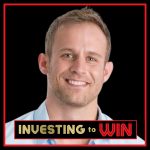
Investing to WIN #067 - Ray Hespen on Scaling Property Meld and Fixing Property Maintenance Systems (Ray Hespen)
Most property management maintenance systems are still slow, fragmented, and heavily dependent on manual coordination. That creates inefficiencies that operators accept as “just how it is,” even when it costs time, money, and tenant satisfaction.
In this conversation, Ray Hespen, CEO and co-founder of Property Meld, breaks down why the property maintenance process has historically been so broken and how software can remove friction at scale. What stands out is how much of the problem is not technical, but operational and behavioral inside organizations.



Duration: 59:00
Date: Aug 20, 2024
Guest: Ray Hespen - CEO and Co-founder of Property Meld
WATCH THE FULL EPISODE:
Want the full experience? Watch directly on YouTube to support the channel and get recommendations for similar episodes.
What You’ll Learn
• How Ray identified inefficiencies in property maintenance and turned them into a software opportunity
• Why early customer discovery matters more than building features too early
• The exact challenge of getting your first 10 paying customers in a startup
• How founder-led sales evolves into scalable sales systems
• Why most startups break at predictable growth “breakpoints”
• How core values directly impact hiring, performance, and retention
• Why understanding customer problems is more important than building requested features
Memorable Moments
“I didn’t come from Silicon Valley, I just started solving problems.”
“Your first ten customers are the hardest by far.”
“The customer is not always right, but their problem is always real.”
Episode Summary
Most property management maintenance systems were built around processes that rely too heavily on manual communication, leading to delays, inefficiencies, and poor customer experiences. In this episode, Ray Hespen explains why these issues persist and why solving them requires more than just adding new software features.
Instead of starting with technology, Ray’s approach focused on deeply understanding operational friction points in property maintenance workflows. By mapping real-world processes and identifying where human interaction created delays, Property Meld was built around removing unnecessary steps rather than layering on complexity.
The conversation also explores the reality of startup growth, including the difficulty of acquiring early customers, the transition from founder-led sales, and the organizational challenges that appear at predictable scaling stages. This episode is especially relevant for operators, founders, and property management professionals looking to improve systems and scale more efficiently.
Chapter Timestamps
[00:01] – Introduction to Ray Hespen
[01:00] – From Wyoming upbringing to engineering career path
[04:20] – How mining engineering shaped his thinking
[06:57] – The origin story behind Property Meld
[09:02] – Early validation through customer discovery
[10:33] – Why property maintenance was the problem worth solving
[14:28] – Building the first version of the product and funding it
[17:19] – The struggle of landing the first 10 customers
[19:40] – How consultative selling changed everything
[29:24] – Scaling challenges and leadership breakpoints
[38:20] – Hiring, core values, and culture building
[48:32] – Building long-term employee growth systems
About Ray Hespen
Ray Hespen is the CEO and co-founder of Property Meld, a software company focused on improving property maintenance workflows for property managers and operators.
He has a background in engineering and operations, including experience in manufacturing environments where efficiency, cost control, and process improvement were critical.
Over the past decade, he has built Property Meld into a widely used platform in the property management industry, with a focus on reducing operational friction and improving maintenance outcomes.
Full Episode Transcript
Garret (00:01.186)
Whatever, I'll just make a note and we can edit it
Ray Hespen (00:04.439)
Okay, beautiful.
Garret (00:05.89)
All right, here we go. are live and I'm just gonna, again, I don't read out a big bio here. I'm gonna, that's your job. So I'm just gonna introduce you to say welcome to the podcast. So just give me five seconds of silence
Ray Hespen (00:12.215)
Okay.
Garret (00:19.522)
Ray Hespin, welcome to my podcast.
Ray Hespen (00:22.785)
Hey, thanks, Garrett. is an absolute pleasure and a treat to be on here with you.
Garret (00:28.288)
No, I am super stoked for this. I've been, we're both busy. We've been trying to get to do this for probably a year. And every time we see each other at conferences, it's kind of like, Hey, we're going to grab a drink and it never happens. So I get you for an hour here. So, no, this is going to be great. So I think I'm going to take a little bit of a different path.
but I want you to start with a really surfacey high level sort of introduction to who you are and then I wanna kind of dig deep into the origin story Ray has
Ray Hespen (01:00.109)
Oh man. Okay. All right. We'll buckle up. guess. No, I so a little bit about me. Property Molds is a software company started in 2014. Solve maintenance for property management companies nationally, internationally actually. And then, and I've been doing that for about 10 years. Largest in the business. I think we're pretty proud that we're number one. But I think kind of like going back a little
you know, before that, I always jest that I, I'm a mining engineer, which is the dumbest kind of engineer you can be and still be an engineer, which is great. there's, there's very few other engineering degrees that are below it, but it was actually an amazing, an amazing experience. And I actually spent a lot of time in operations helping solve in manufacturing operations. How do you deliver consistent quality?
Enhanced safety at a lower cost. And so I actually was really fortunate before going into property management. I've had like six to seven years of professional experience of doing nothing, but working in a really bad economic environment, being forced to learn how to make things leaner and better using data and automation. So kind of some injuries, same paths there. And then before that, you know, I'm a, I'm a kid from Wyoming. So grew up in a little town called Gillette.
with one of my five siblings with neither parent that went to college and and so I had actually an exceptional childhood as well. So it's my work backwards.
Garret (02:34.144)
Wyoming. Okay, that I didn't know that I didn't know. I've always thought you as I know you said farm kid, but like, have you lived in Wyoming before the move to South Dakota
Ray Hespen (02:46.421)
Yeah, so I grew up in a small town called Gillette, really good blue collar city, heavily propped up around oil and gas. But then, you know, after enough summers in the oil field, you realize that it is really hard work. And I was one of those lazy entrepreneurs that will work incessantly hard to not have to work later. Still waiting, but like, but ended up going to school.
Garret (03:12.599)
Me too.
Ray Hespen (03:14.239)
Yeah, it's coming, right? It's almost there, I'm sure. One day. So then I went to school, but then in South Dakota, South Dakota School of Mines. But then I was actually, I moved around a lot. I tell people, my wife and I got to date the country. And so I lived in California. I was in Tulsa. I was in Chicago area. I was in the Baltimore area and then Denver. And I basically kind of chased my company around like,
Garret (03:17.438)
One day, one day,
Ray Hespen (03:43.627)
You know, I got a problem and be like, what psychopath is willing to move out and try to help solve it? And I would just raise my hand, about any instance I got. So I got to travel around a lot, live in a lot of places, meet a lot of amazing people. And then, you know, I always loved Rapid and I had a lot of friends who loved Rapid, never wanted to leave. And I'm like, you know what? I bet you we can have some amazing people work at a software company here. So it's kind of the, the, the, the,
Garret (04:13.782)
Okay, well, so mining engineer, why did you go into that of all things?
Ray Hespen (04:20.269)
my goodness, so Garrett, I will tell you, I had the big man upstairs watching out for me. I was in high school. I got accepted into West Point Military Academy, which is a pretty prestigious school. But at the same time, I was just finding out about girls. Everybody's younger, but
Garret (04:36.776)
yes, absolutely.
Ray Hespen (04:49.175)
When you find a girl and you're like, you know what, I'm going to just legitimately be, I'm just going to legitimately give up everything I'm doing to stay with this girl. So I was not planning on going to college. I was going to stay in the oil field. And I was like, this was my girl. I even moved out of my house, senior year in high school. I moved out early because I was so convinced that this was it. So anyways,
Happenstance, my parents and I stayed at least on a good enough relationship where I was broke as all, because I moved out and paying my own way as a senior in high school and going to high school. And my parents would be like, hey, we'll buy you some clothes. And boy, was I not going to take them up on that. So we went to the mall that was nearby and they had this great engineering exhibit where it was there was robotics, there was a concrete canoe, there was
these drones they were building, like all this cool engineering stuff. And I just gravitated. And I remember my dad was with me and him and I, you you move out. It's not like on great terms, but I was like, that looks really cool. And I just remember him just like, let's go take a look. Like, you know, just make me be able, let's go look at this engineering stuff. Absolutely. Cause you know, again, I'm some kid who's not going to do anything after high school, which oil feels great living by the way. But anyways, I go over, I was like, I think I won. And my dad's like,
Let's go check out this, you know, this meeting. And so he was really great at helping me. And I'm like, I'm to be a mechanical engineer. And then I a guy at the university that I ultimately went with called me one day and he's like, Hey dude, do you know how much mining engineers make? And he's like, it's pretty much the same thing. It's the same amount of math, the same amount of this, but this part's different. This part's different. And so I ended up just getting talked into mining engineer by one guy and forever thankful for him.
Anyways, it was one conversation. I was like, sounds like a good idea. I'll go into mining then. That's as simple as that story is, but a lot of very fortunate events that basically led up to
Garret (06:57.398)
Okay, so you're in manufacturing, you're traveling around the country. Tell me about the spark of property melt. Tell me how that happened.
Ray Hespen (07:06.925)
I will say Garrett I am Very much the guy I think who recognized a good idea, but I don't always come up with them And so there's people that come up with them and there's people that know which ones are good. I am the latter My co -founder David Kingman and I We were always like we even room together for a little bit during college. He was a he was a he was in the National Guard so he was deployed twice
So we kind of got to intercept ourselves a little bit, but we would always like jumble around things or opportunity or business ideas that we would want to do together. And we even evaluated a few of them together, like just starting fresh. But then one day he called me, I was in Baltimore at the time. He was in Albuquerque and he's like, dude, has renting always been terrible for you when it comes to maintenance? You know, cause I moved around a lot and he was like, I'm having this experience. And it was
It's bad enough that I'm handy enough that I would just rather fix it myself and not even say anything. And it was actually easier. And so that's when we started to evaluate. And then when I talked to about 25 different property management operators, I was like, oof, this is bad. it kind of, honestly, it kind of mirrored a lot what I'd learned in my professional career of manufacturing and operations. I was like, man, there's a lot of waste in here that we can.
do something with and I'm very aware of what technology is capable of. And so that was the moment after having those conversations, there was enough of conviction built. I can't tell you which one, but there was point where I was like, this is obvious. This is obvious. That has to be done.
Garret (08:52.716)
All right, so there's got to be a better way you find a need in the market. How do you start up from concept to hanging out a shingle? What does that look
Ray Hespen (09:02.765)
Oh my goodness, well, spent, so this was our business plan. This is the OG one. I didn't come prepared for as a prop, but this is the 2014 pitch paper that I worked with my first investment meeting. This is the same alligator clip and everything. Like this is museum worthy. Yeah. Right. There's so much garbage in
Garret (09:20.514)
Wow, gotta get that bronzed.
Ray Hespen (09:29.745)
So much garbage. mean, it's a good process to do it. I'm trying to remember there's some financial modeling in here. There's like sensitivity analysis, all trash, totally garbage, way off. The most valuable thing that we had built is we got to understand the process really well and we could map out where the friction points were and which ones had human interactions and which ones we could have not have human interactions. And so
Like we almost spent all of our time like trying to understand the business so well that it then became, are you able to build technology well enough to do the thing was the only question. It wasn't like, would it be valuable? Could it be solved? So that was like, that was kind of the first part of doing it. So interviewed a ton of customers, understood their process really well, mapped it out. And they were like, all we got to do is solve these points right
And it's worth a lot of money for customers to do
Garret (10:33.048)
Okay, so you had it in your mind already to have a software platform to solve this rather than some of the other types of things that are out
Ray Hespen (10:43.789)
I think that was my co -founder sitting there saying that. And again, the very nice thing about property management, tends to be a little bit of a laggard in the consumer experience. We get great consumer experiences oftentimes, like ordering pizza or getting an Uber or a Lyft or ordering something from Walmart or Amazon. And so when that's getting shoved in your face, it's very easy to paint a contrast to the experience that we were experiencing as renters.
and going like, clearly technology has solved this for other vertices. And so it wasn't a hard leap to think like that could be solved there too, right? And so the general answer is to yes. And then, you know, so it wasn't like we were inventing anything new as much like figuring out how to do it right.
Garret (11:34.666)
Okay, so are you like you mentioned funding and things like that? Were you guys savvy enough right out of the gate to think about we need to fund this as a startup? Or were you trying to just program it on your own on the weekends?
Ray Hespen (11:47.245)
Uh, both. Yes. Um, I will tell you, uh, there was a interesting part. So Garrett, when I was my last job in manufacturing, I was the plant manager of a $36 million a year operating budget business at a team. I was actually responsible for the turnaround. had an amazing boss, but was responsible for the turnaround of that group. had my own executive assistant, like all that was good. And then
Then to go and just have conversations with people and being like, I would like to raise money. I was seen as a very high performer in my org. And then I went out in like the more conventional paths to raise money. And I definitely got my teeth kicked in a bit. Like not from a, a couldn't get any money, but two like.
Nobody here thinks I'm special. Everyone at my last company thought I was special and really good at what I did. Nobody thinks I'm very special. So why aren't they? Like it was almost kind of, it's kind of that, that rude awakening. And there was one gentleman, I remember he said it, which I actually thank him because it was very needed for me. He said, Hey man, I'm going to shoot you straight with your background and your degree.
No one's going to give you money. Straight up told me it. And I needed it. I needed him to rest right on my shoulder right here. But you know, I was kind of sitting there going like, this is not going to be as glamorous as like, you I saw, you know, at that time Silicon Valley wasn't out, but you would at least heard things where So & Toko raised a ton of money. And it's like, go write him a check. I was sitting there going like, this is going to be a slog.
So I then kind of abandoned the concept of fundraising, the sexy kind of fundraising where you get the big term sheet and you celebrate and you pop champagne. And I did the ground and pound, friends and family find out anybody that would be willing to give me money. And ended up raising, I think the first tranche was around 150 grand between three investors. far less sexy than what you get to see on TV.
Garret (14:06.424)
So a lot of that, is it towards south? I mean, let's talk about the nuts and bolts. I I've actually, we can talk about this offline, but I'm trying to do a bit of a startup myself in the property management space. And the nuts and bolts of that initial fund, like where does that money go? mean, salaries of a programmer, R &D.
Ray Hespen (14:28.605)
Let me pull out my really detailed R &D, really detailed financial model. You know, you have some ideas. One, you are overly idealistic, which is actually a prerequisite for an entrepreneur to even begin. Not even a successful one, probably a successful one too, but like even to start, you have to be blindly optimistic for whatever reason. I assumed...
Garret (14:32.792)
You got your napkin with you?
Ray Hespen (14:55.575)
that we're just gonna get some, so we ended up buying development space, excuse me, brought on another developer, we paid hosting costs and even, dallyed in a couple of salespeople at the time, which were unsuccessful, but the goal was to just get money to build the product more and then I was gonna sell it or me and one other person.
And so admittedly the money just went purely for R &D and I was the loan sales guy onboarding support, you know, all that together, but it was just the app.
Garret (15:36.94)
you could name one problem in that first year that was staring you in the face, what would you think that would be the biggest challenge you had to
Ray Hespen (15:47.981)
Getting the first 10 customers It took us it took us Garrett. It took us probably a legit two years To get one paying customer or like the semblance of as a matter of fact I remember names like that's how big they were and There was a gentleman his name is John Harms really nice guy. He was fortunate enough when I was living in Baltimore I think he was in Parsippany, New Jersey. I think I'm getting the city right in the old Staples headquarters software company up
And he was kind enough to give me some insight. said Your first ten customers you will have to claw fight scratch steel to get the first time first ten of the hardest period But he said then your next hundred will be as difficult as the first ten and so That is absolutely like
the thing to overcome and it is demoralizing to anybody involved when you're not making a paycheck, you're not doing this, to have no like tangible levels of success. The revenue coming in the door is like the only scorecard that says you're on the right path. Like really. Everything else is you're hoping it is. And so that was the one that I don't think comes easy to anybody, but it's also the thing if you can get over.
is probably that's the biggest hurdle for, I think a successful startup.
Garret (17:19.65)
You know, I'm thinking of, I'm going to ask like an early script, how are you even selling customer number one on a brand new software that basically doesn't have any customers yet? Is it promises? Is it potential?
Ray Hespen (17:33.533)
Mm -hmm. man well number one when you're the founder everybody's buying your new vision like But I would say like we went through a lot of iterations because we were you have to find what works and I think that's the important thing One about proximity if you want to do a startup. I don't know how people in sales teams do them Remotely no idea because you're going through iterations so quickly unlike what's not working
yet you can include one failure indicates not working. So you have to do a bunch of reps and keep like slightly iterating the message. So for us, like we were very focused on maintenance. Well, every single one of these providers was using a property management software that had a work order module. So first pitch, I was like, property management software. Nope. Everybody's like, I'm happy with this one currently. Then I would be property maintenance software.
And then they're like, I'm too busy, I don't got time for this. And then they're like, it's bolt on. And nobody cares. Like I've already got a thing that does it. And so lastly, arrived to exceptionally good consultant level discovery. So I would just have questions for them and ask them what was happening and what was happening in these parts of the process. And by that, they would sit there and be like, ooh.
I don't like that in my own business. Ooh, I don't. And so then I wouldn't have to sell software at all. I would just sit there and go, let me learn about you, your business. by the way, it turns out if you've got some real meaningful problems, do you want those to go away? Then let's have a conversation. And so that was probably the biggest thing that when I started to learn how to do that,
That was when everything took off. When I helped prospects see the own challenges in their own organization that they didn't know they had, then that was when we really took
Garret (19:40.0)
It's brilliant because you're not selling. You are communicating, creating a relationship as all people in, I don't want to call it sales because I think sales is everywhere. think really what we're in is the service and the people business, right? It's not about sales and yeah, just doing those deep dive investigations. I do the exact same thing in our property management business.
Ray Hespen (19:44.193)
Yeah.
Garret (20:05.55)
So, okay, I remember going to a software conference and I had already committed to this one vendor and then I went around the corner. think I've told you this and as of, I think they had, I'm not gonna mention the software, it doesn't really matter, 1 ,500 to 2 ,000 attendees at this thing is pretty big. And you you come out of the main,
auditorium and you've got all your vendors there and they've got all the great spots. So of course I'm being wooed and I sign up for this, that, whatever, and I go around, I'm trying to find the washroom and I probably had to go down two hallways and there's this one table right in front of the men's washroom and there's this guy there, Ray, standing in front of this table in the absolute worst spot. But you know what? I was intrigued because the visuals.
of what you were saying about the communication. I just remember going, yeah, this makes sense. Like all the other software that I was there looked like almost like CB radio traffic and yours was elegant. It looked like iPhone chat bubbles. Tell me a little bit about
Ray Hespen (21:14.873)
man, so I remember the conference too, Garrett, by the way. That was actually the first time we had actually gotten enough customers that that particular software provider had actually opened up to a marketplace. I actually think, let's give them credit, RentManager was one of the first ones in our particular space that said,
we should make these best in breeds be able to plug into our system. And that was actually relatively novel at the time. They were definitely a leader in that. And so not only were we sitting there trying to sell wares, but we had a great answer now. It integrates. boy. I was like, I'll go to all the revisions. It's so much easier to have that conversation. It integrates. But I'll say though, it's kind of interesting.
for a long while, you just end up having to just go and like learn, like what is the messaging that works? So just like you called out, Gary, I probably knew nothing about the chat bubbles driving it. I was just like, I need to know who these people are. I need to meet with them. And then you get a test messaging and then find out what's getting further. You understand what your product does, but it's like how you get them there.
Like I was able to rapid fire in conversation or even like do some live demos there. And you could almost see what was resonating and which wasn't. And then, then you'd be like, well, why is that not resonating? That's like the coolest thing that it does. And then you get to just keep being iterative. And I feel like that's like, apart from the awesome opportunity, Garrett of pulling in our first, customer in, in Canada, you don't have to give them all the war stories of how brutal it was, being such an early customer, but.
But I think the thing as an entrepreneur, founder, is like the speed at which you get to the right message or the speed at which you get to the right product, the faster you can do it, the greater the likelihood of success because your brain can only take you through the desert so long before you quit.
Ray Hespen (23:24.971)
So you have to be fast. And that's what I loved about events like that. I eventually was just keep getting better and better and better. I was getting more conversations, more demos, more sales. yeah, like people very undervalue the reps that are necessary to get a product, a place where you can sell
Garret (23:46.85)
Yeah, the rent manager conference. remember actually, I was actually feeling sorry for you thinking this poor guy must've signed up really late. They stuck him in front of the washroom. And honestly, that's why I came over and yeah, audience, was customer number one in Canada. It actually, it wasn't that bad. mean, I remember having a conversation that you had the tenants and the tenant communication part out,
not necessarily, and with the tenant and the vendors, but not necessarily the owners. And you had said, well, you know what? I think we can build that by like Q3 or Q4 of next year. And I'm like, well, yeah, if you can do that and kind of be responsive to us, then I'm in. And what you're just saying there about people coming in and you adapting on the fly almost is I think really echoing like Property Meld's core belief and just adapting to what the customer.
wants and needs not necessarily trying to force them to like your product because of what it does. Would you agree with
Ray Hespen (24:48.749)
I'll go 50 -50 with you on the agreement of it. Here's one of the things, and Garrett has some pretty big fingerprints on some of the product, but the reason, Garrett, that you do, and uniquely you do, you've got your survivorship bias on your input. Be oh, these people just listen to people. We have a core value in our company, and it's loyalty to customers, which sounds super cheesy, but we've got
we got a kind of like a short blurb after that really describes to our team members what it means to be loyal, is the customer is not always right, but their problem is always real. And so if you look at it on that mindset and you can sit there and go, but what are they experiencing? They might have their own solution to it. It may be the right one. It may not be. But a lot of the times we'd end up finding customers who understood their problem and the solution together really well.
and they knew why it was impacting them. They knew what it could do and they knew what technology. So you ended up, as long as the customer solution or idea of a solution matched or they were bought into that concept, it feels like a very two -way system. I will say actually early on, if we would have, I remember on all those 25 customer discovery calls, like at the beginning of the company, I would ask questions like, what do you think would make it better?
And a lot of the answers were like, well, if I just had one more field to do X or a checkbox that would help me do what, and I'm sitting there thinking like, well, why do you want that? Well, it's to track this. Well, what's happening there? That. And so I would bypass the checkbox or the textbook, you know, the text block, because that was a very inefficient way that required human beings like, can we just get rid of that? Solve their problem. And
That's one of the things I think for us, like, and why I'm such a, I would say I'm probably two in the weeds in this business, not from PropertyMail, but I love property maintenance, because if I understand it so incessantly well, I can take data points from very intelligent customers and I can go, that one will make a huge impact in their business. Then that's kind of where that symbiotic relationship works out so incredibly
Ray Hespen (27:08.171)
And I think Garrett, you were a technology guy at the time. clearly had some technology chops. You're like, you could probably do this. Why couldn't you do that? That would actually save Axe and Beck. okay. Yeah. No, that's actually a really good idea. David, just a couple of lines of code, right? No, but it's let's get that thing done. So
Garret (27:24.989)
Yeah
Garret (27:29.654)
No, you know, I'm gonna paraphrase what you just said there because I say this to my staff all the time. And again, being in traditional property management, I'm gonna just come out and say it's awful, right? Like we are squarely between an owner that might want something that's completely different from a tenant. And sometimes, you know, property managers that come up to me and they're just like, man, this client, they just don't get it. It's just so simple. I don't understand why they're complaining about
And to paraphrase you Ray, I mean, I tell them like, doesn't matter how little of a problem that we think it is or how quickly we can solve it. They, it bothers them and that's one of their little buttons. And it's our duty to solve it no matter how insignificant we think that problem might
Ray Hespen (28:13.261)
Yeah, I think you know if anybody's starting a new business Figure out the best way to solve it. That's really the game and learn all the problems like Even when you're talking about that angry upset owner They're well, that one thing and if you were to understand why that one thing bothers them so much
Like, I get it. And because I'm not in your world, I'm not sitting there thinking about that mortgage payment I gotta make with that rent money that's not coming in for whatever reason. You're like, I see now. Is there any way that we can help solve this in our business that even prevents that feeling or that whatever?
And so you have to, you have to really go understand them and why they feel a certain way or what's causing it because you're right. It should be a data point that says they don't like it. Can't solve all the problems. But if you hear enough of them and go, it's a big problem where we lose investors because of X, Y, and Z. It's like, that's the one that, you know, we should as a business find out exactly why and know it incessantly well and educate our team on why it bothers them and then go solve it. But yeah,
We're saying the same thing, but
Garret (29:24.526)
No, it's amazing. think that's absolutely the key to business in general. Speak to me about scaling, but more specifically, can you recall over the last 10 years, was the scaling of property meld very structured? Was it instinctual? Like from hiring to, okay, now we got to get another round of funding. Give me the details on that.
Ray Hespen (29:50.325)
Well, we don't have that much time, but I will tell you, just like we were kind of in the green room a little bit earlier, I am convinced there's absolutely no way to learn certain lessons without legitimately going through the desert in those scenarios. And so I'll give you an example of the first one. Apart from learning how to sell, I was not a good salesperson from a truly consultative approach.
Until you know, you got a proverbial gun to your head of people relying on you and there's no sales coming in It's like you have to learn how to sell and you have to learn how to be a consultant and you have to learn how to be a good on -boarder and you have to learn how to do all these things so There's some moments where you're like, I've got to learn this thing then there are like major gaps where you have to learn something big and I remember
There was a point, and it's obnoxious, like I don't think I could have stood myself, Garrett. Like if I would have talked to myself in 2019, I'd feel like this prick. Like he is too much. But in 2019, I felt I knew a lot more than I did. was like, this being a CEO is pretty easy. We grew up from four to 17 people, 17 to 35 at that time. And it's like, now...
I was burning money like crazy, but the thing that I was learning is like as we were scaling, there was something happening where my time and my calendar became full. And as soon as that happened and I was not able to jump in and help with certain scenarios, give very specific advice to very specific things, things just started to break. The growth just kind of went, and then just hit. It was almost as if it hit
when I was not available to help get a deal across the line or help with an onboarding and challenge, help with whatever. so 2019, I had to learn one, I don't have it all figured out, but two, a big reason is because I didn't know how to really to manage managers or manage with more autonomy, people development. was not, I wasn't doing anything. I was just telling people what to do.
Ray Hespen (32:02.477)
And that took a good solid, probably a year and a half of getting my ass absolutely handed to me. I was spending a lot of money and I was getting very little traction. And it took that long to figure out what my problem was and come up with something to rectify and leave a whole bunch of amazing employees. We've had amazing employees. But it left a whole lot
pain, scars, corpses, like going through that. no, not been very linear. It's almost like it hops in until you find that next major lesson you need to do and you plateau. And until you figure out that lesson, then you can start going up and then you plateau again. And when you do that, then you plateau. So it's almost like there's weird milestones I think a lot of people have to go through that haven't done this before. I would, that.
You almost have to like go through some really painful organizational challenge because one of the leaders, you know, has just not cracked the code yet on how to do that well.
Garret (33:09.442)
That is really fascinating because over my, I'm going to say, what is it now July eight month journey, since I had to make some very real changes in our organization. I started working with Brandon and Natalie Dawson out of Cardone ventures, and he actually talks and speaks about what he calls break
And you know, you might be at a million now, you might be at 3 million gross revenue. He said there's a, you know, there's a break point at a million. There's another one at three. I think he said another one at 10, another one at 35 to 40, where you think everything is going great. And then the business, if you're not prepared for it, like you said, you could call it a plateau. Like things are just going to break and explode on you. And if you're not going to react to them or be prepared for them in his case, he's trying to prepare us for those.
so it sounds like that is a very real and consistent thing in, all businesses as they
Ray Hespen (34:05.195)
Yeah, and I will at say in software, it's actually the more I've learned about it, the more the areas are very common, those breakpoints. like those. Did you say breakpoints or brick? Breakpoints, okay. I liked a breakpoint for some reason, but I'll go with breakpoints. But those breakpoints happen at very specific revenue numbers and people can
Garret (34:17.774)
break, break points.
Garret (34:28.973)
Mm
Ray Hespen (34:30.347)
Well, that's when you go from founder led sales organization, like you have to find a way to get out of founder led sales organization. That's how you move from this to this. Well, then once you get there, you have to have leadership structure that really incentivizes autonomy and organizational development. And then you go here. It's very super common. so break points. I like that. I'm going to use that.
Garret (34:52.578)
Yeah, break points, C -suite type stuff, you know, when you get to certain, you know, tens of millions of dollars. Speaking of that, just popped into my head, finance wise, obviously I'm not going to say how important it is for you to be on your finances, but how early on did you guys discover that you needed to be in touch with finance? And was that one of your first major hires as you guys were expanding?
Ray Hespen (35:19.725)
I will tell you no. One of the great benefits, I think a lot of people think they need to be an entrepreneur right out of college because Mark Zuckerberg did it. But the reality is professional world in your career can teach you a ton of things. So I was in the cement business, graduated 2009. And for those that remember, that was really not a fun time. And it was definitely not a fun time to be in construction materials. So.
My next six or seven years like not only figuring out how to operate under very scarce resources But then to like especially my last two gigs I had amazing boss that held the line really hard financially And so I had to learn budgeting and finance and prediction and forecasting
very well, at least enough, I would say, and in hindsight, at least enough at that point that I could manage books and understand and I knew our budgets and I knew when we were in trouble. And so it wasn't probably until about two years ago that that became a more formal team and process and handed off off to me. So I had it for what was seven years. And so I would say,
the number one thing that can kill a company, the number one thing is you run out of cash. It's the only thing that can kill a company. And so for as many fundraising rounds I did and had to, I was very keenly aware of how much money had hit coming in and where it was going out and how it was going out. So as much as it probably should have maybe hired somebody, I actually thought it was really healthy for me to be that in tune.
For a long duration there was a point where it became, you know, I could have definitely pulled somebody in faster hindsight
Garret (37:03.246)
Okay, but as CEO now, how often are you reading reports or looking at the numbers?
Ray Hespen (37:08.171)
Financials. Usually just when we have our books finished, we've gotten to the point where it's relatively predictable. Like there's a lot of leading things that I look at weekly. And then the lagging is here's your P &L that's been finalized, done all the gap stuff. And so we review that once a month. So I see a lot of leading indicators
Income on a weekly basis and then I get to see the lagging which is revenue and expenses on a monthly basis. So it's a And then of course quarterly with the board reviewing that as
Garret (37:47.507)
Okay. Let's transition into people. This is my favorite topic because as most of my listeners know, I also had a bit of some people challenges, know, had to let go some key members in the company and eventually learned that, you know, you have to look in the mirror. And really, I had to realize it was my leadership.
What lessons can you tell our audience about leadership in the company and finding really great people and empowering them to really do the best for them and your company?
Ray Hespen (38:20.471)
So you've heard of mission statements and core values. So I was in a corporate organization. I couldn't even tell you what it was. It was like the most word salad vomit I've ever heard. And it was like somebody came in and be like, we need to include everything that we're doing into these two sentences. And it was just terrible. But I was chatting with a guy, he actually is in South Dakota, an amazing success story as an entrepreneur. His name's Eric.
And the core value thing I've realized is really big. You can get away with it for a while early on of not having aligned core values, but when you start to get to any organizational size, like it's almost like you're operating systems that know how to speak the same language.
operating system receives particular instructions well, the operating system receives certain instructions very poorly, and there's something beautiful about all being on the same page. So I remember one of them was this concept of core values and he asked it as simple as this. He's like, you ever seen somebody do something that was technically not wrong but pissed you off?
And I was thinking about a time where we had a customer that was really had a hard time with some something happening, something with their account. And, you know, had a team member that was kind of in charge of it. Hey, five o 'clock, I got to go. It's like, I get it. That is what you need to do. But this customer needs help. And it was just, it royal my blood. And it was like, there was nothing wrong. And then once you find enough of those, you realize they're actually core values.
So like there's nothing worse than trying to talk to a team member that thinks they have it all figured out all the time. The worst, like for us as a company. So one of our core values is humility, having white belt mentality. And it goes very poorly if you have somebody who does not have humility in our organization, every direction. The odd thing about it, most people think they have it, but there's there's real, there's really humility. And it's hard to have that as a human.
Ray Hespen (40:29.847)
The other one is the loyalty of the customers. Talked about that. Like you have to be obsessed with learning about it. So we got these core values really lined up and then we're sitting there going, were saying these were important, but we weren't hiring for them. Like not really. And so then you're just getting mad saying these are important and people are being like, well, they're not adhering to the core values and people don't know how to interact as efficiently because they don't have the same aligned core values. And so all of that being said,
And we still battle with it. Like what? Like we've had something that didn't work out and it I'd say we don't have a ton of like core value issues, but there's times you do and be like, well, did we go and evaluate that? It's like, no, we didn't. And so getting everybody to operate on a similar aspect of core values, like makes the machine operate so much better because they all value the same thing. You don't have to sit there and go, are you going to take care of that customer? Everybody knows you just take care of the customer.
And if you can't, because you got to go to a kid thing, let me help you because I know how important that is. It's just amazing how it does. Or if we want to build product, and someone's like, I think we should do this. Have you ever talked to customers? No. How on earth can you have loyalty then? You can't. And it will make somebody flip out on like, you haven't even talked to customers. How on earth can you generate product to help solve their problems?
And so like you get everybody kind of operating on the same wavelength and that just it's so much faster. Everybody just has a better inkling of knowing what to do and the amount of conflict significantly comes down. I would say we have plenty of healthy conflict in our organization, but it helps a lot of unnecessary stuff go away.
Garret (42:13.452)
You know, this is becoming a really great interview because of what I'm going through again, the whole hiring thing. We're in a bit of a hiring frenzy right now, but we have to take our time and through our work again with Brandon and Natalie, one of the things that they're having us do is almost like a four part interview, which seems so arduous and so slow. And the first part is what they call a cultural fit interview. Then you go into a technical interview, but the third part Ray,
is we actually have the candidate look up our core values, which we publish in our careers page on our website. And they have to do a five minute presentation of how their work, not themselves, because anybody can go, yeah, I'm transparent. How their work has demonstrated aligned with those core values. And I'm telling you, it's a game changer. Like the three people that we have, like Zach is our video content editor. just started three weeks ago. He's probably going to be listening to this going, why did you say my name when I'm editing the podcast?
But no, like as the first hire under this new process, like off the charts compared to your 20 minute interview, hey, when can you start? You check a reference and then six months later you find out that they're just not a fit, right? So you're saying, everything you're saying is really aligning with what I'm learning right now.
Ray Hespen (43:32.609)
Well, I'm gonna have to take inspiration, because I don't steal ideas. I take inspiration. I'm gonna have to take inspiration from that one, because we're trying to figure out how to get better. And not only that, like, people like, it's not that some core values are right and some are wrong. Like, that's not it. It's that you just want them similar. Because, and so it actually helps the incoming employee as well know, like, no, these are my people.
Or, this is the thing I was running away from and I feel better about being here because it aligns. Or, sit there and go, you know, they care about this stuff, I could give a rat's whatever about this stuff. This isn't important to me, but these things over here are. And boy, like everybody avoids a bad time. But I might have to take inspiration from your, from your, they have to build a presentation and present to you how their work.
not themselves demonstrates that.
Garret (44:29.262)
Yeah, well again, I'm giving credit to the Dawson's because I'm not coming up with this stuff, but I think the lesson there is also don't like look above you, right? When you're trying to learn, nothing wrong with looking left and right, but I mean, you got a whatever, a work partner or another business that's at the exact same level as you, how on earth are they going to give you the answers to get there other than just shooting the you know what and trying to, you
throw whatever lands on the wall, no, you have to look up and kind of follow somebody, mentor, whatever you want to call it, on how they made it through what you're trying to go through.
Ray Hespen (45:09.613)
So that's really great. Like an 18 -year -old Ray and 19 -year -old Ray would probably have like, honestly, smarter than the people up. That's why it was so annoying about it is I almost had to have that humility baseball bat hit me in the head and realize I really need to learn some things and then go, are there less painful ways? Are there less painful ways, please? And that's when you start sitting there going
Alright, these people know. I'm gonna ask them questions. I'm not gonna educate them on what I know. I need to learn from you. What is it?
Garret (45:43.244)
Yeah, that if there's any aspiring entrepreneurs out there, take a lesson from Garrett and Ray, like pain is a good teacher. And we said this in the green room, but how long are you going to be in that pain state before you actually take your head out of your butt and start learning and changing,
Ray Hespen (46:00.045)
I will tell you, so I actually wrote about this. had an amazing team member here that went through, she called it the desert. And there's such a profound concept to this idea of the desert of like, it's this thing you have to go through sometimes to learn something because our own ego protects us, our own, you know, our own
The thing doesn't become the most important until it's the most important and it's gotta be bad. It's pain. And then that's when you start to learn, like you said, but I have become so fond and keen, and that's one of the things I try to understand from people, is who can go through those long deserts? And some people would call it the fear zone, whatever, but where a lot of people duck out and they leave and it's going, it's not me, it's this, or my exterior, or my whatever, or my boss, whatever.
It's like when you realize the simple truth of that, true personal and professional development requires pain. Then you sit there and go, there are going to be very painful journeys that some will just not be able to get through. They just won't. And so who's got that weird stomach that can make it through that desert? And that's really hard. And it's really hard to realize and accept as a truth, but I am
I don't actually think there's shortcuts. I've met way too many smart people that have done some amazing things, and the amount of deserts they've been through is incredible. And you have to learn how to have the stomach to go through a desert. And then once you're on the other side of it, and you realize the positive nature of the desert, then you can also recognize when you're in a desert again, and be like, this is just a desert. I know I'm in my spot. What is it I need to learn from this? What is it I need to walk out with?
It's a beautiful, beautiful thing if you recognize it for what it's worth.
Garret (47:59.214)
I love that analogy, I love that. Culture, we're talking about people, we're talking about engagement, you have that first hire, but that's not enough. Because I believe if you don't have proper people culture, people get disengaged. I think the average younger person under 40 is already preconditioned to leave jobs after two or three years. And as you know, as both of us being company owners, that's not doing anybody any favors. Give me your thoughts on company culture.
and how you foster that sense.
Ray Hespen (48:32.525)
So it works out, so we had to pick a people strategy. So our people strategy was hire early and develop. So we probably have, and you know, like we haven't had like the best track record. Like we don't have the kind of company that's like, I've come here and we've got all of our OGs and here they are. They've all got a ton of tenure. We've got some key members that have been here for a while. And then we've learned our lessons as an organization. One of those things is that humility core values a big deal.
people can develop if they recognize themselves as needing to have a white belt mentality, period. So that's one. And then two, it's about almost repeating something incessantly until people start believing it. I was having a conversation with, I forget it was a friend or something, yeah, it was with a friend. And I was sitting there going like, you know, the problem is societally, we're telling people shorter and shorter time spans.
Whatever it is right shorter and shorter and so the problem is the market the school system Nobody has like gotten people to think longer term. It's actually been shorter and shorter, right? You think about people and counting on Social Security pensions are gone. There's literally nothing That makes somebody think longer
And so what I've tended to really take a hill on is actually trying to do my best to repeat. Pain is a beautiful thing. But then two, like you need to start getting an idea of what you want to do longer term. And that's actually really hard. It's really hard to have somebody who is in their moment. The only way that they can feel if something's good or bad is in the moment. Does this make me feel good or does it not? And then what happens is they sit there and go, I don't feel good right now.
They don't understand the destination they're going. They don't understand they're in a desert. Nobody's pushing them. And they go, this feels bad. I bet if I go over here, it's all going to fix. I bet you they don't have that bad stuff. And so then they go over here. And then they get hit with all the negatives after six months, after the noon is where it's off. Now they're negative. well, that one different negatives. So you kind of have this repeat cycle. Well, the problem with those individuals is they will go through and lose so much time.
Ray Hespen (50:48.409)
in transitioning, but then in addition to they don't have the opportunity to learn mastering. And so long term, they're going to very much suffer as professionals. They just will. And so the thing that I've been focusing on is getting a really crisp and clear picture about what they might want to do in five years or some veins of it. And that way, when you're talking to them and sitting there going like, I hate this thing, I'm feeling this negative.
Then you can sit there and go, that's actually completely normal because you're bad at that thing and you just need to get better because that's the only way you're going to get to the thing you want. And so now they're not changing that, that this is bad, but they're actually going like, this is painful, but good. And I think that's the thing our society all the way up until their first job or first professional job, second professional job, whatever doesn't help do. And unless you intercept that line of thinking,
It's just really hard to do anything about it. So anyways.
Garret (51:47.726)
No, I'm going to again, Brandon and Natalie, one of the things that we're working on now is what they call PPFs, personal, professional, financial goals. You're just paraphrasing it a little bit differently, but I like that you're already on this path. so now at around the one month mark of a new person being in our company, I will have an interview with them. I'll introduce what I want for my organization. We want to reach a hundred million dollars in let's say 10 years.
And then I need to know what they want, personal, professional, financially, right? Some might say that's a little bit too invasive, but really it's not in my mind because you need to know what the end zone looks like in your own life, whether it's five or 10 years, because it's not about taking X job or in this department or that department or in that company. If you want to be, again, in a bigger house with a different career,
Ray Hespen (52:23.201)
No
Garret (52:46.534)
whatever it might be, traveling for a living, you need to know how to get there. And if that company can provide you a pathway by which to get there, then they will stick around as long as you're constantly communicating that and being transparent about
Ray Hespen (53:01.921)
I will tell you, I love that PPF. I would say it's the only tool that I've found to be successful to legitimately push people hard. And if you can push people hard, then they can grow really quickly. I mean, I was very fortunate. I had two amazing bosses before.
Property meld that were just like found pushed me up to the line and that was then they would like hold it basically And you don't realize what a gift that is until like you get older and you're like, my goodness Like that was such a gift, but it's the only thing that makes it about You as a person and going through that challenge is for you it's not for the company with the letterhead in and you realize it's a you thing and it's a you opportunity and
It makes the conversation so much better. People feel like you truly and legitimately want them to do great things. And it also helps, you know, put people in perspective and marry up their expectations of what they're willing to do for it. because that's the last thing, of course, we'd all love seven figure salaries and have the eight figure homes and the six figure cars and all that. like, well, are you willing to work, you know, a hundred hours a week? no. I'm kind of big into the work life balance thing.
Garret (54:19.96)
Hahaha.
Ray Hespen (54:20.269)
Yeah, totally. Then we probably just got to legitimately talk about this because if you want this incredible 0 .001 % professional development plan, you got to also be able to do the things that are 0 .001. And I just want to make sure that we're understand what that means because that's, that'd be a very mismatch unmet expectation
Garret (54:44.204)
Yeah, I have adapted a little speech from Brandon that I do at the end of the second interview. So that would be the cultural fit interview where we're just asking like six questions. Number one being, what do you know about our company? Right? Cause if they're like, I don't know. Then you know, they haven't done any research, but at the very end of that, I'm literally saying something that goes along like, you know, I, I'm, this is going to be a partnership. I'm investing your growth personally, professionally, financially.
because that is the best way that our company can grow and for your teammates, if you come on here. And I just wanna make sure that you understand that if I don't see you growing, that means you're not interested in growth and I refuse to not grow. So therefore the relationship unfortunately will be over if I don't see you investing in yourself. Like it's all about that person wanting to push themselves and not just live for a paycheck and wait for the weekends to happen.
And so in taking that step and being very transparent about that at the interview, then when you push later and say, want the best for you, because again, from the Dawson's, know, businesses don't move people, people move the business, right? And if you can really get behind that saying, then you can get out of your own way and let your people really take your company to where it deserves to be because they are the ones who are going to directly benefit.
Ray Hespen (56:07.725)
Totally agree.
Garret (56:13.644)
All right, well, I'm just gonna end off with two more questions. I know we've been here for about an hour. looking back, what is, let's say one milestone or achievement that you're most proud of in the last nine years of Property Melt?
Ray Hespen (56:31.571)
Mmm, I'd say the thing that I'm most proud of is we have an organization that has grown some pretty incredible people in our industry like we're a we're a we're a talent producing engine and so There's been a lot of people that have launched out of our company into our industry, but there's some amazing leaders that have come up
very limited roles to have. They're gonna do incredible things in the company. the part of the thing is I don't wanna wish them away, but part of me is like, I'm really curious what these people are gonna go do because they're just something special. And so that's the thing that I get really excited about thinking about.
Garret (57:14.452)
Awesome. Okay. And final question. And I ask every guest this question. So I want to hear what you have to say. Ray Hespin, this is the Investing to Win podcast. How do you define success and what does winning look like for
Ray Hespen (57:29.933)
Can I answer it in three parts? So there's three parts. One is, so the thing that I'll feel good and that I can be done whenever that time is. One, the vision that we have for maintenance and the home that fixing itself is more obvious than not. So the industry has already gobbled it up. They're taking it, they're gonna run with it. You're not the outlier anymore.
Garret (57:32.92)
Sure.
Ray Hespen (57:55.147)
That's one, because that's what's going to make maintenance exceptional for a lot of people. Two is the people of this company have a great financial outcome. We do employee shares and different things there. And I want people to sit there and go, apart from what I've learned and developed and grown and the kind of career I'm going to get to have after this, or if I choose to want to have, it's incredible. But I want it to be very meaningful. And then three, we're in a kind of like you all, Garrett, is like we're in a community that we very much care about.
I wanna, there's not a lot of software companies around. And so big thing for me is showing a lot of people outside this area, the kind of talented people that are here, and this is an investable place and there's startups to be had here. That is also gotta be obvious.
And so those are the three things that I've kind of almost like, that's when I feel like I can back off the drive and let somebody else run. But that would be immense success for me personally.
Garret (58:55.874)
Love it. Well, thank you so much for your time today, Ray. Again, it's been a long time coming. Truly enjoyed the conversation.
Ray Hespen (59:02.879)
Likewise. Thanks, Garrett.
Garret (59:05.483)
All right, take
Want more episodes like this?
Join my email list and I’ll send the best insights from real estate + business + investing.