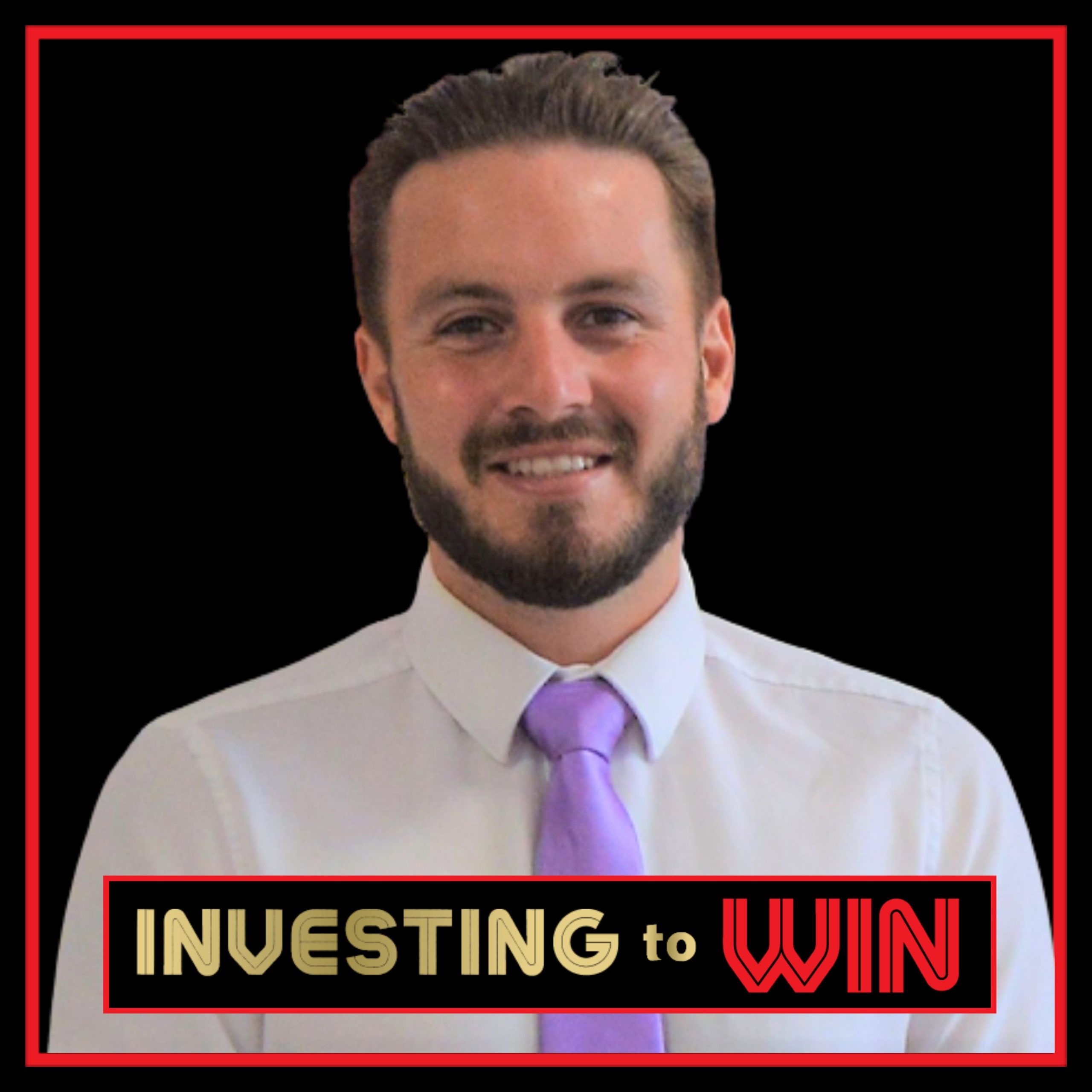
Investing to WIN #074 - How Entrepreneurs Buy, Scale, and Exit Better Businesses (Charlie Panayi)
Many real estate investors understand leverage when it comes to property, but fewer understand how the same thinking applies to buying and scaling businesses. In this episode, Charlie Panayi explains why business acquisitions can create opportunity when you know how to evaluate numbers, structure deals, and avoid buying yourself another job.
This conversation matters because more entrepreneurs are looking beyond one income stream and asking how to build wealth through ownership, partnerships, and strategic exits. Charlie shares a grounded look at what most buyers miss before acquiring a business, including why relationships, transparency, and community can matter as much as the deal itself.



Duration: 69:00
Date: Oct 8, 2024
Guest: Charlie Panayi - Entrepreneur
WATCH THE FULL EPISODE:
Want the full experience? Watch directly on YouTube to support the channel and get recommendations for similar episodes.
What You’ll Learn
• Why buying a business can be similar to real estate investing
• How seller financing and business loans can create leverage
• Why founders should think about the exit before buying a company
• How to evaluate whether a business can scale without you operating it
• Why partnerships need clear roles, agreements, and honest expectations
• How community gives entrepreneurs access to experience they do not yet have
• Why freedom and happiness matter more than chasing bigger numbers
Memorable Moments
“I just saved, saved super hard.”
“You don’t want all your eggs in one basket.”
“A lot of buying businesses comes down to relationships.”
Episode Summary
This episode helps investors and entrepreneurs understand how business acquisitions work and why the process is often misunderstood. Many people assume buying a business requires huge amounts of cash, but Charlie Panayi explains how leverage, seller financing, bank loans, and deal structure can change the equation.
What makes this conversation valuable is Charlie’s comparison between real estate and business ownership. He explains why real estate can build long-term wealth, while businesses can be bought, scaled, professionalized, and sold when the buyer understands systems, people, and exit value.
This episode is for real estate investors, entrepreneurs, and business owners who want to think beyond one asset class. After watching, they will have a clearer framework for evaluating deals, choosing partners, avoiding emotional decisions, and building businesses that do not depend entirely on the founder.
Chapter Timestamps
[00:00] – Charlie Panayi’s background and international lifestyle
[02:14] – Buying his first investment property at 18
[04:00] – Building financial freedom through real estate
[08:15] – Transitioning from real estate into buying businesses
[11:04] – How leverage works in business acquisitions
[13:04] – Charlie’s first acquisition and seller financing structure
[19:46] – Building a private entrepreneur community
[38:41] – What to look for before buying a business
[49:42] – Partnership risks, shareholder agreements, and accountability
[59:35] – Charlie’s advice for buying your first business
[01:06:08] – Charlie’s definition of success and winning
About Charlie Panayi
Charlie Panayi is an entrepreneur from North London with a background in real estate investing, business acquisitions, mentoring, and community building.
He bought his first investment property at 18 and built a real estate portfolio at a young age before expanding into business ownership and acquisitions.
Today, Charlie focuses on buying, scaling, and professionalizing businesses, especially in areas where his experience in real estate, professional services, and business strategy creates an advantage.
He also runs a private entrepreneur community focused on mindset, accountability, business growth, real estate, and personal development.
Full Episode Transcript
Garret (00:01.656)
Charlie, welcome to my podcast.
Charlie Panayi (00:04.044)
Thanks for having me. How are doing?
Garret (00:05.9)
I'm doing very well. Why don't you tell the listeners where you're currently at because we can detect an accent.
Charlie Panayi (00:13.382)
So yeah, no I'm from England North London originally, but to be fair I tend to spend my time in different countries these days, so It looks different each year, but this year probably 50 % of the time so far in the UAE about a month in Spain the rest in England So all over the place, but I'm currently sitting in England
Garret (00:36.878)
Wow, all right, excellent. Well, why don't we start, that's a good segue into your background. Why don't you tell the listeners a little bit about your background and then we'll delve into the topic at hand.
Charlie Panayi (00:46.768)
Sounds good. So, I mean, it's hard to describe myself nowadays, to be fair. I used a really cheesy line recently saying I'd do what I enjoy, but I won't say that. So yeah, I'm Charlie Penai. I started off in the real estate world. I invested from quite a young age and built large portfolios. And really, that was where my business journey started as such. And I'm still very heavily involved in real estate around the world.
But I do lots of other things as well now. So I mentor, I coach, I buy businesses. Anything sort of $1 million up to $5 million is a keen interest to me. And yeah, I have a private community. So to be fair, you would call me one of those typical entrepreneurs where I have a lot of plate spinning, but I enjoy what I do. You know, I love what I do. I love when I make change. I'm very success driven.
So for me, it's fun. And realistically, buying and selling businesses is quite similar. People might not understand how, but it is quite similar to real estate when you know why and how.
Garret (01:59.15)
Yeah, I would tend to agree. your bio, as I was reading through it said that you bought your first property at 18, self -made millionaire by 25. Tell us about that first property because, a lot of my listeners are in real estate.
Charlie Panayi (02:06.629)
Yes.
Charlie Panayi (02:14.863)
So I knew I was going to, I don't know why I decided at seven years old, but at seven years old I decided, yeah, I don't really remember the ins and outs of what made me decide property and real estate, but I decided I wanted to be financially free and I decided it was going to be used, I would use real estate to do that.
Garret (02:20.776)
Seven.
Charlie Panayi (02:35.974)
So yeah, I just saved, saved super hard. Easter's, used to be, don't me Easter eggs, give me pound coins. And I worked from 12 and you know, I just was grafting really to really be able to buy my first, whatever it might've been in real estate, but something as soon as I was physically allowed. And obviously in the UK, you're not allowed to complete on a property yourself, self -owned until you're 18. So that's when I did it.
So yeah, I really fast tracked in terms of just saved saved work saved so then the day I could complete on a purchase I did
Garret (03:11.574)
Okay. And I'm assuming it was this your own personal property that you're going to live in or was that a rental?
Charlie Panayi (03:15.15)
Yes, I never intended to, you know what my goals was never to leave my mum's house until I got married because I realised it was a good saving opportunity. So no, I was never going to live in it. It was only ever for an investment. The reality is I left my mum's home far earlier than I planned because of work. But that was my initial thoughts. I'm going to stay there till I get married and I'm going to save as much money as possible and keep investing.
Life took me different ways, so I had to go a bit earlier than I planned.
Garret (03:46.382)
Okay. So you have this first property 18th amazing. I bought my first one to 27 and I can't even imagine if I had a 10 year headstart. What was, what was the pathway after that?
Charlie Panayi (04:00.42)
So I just really, so I was actually working as an account director of one of Europe's largest training and mystery shopping companies. So I was earning for my age, good money. So I was earning good money there, investing everything into real estate. So I scaled pretty quick. Not as quick as I could have, in hindsight. If I paid someone like me to teach me how to do it, I would have done a lot more and a lot quicker. But I was relatively ignorant in terms of...
I was making good money so I will invest myself. So yeah, I think it's hard to know when I got the portfolio to a size where it made me financially free because I wasn't really looking at it. I was just doing, buying, buying, investing, working, investing, buying. So I think the first reality I had where I had a sizeable portfolio where I had freedom was in 2011 when I realized I could do what I want.
So I just took time off work and lived in Madagascar and volunteered for a long while. So yeah, I really just kept buying. Anytime I had a penny spare, it went into my investment and it was like, how do I buy the next property? How do I get to the next one? And was purely all I looked at was buying the next one, buying the next one. How do I leverage skills? How do I leverage relationships to do that? And yeah, I should have probably noted what I did and didn't do by the age of 21.
and all 25. We actually rounded up to 25 because I may well have been a self -made millionaire at 21. I just never looked.
Garret (05:35.534)
Yeah, I mean, that's part of, I interview a lot of successful people here and I think they look beyond, right? It's not the goal to say, I want a million dollars, I want to be a millionaire. They have like a further goal and then that's just more of a stepping stone. But 2011, how old were you then?
Charlie Panayi (05:54.841)
2020, nearly turned to 2021.
Garret (05:57.236)
geez. Okay. So it's only a few years after. So literally you're just saving and buying these properties, any particular, I mean the BRRR method or are you renovating them and refining them or you're just literally saving down payments.
Charlie Panayi (06:07.462)
I had, well this is where I say some part of me, if I could have turned back time I would have invested in someone to really give me an open. I was just doing what I thought I knew in real estate back then. So there was no real defined strategy. The most obvious was like buy to rent because that was simple. I understood if I was putting 25 % down on this purchase, I was gonna get this much mortgage, this is my rent, this is the profit.
I'll own it for two years, I'll pull the money back out, I'll buy more. That was really, I did refurbishments, not extensive refurbishments, with I'm talking, you know, just tidying up, know, new kitchen, new bathroom, decorating carpets. So I always looked for that because I realized most people in my world, in the UK and Europe, obviously I've gone furrow filled since, they were always looking for this huge project.
and they were ignoring these little bits where actually I made some really good money. I maybe there was one property I bought I don't remember when it was now but people just weren't buying it because it had future pink walls, had a future pink kitchen and you know people just couldn't see through it. That cost me eight thousand pounds, English pounds to to get it to then pull out eighty eight thousand pounds on top.
So it was really a buy to rent slash mine a refurb strategy. I never used other people's money. I never knew anything about that side of the world, conversions. It was pretty straightforward back then.
Garret (07:50.23)
Okay, no, that's just grind it out. And speak to me about the transition into business itself. I know obviously investment properties is a business of a form anyways, but you mentioned, read it in the intro a few minutes ago that businesses and trading in businesses can be kind of like real estate. What was the first thought you had to transition into any kind of business?
Charlie Panayi (08:15.832)
So really when I realised I was a businessman, it sounds silly but I only saw myself as someone who bought properties. And then I realised what I did for work, I realised what I did in real estate and I saw I had quite a good skill set of understanding how to scale people's businesses, you know I worked within businesses.
I then started thinking about the leveraging and anyone who really scales property and real estate portfolios successfully understands how to leverage. And then I thought, I didn't know, but I was thinking it must be a thing in the business world. There's got to be a way to do a similar -ish type of thing within business. And I then soon realized, if you looked at my investment portfolio, I mean up until recent years,
my portfolio was probably 90 plus percent real estate. Now to me, I love real estate. I call it a sexy asset. It's something we can see, feel, touch. But I realized you don't want all your eggs in one basket. So yeah, it was really the leveraging and understanding that I've got an ability to understand how to scale things. And I thought I could relay that. So that's when I started looking at businesses. Obviously I...
Accidentally naturally whatever started a few businesses that I still have today back when I was 18 So yeah, that's really where it come from the leveraging idea, you know leveraging skills Not just money leveraging skills that leveraging contacts leveraging friends Really if I could take a one million dollar Business because I do we tend to look in America a lot UK America specifically
and I can scale that business to 10 plus mil and then I know the people that I can position that 10 plus mil business to. Whereas people who own one to five million dollar businesses don't tend to know how to sell them that well.
Garret (10:24.064)
Okay, lots to unpack there. Let's talk about the concept of leverage. We're gonna maybe, if you bear with me and humor me, real estate versus businesses. Now, obviously I think in real estate, the main audience listening here can understand that, right? Because you're saving up money as you did, whether you use other people's money for the down payment or not, and you're leveraging that going to a financial institution and purchasing a property.
instead of paying for the whole thing, where does leverage come in in your mind and really sort of really define it for the audience with respect to business?
Charlie Panayi (11:04.198)
So it's a different sort of leverage, but for example people don't realize and I'm gonna make it sound very simple what I'm about to say, but you can buy businesses with no money You put zero in you have to put a penny there is business loans in the US called SBA 7 loans where you need 10 % So you can look at in the same format if you're gonna go and buy a piece of real estate land for a million dollars And you only have to put 10 % down. That's that is unlike
most investments you can do in the world. If you're going to a bond or a structured note or stocks and shares and you say I want a million dollars I'm only going to put a hundred thousand in. They're going to tell you where to go. So actually what you can do in business is a very similar thing to real estate in terms of in the US specifically if you can find
companies that have the SBA 7 loan, phenomenal products. And you've only got to find 10%. In other cases, if you know how and why and what to look for, you can actually purchase a business with none of your own money, and the sellers pay for it.
Garret (12:09.016)
So are you talking about specifically when you're talking seller, like holding the financing, like the actual owner giving you a note loan or things like that?
Charlie Panayi (12:16.344)
Yes, yeah.
Absolutely, so yeah, it's actually that case and again tends to be if you don't have the finances in place Most banks will get involved if those are profitable business that's you know making a reasonable Reasonable return they will be open to putting down the first 50 % So the seller is only financing the other 50 % so actually you put zero down, but the business is paying for the loans It's quite a simple format. It's all leverage
Garret (12:44.984)
Okay.
Charlie Panayi (12:48.162)
It's not...
Garret (12:48.344)
Can you give the, sorry, go ahead.
Charlie Panayi (12:51.919)
No, no, go.
Garret (12:53.186)
I was just gonna say, can you give an example of the first time that you use this strategy in a business? Kind of like break it down, what type of business was it? I mean, obviously not names and things like that.
Charlie Panayi (13:04.144)
So the first one was real estate actually. So it's a real estate company that sort of had a lot of synergy alongside stuff that I did. I said to the owner quite early on, I mean I was quite young at the time, I said, when you're ready and you're done, I'd buy your business. A lot of buying businesses comes down to relationships, especially in what I focus on anyway. anyway.
three years later they phoned me and said, yeah, look, we just want you to buy it. So obviously we do the whole negotiating process of agreeing what price suits. And in that one, for example, they had around 90 something, I can't remember, 90 something properties. And it is harder, by the way, anyone listening to the real estate, doing business purchases in real estate is something I don't normally do because the way...
Owners value their businesses are far higher because they've got so many assets Whereas in business is your profit and loss, you know turnover anyway so Yeah, they're about 90 we agreed a structure. I would put to memory I think we put 40 % down up from in this case, which at 40 % was done by a bank on a five -year loan But there was enough profit that that was completely covered plus profit for us
And then we agreed with the sellers that, you know, subject to XYZ happening, you will get a 20 % payment after 12 months, another 25 % on top of that after 18 months, and then the balance another six months after. But there was certain carry outs, you know, if X happens, then we can deduct X percentage. So it's really important that the sellers don't leave any anything hidden from us.
because end of the day it's going to backfire on them. If there's anything that they haven't been transparent about and there's something that will come back around and bite us in the backside as such, it will also bite them in the backside. we make clear. So that's a structure I did there. So it about, it was a all in all just over a two year acquisition. I mean, you own it upfront because it's just center finance, but in terms of paying off everything in that case.
Charlie Panayi (15:25.412)
It was a very good case that loan we took for five years from the bank. We actually paid off in the first year. We had that much profit in the deal. We paid that off. Plus still meeting the payments to the previous owner. And I think we had some carry out. So I think in the end, after the two years, there was like a four or five percent reduction in agreed price because of the carry outs. But it was was a successful transaction.
Garret (15:32.579)
Wow.
Charlie Panayi (15:55.224)
I don't focus on real estate businesses anymore because of what I said, the asset side of it actually makes it value wise quite difficult to put through banks and finances.
Garret (16:07.502)
Yeah, I'm actually surprised that the first business that you did was in real estate. When you said a real estate company, I wasn't sure whether you were talking about a realtor brokerage or things like that. So you actually went out and purchased basically a real estate portfolio from somebody that had 90 units. Well, yeah, because it's all the value, right? Like you're not purchasing a restaurant or even an electrician's
Charlie Panayi (16:24.398)
Hmm. Yeah, in hindsight, we won't do it.
Charlie Panayi (16:32.24)
Yeah.
Garret (16:35.436)
book of business or something like that, which would be significantly less, right?
Charlie Panayi (16:36.912)
Mm.
Yeah, 100%. And that's what you learn as you go on. Obviously, don't get me wrong, it was very profitable. So Touchwood, it was a very big success. However, know, I put into that one deal, I probably could have done a hell of a lot more. Coming back to when I my first property, if I knew what I knew now, I would have done what took me 10 years in probably two years.
Garret (17:07.789)
Mm -hmm.
Charlie Panayi (17:08.868)
And it's the same in business, you naturally, because of my real estate background, I thought real estate, was just really, obviously I've, I've worked in, I've headed up the world's largest independent financial consultancy on real estate investment around the world. and the UK, they're the Europe's largest training and mystery shopping company. So I realized actually I've got far bigger skill set. Property was my side hustle. My actual knowledge is business. So.
So I sort of after that transaction realized, wait a minute, let's focus on things that I have synergy in professional services. I work with one of my best friends these days as well in a capital purchase company where he's got an extensive background in software. I've got an extensive background in professional services. you know, we were really focused on those. Obviously I'm still heavily involved in the real estate world. still purchase every month. still.
mentor people, still hold investments and invest for people. you know, it's still passion. It's just as hopefully without sounding the wrong way. But once you do something really well in one's place, you do as an entrepreneur think, what else could I do? And that's really where that come from. And diversify portfolio.
Garret (18:31.98)
Yeah, no. Yeah, I would tend to agree. One of my business coaches has, I don't wanna say he's convincing me, but what I'm seeing as I go to more and more business conferences and not realistic conferences is that a lot of really successful business and entrepreneurs will like to work in the business world, buying, selling, scaling.
and then they use those profits to put into real estate passively rather than working the real estate like you and I did when we were younger. Would you tend to agree with that?
Charlie Panayi (19:03.3)
Yes, yeah definitely that's the that's where I've really gone over the last
probably five years, six years is focusing on the income coming from other streams. I still make a hell of a lot of money from the real estate world in terms of the reality, but I've definitely treated that more as a passive income, as you just said, know, the profits in there, because it is a solid investment. As long as you're not looking at real estate as a quick turnover, it's still solid long -term investment. So that's a passive side, the businesses and the community that I run and things like that.
that's where I make the other income.
Garret (19:46.08)
Okay, tell us a little bit about the community. I have an online community myself for self -managing landlords. What is your community focus on?
Charlie Panayi (19:54.872)
It was focused, so I accidentally fell into international speaking a long time ago when people realized what I did, large corporate companies used to get me in to speak to their celebrity customers and stuff like that. And then I accidentally started mentoring people not really realizing I was doing that. And I just realized that a lot of people I speak with, friends in the business world,
tend to struggle with similar things and a lot of it comes back to mindset. So I founded the Grit and Growth project which is private at the moment. We are going to be launching it more publicly in the month or two probably. But I launched it quite a while back more because I just saw people struggling with the same things in terms of mindset issues. Entrepreneurship is, or solopreneurs are very lonely.
We don't realise that. So it is a very lonely world of... And they all feel like they might be the only ones going for it. So it was intended on that originally and just being a space where actually we can support each other's wins. I can give...
guidance on how and why and what I do and what I would do in scenarios. every week we have two live calls to keep people accountable. Obviously it's grown since then so we have specialist areas for business structures, have specialist areas for real estate and we have specialist areas for fitness and health because fitness and health is quite big for me. I think if you don't look after yourself whether that's physically and mentally then you're never going to be successful.
for forever.
Garret (21:37.122)
So many different directions I wanted to take that I actually had as you know, pre prepared some questions just to sort of direct the flow of this and health and business and fitness is definitely a passion of mine as well. But before we go there, let's maybe a lot of listeners are like, they keep talking about community Garrett Charlie, what's a community? So let's define that for the listeners.
Charlie Panayi (21:42.65)
Mm.
Charlie Panayi (21:58.011)
Yep.
So to me, and I think actually people can define community as lots of different things actually, but to me it's just having a group of individuals, of like -minded individuals importantly, who are there to support your journey. It doesn't mean blow smoke up your backside. It's there to just be honest with you. And the reason I say this is most people in, I'm gonna call it village and quiet areas,
Charlie Panayi (22:30.638)
when they start to do something differently to the norm, i .e. their peers, their family, people don't like it. Now they want to be a successful person they start talking commonly about, want to do this, I want to that. What you will find is that people around you that don't really want to support you, I call them social vampires, but there's lots of people that don't and I think people get this misconception where
They hear successful people say you should celebrate your wins, you should talk about your wins. 100 % you should be mindful of your environment. Your family might not like what you're trying to achieve. It doesn't mean about being a trillionaire or a millionaire or whatever. If you want to be the fastest walker down the road, you want to surround yourself with people that want to walk fast down the road.
If you go saying to your uncle who never gets up off the sofa and is 24 stone how fast a walker you want to be, he's not really going to be on board. So what a community he is, is just being in this environment of people that are on the same...
journey is you may not be same industry but someone who is going to be there to support your daily wins. Daily wins are important for me but also be there when you're struggling and you're thinking well how do I do this? Where do I go? If you've got a strong community of people that share your values then they're going to be there to support you which it does sound horrible but you know family and friends aren't always there for that.
they're there for part of it. again, in community, I help people become aware of really going outside their fear zone. Because of our environments, we can tend to be in our fear bubbles all the time. my best friend might judge how I put stuff on Instagram or whatnot, so I don't do it.
Charlie Panayi (24:19.808)
And that I don't want. And actually I'll give you that. Sorry to go on here on this but hopefully we've got time. I'm not in a rush. I've got one of my best friends. He hasn't watched a single one of my videos for four years. Now I say this because we had this conversation a few weeks ago because he says to me openly, look I love what you do and I'm so happy that you're successful in what you do and I want you to do well.
I find it cringy. Now, if I'm relying on him as my support mechanism, simply an avenue, whereas a community does. And that's what it's about. And I'm sure your community would be the same thing with the landlord side. There's people there that want to the same thing. So when they're going through the good and the bad, the others in there there to support that.
Garret (25:12.492)
Yeah, no, I'm nodding my head for those of you who are just listening to this on Spotify or the audio version. I am nodding my head through the entire thing there because there's so many takeaways. And to your point, Charlie, it's not that our friends and family are negative or they're trying to hold us back. They're trying to protect us, right? But I think entrepreneurs, not to offend all the entrepreneurs listening to this or the budding entrepreneurs, it's a certain type of
crazy, right? Certain type of thing that you're always trying to just, you're pushing and pushing and pushing past what seems normal. Not to define that normal is bad, but we just seem to want more and more. And it's not because for money, I think it's the creativity, at least for me, that drives me. That's why I'm looking at purchasing other businesses and getting out outside of my real estate comfort zone. Would you tend to agree with some of that?
Charlie Panayi (26:12.038)
Yeah, I I think it is what you said, it's the protection. Sometimes you look at it as, you I remember when I used have to work in Colombia back in 2012 and my mum used to offer me money not to go. I was always going, but she was trying to protect me and this is what we mean about, you know, going outside that fear bubble as I call it. And like said, I don't mean it offensively what I'm about to say either, but you know, average people stay average.
because they don't go into those outside their fear bubbles, entrepreneurs tend to want to go outside it. But if they don't have the right community to support them in that journey, whether that's a friend, whether it's a mentor, whether it's a actual community they've joined, then it's really tough. And we all get that the...
imposter syndrome, I get it. You know, I go into rooms where I do think like, you know, why are they paying me this to beat it? You know, do I really know what they want to know? We all get it. It's just understand how to manage it. And that's why I think the community side really comes into it and probably is undervalued by many people until they join or find a mentor or whatever version they figure out. I think it's super undervalued.
And then once they do it, they realise, wow, I wish I'd done this before.
Garret (27:32.462)
Yeah, I think one of the things I love about my new community is that it's not an open Facebook group. I mean, I call it out like that because at least in my space, there's a lot of people who are, I don't know how to evict my tenant or I don't know what I'm doing as a landlord. Can anybody tell me how to do one, two, three, and whatever regulations are in your province or state here? And you get 50 % of the people are
giving you a link back to the regulations that you just don't understand, but then, you you might get some sincere 10 or 15%. The rest is all sarcasm and ridicule. That's not true support. That's why I like taking it into its own closed community. And that sounds like what you've developed.
Charlie Panayi (28:17.838)
Yeah, yeah, this has been very private really for many years. It's been, it didn't really actually have the name Grit and Grave for a long time. It was just me, any customers, friends, acquaintances. We just sort of formed it originally on, it was originally on Slack. We're probably gonna launch it as a, not public as in terms of open Facebook, but public in terms of people can join now.
But it was solely created for what you were saying, you know, and what I was just mentioning. was solely created to just create that environment. And I agree with the Facebook groups. I don't want to sound like I'm bad -mouthed in them, but more often than what I saw is people just trying to sell themselves constantly. Now, yes, you might have the sarcasm. You will have the other people that just send you a link which you've already looked at and don't have a clue what it means.
Garret (29:05.688)
Mm -hmm.
Charlie Panayi (29:14.65)
But actually I used to see most of it was, what I used to see anyway, was just people trying to sell themselves. And that's all well and good. People tend to give advice because they want to build that relationship so then one day they use that. That's the reality of the business world. But the Facebook ones I always seen was very hard sell. know, here's me, this is what I do, call me and we can, you can be my customer, whatever it might have been, whereas...
Whereas again, coming back to the community setups, the good ones anyway, because there's a few communities about nowadays, I believe. And I think the ones who mean what they do will always go along the lines of, I want to give super value. Yes, there's always other ways to work. know, just because you're in our community doesn't mean I'm going to mentor you personally. You can have me mentor you personally, but that is a cost. But day to day, the only people allowed in this community are people that are going to...
support each other, give that, you know, if someone says how do I evict the tenants, this is a situ, the community needs to be there to give real honest guidance on that. They might not be legal extraordinaires, but you know, give proper guidance or connect them to someone who can do it, is the other point in a community.
Garret (30:35.854)
So I just had a podcast light bulb go off. I had initially asked you leverage, right? And I'm in my mind, leverage in real estate is financial leverage. What you've just described is leverage of other people's experience who have either done it or are going through it. That's really the true definition of community for me.
Charlie Panayi (30:39.369)
yeah.
Charlie Panayi (30:56.922)
Yes, yes. like I said, I did that with not even realised I was doing it for a long time. And that's where my personal community come from was that, wait a minute.
this person's struggle but most people I deal with struggle with the same things. It's business, I can tell them things in minutes because most of the people I mentor, well I say most do, probably 40 % are business related, 40 % are property related and then the other 20 % is mindset. So most of my business is either real estate or business and both sets of people had the same issues.
you know with the day to day stuff. real estate is slightly different if you need a builder I know who to give you, know a broker, financier, I know who to introduce you to because you know even this morning I had a developer who silly, stupidly, shouldn't say the word stupid but it is stupidly decided to not get his new builds insured through the process. Now this is in the UK when you're doing a new build you should have NHBC or there's other insurers out there.
and they come out through the process and sign off each stage and give you a 10 year insurance. This gent done a retrospect insurance. No lender will lend on that. So now he has just built some really high end, new build properties, like proper built, gone all out. The way he's built them is really good quality. Only cash buyers can buy them. Now you and I know, as soon as it's only available to one type of buyer, your value is just gone.
So, know, like someone like that, imagine if he was in a community from day one when he first thought about building, because this is his first project, he built himself. He's been in the building world for a long time. Just imagine if he was in a community and he just shared his start. Someone in that community would have said, make sure you do this. Yeah, don't do.
Charlie Panayi (32:59.128)
and then we could have that discussion. He might still have chose to not do it, but at least he would have had an opportunity to realise, should I do this? And have those conversations.
Garret (33:09.026)
Well, somebody very smart once told me you don't know what you don't know, right? That's what we're talking about here.
Charlie Panayi (33:17.39)
Yeah, yeah, I went in as a director of a company, a global company a few years ago, and they said, I'll just do what you want to do. I was like, what you need? They're like, I don't know whatever you need. was like, but I don't know what I don't know in your business. So tell me what you want. And then I can tailor what we're going to do. So yeah, I always say it to people, you don't know what you don't know.
Garret (33:35.246)
Yeah, no, 100%. You mentioned that one of your strengths that you bring is professional services. Tell me a little bit about what type of professional services and how you develop that skill set.
Charlie Panayi (33:48.702)
So we all come from that I say develop I think that was just a natural ability to be able to look at structure and whether that's real estate business and just see where the scalability is here in terms of I call it professionalizing if we're looking at the business world specifically professionalizing a business, so I was part of a group that
we went into a company that was valued at around $8 million. And the reality was it was worth a hell of a lot more, but it just wasn't professionalized.
They didn't have proper staff procedures, didn't have proper handbooks, didn't have proper, really procedure -driven, structure -driven. Because it was founder -owned, scaled. Normally when it's founder -owned and scaled, you learn as you go on and there's processes. So to big businesses, they only want to buy businesses that slot straight in. That's it. They don't want to do any of the work.
So what I realized is that ability that I can see a structure and very quickly establish what needs to be done to make this company professionalized and scalable. I think obviously you develop it because the first time you're involved in acquisitions to a few down the line, you learn a lot. But from a business side, I already knew it. And I think there was a natural part of that.
and it was a skill set that I still work on because I love relationships. I mentioned my friend earlier on this podcast, you know, he has a skill set I don't have. So when he was coming out of his work because he was very successful, hell of a lot of money, but when he was told to jump and how high, he jumps that high.
Charlie Panayi (35:47.206)
and he realised in one year he travelled between the US and Japan and Switzerland and the UK 54 times in one year. It only 52 weeks of the year. So he resigned and we were just chatting in a pool in Sicily, one of my best mates, we were there for another friend's wedding and I was like, look, you've got skill set I don't have. He said, but you already do it, so why would you work with me? I was like...
Garret (35:58.518)
wow. Yeah, yeah.
Charlie Panayi (36:17.731)
I'd rather have a share of a big pie than all of none. You've got a skill set I simply don't have and I've got ones that you don't have. Now if we work together with the connections him and I have in the world of business, we can really scale any type of professional services. Obviously...
I would say anyone listening who's thinking about going into buying businesses, it is a little bit like a kid in a candy shop at the start when you realise, hey there's probably 3 million businesses for sale in the UK and the US alone. So there's a lot of options. So you start saying, that ladies underwear company, I love that, you the numbers are doing really well, the profit margins are good.
If you don't know anything about a ladies underwear company, just don't do it. Just focus on something that you have synergy with. for me, it's anything that supports a run of the mill. So IT services are always a popular one for me. Obviously media, because most companies need some form of media work.
and SaaS technology software, you know, we look at those sort of anything that complements businesses, you know, if I buy business A and then there's another business B out there that complements pay, then we'll look at that. And then there's C that complement both of those two and then you build a group. So coming back to that $8 million one that we've become involved with after four years, we sold that at $62 million. But it was already worth close to $62 million when we purchased.
it was just the case they didn't know how to position that.
Garret (38:00.664)
Okay, so I'm going to take a few liberties here because from what I'm hearing you saying, number one, core business principle, you're buying a business with your eye on the exit already. Is that fair?
Charlie Panayi (38:13.242)
Business, yeah. Like we said, definitely different to real estate. Real estate, I look at it as I'm never going to sell it.
Garret (38:18.732)
Right, right, and the value keeps going up hopefully. And you know, get that negative or the passive cashflow aspect as well. But with a business, okay, fine. We're gonna go into something that we're passionate about. We're going to not go into ladies underwear unless you're an expert on it or at least you know a little bit about it. Sure, fair enough.
Charlie Panayi (38:27.866)
Yeah.
Charlie Panayi (38:37.806)
or know someone that does anyway. If you know someone, then that's fine.
Garret (38:41.922)
But what are the other core things that you need to look at? Like you just define, you know, SOPs or procedures, making sure that what the solopreneur can actually exit properly so that you're like, what happens if the business isn't big enough to support all of those extra staff to let the founder out? How do you approach that?
Charlie Panayi (39:04.504)
Yeah, so there is different occasions actually. We have entertainment got involved with ones that business owners stay on. So they are an expert on what they do, but they just don't know how to scale. And so that actually is quite appealing to someone like me because they're passionate about it. As long as they're willing to learn and change and develop, then because what we can't have is an owner who's like, yeah, but this how I do it. Okay.
Remember why you wanted us involved. We're here to scale the points. So that's not our... It's definitely open to us. But I think when you're looking at this and you're looking at profit margins, people get a bit excited. They just say, yeah, I love this business. I want to buy it. And they don't really take into the reality. Now I do the same in real estate in terms of I'm always worst case scenario. Okay, know, Mr. and Mrs. Smith, you're telling me...
that your profit margin is this. You can demonstrate it as well to be fair. But what if this? What if that happens? So I think I mentioned it earlier. I need full transparency from seller and I keep putting the pressure on them that if you do not give it, you are going to lose money because the deal we're going to strike is based on certain key components over the course of one, two, three, four years. So if you aren't transparent. So you've got to make sure there's enough profit in it.
in terms of yes, replacing the head of the company. An ideal scenario is it's already got a solid management system where the owner's already really day to day not that involved. Because then you know, okay, they've obviously got people that are doing well. The owner tends to be transparent back to what I said about they need to be in terms of what parts of that team we get rid of and what type parts of the team we keep because they will tell us the dead would and the good would.
And that's really important as well because it's harsh to say but even in businesses I'm involved with, it's absolutely people in there that are dead wood. But it's very hard to move them on when you go past certain amount of time they've worked for you. A new owner can do what they want, it's pure restructure. If I take over Grit and Growth Project and I want to get rid of the sales director, I'm getting rid of them. There no two ways about it, as part of the restructure they've got.
Charlie Panayi (41:24.656)
there's lots of fundamentals so you've got obviously exit strategy you've got to think about is this something I'm exiting because if it's just a break even business you're not gonna ever be able to exit you know if you're able to pay yourself a couple hundred grand a year but no profit after that you're never exiting so be realistic what do you want now me and my business partner for a million dollar
Purchase for example, we're quite actually happy. This might sound really low to listeners We're very happy at setting our benchmark at 35 to 40 K each a year out of that business that might sound really low But we want to be super realistic in terms of I don't want to I Don't want to stop this business from scaling because I want to take 400 grand out of you So actually what we happy with?
We play a numbers game. We own X amount and we're taking 40k per business over all of them. And at the end of each tax year, there's enough to pay out ourselves the dividends of X amount. Brilliant. So for us, it's a 40. It sounds small. Everyone can have their own maths. But for me, that's how I look at it. If we can take 40k profit as a salary, then that's enough for us to sit on the board of directors. And that's another key component because I...
I've worked with people who I've mentored to who want to buy a business because they want to own a... sorry for the language but I can't think of a better word but a shit ton of money from this business but they don't want to work in the business so for me that's the key you don't want to work in this business because if you're working in the business you might as well just go and start your own and do something you're really passionate about
Garret (43:03.821)
Right.
Charlie Panayi (43:17.946)
You do not want to open this business. So rather than really holding this business over a barrel because of your greed, take the minimum and then if it's a bonus. And then the reason I say this as well is the books look better when you come to want to position it. You can invest more into the sales staff or the marketing staff or whatever it is you need to scale to get from A to B. So I think that's that you already mentioned the first two important components. I think that's the other one is just remembering.
minimums you want to take rather than thinking your ideal scenarios and that you are not working in this business. Your ideal scenario is you are simply there to have a quarterly meeting and make the connections.
Garret (44:04.214)
No, it's basically you don't want to buy a business to buy yourself another job is what you're saying, right? Yeah, they do. No, no, there's no shame in it either. I mean, there's nothing wrong with that. But if you really are buying that and you want to have multiple businesses, it's impossible. You can't work. There aren't more hours in the day, right? You can do a lot of things. You can be a lot of very creative, but you can't create more time. when you're scaling or you're looking at a potential target that you want to purchase for an acquisition,
Charlie Panayi (44:09.828)
People do do it. People do do it.
Garret (44:34.07)
What is in your mind when you're saying, I think I can scale this or scale that what is scaling in like the definition of scaling in that context?
Charlie Panayi (44:43.184)
So from the face of it, it's obviously you're really just looking at numbers at the start. Unless you know, have a relationship with this business owner, the reality is when you're looking at opportunities, it's pure numbers. So the first point is I look at, like to like, I personally, if I can get my hands on a five year profit and loss, I want the financials five years because.
You don't really know the foundations of the business at this point. But what you don't want to do is spend hours with the owner or whoever and then find out the numbers don't work. So you have to look at the numbers first. Now over a five year span, the reason I like that is it's giving you an idea of the flow and the trajectory of where the business is. So, you know, if there's a clear decline,
If that's something, doesn't mean you don't inquire about this business. The business numbers might still be good. There might be a reason for it. But then you really know what you're going to be asking the business owner. That's the first thing. Just look at the numbers for the trajectory. Not getting your heart set on it. might be a veterinary school and you might love animals. Just because you love animals doesn't mean it's good business. So look at the numbers. Be quite cutthroat. There are so many options out there. If the numbers don't look right, don't even waste your time.
If the numbers suit it, yes the trajectory might be off in terms of they might be on a decline or whatever, but there's something still there. That's where it comes to the conversation side. And for me, I like to get straight to that as quick as possible. Some people try to go by the brokers and ask this question and that question and this question and that question and brokers, I'm sorry if I offend anyone listening this, pretty useless.
in my experience, you know, and sorry, I do not mean that to offend, I'm just based on experience. So rather than waste your time, let's get straight to the business owner. Let's have a meeting virtually in person if you're local. There's two reasons for this. One, rather than go back and forth over weeks or months sometimes, you can just ask everyone in one go.
Charlie Panayi (46:57.836)
Secondly, I think it's super important to understand the relationship between that person. If you meet the owner and you think, really, there's something not right about this person. Irrelevant of what the numbers are telling you, from my experience, you should walk away. Because it is all value led and it's all morally led. And if you're buying a business where you don't trust that individual, then you probably will have something come back on you somewhere.
they'll try and change the goalposts. So it's a huge relationship and it sounds really basic. But before we go any further, like today, a few hours ago, I sat on a call on Zoom or Google meets, for an hour with a software company that we're in talks with. is actually, we already looked at the numbers. We can see what we can do. I understand that market specifically very well.
And obviously my business partners got huge background in software. So we already knew it was something that's definitely something we've put an offer in but we wanted to sit there with the owner albeit virtually and really just get to know what this person's like because then you understand company Ufos the challenges you may or may not come across. He was very transparent with his team in terms of the really loyal and hard workers the non -so and those bits are so important.
when you're doing it. So for me, people overcomplicate this strategy and they try to do too much before getting anywhere. Just look at the numbers, be harsh on it, be cutthroat. If there's anything that doesn't work, move on to the next, move on to the next. And then get on the meeting with the owner as quickly as possible. Because if you spend a one hour with that person, you might see it as a waste of time if it doesn't go anywhere. But I'd much rather spend that hour and establish it's not going anywhere than spend months.
messing around to get to the last point where people change goalposts.
Garret (48:58.222)
Yeah, no, uncover what you need to follow your gut instinct, do it in person or on zoom if you can. 100 % agree. I want to take a little bit of a segue here. You mentioned several times, know, best friend partners, bringing different skill sets to the table. I heard a quote for 2024 that collaboration is now the new goal. That's where all the huge successes are going to come. But I've had
business partners that I've had to exit from, good ones and bad ones, some were, you know, very, you know, agree to disagree type of things. Where would you say is the danger zone when you're partnering with somebody?
Charlie Panayi (49:42.313)
So yeah, I think it's definitely being honest with yourself and then people sometimes have a best friend or a business person they've done a lot of work with and they like the idea of it and they get this, know, if you think about acquiring businesses, with me and Sam sitting there, you know, we're going to buy 15, $5 million businesses in a year. You look at, you just start looking at the numbers and think, God, that's amazing. But actually it's important to understand before you...
Sometimes you don't know sometimes it's impossible by the way, but you if you're honest with yourself About this other person. What are their flaws and what are the benefits? Everyone has flaws. I have flaws, you know, we all have flaws So the only way to protect yourself really is to be really honest with that at the start and again Is this gonna be an issue long term because if it is it doesn't mean you don't get into business with them, but
Again, this is something people don't do, is a shareholders agreement or owner agreement. And they don't do it because, we're best mates or we're mum and brother and sister or whatever, you know, it'd be fine. You want a plan for when the shit hits the fan. So actually, if you know that this person's flaws are this, let's do a shareholders agreement of what we commit.
What are doing here? What are we committing to? What are you doing? What am I doing? And it sounds over the top because you might think, yeah, but my mum's going to let me run this business. It might not be the case. So that's my biggest bit of advice is that day one, understand who brings what to the table. Put it in words. Doesn't mean it can't change. I like to have reviews with my business partners.
And this tends to be over dinner or lunch, you know, but we sit there, we talk about who's doing what, what's going well. Do we need to review what we agreed? It's important to have those conversations. So if you think about my friend Sam, you know, we're sort of, he's one of my best friends. So it's quite easy not to have those conversations because end of the day, we're sort of like best mates. So, you know, we know each other. We have to have the hard ones. And I have worked with best friends in the past.
Charlie Panayi (51:59.91)
hasn't gone bad, but hasn't gone well. You know, in terms of that they don't match my work ethic. And the problem is if I'm putting in 10%, 15 % time, whatever it is I'm putting in on my hundreds, you know, I look at my world as I've got, there's a hundred percent, that's my time. So if that takes 15 % of my time, I want 15 % from no one person, but whatever the equation. So, so yeah, I think that is the biggest key to having business partners.
not taking it, not really getting too personal in terms of like, I love them or I've known them for 20 years or whatever. It's business. It's quite straightforward. It is business.
Garret (52:41.856)
It is, and you know, I do shareholder's agreement on everything I do with any potential partner and to your point, Charlie, just having a very long conversation in person, an honest conversation. And I think especially when you, intimately know somebody because you know them, but the risk is that you could destroy that relationship if you're not airing everything out at the very beginning. And I think from what I've seen, at least in my personal experience, the biggest...
thing that destroys a partnership is the perception that one party is doing more than the other or one party is not doing enough.
Charlie Panayi (53:16.804)
Yes. Yeah. And that's why I mentioned that part of who's doing what, what we bring into the table, what time are we committing? Because time's quite easy. I've done a shareholders agreement with, I took shares in a media company recently, few months ago. And as part of my proposition as the agreement for the shareholders is time. Who's doing what time? Because if I'm, for this company, for example, I'm given two hours a month, it's quite easy.
And they found it bizarre, they're like, Charlie, even if you give us 10 minutes, we're happy. I was like, no. Based on the shares you've given me, I've agreed to two hours a month. So that's going to be in the agreement. So you can hold it against me. If I do not give you two hours a month, it's there in writing what I said and what you said. And equally, if you turn around and try and take three hours from me, I'm going to charge you for it. So like, you know, we're looking at it from both sides and it does sound over the top because this media company, the guy who owns it, is a friend of mine. And, you know,
he just didn't care, he's like look, I have 50 % of you on, I was like no, value wise 10%, two hours a month, that's what I want, and we're gonna put it down and run, because like you said, perception is the worst part, we might perceive, like Sam knows numbers far better than me, so if in my head, I think about Sam's just gonna do the numbers every single time, that's not fair, so we have to have conversation about, when we're doing this acquisition,
what bit am I doing, what bit are you doing? So we're accountable for what we're doing. Otherwise we start miscommunicating and blaming each other. And it has happened, I trusted a a while ago to build an app for me. And this is my fault. They built apps for other people. I knew them for a very long time as a friend from childhood. So I had no reason not really to trust them.
So I used them anyway, long story short, the app didn't get finished and they took all the money. Now, if it was anyone else I went to build a bit of an app with, I would have done so much more due diligence on them. So unfortunately, since that lesson doesn't matter if you're a friend, loved one or, and my mum's different, my mum can have what she wants, but you know, I don't care if you're a loved one or a friend, we will be very specific.
Garret (55:39.128)
Yeah, just because it's the right thing to do. That's what I tell. You know, it's not about, I think as people who are listening to this get, think about, okay, I'm an entrepreneur. I want to be an entrepreneur. You get that excitement when you potentially partner with a like -minded person. Great. And you're defining all of that, but it's really not about trust, right? Because otherwise that hurts feelings. What I like to say is it's just good business principles to put these.
things in place or if I could give some advice to the audience, put things in place, but present it in such a way because you're going to be scaling and the positions that you're setting up right now will not be occupied by the founders. So you might as well put those checks and balances in place at the very beginning, which serve two purposes that allows you to scale. But at the same time, it's also putting some kind of checks and balances in place for that potential partner so that you're just
as it just in case, a fallback mechanism.
Charlie Panayi (56:40.762)
Yeah, that's what I mean. It's just...
I have had individuals that can take it offensively when you bring up the case of let's discuss these things. So they're like, do you not trust me? It's got nothing to do with our trust. Actually, I do trust you. Otherwise, I wouldn't be getting in business with you. So that's the first thing when people say it to you. Why would I be in business with you? I didn't trust you. And then nowadays, I don't really have any pushbacks on it because I just explain some of the experiences that I've witnessed and had myself.
Garret (56:58.104)
Great point.
Charlie Panayi (57:13.078)
And I think you said it already, in terms of perception tends to be the biggest problem. And we all do it, know, even if you think me and Sam, who've got relatively, you watertight, sometimes I think I'm putting in more time than him. And I'm sure he thinks at times he's putting in more time than me. But the reality is he and I, every single week, for a minimum of an hour and half, sit there and go through what we've done.
And that's our commitment, because if we don't, we won't keep progressing. And that sounds excessive to some people, but we are in an aggressive phase of purchasing businesses. So we need that specific time. It doesn't always happen. He goes away, I'll go away, whatever. But more often than not, every single Friday, hour and a half, we're on a call, or in person, going about what we've done over that seven days. So that just gets rid of the perception.
they're going to be honest. He'll come in and say, you know what? I've had too many things on this week, let's just say I'm done in a bit. So would I. And that's it, perception. And we come back to the, you said the word excitement. I see this all the time. Someone I mentor gets excited quite regularly when people reach out to them about becoming a partner. They've got a big beauty company. And I have to always remind this person, but what's in it for you and what's in it for them? But...
I don't want to be negative because I'm actually a very optimistic person but take a step back and review this. If we think back to prehistoric times, we're cavemen, know, so we love being in packs. It's very natural, our brains are still wired, but as soon as someone wants to be my friend and be my business journey and they feel the same, I'm in a pack.
So forget about the technical stuff and this and that. We just go back to the cavemen times and our brains just take over. And sometimes it's important to step back. Does this person want to walk down the road fast like I do? Do they have the same morals as me? What's in it for them? And what's in it for me? Too many people forget about what's in it for them, they think. They're just doing it because they're a nice person. Not often.
Garret (59:21.602)
Yeah, wonderful. Two more questions before we wrap up here. What is your top piece of advice for somebody thinking about purchasing a business?
Charlie Panayi (59:35.39)
I would suggest, sorry to go too much into this question, but are we basing this on someone who has good business understanding or not?
Garret (59:46.51)
Let's just say good business understanding. Let's go from there.
Charlie Panayi (59:50.766)
Okay, cool. So I thought I'd just clarify that, some people go into it about extensive ones and it's not a problem actually, you should still do it. But it's two different answers. So yeah, if you've got a good solid background, my actual biggest bit of advice is to take massive action. Now this might sound really basic and you might hear lots of people saying about just take action, but the reality is in buying businesses is, I said it already, it's very hard to communicate with brokers.
There is ones you find are really good, but in the generalization, if there's two million businesses for sale in the US and the UK alone, sub five million and above one million, you're just not gonna get the communication. So you have to always be active every single day.
And I'm not on about setting daily goals, but we have to have monthly targets. So we know we're always moving towards it. And I think that's the biggest bit because when I work with people in the business acquisition world who want to do more business acquisitions and being brutal myself, even I, as a busy guy, we can just not take enough action at times.
And what happens is every day you don't take action is one more day behind it. So you've got a solid business understanding already. If you just take massive action, things will come. You already should understand the right people and the right connections and the right this. So you don't need all that. It's just get on with it. Stop making excuses.
Garret (01:01:19.726)
Okay, great. Well, that question was kind of selfish because I own some businesses. So let's, you know what, I'll add another little thing in there for some people who are maybe just thinking about starting. So how would you answer that question? How do you buy business if you've never had a business before? You don't have that acumen.
Charlie Panayi (01:01:23.813)
Ha
Charlie Panayi (01:01:39.608)
Yeah, so I definitely would say don't be against doing it because starting your own business is a bloody nightmare. I've been there, well I've been there, know, and it's hard work. So actually buying a business is easiest way into business. However, it comes back to what I said about my start of my real estate journey actually. I didn't seek education. I just earned good money and I did it. I didn't lose money, but I definitely did make what I should have made. So for me, my best advice would be...
look around and see who you can connect to. You might not be able to afford a mentor, if you can, amazing. But mentors can be very, a lot of different formats. We can talk about mentors as you might have a family member who's really successful in business. Take them, the best investment you can do, because I have some people say to me, yeah, but can't, I don't know, every mentor would charge different amounts, but if you want to work with me one to one, it costs thousands. Now,
They might not be able to afford that. I'll tell you what though, if you said to me Charlie can I take out for dinner this month on me, which might cost you £100, I will go with you.
and we can chat business and I can give you little tips. So if you can't afford mentors, maybe look at family members or friends or people you know that been where you want to be and get them. Because the reality is when you come to do your first transaction, you are going to need friends. In terms of people you can bend their ear and say, gosh, what do I do with this? Or what do I do with that? And I think education is the biggest key here. And I don't mean...
spending money, educating every single month and doing it for years and then taking action. Do it at the same time. Seek education, take action at the same time. You figure it out, you know. But I think the mentoring or the education is the best way because I'm sure you know what you know about the real estate side of things. If you back at 27 when you bought your first place.
Charlie Panayi (01:03:41.062)
could tell yourself could I have got Garrett now I would have done xyz quicker you would have and people undervalue it you know I think so mentoring is probably the key and the reason I say that as well is these people have connections so let's say you are buying a software company
You don't have to be a software expert. What you do need is a software expert. So your connections, your mentors, your friends, whatever it is, community, community is a phenomenal now. We've talked about that already. You could just reach out to them and say, look, I'm in the process of doing this. They've got a solid team, but they do need a sales director or operations director. Who do you know anymore? Now these guys will connect you to people you just simply wouldn't have connections to. Financiers.
I can connect you to financials you simply wouldn't have access to. There might be, especially if it's your first time in buying businesses, a financial might not want to lend to you because you don't have any background in it. If you've got a good friend, mentor, family member who's got a solid background, they can go on as a non -exec and then the financial will lend to you. I've done that for friends. See, there's always someone in it for me, somewhat. They're not going to just go and sit on a business for free, but...
end of the day, by having me as a non -exec, they've been able to do that transaction. So I think that's, I know it's a long -winded answer there, Garrett, but I think getting a mentor or education, whatever we, that can be different ways, because like I said, you might not be able to afford it. So if you can't afford it, if you've got a hundred pound spare a month, invest that into a good community, because there is some good business communities, mine's like $20 a month when I launch it, where you can have connections.
and then the other $80, go and take someone business -wise out for dinner once a month. Let's just look at it as $100, $20 into a community, $80 into taking out a local business person that you know and just ask them stuff at dinner or lunch.
Garret (01:05:50.766)
Amazing advice. Love it. Love it. Love it. Okay, final question and I ask every guest this question I really want to hear what you have to say Charlie Panay, this is the investing to win podcast How do you define success and what does winning look like for you?
Charlie Panayi (01:06:08.176)
Success to me is freedom and winning, so I saw this, obviously I know we said this to each before, the winning is a difficult one. So.
I tried to think of this before we jumped on the call but I just couldn't get my head around it. So freedom is the number one to that answer. For me, that is success. And winning for me is actually happiness. Now that might sound really cheesy, very spiritual, but we chase as solopreneurs, entrepreneurs, business people, success all the time. And we might get success. I get my freedom, which I have my freedom.
but you have no happiness alongside that, it's pointless. I'm not a numbers driven guy. I'm not here to make $20 million or $1 million. I love success. Success is freedom. Freedom then comes with happiness. So if you're happy and you're winning, that's as far as I keep it. I was trying my hardest, but I'm not financially driven. So it's this hard win. If you're financially driven, Garrett, and you earn one million and you want two, it's simple.
Garret (01:07:12.812)
Love it.
Garret (01:07:23.5)
Yeah, but I agree with you. If you're not happy, what's the point? Right?
Charlie Panayi (01:07:27.61)
That's it, know, and especially as entrepreneurs, you've said it already in this podcast, we're always wanting more. We're always wanting to do more. So you gotta learn to enjoy it. So you're only really winning if you're enjoying it you're happy because you're doing it for no reason.
Garret (01:07:42.604)
Yep, gotta have fun. Perfect. All right, that's a great way to put a cap on it. Love to thank you for coming on the show. It's been really insightful. I learned a ton and I know my listeners did as well.
Charlie Panayi (01:07:56.406)
Thanks for having me.
Garret (01:07:57.878)
All right, take care.
Want more episodes like this?
Join my email list and I’ll send the best insights from real estate + business + investing.