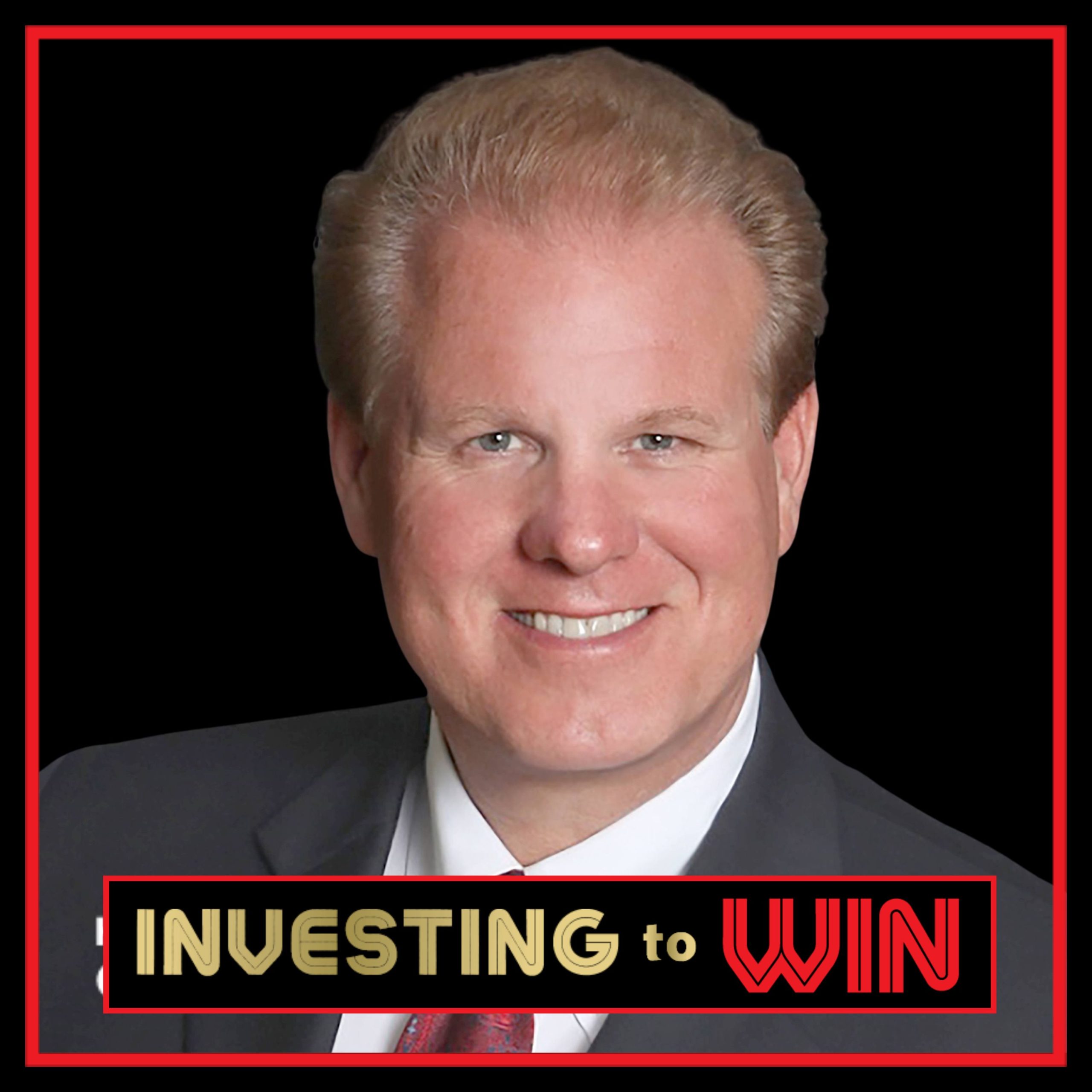
Investing to WIN #069 - How Jay Conner Uses Private Money to Fund Real Estate Deals (with Jay Connor)
Private money is one of the most misunderstood tools in real estate investing. Many investors think funding deals means banks, credit checks, strict underwriting, or expensive hard money lenders. In this episode, Jay Conner breaks down how private lending actually works and why it can create faster, more flexible deals.
With tighter lending conditions and rising rates, knowing how to raise capital without relying on banks matters more than ever. Jay shares the exact mindset, structure, and process he used to raise millions in private money—without ever asking anyone for money directly.



Duration: 55:00
Date: Sep 3, 2024
Guest: Jay Conner - Real Estate Investor
WATCH THE FULL EPISODE:
Want the full experience? Watch directly on YouTube to support the channel and get recommendations for similar episodes.
What You’ll Learn
• How to raise private money without pitching specific deals
• Why separating education from deal-making builds stronger investor trust
• The difference between private money, hard money, and traditional bank financing
• How self-directed retirement accounts can become private lending capital
• Why speed and flexibility can create better real estate opportunities
• How to structure private loans to protect both lender and borrower
• The mindset shift that removes fear of rejection when raising capital
Memorable Moments
“Desperation has got a smell to it.”
“You don’t have to be in a big market.”
“The power is in good questions.”
Episode Summary
This episode solves one of the biggest problems real estate investors face: finding reliable funding without depending on banks. Most investors assume capital is the barrier, but Jay explains that the real barrier is understanding how to build trust and structure private lending relationships correctly.
What stands out in this conversation is Jay’s contrarian approach to raising money. Instead of pitching deals, he teaches potential lenders how private lending works first. That shift removes pressure, builds credibility, and creates a pipeline of capital ready when deals appear.
This episode is especially valuable for investors looking to scale, close faster, or move beyond traditional financing. After watching, listeners will have a clearer framework for raising capital, structuring deals, and protecting both themselves and their lenders.
Chapter Timestamps
[00:00] – Introduction to Jay Conner and private money investing
[03:34] – How losing a bank credit line changed Jay’s business
[05:01] – Raising $2.15 million in 90 days without asking
[09:47] – What private money actually means in real estate
[12:18] – The biggest differences between banks and private lenders
[17:17] – Using self-directed retirement funds for real estate lending
[31:27] – First steps for beginners raising private money
[44:41] – How self-directed IRA funding works step-by-step
About Jay Conner
Jay Conner is a real estate investor based in Eastern North Carolina with more than two decades of experience buying and flipping single-family homes.
Since 2003, he has built a business focused on off-market deals and private money funding, completing more than 500 rehabs.
After the 2008 financial crisis, Jay shifted away from traditional bank financing and built a private lending system that has raised millions in capital.
Today, he teaches other investors how to fund deals using relationship-based private lending strategies.
Full Episode Transcript
Garret (00:06.626)
Jay Connor, welcome to my podcast.
Jay Conner (00:08.841)
Well, hello there, Garrett. Thank you so much for inviting me to come along and talk about what I'm so passionate about, that being private money, because private money has had more of an impact on our business than any other strategy, anything else we've implemented since we went full time in this business in 2003.
Garret (00:29.096)
Excellent. Well, I am very excited about this episode as well as my listeners know I'm also a real estate investor and private money is one of those sources that seems to be a bit of a mystery. But before we delve into the topic at hand, why don't you give the listeners a bit of a background about yourself?
Jay Conner (00:46.089)
Sure. Well, my wife, Carol Joy and I, we've been investing in single family houses. As I said, full time since 2003 here in Eastern North Carolina. We're in a small market. Our total target markets only 40 ,000 people, if you can believe that. But we do two to three deals a month. Our average profit per single family house is $82 ,000. I don't say that to brag at all. I say that to make a point.
Garret (01:01.047)
Wow.
Jay Conner (01:13.673)
And that is you don't have to be in a big market to make big money as long as you know how to find those off -market deals. Well, from 2003 until January of 2009, those first six years, I used the local bank and just traditional institutional money to fund my real estate deals. That's all I knew to do. All I knew to do was go to the local bank. In fact, I didn't even know anything about hard money back then.
Anyway, all I to do is go to the local bank, get on my hands and knees and put my hands underneath my chin and beg and pull up my skirts so they can look at my personal assets and pull my credit score and all that. That's all I knew to do was to abide by the bank's rules. You know, the traditional way to borrow money is they make the rules, they do the underwriting. And so that worked out okay. The first six years until until.
January 2009, I was sitting right here at this desk, Garrett, and I called up my banker, same banker I'd been using for six years. I had two houses under contract to buy and I found out on that conversation, Garrett, that they had closed my line of credit with no notice. And I said, Steve, what are you talking about closing my line of credit? We've had a great relationship for six years, never laid on payments. I still got a great credit score.
And he said, Jay, don't you know there's a global financial crisis going on right now? I said, no, but now you just gave me a global financial crisis because I don't have a way to fund my deal. So I hung up the phone and I sat here for a moment. Garrett, I asked myself a very important question and I want to share this question that I asked myself with you and your audience. This question, and you know, the power is in good questions. I asked myself this question and
This question will help you fix any problem you got in your life from career problem, financial problem, health problem, relationship problem, business problem, and a matter. And here's the question I asked myself. said, Jay, who, who do you know that can help you with your problem? And by the way, these people are running around saying every problem is an opportunity makes me want to throw up. I didn't have an opportunity. I had a problem, right?
Jay Conner (03:34.713)
So when I asked myself that question, who do I know that can help me with my problem? I immediately thought of Jeff Blankenship, who lived in Greensboro, North Carolina at the time. Jeff is a very dear friend of ours. We know each other through church and singing events and stuff. Well, he was investing in real estate. I called him up. I told him my story. He said, well, Jay, welcome to the club. said, what club is that? He said the club of having your bank close your line of credit. They shut me down last week.
I said, well, how are you going to fund your deals? He said, well, have you ever heard of private money? I said, no. He said, have you ever heard of self -directed IRAs and how individuals can use retirement funds to be a private lender and earn either tax deferred or tax free income? said, no, I never heard of that world. So I learned about it. I studied it. And what I did, Garrett, is I put my program, my private lending program together that I was going to start teaching people in my own network.
without any deals associated with them, but just teaching how they could become a private lender. So what did I do? put on, excuse me, I put on my teacher hat, my private lender teacher hat, and I just started teaching people how they could be a private lender and earn high rates of return safely and securely. And so I was able to raise $2 ,150 ,000 in the first 90 days of private money.
Garret (04:43.975)
Ha!
Love it.
Jay Conner (05:01.737)
from individuals and, and now today I've got 47 private lenders and eight and a half million dollars that we just use from project to project. But we go about this on raising money without ever asking anybody for money. So Jay, how do you get your deals funded without asking people for money? Well, first we teach them the program and how it works, how they can earn high rates of return safely and securely and how they're protected and all that.
without attaching a deal to it. know, Garrett desperation has got a smell to it. And the worst time to be raising private money is when you need it for a deal. You know, if I'm teaching somebody about private money and that opportunity, and I talk about a deal that I need funded, I already sound desperate and I don't, I'm not even trying to. So we separate the conversations between teaching about the opportunity and how it works. And then when we have a deal for them to fund,
I call it the good news phone call. Garrett, let's say you're one of my new private lenders. I'll pick up the phone. I'll call you. say, Garrett, I got good news for you. I can now put your money to work. I got a house in Newport with an after -repaired value of $200 ,000 under contract and the funding required for the deal is $150 ,000. That matches up to what you told me you wanted to start with. And closing is going to be next Tuesday. I need you to have wire your funds to my real estate attorney's trust account by next Monday.
I'm going to send you the wiring instructions. Now that's the end of the conversation. The most stupid question I could ask you is do you want to fund the deal? Of course you want to fund the deal. You've been waiting for the phone call to put your money to work and particularly if it's retirement funds that you've moved over to a self -directed IRA account, at my recommendation, you're not making any money until I put your money to work. So
The place to start in this world is getting your mindset right. You're teaching, you're serving, you're leading with a serve its heart, and you're not begging, chasing, selling, or persuading anybody to do anything. You are offering them an opportunity and it's a win -win for everybody.
Garret (07:13.282)
Love it. No, that is a lot of meat on the bone. I'm going to be digging into quite a bit of that. You cover a lot of concepts that I'm also using with my private investors. But before we even go into that, I want to back up just a little bit. Tell me what you did in your previous life before you got into real estate.
Jay Conner (07:31.273)
So I was in the mobile home business, also known as manufactured housing, single wides, double wides, all that. I was actually raised in that industry. And then long about 2002, 2003, most of the consumer financing for the product went away. The whole industry fell out of favor with Wall Street. And so we had to shut that company down. I know if I ever got out of mobile homes, single family houses.
that I wanted to get into single family, excuse me, if I ever got out of mobile homes and manufactured homes, I wanted to get into single family houses because back in 1993, 10 years earlier of me getting into this business, good friends of ours that live in the Eastern North Carolina, they flipped a house in 90 days and made $30 ,000 and I was trying to make $3 ,000 on a single wide. So I knew.
I like 30 ,000 better than 3 ,000, but I had to wait 10 years before I made the transition.
Garret (08:33.198)
Okay, you mentioned that your average profit is like $82 ,000. Are you talking about flips? Wow, in a market of 40 ,000. That is very impressive. Are you holding, are you a buy and hold guy at all?
Jay Conner (08:40.231)
Yes, flips, flips.
Yes.
Jay Conner (08:48.625)
So it depends on how I buy the property and fund it. If I buy it with private money, I don't want to leave private money buried in there. I'm going to probably cash out. And of course, refinancing it through commercial, I'm not liking those rates these days either, right? But if I buy the property on terms, creative financing, such as subject to the existing note or with seller financing, then I'm probably going to want to stay in the deal because if I can buy on terms, then I'll sell on terms such as
sell to a buyer on lease purchase or rent to own.
Garret (09:21.806)
Okay, okay. Yeah, we can get a little bit more into that. All right, so let's, you talked about private money. I really liked the story about how, I mean, 2008, 2009, who doesn't know that crisis? then where, people talk about the mini crisis that we're in right now, it pales in comparison. Tell the listeners exactly what the definition of private money is.
Jay Conner (09:47.113)
Sure. So private money is when a human being, an individual, none of this has got anything to do with institutional money. None of this has got to do with hard money. This is doing business one -on -one. You are the operator, the real estate investor, the borrower, and you're doing business directly with another individual, a private lender, that's going to loan you money on your real estate deal, and you're not going to borrow it unsecured. You're going to
back that note with the real estate that you're investing in. And so there's no broker, there's no middle person. It's a one -on -one transaction between you and an individual that's gonna loan you money either from their investment capital and or their retirement funds that they already have. And for whatever reason, they're not happy with the returns they're getting on those retirement funds.
Garret (10:40.782)
Okay, versus you kind of went through the nightmare that the banks give you, but I mean, again, I think most listeners have tried to get financed for something, whether it's a car, but let's talk about real estate. What does that journey look like?
Jay Conner (10:54.301)
So as far as.
Garret (10:56.544)
walking into a bank and trying to get a mortgage.
Jay Conner (10:59.867)
my word. Well, first of all, I'm surprised anything ever closes traditionally. I mean, what do they do with all the verifications that you already gave them, such as your verification of income and et cetera. And so when you're borrowing traditionally from the banks or a hard money lender, again, they make the rules. They do the underwriting. They tell you what the maximum, what their maximum loan to value is, down payments. You know, this world of private money.
We never take any of our own money to the closing table. There are no down payments. There, we always borrow more than we need to purchase. Now that only works when you're buying at a discount, right? Cause for example, my maximum loan to value in my program that I teach my private lenders is 75 % of the after repaired value, not 75 % of purchase. know, traditional money, they do a maximum loan to value based on the purchase price, regardless of how
good the deal is or how much equity is there. But in this world of private money, we borrow on a percentage of the after repaired value. So for example, on that little $200 ,000 after repaired value example like Dave, if I'm borrowing $150 ,000, well, that's 75 % of the after repaired value of 200. I'm going to buy that property at 50 % of after repaired value. I'm going to buy it, say, for $100 ,000.
And if I borrow 150, I'm going to bring home around figures of $50 ,000 check, which is called excess cash to close on my real estate attorney's check stub, which is my favorite phrase because I love me some excess cash. And so we always bring home a check instead of taking a check. So, and another big difference is how fast transactions can take place. If you're borrowing institutional money from the bank.
from a hard money lender, cetera. And by the way, I got some great friends that are hard money lenders. I say establish as many relationships as you can. But when you're borrowing money from, as far as speed goes, well, I make offers that I can close in seven days. In fact, a couple of months ago, I bought an ocean front condominium at Atlantic Beach, North Carolina, right here in our area.
Jay Conner (13:24.489)
And I bought it for $425 ,000, all funded with private money. And the rehab was a whopping $11 ,000. That's way out of the ordinary. All it needed was interior paint and some sheet rock repair. Put it in the multiple listing service and sold it for $628 ,000. I was in and out of the deal in five weeks, but here's the point of the story. When the individual contacted us on one of our Google ads, pay per click.
it was going to the courthouse auction foreclosure in two weeks from contacting us. And so I closed that deal in five days from the time that seller contacted us. Well, you can't close a deal in five days using traditional money, right? So that's another big benefit of private money closing fast. Another big difference is there's no limit to the number of private lenders or limit to the amount of private money you can use.
When I was borrowing money from banks traditionally, there was a limit to my line of credit. All I had was a million dollars, which, you know, if you're going to do multiple deals, that's going to run out pretty fast. So speed, you make the rules, you set the interest rate, closing quickly. There's no appraisals in this world of private money. We use CMAs, comparative market analysis from our realtors. private lending just allows you to move.
So much more quickly, no limit to the number of deals that you can be doing simultaneously. There's a long list of benefits on private money.
Garret (15:04.276)
Okay, lots of questions here. You had just answered one actually, because you mentioned appraisals and CMAs comparative market assessments, because that was my first question. And again, I've used private lenders, I have my own, you know, Rolodex, so to speak, but I'm trying to ask the maybe not so obvious questions for the benefit of the audience and some people who are maybe a little bit afraid to get into the world of private lending. When you have a private lender compared to a bank,
I'm assuming that there's somebody like you said ready to go with the phone call They got the funds and we'll talk about where those funds are coming from in a second how How confident are they when you tell them that hey? I just bought a property with an after repaired value of 200 ,000
Jay Conner (15:52.229)
I'm sorry, I missed the question.
Garret (15:54.606)
Well, I mean, you've got a private lender, okay? Maybe you have a good relationship, maybe they're brand new, they're just trying you out versus a bank with an actual appraisal, they can read it, they can touch it. What's the trust factor there for them to, you just say, hey, I've got a property that's gonna be worth 200 grand, will you fund me on it?
Jay Conner (16:15.625)
Well, I didn't ask him, will they fund me? told them what to do. But anyway, but in answer to your question, the trust factor is huge. Huge, absolutely huge. That's why I've never had one of my 47 private lenders ask, even asked to see an appraisal, even ask to see the comparative market analysis. Now I've got a lot of private lenders I've never met in person.
Garret (16:19.468)
Okay, fair enough. No, but I mean, I think it's a fair question on the value, right?
Jay Conner (16:44.285)
But there's this thing called the trust bridge. Trust bridge. By the way, if my private lender wanted to see an appraisal or wanted to see a comparative market analysis, I'm glad to share it. I got nothing to hide at all, of course. But since that trust is so huge in the relationship, they know they're going to be getting, that I'm not borrowing anything unsecured, but...
In answer to your question, the relationship and the trust is paramount. Paramount.
Garret (17:17.934)
Okay, let's, you mentioned self -directed IRAs. Here in Canada, we have RSPs, retirement savings plans. We do have the same options, I believe. Are you using lenders specifically with self -directed funds or are they, you know, more accredited investors and wealthy investors that just have money to lend?
Jay Conner (17:41.481)
So of the 47 private lenders I have, the majority of them would not be accredited investors. got a small handful, but these are just regular people. I mean, these are retired school teachers. These are civil service workers. These are everyday people. And some people only have $50 ,000 with me.
Garret (17:47.98)
Interesting, okay.
Jay Conner (18:07.849)
I've got a, I got a couple that's a retired school to both of them are retired school teachers. That's got $1 ,250 ,000 with me. So these are, and what's interesting, Garrett, I doubt any of these 47 people that are my private lenders. I doubt any of them even know what an accredited investor definition is. Probably, probably. So no, these are not sophisticated investors.
These are everyday people, walk -a -life people that are just looking for better returns on their money.
Garret (18:42.198)
Okay, so I'm going to ask you a challenging question then, but first let's define a credited investor for the listeners.
Jay Conner (18:48.713)
Sure. So an accredited investor is going to have a net worth of at least, now that's here in the United States. I don't know about Canada, but here in the United States is going to have a net worth of at least a million dollars, not including their primary residence where they live. And they're going to have earned at least $200 ,000 taxable income the most recent two years.
Garret (18:55.928)
Fair. It's very similar, actually.
Garret (19:16.782)
Okay, yeah, very, very similar to Canada. So, I mean, I think the idea is people with that kind of net worth and that kind of disposable income can handle the risk of lending money in a so -called, quote unquote, risky real estate investment, correct? Okay, so then where this challenge comes in then is this out of the 47 investors, how, mean, I believe there are some...
Jay Conner (19:33.747)
Correct.
Garret (19:44.106)
arms length rules of what a non -accredited investor is and to be on side with the securities and exchange and things like that.
Jay Conner (19:51.593)
Well, that's the great thing about here in the U S with what I'm doing with single family houses. The sec is doesn't have any rules for what I'm doing because what I'm doing is what's called one offs. So when I say a one off, you've got a single family house and you've got one or maybe two private lenders that are funding that deal. Each of those private lenders have their own promissory note. Each of them have their own mortgage here in North Carolina. It's called a deed of trust.
And so they're not investing in say like a syndication type of thing. Right. And so the SEC rules really are not pertaining to these one -off deals.
Garret (20:36.462)
Okay, no, that's great. Okay, so let's move forward then. When you are, like, are you finding a potential lender? I thought I heard you say you're teaching them how to pull those funds and put them into a self -directed vehicle.
Jay Conner (20:52.743)
Yeah, if they have retirement funds, already current retirement funds, such as maybe they've got retirement funds at Vanguard or Schwab or any of large brokerages and it's dedicated retirement funds that's invested in the stock market. And maybe they're tired of the volatility or the value, right? And that's another big reason that our private lenders absolutely love the private lending program.
It's because it's like putting money in a CD in a bank, certificate of deposit, and they know exactly what that rate of return is going to be. And so the value of their investment is not going down. It's not going up. It's like they know exactly what that rate of return is going to be, which by the way is 8%, a straight 8%, no points. And so they really, they really like knowing what the return is going to be and don't have to worry about the value going up and down.
As I say, that's one of the big benefits. But what was the question? I sidetracked myself.
Garret (21:56.91)
No, that's okay. No, you did answer it. I actually wanted to, before we delve a little bit more into the self -directed things, to talk about the different categories of private lending that an individual might encounter because there are different types. Could we maybe explore that a bit?
Jay Conner (22:14.077)
When you say categories, you talking about where do these private lenders come from and how do you find them?
Garret (22:20.178)
well, I had already said accredited investors, we're talking about people with maybe, you know, they're going to be putting their retirement funds into more self directed things. And there's also private lending institutions, right? I believe up here, at least they call them BNC lenders. What what comes to mind for you when I'm talking about that?
Jay Conner (22:43.057)
Well, yeah. So what comes to mind is you've got hard money lenders here in the US, which is institutional money. And of course, what the hard money lenders do, most of them are brokers. Most of them are brokers. And what they do is establish a fund and then they go raise money from individuals to invest in their hard money lending fund. And then the hard money lender or brokerage oversees those funds and then lends that money out.
to the real estate investors, right? So the real estate investor or entrepreneur is not in contact directly with those private lenders or investors that have invested with the fund. They're just doing business with the brokerage. And of course the brokerage is making their money on charging a higher interest rate, perhaps charging origination fees or points and that type of thing.
Garret (23:35.726)
Correct. I have used several, I guess, institutionalized private money, I guess, and it is a lot easier than the banks. I mean, I'm making a phone call, there's a relationship. Usually I can get funds within a week, but you're right, it is a higher interest rate and there are fees associated. But let's back up again. Did I hear you say 8 %? Okay.
Jay Conner (23:59.689)
Yes, 8%. And that's either accruing if we're doing a flip without even having to make payments or if I'm going to be in the deal a little bit longer, I may be making interest only payments monthly or quarterly.
Garret (24:04.152)
Sure.
Garret (24:15.054)
So it depends how you are presenting this to your investor.
Jay Conner (24:18.703)
Right. Well, actually I'll let them decide because I've got some private lenders, individuals that are you that actually need the monthly income to live off of. Right. And so, you know, if I'm bringing home a big check when I buy the property, then actually initially their cashflow and their own monthly payments that I'm making, you know, but you know, different private lenders have different objectives. If they're not needing it for the income.
Garret (24:29.89)
Okay.
Garret (24:40.216)
Sure. Yeah.
Jay Conner (24:46.941)
Then as I said, we may just let her to crew or make, you know, quarterly interest payments to them.
Garret (24:53.454)
Okay, let's talk about from a private lender's point of view, making your money work for you. And what I'm specifically referring to is if you get out of a deal, you've repaired it, like you said, $11 ,000, and now it's on the MLS, and it sells very quickly, you're paying your private lender back, now their money's not working for them. How do you recycle that for them? Because they're going to be hungry for more.
Jay Conner (25:17.993)
Sure. Well, there's two answers to that. typically, I mean, that five weeks is very, very out of the ordinary. Typically, I'm using the money for six to nine months from starting to cashing out because I may have a property sit there three months before we actually start the renovations because we've got so many projects going on, right? But in answer to your question, two answers to your question. First of all,
Garret (25:23.649)
No, I know.
Garret (25:29.357)
Mm
Jay Conner (25:45.459)
part of the program and the opportunity that I offer my private lenders is I put in the promissory note, I put what's called a minimum of six months of interest on any deal. So the note says in the event that I cash out in less than six months from the time of borrowing your money, I will promise to pay you at least six months of interest, even if I didn't use it for six months or
If I have another property that I'm either getting ready to purchase or has got a lot of equity in it and I need some rehab money or whatever, then I can substitute the collateral, do a loan modification, keep their note open to where they're still earning money. But what we do is we just change out the collateral that is collateralized in that note. So I'm either going to pay them a minimum of six months or if I've got another property to recollateralize that note.
We'll just keep their note open to where they don't miss any interest.
Garret (26:47.47)
Okay. No, that's great. I love the flexibility. What I'm asking also though is, because I've come up against this with my private lenders is again, you pay them back. Now their money is not working for them again. You've got 47. What if you run out of projects? I mean, that's, I guess a good problem, but then you run the risk that your private money is going to go and find other investors.
Jay Conner (27:16.713)
That's right. So it's been a juggling act since 2009. Deals money, deals money, deals money. So one thing is don't agree to have too many private lenders or too much private money that you can't put to work. I actually have an exercise that I have my students and membership walk through. And what I teach them to do is to calculate, and I've got a formula for it.
Calculate how much private money do you need to raise? You know to where you can keep your private lenders happy So a couple of thoughts come to mind When I have a brand new private lender that I'm bringing in and I'm gonna be using their money They go to what I call to the top of the queue. Well, what's the queue? The queue is who's next in line to be using their money, right? So when I pay off a private lender
They go down to the bottom of the queue and work their way up. And of course, a variable of that is, how much private money have they got? You know, if somebody's only got $50 ,000, I'm not going to be able to use that money as quickly as say a hundred or 200 ,000, because I can use a hundred or 200 to purchase properties. All right. Those lower amounts I'll be, I could just use for renovation and, and, you know, rehab projects. So, so, but
I have a new private lender, they go to the top of the list because I want to prove to them that I can perform and I can, you know, put the investment, you know, capital to work. So the first answer that comes to mind is don't be agreeing and all that, by the way, all this initially is verbal pledge. Someone says, I got $200 ,000. I'm not asking them to sign any paperwork. They've just told me. And then we go simply to our Excel spreadsheet and it says Garrett.
He's got $200 ,000. we're going to put his money to work, you know, for him as soon, as soon as we can. So it's managing, knowing how much private money you need, given the amount of deals that you're doing, given the, what's your, what's your average price point that you're purchasing properties for? What's your average amount that you're borrowing on a property? And, there's a very, very simple formula to, I mean, it takes about
Jay Conner (29:39.689)
10 to 15 minutes to go through it. But know how much you need and make sure you've got consistent lead flow coming in from motivated sellers because if you don't, you got a hobby and not a business.
Garret (29:54.478)
True. Okay. What about larger properties? Could you take a few of these lenders and pool some money together to buy, let's say a small apartment block?
Jay Conner (30:04.795)
It depends on how big of a project it is. My rule of thumb is the answer is yes, depending on how big the project is. You know, let's say that I'm going to buy a small apartment, you know, that's got just a few doors or, you know, you know, four plex or two plex or whatever. My rule of thumb is if you're going to be like up to a million dollars, then you're okay to have, you know,
or three private lenders and have that property securing and collateralizing their individual notes. But if you're getting up in that two million, three million range, I'm going to strongly recommend you do syndication, which is another conversation, but you do syndication and establish a fund, get a SEC attorney to draw up your private placement memorandum. And then you can have your investors investing in the fund instead of doing
these one -offs that we talk about.
Garret (31:04.406)
Okay and why would you recommend that when you're getting up into the three four million dollar range?
Jay Conner (31:09.353)
Because when you're getting up into the $3 $4 million dollar range, odds are you're going to be having to do a lot of promissory notes and a lot of deeds of trust. it would become paperwork -wise, in my opinion, cumbersome.
Garret (31:27.182)
Mm -hmm. Yeah, no, it's I guess five, 10, 15 different sets of documents versus one, right? Okay. What are the first steps maybe if somebody's trying to do this other than taking your course, but let's outline some steps for the beginner. If they're trying to approach a private lender, what are the nuances of trying to do that?
Jay Conner (31:34.537)
Correct.
Jay Conner (31:51.741)
Well, the very first step, I say it's going to be hard to own real estate until you own the real estate between your ears. So you got to get your mindset right. Right. So remember this whole framework is we're not begging and chasing and selling. Right. But, you know, do real estate investors will ask me, they'll say, Jay, how do I get over the fear of rejection? And I'll say, well, let me answer that question with a question. How can you be rejected?
If you're not asking anybody for anything, all you're doing is teaching what private lending is offering an opportunity. And you know, if that's not for them, that's fine. Cause there's a whole lot more money than there are deals. So you're, you're stepping out there looking to make a difference in people's lives to where they're going to be earning money on, on this program to where they can't get these kinds of returns anywhere else. So again, you're not applying.
You're not selling, you're offering an opportunity, right? And you're not attaching, remember, you're not attaching a deal to that. So we want to have our mindset, we want to have our mindset straight. So once you've got that, right? Then what are the actual activities and strategies to attract the money? Well, first of all, how do you start conversations with people? If you're doing just one -on -one conversations, how do you start conversations? Well,
Garret (33:01.921)
Interesting.
Jay Conner (33:20.355)
I love did you know questions. I love did you know questions. So one of my favorite did you know questions is let's say I'm just having coffee or I'm having lunch with, you know, a friend of mine or a business relationship. And just in the midst of that question, I may say, by the way, Garrett, did you know there's a way individuals, the individual people can earn unlimited money per year tax free?
Well, if you're an average person on the street, you're probably not going to know the answer to that question. How can you earn money tax free? And then my follow -up question that would be, well, have you ever heard of self -directed IRAs and how people can use their retirement funds to invest in real estate and earn that money either tax deferred or tax free? It's self -directed IRAs. it's, so I asked maybe you ever heard of self -directed IRAs?
in all probability they haven't. So now I can have a conversation about, well, here's how people can use retirement funds and move it over to self -directed IRA company. And that's how that works. So I love starting conversations like that. I'll share a short story with you, Garrett, and your audience about how I got my first $500 ,000 in private money when I was cut off from the bank. I was going to church to Bible study on a Wednesday night.
My wife, Carol, Joe and I are very involved in the local church and I was going to speak to a gentleman named Wayne that I had known for a while. So I walked into the foyer of the church. saw Wayne. I walked up to Wayne. said, Wayne, said, I got something I want to talk to you about confidentially after church. Can we get together? And he said, well, sure. So we got together and here's exactly, and we went down to the nursery, shut the door. And I tell you exactly what I said to Wayne.
I said, Wayne, you know, everybody in this town and he did, he was the original Zenith television dealer. And if you don't know what the Zenith television dealer was, that's you are, you are too young to remember life before Walmart came to town anyway. So Wayne, was the Zenith television. I said, Wayne, know, everybody in this town. You're, you're well connected in the rotary club. And here's the magic phrase. said, Wayne.
Garret (35:29.134)
I do, unfortunately.
Jay Conner (35:48.541)
I need your help." He said, well, what do you need? I said, I just want to let you know I've now opened up my real estate investing business by referral only, and I'm now paying insane high rates of return for folks that want to invest in my deals. So Wayne, when you run across somebody that's complaining about the rates at the local banks and the CDs and the volatility of the stock market,
Would you refer them to me and I'll share my program with them as to how they can earn high rates of return safely and securely. Well, why do you think Wayne said? Wayne said, well now brother Jay, what you got in mind? And I said, well, are you saying you might be interested? He said, well, we might. My wife and I are losing money in the stock market and we're only making 3%. And that's what it was in 2009. only making 3 % in the local bank. What kind of, what kind of returns are.
Interest rates are you paying? And I said, well, you know, that sort of depends on the deal. said, Wayne, what sounds high to you? He said, I don't know, maybe 5 % or 6%. I said, Wayne, I can't pay you 5 or 6%, but I can pay you 8%. He said, put me down for $250 ,000. So I went to his and his wife's home the next day and I put on my teacher hat again and I shared the program. Remember without any deals attached to it.
And so I shared the program with him over coffee. Well, that $250 ,000 quickly became $500 ,000. And so let's unpack and undress what I just shared. I didn't ask Wayne for any money. I didn't ask Wayne to be a private lender. I asked Wayne to help spread the word. And I used a magic phrase, I need your help. And then he was interested himself. And by the way,
He and his wife did spread the word big time. I got, don't know how many referrals from them of other people that wanted to be a private lender after they had experienced the program themselves.
Garret (37:55.85)
Okay. You know, I'm going to back up a second here because I've held these as well. And I mean, let's talk about webinars. Okay. Now webinars, obviously everybody knows it's something that's advertised. You go and you attend it. You learn something, right? But a lot of webinars that I see are very deal specific. Okay. Send out, I actually just did one on, you know, I have some, some apartment block in Florida that I'm a co -GP on general partner.
And so I also presented a webinar on the deal itself. What you're talking about is not doing the deal itself in a webinar or whatever, because then you're asking for money and you're just saying, this is a program. I'm really liking what I'm hearing here.
Jay Conner (38:42.089)
Yeah, I'm it's interesting you brought up the word webinar. In fact, I don't I've been on I've been a guest on over 800 podcasts talking about private money. I've never had a host bring up the webinar term and I'm glad you have because I want to share a short little story here. So I started coaching and working with other real estate investors to help them raise private money for their own deals back in 2011 is when I started doing it.
And so one thing I do with my real estate with my membership that want to work with me, we do a webinar. We don't do a zoom. We actually do a traditional webinar. And so what they do, I've given them the scripts and everything. They invite people from their own connections, their own warm market people. They've already got an association with. They invite them to this webinar to learn about private money, private lending. And so I have.
done this webinar with my real estate investing coaching members hundreds of times since 2011. And the purpose of that webinar, first of all, is for my member to learn how to do this themselves, learn how to present the webinar and teach it themselves. But in addition to that, the other purpose is to actually raise private money from their own warm market.
And I'm thinking of Stu and Harriet Baldwin right now that live up in Elmira, New York. And they came to me to work with me on raising private money. They already had a hundred houses in their portfolio and they had already raised quite a bit of private money. But you know, I had a new approach. So we started working together that webinar alone. You see, we do it live, but then we record it and make it evergreen.
Now they got a link that they can send out forever to new potential private lenders and their own connections. Just that one webinar with Stu and Harriet has raised them over $2 million in a short period of time by them just inviting their connections to the webinar and them sending it out, you know, you know, evergreen sending out links. So yeah, I've never used a webinar to pitch a deal.
Jay Conner (41:04.923)
or to sell a deal or to offer the opportunity on a deal. But I've done hundreds of webinars where we're just teaching the program to new potential private lenders that my coaching members invite to the webinar.
Garret (41:21.134)
Okay, I'm going to be the devil's advocate. Okay, I mean, you and I are of the older variety. Let's say that somebody's brand new, right? Little green behind the ears. They look very youthful even. They go through your program. They do the webinar. What are the objections that they're going to get on again? It's how many deals have you done? Can you give me referrals on how many investors have you've used your money and things like that? Because
It's a chicken and egg. What would you give your advice to your students?
Jay Conner (41:53.453)
Leverage your relationships. First of all, leverage what you've already been successful at. What have you already done in your life that you've been successful at doing? Right? So leverage your own experience. I mean, if you've been successful over here in another industry, odds are you're to be successful in this industry. Right? And then leverage a business relationship. So for example,
If someone's brand new, never done a real estate deal, then you better not get out there and do that first or two or three real estate deals by yourself, raising money, and you don't know what in the world you're doing. I mean, you might have read a book, you might have been to a conference, you might have been to a seminar, but for goodness sakes, join forces with a real estate investing coach or mentor.
that knows what they're doing. That's already made hundreds of thousands of dollars of mistakes like I did when I started out, right? And, and join forces with them. And then you can honestly say, when somebody asks you, well, how many deals have you done? How many private lenders have you got? You can say, well, me and my business partner and whoever that is, Garrett, Jay Connor, whoever your business partner is that you're working with. Me, my business partner and I,
together we've raised $8 .5 million dollars. Or just talk about your business partner. My business partner has raised $8 .5 million dollars and has rehabbed over 500 houses and has got 47 private lenders. And so I'm brand new and that's why I'm doing business with my business partner because we are relying on his experience or her experience.
Garret (43:42.328)
Okay, so chicken and egg, you leverage somebody else's experience. I mean, this is not a foreign concept to people, right? I I give advice on this all the time to a brand new investor who doesn't even know real estate, like the joint venture partnership and things like that, where you're gonna partner with somebody. So just for the sake of learning, what you're saying is to partner with somebody to be able to get that credibility as the project manager, so to speak.
Jay Conner (44:10.201)
Exactly, exactly.
Garret (44:12.492)
Love it. Okay, so when somebody is trying to structure one of these deals, can you kind of go over what you suggest for structure?
Jay Conner (44:22.141)
So structure as far as how to borrow or maximum to borrow.
Garret (44:26.69)
Yeah, what it looks like. you know what? I'm changing my question. Let's back up a second and get into more of the definition of how somebody self -directs some of these funds so we can kind of lay the framework for that.
Jay Conner (44:41.257)
Sure. So self -directing or having a self -directed IRA, the private lender, the new private lender would have an established retirement fund, either at one of the big stock brokerages, or they could have a 401k retirement fund at a previous employer. And now they've left that employer and they want to move that 401k retirement fund somewhere else.
Garret (45:01.432)
Mm -hmm.
Jay Conner (45:10.491)
So what I do is they're interested in learning about that. So I introduce them to a representative at a self -directed IRA company that I've done business with and I know they're reputable and trustworthy. And so I'll introduce them and they'll get their questions answered about how the funds can be transferred without triggering any kind of tax effect, no penalty, that kind of thing. And so then they will transfer their funds, which normally takes two to four weeks to get their account funded.
at the self -directed IRA company. And then once that account is funded, then of course, I'm going to put their money to work for them as soon as possible. So when I've got a deal for them to fund, I'll call them up with the good news phone call that I shared earlier. And so then what they will need to fill out is what's called a direction of investment, a DOI, direction of investment. And so what a direction of investment is, it's a document that
typically just uses DocuSign from the self -directed IRA company. And that direction of investment matches up to the promissory note and the deed of trust or mortgage. So we know who the lender is, it's that retirement account. So we don't have the interest rate on it, the principal loan amount, the length of the note, the frequency of payments. So that direction of investment document is exactly what it sounds like. It is giving the self -directed IRA company
a direction on where to send the client's funds. in my case, on a real estate investment, they're going to loan that money out so those funds will go directly to the closing agent's trust account. So this makes a big point. We as the borrower, we never have funds come directly to us from the private lender to our company. It's a big no -no. We want everybody protected.
So the private lender is going to send either their own investment capital or their retirement funds like we're talking about. And they're going to be wired from the self -directed IRA account directly to the title company's trust account or the real estate attorney's trust account, whoever's doing the closing. So now that money comes in and now we have the closing. And then after the deed of trust or mortgage is on public record,
Jay Conner (47:32.221)
That's when funds will be dispersed to the seller. And then of course the excess cash will be dispersed to us, to our company. But that's after closing, after everything's on public record.
Garret (47:47.662)
Okay, you know, there is a lot of, I mean, I'm just gonna call it like it is fraud out there. And I think maybe some of it is maybe even non intentional. What you just said is something I also practice, I'm using a trust lawyer, like that's how I just do everything. I presented that way to my private lenders. But there are people who just will take a check. They'll put a promissory note on a piece of loose leaf paper and they'll,
They'll just do a deal like that because they happen to know somebody. I mean, can we talk about that a little bit and the dangers of it?
Jay Conner (48:23.835)
It's very dangerous. It's very dangerous. mean, first of all, I mean, thank goodness there's a promissory note. I mean, if there is, mean, there's people out there doing business on a handshake. Hey, here, I'll wire you the money. Very dangerous. So first of all, I don't want to put myself in the position of the borrower.
Garret (48:31.052)
Well, if there is.
Jay Conner (48:47.913)
Not having my lender protected because you know, what if things go awry? By the way, I've never had never I've never had a after doing over 500 rehabs. I've never had a project come in on budget. It's always more right now. I protect my private lender by not borrowing more than 75 % of that after repaired value. So there's going to be a 25 % equity cushion, right? But
I just want to put myself or my lenders in any kind of risk or predicament to where that note is not collateralized. mean, I want to protect my private lenders to where like, let's say I don't pay them. I don't pay, let's say I don't, for whatever reason, I don't pay them. Maybe I have a cashflow issue. Maybe I intended to pay them, but now I got a cashflow problem and now I can't pay them.
Well, here's the bottom line. When they are protected and that note's collateralized, if I don't pay them, I at least know and they know the property will pay them. They at least can get the property and they've got the legal recourse.
Garret (49:58.71)
I think people can understand that model too, because that's exactly what the banks do. The bank's not going to lend you money to buy a home without securing something on title against that asset, right?
Jay Conner (50:11.113)
At least in today's market. Now when I started back in 2003 when it was the wild wild west, I got a $250 ,000 unsecured line of credit in 2003 and you could do that in 2003 if you had a decent credit score and you had a relationship with the bank, but that ain't happening today.
Garret (50:31.052)
Yeah, no, I've had those as well. No, I love the transparency. I mean, again, this is everything that I do with my investors as well. Before we wrap up, I'm gonna allow you to sort of, why don't you give the listeners a little bit of a outline of how your program works and what the benefits are.
Jay Conner (50:51.667)
Sure. So now you're talking about what I offer my private lenders or what I offer my coaching members. Sure. So I've got all different layers of coaching, but let me tell you, let me keep it simple, Garrett. Let me tell you what I'm so excited about. I just finished recording my brand new private money challenge. So what in the world is the private money challenge?
Garret (50:59.019)
Ear coaching.
Jay Conner (51:16.905)
It's a series of seven videos that are only 15 to 20 minutes long in length. So they're very digestible, easy to follow along. And so when someone enrolls in the, I call it the seven day private money challenge, when they enroll in it, immediately in their email inbox, they get the very first video, which again is only 15 to 20 minutes long. And then every day for the next six days in a row at 9 a Eastern time.
They will receive each subsequent video on training. So it's a great foundational introduction and training on private money. So I invite your audience, Garrett, to come join me in the private money challenge at www .privatemoneychallenge .com. It's that simple. Just go to privatemoneychallenge .com. And not only will you learn how to raise private money, but
We're going to have a lot of fun too. I'll be engaging with you on the videos, giving you a bit of homework. I actually, one of the days walk you through that exercise I talked about of figuring out how much private money do you need to raise? And so that's one of the videos. I'm so excited about it. It'll give your audience a great start and a great foundation.
Garret (52:32.718)
Okay, well, we'll definitely get some information post show and I'm going to be putting that into the show notes. Anything else that you want to talk about your programs?
Jay Conner (52:41.737)
no, think that, you know, they come into the challenge, obviously by the end of the challenge, I talk about different ways that folks can work with me and that type of thing. But this private money challenge .com is a great way to get introduced.
Garret (52:54.094)
Okay, perfect. All right, so to wrap things up, I always ask every guest this question and I do wanna hear what you have to say. This is the Investing to Win podcast. How do you define success and what does winning look like for you?
Jay Conner (53:08.805)
I define success and winning as are you able to do whatever you want to do with whom you want to do it for as long as you want to do it and you're having a blast and you're having fun while you're doing it. That success is enjoying life and having joy while you're doing it. Right. you know, any, any venture or opportunity, Garrett, that I've gotten involved in throughout my life, if I was only doing it for the money.
I failed miserably. I never even got off square one. So my definition of success is being passionate about what you're doing, giving back, making a difference, and making a really good income while you're doing it and creating win -win scenarios.
Garret (53:59.266)
Love it. Well said. Well, you certainly brought the energy to this podcast woke me up on this Monday morning. So I do appreciate that. I'd like to thank you very much for coming on today.
Jay Conner (54:08.797)
Garrett, thank you so much for having me on. God bless you.
Want more episodes like this?
Join my email list and I’ll send the best insights from real estate + business + investing.