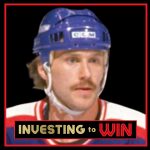
Investing to WIN #087 - Former NHL Center Laurie Boschman on Navigating the Transition to Post Pro Sports Life (Laurie Boschman)
Many elite athletes and high-performing professionals struggle to redefine themselves once their primary career comes to an abrupt end. They frequently fall into the trap of tying their entire identity to a single skillset, leaving them highly vulnerable to financial instability, sudden loss of purpose, and severe lifestyle displacement once they step away from the game.
In this episode of the Investing to Win podcast, former NHL center and original Ottawa Senators captain Laurie Boschman pulls back the curtain on what life after professional sports actually looks like. He shares his personal journey from navigating a phone-call-only draft in 1979 to managing his own contracts, obtaining a real estate license during off-seasons, and ultimately finding structural significance through community leadership and youth development after his 14-year pro career.



Duration: 58:08
Date: Jan 7, 2025
Guest: Laurie Boschman - Former NHL Center and President of the Ottawa Senators Alumni Association
WATCH THE FULL EPISODE:
Want the full experience? Watch directly on YouTube to support the channel and get recommendations for similar episodes.
What You’ll Learn
- The strategic reality of transition planning while still operating at the peak of your primary professional career
- Why salary transparency altered player leverage and allowed athletes to successfully negotiate contracts without middlemen
- A conservative capital preservation framework designed to survive volatile market conditions and sudden financial adjustments
- The psychological shift required to pivot personal identity from external career success to long-term operational significance
- How core team concepts like structural honesty, punctuality, and hard work translate directly into alternative business environments
- The increasing impact of modern algorithmic digital platforms and sports gambling apps on the financial safety of younger generations
Memorable Moments
"Never invest more than you can afford to lose."
"There is more to our existence than that."
"Character issues are real important things for people."
Episode Summary
The primary problem that many retired professionals and elite athletes face is the sudden drop-off in structure and identity that occurs when a high-profile career ends. Most people assume that accumulating significant wealth early in life automatically guarantees long-term happiness and stability, completely misunderstanding that money alone cannot replace a missing sense of daily discipline, competitive drive, and core operational purpose. This conversation details the critical necessity of proactive post-career planning, demonstrating that even a 14-year career in the NHL requires a structured secondary act.
What is highly contrarian about Laurie's journey is his hands-on approach to personal business and real estate asset management while still an active player. Rather than delegating all responsibilities to agents, he took the unusual step of studying for his real estate license and negotiating three of his own major professional sports contracts. He outlines how leveraging market data and engaging directly with leadership provides far greater financial alignment than relying blindly on speculative investments or third-party advisors.
This episode is a blueprint for current athletes, corporate professionals, and high-net-worth individuals who want to ensure their next career move is defined by stability and personal alignment. Listeners will gain a grounded perspective on applying baseline athletic disciplines to the corporate and non-profit worlds, evaluating investment risks objectively, and prioritizing personal character over short-term financial acceleration.
Chapter Timestamps
[00:00] – The reality of growing up playing unstructured multi-sport athletics in Western Canada
[03:56] – Navigating the unique underage amateur draft system during the WHA and NHL merger
[07:51] – A look back at the 1979 conference call draft day from a Calgary training facility basement
[13:46] – The sudden transition to civilian life and finding out about expansion selection via a customs agent
[19:15] – Evaluating secondary career paths and getting a real estate license during the hockey off-season
[28:04] – Financial management comparisons between conservative mutual funds and high-risk speculative stocks
[30:50] – Transitioning from secular career success to building long-term institutional significance
[35:21] – Addressing deep psychological and spiritual questions for junior and major league players
[41:46] – Capital preservation rules and managing the emotional reality of market losses
[42:55] – The dangers of modern accessible gambling applications and addictive platform algorithms
[48:15] – Translating baseline athletic principles into long-term commercial and personal success
About Laurie Boschman
Laurie Boschman is a former NHL center who played 14 seasons in the National Hockey League, recording over 500 career points and nearly 2,300 penalty minutes. Drafted 9th overall in 1979 by the Toronto Maple Leafs, his versatile career included impactful tenures with the Edmonton Oilers, Winnipeg Jets, New Jersey Devils, and serving as the first-ever captain of the expansion Ottawa Senators. Following his retirement from professional hockey, he transitioned to full-time service with Hockey Ministries International and currently serves as the President of the Ottawa Senators Alumni Association, focusing on community impact and charitable resource development.
Full Episode Transcript
Garret (00:02.83)
Great. Laurie, welcome to the podcast.
Laurie (00:07.476)
Thanks, Garrett. Good to be with you this morning.
Garret (00:09.548)
Yeah, no, it's just before Christmas talking over in the green room, all the different things. I appreciate you taking the time to come on. So audience, I'm doing a series here, sort of a life after the pros or I'm not sure exactly what I'm going to call it, but Laurie's agreed graciously to come on. And, you know, for those people who are listening, I'm sure Laurie is no stranger, but why don't you sort of give your a little bit of an intro there, Laurie, so we can get your background.
Laurie (00:37.886)
Sure, Garrett, it's good to be on the podcast here. Yeah, well, I'm a Saskatchewan boy. I grew up out in Western Canada, spent my first nine years in Saskatchewan. from there moved to, my folks moved when I was nine from a place called Bengoff, Saskatchewan in the southern part of Saskatchewan near the Montana border.
We moved to Brandon, Manitoba, of course, just down the road from Winnipeg and came from a family of five and it was five kids in the family and I was right in the middle and we were, you know, back in the day, of course, growing up in the 60s and stuff, wasn't, TV wasn't as popular as it is today and of course there was no cell phones and social media and those kinds of things. So we just spent lots of time.
We had very active family. We were very busy in all kinds of sports and that was the case with myself I played just about all the sports and stuff, but because we lived in a cold weather You know environment we played outside we played a lot of road hockey and we played a lot of hockey and so I kind of Kind of excelled at that and track and field and and those kinds of things But like I said, I played basketball volleyball the only thing I didn't play was football because
that sort of figured you know you could really get pounded. I wasn't a huge guy I was six foot you know when I sort of fully filled out I was six foot 185 pounds but sometimes in football there's some pretty big guys but anyways we moved you know to Brandon when I was nine as I mentioned and I sort of got most of my formal training in hockey when I started playing hockey in Brandon and then I just played I just played hockey Garrett for
for fun, you know, I kind of excelled at it. I didn't really think of it in those terms. It was just something I really enjoyed doing and was able to be with my friends. And I think that was the attraction really is just to do something you like and be with your friends and again, being very active in school and stuff. And it just kind of worked out that, you know, I continued to move down that road with hockey and back in our day.
Laurie (02:57.448)
You know, we didn't have all the summer hockey that goes on in that. So we did other sports in the summer and those kinds of things, played baseball and soccer and those kinds of things. And so, you know, when I was 16 years old, I was put on the list back then. They didn't have an amateur draft, if you would, or a Western Hockey League draft at the time. It was location and I lived in Brandon. So I was put on the list with the brand of weakings and
Garret (03:01.304)
Right.
Laurie (03:26.42)
When I was, I guess it was 16 years old, I tried out for the, they called them the Brennan Travelers at the time, which was the tier two team. And at the end of that year, actually my first coach was Andy Murray and Andy Murray ended up, yeah, I ended up coaching the national hockey team for a lot of years. And then I played a couple of games with the Brennan Wikings as a 16 year old. And then the next year as a 17 year old, I was fortunate enough to make the team and sort of.
Garret (03:41.629)
really?
No, of course, of course.
Laurie (03:56.028)
I sort of played my two years then with the Brown and Wheat Kings where we had a really good team. I played between Brian Propp and Ray Allison. So we had quite a good team. My hockey just sort of, if you would, evolved from that. I was a young kid, Garrett, who liked hockey a lot. That was probably my favourite sport, but I track and field quite a bit too and did lots of that stuff.
was with the Sundowners Track and Field Club and I love to run and do a lot of things but I sort of excelled at hockey and those kinds of things.
Garret (04:34.37)
Yeah, in woods there. it's really interesting, Lori. I've been talking to a lot of athletes and the concept of cross sports always seems to come up. And I mean, I don't want to just say athletic or not, but that that's really interesting. Was there sort of a moment where you're kind of in there and you're like, you know what? I think, I think I can do this. I think I can make it.
Laurie (04:42.132)
Mm-hmm.
Laurie (04:56.148)
Well, know what, Garrett, wasn't, it really wasn't until like my last year of junior, I was 17 years old. I would have turned 18 that year. So it was my last year of junior hockey. We had a really good hockey club. And it wasn't until my last year of junior where I really thought I had heard that, you know, because I had a good year, the year before and
there was talk of an underage draft because back in 1979 when I got drafted there was still a world hockey association and there was talk that the world hockey association might disband and you know might join the NHL and that's exactly what happened and then when that happened there was an underage draft and I was an underage player and there was talk that these underage players would be drafted and so then we had guys like Allen Eagleson
Garret (05:32.258)
Great.
Laurie (05:54.356)
that was traveling around the country who was a big player agent at the time and he was trying to recruit guys like myself and Ryan Propp and Ray Allison. So that was really the only time, Garrett. Otherwise, just thought Boston was my favorite team and I loved Bob Yoran, Phyllis Bacito, Cashman, and Hodge and all these players, Jerry Cheevers. But I never thought I would ever play in NHL. I didn't think I was that good.
So it wasn't until my last year that I, that, you know, and then of course I got drafted. I got drafted by Toronto and went to training camp and getting drafted is only part of it. Right. And then you've got to, you've got to try and make the team. so yeah, so wasn't really until I was, you know, my last year junior that I really thought I you know, maybe have a, have a chance at playing in the NHL.
Garret (06:36.344)
course.
Garret (06:49.836)
Amazing. then look at the career you had. Was there any moments, I'm audience, I'm trying not to just do sort of Laurie's professional career here because I think that's, not to say it's been overdone, but I think everybody can read about the story. They know about the story. I really want to talk about, you know, what you did after what you're doing now, but is there anything in your career that really sticks out sort of one of those quote unquote pivotal moments when you look back?
Laurie (07:19.058)
Well, you know, there's several things, I mean, throughout the course of my career. mean, one of them is just actually, Garrett is just actually getting drafted, right? Because it was kind of like, wow, you know, getting drafted in NHL, like I never thought that would happen, right?
Garret (07:38.158)
Can you take us through that moment? I've always wondered, right? mean, things are probably different now. Well, things are different today in 2024 than they even were two years ago. mean, guys are just getting phone calls rather than going down and things like that. But what was your moment like?
Laurie (07:41.34)
Yeah. They are.
Laurie (07:51.7)
Yeah, yeah, what was interesting back in 79 because they had the world hockey disbanded and so it was Quebec, Hartford, Winnipeg, Edmonton had joined the NHL to make it a 21 team league. And of course now it's 32 teams. so, you know, they've had 11 teams in, you know, in 40 years kind of thing.
But back then, because it was.
it was going to be because of the disbanding of the World Hockey Association that they decided to have a draft that was just by telephone. so we did not go, know, like today you have, where was the draft last year? It was at Montreal or whatever, and you have the top picks in their families. They'll go down to, you know, the...
Garret (08:41.678)
wow.
Laurie (08:52.532)
the Ball Centre in Montreal and they'll have family and agents and friends and all that kind of stuff. And now it's a big TV spectacular like on TSN and stuff. Well, back in our day, back in 79, it was a six round conference call that they had. And what else was going on in the hockey world after Brandon went to, like we were in the Memorial Cup Championships, we were the Western Hockey League champs and we ended up going to the
Garret (08:58.712)
Mm-hmm.
Laurie (09:21.492)
you know, the Memorial Cup final, of course is the final for the championship for junior supremacy. And we ended up losing in overtime 2-1 to Peterborough Peets and it was down in the Montreal area in Laval. And so after that was over, we came back and came back to Brent and we had a little bit of a parade there. And what else was happening in the hockey world in 1979 was the...
The hockey world was getting ready for the Olympics in Lake Placid, New York. And that's the miracle on ice in 1980. And so what they were doing, they didn't use NHL players at that particular time. They used amateurs. So when I got back from the Memorial Cup Championship, I got a call from my agent at the time, Alan Eagleson, and he said, know, Hockey Canada wanted me to come to Calgary to try out for the Olympic team.
And so I went down to Calgary that summer, the summer of 79. And while the tryouts were going on for the Olympic program was going to be that six round conference call. So myself and Paul Reinhart was another top prospect in that particular draft. so we were doing two days at the time and when the draft was held and they kept us out of practice in the morning.
And we were downstairs in the old Calgary Corral because that's where the training camp was. And they had a telephone set up and the deal was they were going to call this number. like there was no TV and no TSN and no sports net or anything like that. so the phone went off and there was a person from Hockey Canada there and
The deal was is when you got drafted, were gonna, because we were both told we were gonna get picked in the first round. And so that's what happened when Toronto called. They picked up the phone, the Hockey Canada guy answered and said, Lori, it's for you. And on the other end was Harold Ballard and King Clancy. And they were welcoming me to the Toronto Maple Leafs. so that's how I found out I was drafted in 1979. And then Paul Reinhart got a call. I don't know what number Paul was picked, but he was picked by the
Laurie (11:40.66)
Atlanta team at the time, the Atlanta flames, which a year later turned in 1980. At the end of 1980, they turned into the Calgary flames. They disbanded and went north to Calgary. So then both Paul and I had a challenge. Were we going to stay with Canada's Olympic program and participate in the Lake Placid Olympics, which was the miracle on ice, which US won, or were we going to try and
Garret (11:49.24)
Mm-hmm.
Garret (12:03.084)
Right.
Mm-hmm.
Laurie (12:09.736)
go to training camp and make our perspective teams. And for me, as a youngster, I never ever thought I'd play on Canada's Olympic program and that wasn't a dream of mine. My dream was always to play in the NHL. so about a week later, I left Team Canada's program and went back to Brandon to get ready for my first training camp in Toronto. And Paul Reinhardt ended up staying and he played in the Olympics in Lake Placid and then
after the Olympics were over, Paul went and joined the Atlanta Flames. So we took two different paths. We both ended up in the NHL, but that's what it looked like for me as far as draft day and all of that kind of stuff back in 1979.
Garret (12:50.904)
Mm-hmm.
Garret (12:59.854)
Wow, just in the basement, just with the phone, looking at a phone.
Laurie (13:02.464)
in the basement of the old Gallaghery Corral, there was just in a 40 or 50 year old building in the basement, we were just kind of looking at each other and just kind of saying, well, it's pretty amazing if we get drafted.
Garret (13:15.702)
Yeah, there's no nobody standing there with a jersey with your name on it. Boy, you know, it's amazing. mean, it's I mean, that's within my lifetime, too. I mean, I just it's amazing with how things you know, let's the career, you know, ending off in Ottawa now. What? I mean, let's just let's just transition into that. I mean, what was sort of, guess.
Laurie (13:18.292)
No, no, there's none of that stuff. Yeah, it was quite a bit different year. Yeah
Garret (13:41.976)
Was it a challenge transitioning after retirement to quote unquote civilian life?
Laurie (13:46.484)
Sure, and yes, the answer is Garrett, yes it was and yes it is for everybody. At every era it is because what happens is of course the biggest difference now, well let me first tell you about my sort of transition story. I finished here, know, was married, have three kids, we're living in Ottawa playing for the Ottawa Senators.
We did not have a very good team. was picked up by the expansion Ottawa Senators in 1992. And it's kind of an interesting story as far as how I got picked up. I played 14 years, Garrett in the NHL. In my last seven years, I negotiated three of my own contracts because I didn't need an agent after we had salary disclosure because I could sit in front of my GM and say, well, listen, here's what I do for you with Winnipeg or with New Jersey or...
You know, those were the teams that I actually negotiated contracts with. You know, and here's Garrett, here's what he does, and this team and that team, and you know, this is what I think I'm worth and stuff, and I was comfortable sitting across from the GM doing that. So, a week before the expansion draft in 1992, that's when Ottawa senators in Tampa Bay lightning came into, you know, came into the NHL. Lou Lamorello was our general manager in New Jersey, and he called me in his office before.
the expansion draft and he said, Laurie, I'm going to leave you unprotected, but I talked to Phil Esposito, the GM for Tampa Bay and Mel Bridgman, and it doesn't look like they're going to pick you up. And I had just signed a four-year contract with Lou the year before. So it was kind of like, okay, Lou, thanks for letting me know and all that kind of stuff. And so that's what he let me know was because I am my own agent.
Garret (15:40.302)
Great.
Laurie (15:40.64)
and also the player that he was gonna leave unprotected. So the day of the expansion draft was the day my wife and I had booked along with our kids. We booked our trip back to Winnipeg, because we had our house in Winnipeg and we rented it out to some of the hockey players that were playing with the Jets at the time. so the expansion, so we went from Newark to Winnipeg, Winnipeg to, or sorry, Newark to Minneapolis, Minneapolis to Winnipeg.
Garret (16:08.46)
Of
Laurie (16:09.712)
on something called Northwest Orient Airlines, which is not in existence today. And so that was sort of the most direct route. So anyways, when we get to Minneapolis, the expansion draft was over. And of course, this is pre-cell phone. So I go to a, you we're waiting at gate number four to catch our connector flight to Winnipeg. And I go to a bank of pay phones and I call my parents, can't get ahold of them because the expansion draft had already taken place. And I wondered,
Garret (16:12.32)
yeah.
Laurie (16:39.464)
You know, Jesus, did I get picked, did I get called? And so anyways, I called a couple other buddies, no one was home. I finally got ahold of one of my buddies and I said, you know, hey Steve, you know, did you hear the expansion draft today? And he said, yeah, yeah, yeah. I said, did you hear my name? He said, no, no, I didn't hear. Where are you, Bosch? I said, I'm just at the airport in here in Minneapolis. I'll, you know, be in Winnipeg in a few hours, so I'll see you in a couple days. And so, okay, great Bosch, you know.
No problem. I go back in line with my three kids and my wife and I say, Nancy, yep, we're going back to New Jersey. I didn't get picked. So it's like, okay, great. So we get into Winnipeg, we're collecting all our stuff. We've got car seats and baby stuff and all that kind of stuff. And, you know, we've got our customs card from the customs agent there in Winnipeg and we hand our custom agent the card. and he said, Mr. Boschman, you're back for the summer, you?
What do you think about getting picked by the Ottawa senators in the expansion draft? It's kind of like what? And I looked back at my wife who was behind me, you with one of the kids, I had the other two pushing the cart and stuff. And that's how we found out. And we go through the gates once we got there and Renu Feld and his wife Dawn and Dick and Shirley Stevens, our good friends were there. They had a truck and they were picking us up because we had all this stuff. And they said, did you hear the news? And we said, yeah, just 20 seconds ago, they
Garret (18:05.92)
Wow.
Laurie (18:06.292)
the customs agent told us. I mean, that's along with the story to say that's how we found out I got picked up by the Ottawa Senators. And, you know, to be an expansion team and stuff towards the end of my career, was my last year, was my 14th year in the NHL, turned out to be my last. It was really, really difficult. You know, I was named the captain because I was one of the veteran players. And I think one of the things we just tried to do is make sure that we don't, you know, we get along because
We just weren't good. I think we won 10 or 11 games. I can't even remember what it was that. So at the end of that year, I still had a couple of years on my contract and the senators decided to buy me out. And then I just retired. And we just decided to stay here in the auto area. what we were thinking of doing is at least we had an option.
When I was playing for the Jets, we had some friends of ours from the church we attended, Grant Memorial Baptist, Dave Quirk and Al Kron, and they still have these shoe stores, they're called Quirk Shoes, U-A-R-K, Quirk Shoes and Al Kron, or sorry, Quirk Shoes and Urban Trail, and Dave Quirk and Al Kron are the two principal owners, and so long and short of it is that we got involved in the company, my wife and I, and we thought about
Garret (19:15.8)
Mm-hmm.
Laurie (19:32.434)
maybe moving back to Winnipeg and getting involved in the business side of the shoe business. one year here in Ottawa turned into three years, turned into five, and then we decided, you know what, it's kind of unfair for our kids, for our three kids, because they were firmly established here in the Ottawa area. So we decided that we wouldn't move back to Winnipeg to get involved in the shoe business.
So it was a transition and it is a transition for everybody when you, no matter what I have found through the years, because I've been retired now 31 years and I deal with hockey players on a regular basis. It's a transition and like, know, back in our day, we made hundreds of thousands of dollars and now the players today, most of the players are making like north of a million. They can't make anything less than $750,000.
So it is a transition because it's a transition thinking okay, so now what? Now what are you gonna do because what you you know your skill before is you know passing skating shooting stop in the puck doing something like that and now it's kind of like You know my my education level Garrett was I finished grade 12 You know back in Brandon at Neil and high and the next year I was playing for the Leafs And so I didn't have a post-secondary education, so it was kind of like okay now what am I gonna do?
And so, I mean, the shoe business was an option. I thought about some different things. What I decided to do is I took a year off with Oak Plain Hockey and was just sort of a dad and a husband, which was really a really nice thing to do after all those years of traveling. And I just sort of felt we had been involved for years with an organization called Hockey Ministries International, which is a...
Christian based organization that does hockey camps and schools in Canada, US and Europe and as a player I was involved with it and and then my my my good friend and and the founder of it Don Lismore had asked me Lori would you consider coming on board and in and working with us on a full-time basis and so That's what I decided to do and and I've been doing that for the past 30 plus years You know, but all that to say is
Laurie (21:49.524)
it's a transition for everyone when you go from one career to have to go to another career. And that is the case whether you play hockey or not, and whether you have a little bit of money or a lot of money, because you still have to, nowadays the guys, they'll have say, north of a million and sometimes multiple millions of dollars in the bank,
they're relatively young in their 30s, sometimes in their 20s, and they have their whole life ahead of them. So then they have to decide, okay, so what am I gonna do with my life? so I sort of decided I would do something that I felt would have a little bit more significance to young people, and that's a transition I made, and I don't regret that at all. But there is a transition.
Garret (22:22.637)
Right.
Laurie (22:47.988)
for everyone. know, as you know, Garrett, when you go from one career to another and then just finding your way.
Garret (22:56.118)
Yeah, no, I would say definitely there's a transition. However, somebody who, you know, like myself, who's going from one career to another, usually you're kind of taking a leapfrog or there's some kind of commonality of it. You're going from, you know, practices, jumping on a bus, jumping on a plane to like, it just kind of stops. You know, I know I've, I've interviewed a few other pro athletes and, just heard some other stories about, and some
Laurie (23:04.158)
Mm-hmm.
Laurie (23:14.27)
Right.
Right.
Garret (23:26.232)
Get some counseling when they're, pretty young. And I mean, I don't know if you're familiar with the story of a rod, like Alex Rodriguez, but he was told, I think when he was 22 or 23, like start investing in real estate because you're only going to be here five years. Now, of course he, he, he had this amazing career, but yeah, he, his backup plan was real estate and buying some duplexes. had Adam Big Hill of the bombers, obviously, you know, great cup champion multiple times and his.
Laurie (23:43.998)
Mm-hmm.
Garret (23:55.48)
I don't want to say backup plan, but he's got this parallel path into financial, financial planning, high net worth type of thing. And so I believe that's what he's going to be doing in China. Almost started working on that in the off season. How, how often do you see guys nowadays or people, should say, not just guys, but professional athletes kind of preparing in that fashion.
Laurie (24:12.52)
Mm-hmm. Yep.
Laurie (24:17.18)
I, you do see some, Garek, and that is something, mean, real estate is something that you really, I mean, it's proven, you really can't go wrong through the years because there's this steady appreciation, you know, and in some cases, if you're in a sort of a more volatile market, like in a Vancouver, in a Toronto, or even a Calgary and Edmonton during the boom and bust of the oil industry, you can make a lot of money in the real estate industry. And so I think,
think real estate has always been something that has proven to be a very valuable investment commodity to get into. And I do see players getting the advice to do that. For myself, Garrett, it was kind of interesting when I was playing for the Jets from 83 to 90, I was always thinking, what am I going to do with my life after hockey? Because I really didn't know.
And I was always, you know, I thought, okay, well, maybe I'll get involved with Dave and Elle with Cork Shoes and do something with Cork Shoes Urban Trail. That was always sort of in the background, but I've I never really socialized that with Dave and Elle too much. But so what I decided to do is one summer, I took my real estate course in Winnipeg and I ended up getting my real estate license.
Garret (25:34.716)
really?
Laurie (25:39.412)
When I was in Winnipeg and at that time in the 80s you couldn't be a part-time real estate agent, but because I was a hockey player they deemed me in the summertime to be unemployed. So I got my real estate license and what I did was I sold some of my teammates houses. So my teammates got traded and I just sold their house. So Jimmy Knowl who's the general manager for the Dallas Stars, he got traded from Winnipeg to Boston and I sold his house, him and Becky's house.
You know, and so I wasn't looking to, you know, sort of work full time in the summertime, because we had three young kids at the time, but I was looking, do I want to do real estate? And I'll tell you, Garrett, I really liked real estate a lot. And I like it to this day. The only thing that I didn't like at the time, and again, this is going before where we are today with technology and everything, is
When I retired, considered it here in Ottawa because Ottawa has always been a stable market. It's a government town. There's always been this steady appreciation. And of course, since COVID things have gone crazy. And I'm sure it's the same Garrett, even in, you know, in Winnipeg and stuff, but the price of housing has just gone, gone absolutely insane. And the only thing I didn't get involved in it on a full-time basis was because of, I didn't want to be showing houses and, and
Garret (26:50.776)
Mm-hmm.
Laurie (27:06.704)
and doing things like that on the weekends because of my kids schedule. I wanted to kind of be a dad and be able to do stuff with my kids. So I decided not to go into real estate full-time basis, but I've always had a desire for it because I really enjoyed the several years in Winnipeg. And then of course, when I went to New Jersey, I couldn't do anything because your license is invalid, obviously in another country slash Eden province. so then just for those, I think it was about five years, I...
I had my real estate license with and I worked for the company called Canada Trust, which is not even a real estate company today. yeah, so there are players that do get involved in that. know, oftentimes what players will do too is they'll have an advisor because most of the guys, have to understand, like most of the guys, they have to focus all their attention on hockey.
Garret (28:04.494)
All right.
Laurie (28:04.564)
And unless they have like, you know, a mom or dad that's involved in some sort of industry business, whatever, it's usually like a good friend or it's usually like, okay, so Garrett's involved in real estate. And so, you know, I invest some money with Garrett and, and, you know, I gets, you know, a good ROI on it. And maybe I'll be involved with that, you know, when I'm done those kinds of things. But, you know, I will say this, some guys do
do fairly well with the investments they make. And sometimes it's in real estate, sometimes it's in restaurants, sometimes it's in other restaurants, sometimes it's just in the stock market because they have a lot of money to invest. one of the guys, and I won't mention his name, one of the guys I played with in Winnipeg, he was big on the stock market and stuff and I wasn't because I didn't understand it quite as well. I had a broker and we mostly
Delta and mutual funds back in the day and I asked this individual one day when we were out for dinner I said to him I'll use your name Garrett I said Garrett like you know and only all the stocks and different things you buy and stuff like how have you done over the years like are you up you know X number of dollars and stuff and he said gosh you know and I'm probably broken even so when he told me that I didn't feel so bad for doing the steady
Garret (29:24.684)
no.
Laurie (29:29.168)
investing in mutual funds which was you know anywhere from whatever like you know three percent to when things were good maybe fifteen percent you know those kinds of things right and but yeah so so guys do a variety of things from from what i understand just from what guys talk about and and that but but again the numbers are quite quite large today with what they have to invest in and those kinds of things
Garret (29:54.466)
Yeah, no, for sure. I mean, from what I'm understanding you say to summarize, mean, everybody seems to be investing in something, right? I mean, that that's the thing because you have this hopefully nest egg of money and whether, like you said, restaurants, businesses, a stock market, everything is still about getting that return on your investment. But then of course you have to have something to do and that's a little bit different than having to
Laurie (30:02.312)
course.
Garret (30:20.332)
I don't, mean, everybody has to work to some extent, but I mean, when you're in your early thirties, even if you had millions and millions of dollars, I mean, you're not just going to sit in your house and, you know, not do anything for 40, 50 more years. So how do you, I mean, how did you redefine yourself? I mean, obviously you, you managed to get into the hockey ministries. So, and some people aren't as lucky and have to transition away from hockey. How exactly, did that exactly happen?
Laurie (30:32.788)
That's right Neil.
Garret (30:50.04)
like the hockey ministries.
Laurie (30:51.536)
Yeah, what was through a relationship basically like through my good friend Don Lismar. It was through someone I knew, know, who offered me the opportunity to do something. And I like to say it was sort of from going from success to significance, know, like helping young boys and girls and, you know, understand, you know,
the basics of hockey, passing, skating, shooting, puck handling. So you're helping young people sort of improve, you know, their game. But then it's also there was this spiritual component, this faith based component that I thought was very important and that we could sort of tap into that as well. And so that's something significant that will help young people no matter what and, you know, for the rest of their lives. So I decided that
I would sort of forego if you would, you know, maybe a career that could add to the bank account to do something that would really have some significance. And that was based on the relationship I had with a good friend of mine and then seeing the significance that the hockey ministries could have, you know, at the junior level and stuff. And we run non-denominational chapel programs.
at the NHL level, American Hockey level, we have a chopper program with the Manitoba Moose, the Winnipeg Jets, with the Ottawa Senators, with many NHL teams and American Hockey League, Western Hockey League, Quebec League teams. So our ability to influence young men for good is sort of what is really the motivation behind my transition, if you would, from hockey to
Hockey Ministries International. But I think, you know, I deal with people all the time because, Garrett, I'm the president of the Ottawa Senators Alumni Association. So we have 50 plus guys who are retired NHL players who live in the Ottawa area. We do a lot of good things in the community to raise funds for a lot of different charities and help out the Ottawa Senators, facilitate some of the things through their Ottawa Senators Foundation. And so it...
Laurie (33:13.204)
You know, I'm in touch with former players all the time and I see some players who have been successful in their transitioning and some that are not so successful in you know, some of the choices and decisions they make and and all of those kinds of things so but You know, so you see a wide variety and guys have tried all kinds of things from you know getting involved in say
you know, being on a team again, like a hockey team. So they've decided, okay, I'm going to be a police officer, a firefighter. But I think most of the most of the guys, I mean, some guys will end up and they'll, they'll even have gone the US road and they have a, you know, they have a degree, but they've been playing hockey for a number of years. And so now it's a matter of transitioning and some of them transition into the financial marketplace where
They'll try and leverage some of the connections they have in hockey and then they're gaining experience in investing money for some of the guys and giving good advice, which is much needed today. But a lot of times current NHL players will have agents and through that agency they usually have someone, if not themselves, that will help the players to invest the money into various things and all that kind of stuff.
Yeah, it's just that I've seen a lot of different guys transitioning, if you would. And then there are a few guys who have made so much money in hockey that they're just happy to literally retire and just kind of manage their nest egg and not do a lot of stuff. But most of the guys are not in that situation. Most of the guys have
Even if they do have enough funds to last them for many, years, you have to do something to get up in the morning and keep you active and give you a bit of a purpose. And that for your existence, I think, is what I see.
Garret (35:13.388)
Yeah.
Garret (35:21.366)
No, you do a ton. mean, for those of the audience who don't know, know, Laurie and I actually met in the Hockey Helps the Homeless tournament. You know, you were here in Winnipeg a few weeks ago and we actually skated on a line together. It was a ton of fun. I actually really enjoyed the locker room stories. And again, hearing the stories today, I won't mention some of those, but no, I think, can you tell us a little bit more like...
When you, with the hockey ministries, I mean, you've told us kind of what you do, but how do you proliferate that message and how do you, like, it seems like your reach is quite far.
Laurie (36:01.264)
It is, but you know, it's like organizationally what Don and Lismore has built through the years. It's why the, you know, the breadth of the messages is so wide, like in different leagues. We have these non-denominational chapel programs, Garrett, in over 40 different leagues and over 400 teams.
And the other thing too is it's all player driven, which means there's a real desire on the part of hockey players, people who play hockey, that, you know, it's they have questions of life. You know, you know, if if God is good, why does my mom have cancer? Why did my cousin die in a car accident? Those are all valid questions. And and they'll ask those questions.
or they'll ask questions, or they'll go just because there is a curiosity of who God is or those kinds of things. questions like, why am I here? Is hockey, is this all that there is? Or at the NHL level, these guys have lots of money. And it's kind of like, OK, well, I have lots of money, but why am I not happy? And so again, we get to address some of these.
some of these questions from a biblical base perspective. So doesn't matter what denomination you attend. It's not what hockey ministry sings. It's not what Lori Boschman thinks. But if we believe that there is a God and stuff, well, you know, the whole premise behind hockey ministries is God has given us, you know, the word of God and those words are found in the pages of scripture. And so let's look to scripture and see what the scriptures say. we find that there's a great need for that.
Garret (37:53.123)
Mm-hmm.
Laurie (37:55.956)
amongst junior players, college players. We have a big college program as well down in the US. And so there's a great need amongst people to just have some answers. And they're looking for meaning and purpose in life and stuff. And so we can give them a perspective that they're not going to hear in the world kind of thing. It's not just all about the...
I mean, yes, we have to make a living, we have to accumulate wealth if you can, and some do it better than others and that. But at the end of the day, is that all that there is? And why am not happy when I have it? Because some of these guys have lots of money, but their lives are quite complex. So we get to address that, which is kind of fun.
Garret (38:43.63)
Bye.
I think you're living proof of that, Lori, that it's not about money necessarily. And you chose immediately to go after the bigger purpose. And I think you're blessed to have found that so quickly. know that myself in real estate right now, I am very passionate about helping the homeless and then just helping ordinary folks just see how easy it is to buy a single rental property. And that's my bigger purpose. Do you find others...
Laurie (39:05.171)
Mm-hmm.
Garret (39:16.588)
would maybe take solace in the bigger purpose because the money is already taken care of? Would you actually say that's a piece of advice?
Laurie (39:23.924)
I mean, I think in some cases, yes, I when you have a certain, you know, those things kind of, kind of looked after in the sense that you have enough money to, you know, like own a house and, you know, maybe even a cottage if you're very fortunate and you've got a couple of vehicles paid for and stuff. But what I find is, is that sometimes money does...
in and of itself when you have lots of it, it doesn't bring that contentment in that because you know always want a little bit more and then going after a little bit more you might take a little bit more risk and sometimes with that risk you know the reward you know for doing investing right is good and sometimes the downside is that you could lose lot more as well which does happen and what I will say too Garrett is that I
You know just from my own experiences everybody that I've talked to You know, I've invested in several things over the years and all of us have lost You know a significant amount of money on something that's just that's just the way it is when you try different things to you know you know, and it could be like, you know, Garrett and I go in on something and and You know, no nobody's doing anything bad or wrong. It's just the timing. So, you know, we bought one
You know at the top of the market and all of sudden now things have fallen off completely like you know we bought you know know Intel stock at $100 and now it's $25 or $20 or the things insolvent like Nortel you know here in the auto area. Big international company and you know it's insolvent today and so that kind of stuff happens it's through no fault of you know of anyone no one did anything illegal it was just the market conditions and
Unfortunately, things went south and that happens too. So that's what you find too, Garrett, with every player that I've talked to that has money. Everybody can tell you a story and sometimes too. It's just a matter of how much they lost. And, you know, I've always been on the very conservative side. So I've always said, you know, and I heard it from other people.
Garret (41:37.166)
Yeah.
Laurie (41:46.836)
you know, is never invest more than you can afford to lose. So if I invest $100,000, can I afford if that goes down to zero? You know, and I never want to take that much of a chance that if I lose that money, I'm going to be insolvent. so that's something I've been very conservative over the years. And I've been very fortunate that way just to, you know, to
you know to never really have to worry about that but you know in saying that of course I have lost money on different things as well.
Garret (42:26.174)
I think they do. What's that saying? There's no success without failure. And I think you see that in business as well. You know, anecdotally just sort of looking around from what you've seen over your breadth of career. Do you find that there's some not stories necessarily, but you see some younger former pro athletes that kind of just jump into something and then it's just like a trend, a disaster. Do you see a lot of that too? Like the, really sad stories.
Laurie (42:29.788)
Yeah. Sure.
Laurie (42:55.764)
yeah, yeah, unfortunately, I mean, you know, there are situations and it's usually like, unfortunately, it's usually like through like an addiction sort of studying, right?
Garret (43:10.414)
Mmm.
Laurie (43:13.01)
Like sometimes the abuse of alcohol or drugs or some sort of sedative after operations or whatever. then some people will have addictive personalities and they'll go down that road and they'll lose lots of money. And sometimes if you end up sort of at the worst case scenario just in the past few years.
you could end up like a situation like a Joe Murphy, which, Joe during his career, he made millions of dollars and unfortunately through addiction and different things, he was on the streets today. And I mean, that's at the far end of it, but you see and hear, there's lots of those stories as well. And I have to say, Garrett, my biggest concern is like, I love watching sports, I love hockey, I love...
NFL football, I Canadian football. But now every time I'm watching a sporting event, I see MGM, Grand, 365, all that kind of stuff. And it is really, it is a problem now for people, and it's going to be a greater problem for a younger generation today. And that's a real concern of mine, because you know what, casinos and gambling,
Garret (44:20.36)
that is just, yep. Yep.
Laurie (44:41.95)
they, the reason they have big facilities and stuff is because they are taking your money, not because they're paying it out. So it's kind of like, I see that as a big problem. And, and, know, that is a, that is a concern at the professional level as well. I don't mean in guys, you know, gambling on their games, but it's just, if you're a hockey player, my understanding is,
Like you can bet on NFL football and stuff. You just can't bet on your own sport. I think that's the case with all of these athletes. think that NBA player last year from the Toronto Raptors that lost his career, he was betting on, my understanding is he was betting on, you know, on himself or on the Raptors, you know, which is illegal. And he has lost his career. He's lost like millions and millions of dollars as a result of that addiction. So I see that as a real problem going forward. And that's something else along with,
know, with addictions to substances and those kinds of things as being something that is going to be a far greater problem just in society today, which is a big concern of mine, you know, with younger generation.
Garret (45:55.754)
I couldn't agree more. I think it was, and this is very recent. mean, within, would say the last year, I'm sure it's always been in the background, but it's so prominent now. I know watching just a Jets game last year and all of a sudden these ads are coming up and some very prominent, you know, sports people are headlining these things, not to say that they're making bad choices, but it reminds me I'm almost, you know, from the sixties and seventies, the big tobacco ads and you've got,
Laurie (46:07.508)
Yeah.
Garret (46:26.39)
applications on your phone and how easy it is for, you know, these young, young people to be able to just learn about betting. I have even no idea what most of these terms mean. You know, I mean, my betting is my gambling is sort of seeing my parents going to the casino in Vegas once a year and that was it. But now they're making it so accessible. And I do worry about my kids, my grandkids, future generations, almost being, you know, addicted to these things.
Laurie (46:36.818)
I've told with
Laurie (46:42.708)
Mm-hmm.
Garret (46:53.282)
before they even have the judgment to be able to know that it's taking over their lives. It's kind of scary.
Laurie (46:57.972)
Yeah, well it's just like, just with our smartphones the way they are today, you can be on whatever it is, whatever application it is, and it's amazing how they have those algorithms just to keep you kind of on the device, right? And if you have some proclivity to that, you know, your best and whatever, I have far too many stories of...
of individuals that are in a very bad way as a result of their addiction to gambling. So anyways, just see that as another thing that one needs to be very much aware of and that's a bit more of one of the latest and greatest concerns that you have to be. Because nowadays, just in the past couple of years, it's everywhere as far as the sporting world goes.
Garret (47:55.79)
Yeah, it certainly is. Getting back to younger, former pro athletes, is there one piece of advice that you might give to them, whether it be get an agent, get some planning the year of, several years before, what kind of advice would you give in preparing for life after pro sports?
Laurie (48:15.922)
Yeah, well, I think for anyone like nowadays, it's not necessarily, unfortunately, it's just the way it is now. There's all kinds of people and agencies that if you're good at something, they know you're good at it when you're like a 13 year old kind of thing. And they're following, you know, Garrett Wong because he's good at what he does. And there'll be several people that are after you and in the hopes that
know, here it's going to get drafted and there's lots of money to be made obviously from, you know, from these agents and stuff. And they do provide a service, you know, obviously a young person unless he has a parent who played or who's comfortable with negotiation or those kinds of things, you're going to need an agent, you know, to manage some of that. But again, I was a little bit different in the fact that I'd always take an active role in
And the fact that I negotiated three contracts myself is a little unusual. I don't know too many people that have done that. Because I was quite comfortable sitting across from my general manager. And with salary disclosure, that was an easy thing for me to be able to do. I was always thinking, Garrett, never thought that I I was never a Dale Howarchuk, so to speak, in Winnipeg. I always was worried, you know,
about next year and the next year, even though I had a two and three year contract and they are guaranteed, but I was always somebody who was worried about, okay, who are they drafting next year? Are they gonna draft, is Garrett Wong that they drafted? Is he a centerman? You I was always concerned about that, because as a centerman, So I was always thinking about what am I gonna do when hockey's done? And I think it's good as a young person. I I laughed when, you know,
So, Eagleton had an accountant and his name was Marvin Goldblatt. And when I was on a payphone with him once, he was telling me that I had to pay taxes on my first year salary, this sounds crazy, as a 19 year old, I was going, what? I only get half of that money? Like, I couldn't believe it. So, I was pretty naive that way.
Laurie (50:41.97)
Maybe the kids today are much more, they're much more sort of, have more information than we did, put it that way. so, my advice would be is obviously to work as hard as you can. I mean, because if you really love what you're doing, you're gonna work at it and you have to work at it in order to, even for someone to.
potentially, you know, think of drafting you into the, you know, Western Hockey League or whatever league it is, or to give you an opportunity to go to university if you're a good student, it's an option. You can get your education paid for and, you know, get a degree and, you know, because the chances are, you know, it's a very, very small percentage of players are actually going to make a living off it. And so if you can get an education off it too, that's really something worthwhile too.
You know, all of my siblings have post-secondary education. I was the only one who didn't. And that's because I finished grade 12 and then the next year I was playing for the Leafs. you know, otherwise that probably wasn't, you know, would have been an option for me too. But I think it's just to work hard at whatever you do. You know, as a former hockey player, I can use those same principles that I use to...
Garret (51:52.429)
Great.
Laurie (52:10.736)
stay in the NHL and to be successful, I can use those principles to, you know, in my post-hockey career because those same principles like, you know, being on time, being honest, working hard, being a good employee, all those things are something that people are desperately looking for. You know, someone who's not stealing from the company, all those kinds of things, right? And those things will take you a long ways, you know.
Garret (52:28.674)
Right.
Laurie (52:37.716)
today and sometimes you have to be fortunate you have to get a break right and somebody to believe in you someone to say hey you know Lori we'd like you on our team and you know come on in and here's you know we're gonna we're gonna we're gonna teach you we're gonna train you and because we think you've got what it takes to do this and that so so you know I think I think those character issues are real important things for for people whether you're young or old you know people are looking for
for individuals, men and women, of character. And so I think those are important things.
Garret (53:12.31)
Okay, well a couple more questions before we wrap up. Legacy, what do you want to be known for your legacy on and off the ice?
Laurie (53:16.82)
Thank
Laurie (53:23.028)
Well, I'm actually not really too concerned about a legacy other than the fact that my kids and my grandkids love their dad and love their grandpa. And that I finish well. I don't want to be sort of in my life on a bad note or a disgraceful note. So I want to finish well.
That's what I really hope. And the fortunate thing is, is have a great relationship with my kids and my grandkids from eight to six months. They think their grandpa's okay right now. They're not old enough to know that he might not be. But no, but it's lots of fun. have 11 grandkids, so it's lots of fun, Garrett. And because this podcast is around Christmas, we're gonna have some
Garret (54:21.741)
Right.
Laurie (54:22.056)
some of them home here over the Christmas season. So we're looking forward to that.
Garret (54:29.018)
Friends and family. Okay. then final question, Laurie. and I ask every guest this question, so I want to hear what you have to say. So this is, this is the investing to win podcast. How do you define success and what does winning look like for you?
Laurie (54:45.832)
How do I define success? Well, I probably define a little bit different than most people, to know, to have a wife who loves me and who I love dearly, and have a great relationship with my kids. And I understand and know that...
the garden in whom I serve. think that to me is what success and where significance comes from as well because everyone does have a sort of plumb line for what is successful. Is it having X number of dollars in the bank? Is it having five properties? Is it having this kind of car? Is it having
You know so so everyone defines it differently and so that you're gonna you're gonna have a wide variety of of answers to those questions, but I think oftentimes you know my faith will You know define what success or significance is a little bit differently than than the rest of course I would like to always have enough money you know all of us would to pay the bills and to do all that kind of stuff, but
But I think there is more to our existence than that. It's just at the bottom line because you don't take money with you.
Garret (56:26.03)
Well said, well said. Well, thank you so much for hanging out with me for the last hour. was a pleasure playing with you, seeing you win all those faceoffs during our little hockey tournament. you know, if we're ever on the ice again, hopefully we'll we'll do a little bit better than we did. But it was a great day.
Laurie (56:32.594)
it was good.
Laurie (56:41.267)
Well, that was very good and Hockey Helps the Homeless does some great work across Canada in helping out those a little less fortunate in the different communities and the agencies that help them out. So yeah, it was great to play with you, great to meet you, Garrett, and maybe we'll see you there at a tournament next year.
Garret (57:03.606)
Absolutely. Thanks for coming on, Laurie.
Laurie (57:05.192)
Okay, good.
Want more episodes like this?
Join my email list and I’ll send the best insights from real estate + business + investing.