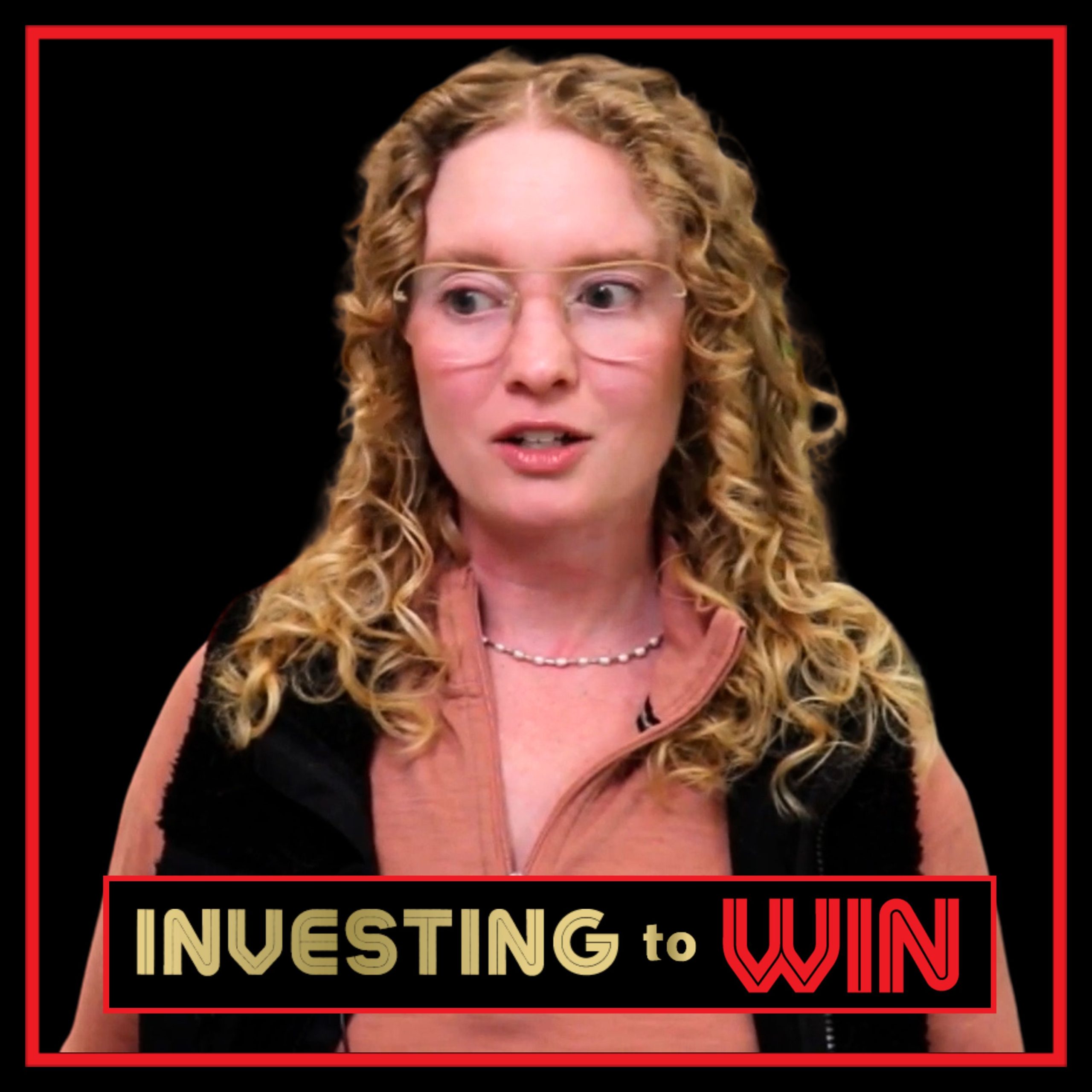
Investing to WIN #050 - How to Achieve Financial Independence Without Sacrificing Your Lifestyle (with Rachel Covert)
Most people believe financial independence requires extreme sacrifice or a massive income. This episode breaks down why that thinking keeps people stuck—and what actually moves the needle.
Rachel Covert shares how she transitioned from a high-pressure corporate role to a life built around flexibility, intention, and control over her time—without relying on shortcuts or unrealistic strategies.



Duration: 55:00
Date: Mar 19, 2024
Guest: Rachel Covert - Financial Coach, Electri FI Wealth
WATCH THE FULL EPISODE:
Want the full experience? Watch directly on YouTube to support the channel and get recommendations for similar episodes.
What You’ll Learn
• How to calculate your financial independence number using a simple formula
• The difference between lean FIRE, coast FIRE, and full financial independence
• Why increasing income strategically can accelerate your exit from corporate life
• How to redesign your spending without strict budgeting or tracking every dollar
• The real trade-offs of geo-arbitrage and living in lower-cost countries
• How to align your financial decisions with your values—not social expectations
• Why most people misunderstand what it actually takes to “retire early”
Memorable Moments
"I don’t want to trade my time for money anymore."
"You can achieve financial independence slowly or aggressively."
"Success is using your time in alignment with your values."
Episode Summary
This episode tackles one of the biggest misconceptions around money: that financial independence is only for high earners or extreme savers. Rachel Covert explains why most people misunderstand how achievable it can be—and where they’re focusing on the wrong things.
What stands out is her balanced approach. Instead of cutting everything or chasing unrealistic returns, she focused on increasing income, making intentional spending decisions, and building a long-term plan that aligned with her lifestyle goals.
This conversation is especially valuable for professionals earning solid incomes but still feeling financially stuck. By the end, you’ll have a clearer framework for how to use your money more intentionally—and how to start creating options in your life.
Chapter Timestamps
[00:00] – Introduction and Rachel’s background in fashion
[04:02] – Life as a VP in a nine-figure fashion company
[10:15] – The moment that sparked her career pivot
[13:07] – Discovering the FIRE movement and increasing income
[21:34] – What financial independence really means
[28:55] – How she transitioned into financial coaching
[35:04] – How to calculate your financial independence number
[37:35] – Living in Portugal and geo-arbitrage explained
About Rachel Covert
Rachel Covert is a financial coach and the founder of Electri FI Wealth. She previously served as a VP at a nine-figure fashion brand before leaving corporate life to pursue financial independence.
After achieving lean FIRE, she now helps professionals understand how to manage money, invest intentionally, and create more freedom in their lives. Her approach combines practical financial education with mindset shifts around spending and lifestyle design.
Full Episode Transcript
Garret (00:08.066)
Hello, this is Garrett, your host of the Investing to Win podcast. Today I have Rachel Covert in the studio. Rachel, how are you?
Rachel Covert (00:16.016)
I'm so good, Garrett. Thanks so much for having me.
Garret (00:18.954)
No, thank you for joining us. In the pre-show we were just discussing, as the viewers can see behind you, that you have a surfboard. We'll kind of get into the why of that, but why don't we start with the normal podcast thing and sort of tell the audience about who you are and how you came to be here.
Rachel Covert (00:35.728)
Yeah, for sure. So I'm actually a financial coach these days, but my real career path involved becoming the vice president of a nine-figure women's fashion business. And I made this pivot about two years, about two and a half years ago, really. And part of it is for the surfboard that you can see in the background, but also just for like many other reasons. And it's been a super fulfilling transition for me. And I'm really excited that I had the opportunity to do that.
Garret (01:03.094)
Wow, let's back up even further. Nine figure, I mean, even further than that, where did you grow up, let's say? Like what part of the world?
Rachel Covert (01:15.42)
Yeah, I grew up outside of Boston, Massachusetts, which I just came back from a visit. So a cold and snowy place, and also a super academic place as well. So I grew up around a lot of universities and colleges.
Garret (01:28.91)
Of course, of course, super cold. Well, you know, I'm in Canada, so you don't wanna talk to me about cold, but no, in all seriousness. So you went through college or university. What's your training officially in then?
Rachel Covert (01:33.59)
Okay.
Rachel Covert (01:42.96)
Yeah, so I have a Bachelor's of Science in Apparel Design. I'm a fashion designer by trade and by education. So I went to school. I'm one of those few people that studied a thing in college and then actually did that thing.
Garret (01:49.447)
Okay.
Garret (01:57.846)
Very nice. My sister actually is up in Toronto and she's a fashion designer, but now of course she's working for a toy design company. It's kind of weird where the textile industry takes you. So then, so walk me through then. So you went to, you got this degree and then you started working in what kind of company?
Rachel Covert (02:07.708)
Yeah.
Rachel Covert (02:17.284)
Yeah, so I think it's interesting to note that I went to the University of Wisconsin-Madison, which is not a historically fashion-oriented school, but when I was a student there, they had this really cool program where you could go to UW-Madison for three years and you had to get a Bachelor of Science in those three years. So I took all the normal kind of courses that anyone who is studying geology or math or whatever would have had to take. And in addition to that, I took a bunch of fashion classes. And then for my fourth year of school, I went to the Fashion Institute of Technology in New York.
So I moved to New York City when I was 21. Yeah, yeah, it was really cool. So I moved to New York when I was 21. I interned at Michael Kors. It was so cool. But I graduated from university in 2007. That is a difficult time to graduate, right? Because much like folks who graduated into COVID, it was a tough time to find a job. It was just before the Great Recession. So I got lucky and I managed to find a job.
Garret (02:48.432)
Oh, nice.
Garret (02:59.598)
Okay.
Garret (03:08.039)
Mm-hmm.
Rachel Covert (03:12.18)
pretty much right out of school, designing clothes for women for a catalog company. And I managed to stay there for three years. But then I got laid off, Garrett, and I actually got laid off about three times during the Great Recession. And so, and that's going to come back later when we talk a little bit about how I kind of ended up in financial coaching. But I ended up staying in fashion for 15 years. So I did it until I was 36.
Garret (03:35.038)
Okay, so speak to me about your last position because obviously that's where people make these huge pivots and their life choices. That's what's really interesting because you said, again, say it again, you were a VP, I think you said?
Rachel Covert (03:49.66)
Yeah, I was the VP of a nine-figure fashion brand. So for those of you trying to run the numbers in your head, that's hundreds of millions of dollars in sales.
Garret (03:57.474)
Okay, and what was your typical work day like?
Rachel Covert (04:02.562)
So the New York City fashion industry doesn't start super early. So we would, you know, usually I would have meetings from 930 until usually they ended between 6 and 7 p.m. And those meetings were, you know, they really ran the gamut from we're having a crisis with this t-shirt to let's review every item that we're going to, you know, put into the...
September 2019 collection. And I worked for this brand that designed everything monthly, which was really fun. It's a little bit unusual, but that meant that every month we had an opportunity to do something new, do something creative, put together a beautiful color palette, really think about the textiles we wanted to use. And so it was a really fun, really fashion focused brand. But I basically, when I was a VP, sat in meetings from 10 a.m. to 7 p.m. four or five days a week.
And then a few times a year I would travel to Asia, visit our vendors, things like that.
Garret (04:57.558)
Wow. Yeah, I know my sister. Asia is a huge hotbed for that, I guess naturally, where things are manufactured. Okay, so speak to me then about the sort of the tail end of that heavy workload, stressful days.
Rachel Covert (05:15.552)
Absolutely, like, you know, the day didn't end just because the meetings ended. So I kind of developed this situation where I would come in the morning and I would just look at my emails and just see if anything appeared to be a true crisis. And if it was not a crisis, I just didn't read it. Very few emails were sent directly to me. Most things were being handled by someone on my team, you know, my senior designers or somebody else. So you know, I would come into 300 new emails a day that I just never read.
And it was really overwhelming. I always felt like I was letting things slip through the cracks, although I think in reality I wasn't because I had such a fantastic team, like really, really creative, talented women on my team who were really supporting me and making me look really good. But at the bottom of it, I was really thinking about, this is not in alignment with how I want to use my life. I don't want to get up every morning, get on a crowded, smelly subway for 45 minutes to go and sit inside in an office tower.
you know, for 10, 11, 12 hours, five days a week. Like, is this really how I want to use my time on this earth? And it was really compounded by, I had been unemployed a lot. So I really understood kind of the value of money in my life. And I was working for a brand that, you know, while I actually believe that we make beautiful products and we made high quality products, we were really selling it under the guise of like,
Buy this thing. It's going to make you happy. And for me, just inherently and foundationally, I know that for myself, buying things does not make me happy. That is not my source of joy in life. And so I had this huge disconnect between helping to build this successful fashion business with these people who I liked and respected doing something I actually liked, but just feeling like the way my time was being used and the stress levels and the message that was being created just really did not align with.
who I am as a human being.
Garret (07:10.506)
Wow. I mean, I think there's a lot of people who are in jobs right now, listening to this podcast who could say the same thing because your passions, your creativity, your why statement, if you will, does not necessarily line up with what you're being told to do and, and sell and how to sell. Um, so that brings me to a question because what drew you to fashion design initially?
Rachel Covert (07:36.552)
You know, I've always loved clothes and loved style. Since I was a little kid, I loved dressing up. I was that kid who wanted to wear my tutu and my cowboy boots to preschool every single day. And that never went away. I loved thrift shopping, vintage shopping. And we didn't have, my parents never really valued things. So I didn't have a lot of new clothes all the time. My mom wasn't taking me to Abercrombie and Fitch, which if you're approximately my age, that was.
the very cool store to shop at when I was a teenager. I think we went once or twice. But so I really got into thrifting and vintage shopping and really developed this like sense of personal style. And I still to this day love fashion, but it was actually my mom who said, maybe you should consider being a fashion designer. And she found that program at Wisconsin that would give me a little bit more of a rounded education than just going to the fashion institute, for example.
Garret (08:25.806)
Okay. And then what was the biggest challenges as you were climbing this ladder? If you could sort of express this to the viewers, because I really want to explore your journey.
Rachel Covert (08:36.804)
Yeah, so if you've ever seen the Devil Wears product, Garrett, which maybe you have and maybe you haven't, but some of your listeners probably have, the fashion industry is not for the faint of heart. There is a lot of very intense, emotionally-charged meetings about things like which color pink you selected or how you decided to finish the inside of a t-shirt and things that just were not curing cancer.
And there was a lot of yelling and a lot of humiliating. And you just have to get really thick skin. Or I think even people with really thick skin, you just have to hold it together. And I feel like for the full most of the 15 years I worked, I would say not so much in my last position. I felt like that job was a good. I got on well with everyone I worked with. But it was a lot of just like gritting my teeth and being like, I can do this. And also, I was good at it. So my sales were good.
I really enjoyed kind of digging into the metrics and saying like, okay, what sold well, what sold quickly, what were our bestselling colors? How can we deliver more of that to our customer? Because that's clearly what our customer, who we always call she, so that's what she wants. So how can I really like do better based on what I'm seeing? And so because of that, and because I was basically just able to put up with being humiliated and screamed at and working until midnight, 1 a.m., 2 a.m.
For years at a time, I was really able to climb that ladder and establish a name for myself and build a really successful career.
Garret (10:09.662)
So what year was it when you decided to pivot away from fashion?
Rachel Covert (10:15.956)
So I decided to pivot away from fashion when I was 29, which was 2014.
Garret (10:24.182)
Wow, okay. So, I mean, we don't know each other very well, but I had a successful career in the lecture of the biology, working for the Federal Virology Lab here. And I also decided to pursue real estate as a passion, which is why we're on this podcast. You know, there's a lot of pressure, right? You go to school, you get your degree, you're working in an industry, you've got a great job. What were other people saying?
when you decided to do this? What were the thoughts going through your mind even before you announced it?
Rachel Covert (10:58.58)
So it's important to note that I didn't really announce that I was doing this for years, because I leveraged my fashion job and the money I was earning to achieve financial independence. So I didn't make a big stink about what I was doing. I mean, I was always kind of frugal because I had been laid off so many times. So I had been through a bunch of experiences where all of a sudden I came into work one day, and then the next day I wasn't getting a paycheck anymore. So I was always, from that, pretty good with my money.
Garret (11:04.375)
Oh.
Rachel Covert (11:28.82)
Um, but I wasn't super like loud about the fact that I was making this pivot. And the real why behind this pivot was when I was 29, I was diagnosed with a condition called rheumatoid arthritis, which is a, an inflammatory joint condition, um, that can get progressively worse throughout your life. And it's really hard to tell if it's going to get worse or if it's going to just sort of be stable. Um, but I just had this like realization that I literally could not spend my healthiest years doing something that was like.
misaligned with who I am as a person. And also, that felt like it was the worst use of my healthy body to sit inside a corporate office tower all day, every day. So that was the beginning of the pivot. I had a long, slow transition. I think a lot of people on social media see folks making these transitions. And it's like, oh, I left my six-figure corporate job. And just two months later, I was making $30,000 of passive income. That isn't.
a reflection, an accurate reflection of my experience. Like, it took me about, I didn't quit until seven years after I sort of got started on my journey.
Garret (12:35.334)
Oh, wow. Okay. So 2014, you said you officially left, or was that when you had the realization? Okay. So then seven years later is when you officially left.
Rachel Covert (12:41.98)
No, that's when I had my, I would say my epiphany. That was when I was diagnosed with arthritis, was in 2014.
Rachel Covert (12:51.972)
Exactly. So exactly.
Garret (12:52.178)
So 2021, so a few years ago. Wow. That that takes some forethought and planning. Okay, so I interrupted you tell me about that. How you know, you're thinking about this for seven years, you're planning in the background. What was happening?
Rachel Covert (13:07.256)
Yeah, so I had this realization I have to get out of fashion. And I started researching other careers, and I was looking at becoming a UX designer or some other type of creative field. But ultimately, everything that I looked at was going to still be me sitting behind a desk, creating a product that was going to be profitable for somebody else, essentially. And
During this time, I stumbled across the FIRE movement, which stands for Financial Independence Retire Early. And there are many ways to skin the cat on the FIRE movement. But I was actually initially turned off by it because it seemed really unattainable and really unachievable. And at the time, I was making, I want to say, $86,000 a year in New York City. So for some folks who are listening, $86,000.
Might sound like a lot of money to be making at 29, but in New York City, it is really not. You can make it work, it's livable, you can save a little bit, but you're not going to be making this like massive investments every year like I thought I needed to do in order to achieve financial independence. And just by coincidence, around this time, a recruiter called me about a job. And...
I wasn't sure I was really interested in the job, to be honest, Garrett. And I decided, you know what? I'm just going to go in for an interview. I was certainly not happy in the job I was in. I mean, I was in an extremely stressful environment at the time. And I went in, and the people I interviewed with were really chill and really nice. And they said, well, how much money are you looking for? And I was like, well, I'm making $115,000, so something more than that.
So I basically just lied about how much I was making. Now, it's not even legal to ask how much are you making. But at the time, they asked me how much are you making? And I just lied. And I said this number because I knew that that's what I needed to start working on financial independence, was I needed more money. And I was working 50, 60, 70 hours a week. I couldn't just have a side hustle. I didn't have all this free time to literally work more hours.
Garret (15:14.794)
course. So you tell them this number. And did you take that job? Did that? What did they say?
Rachel Covert (15:22.1)
They said, that's not really the number we were thinking about. Give us some time. And then they came back to me, and they actually offered me $120,000, which for me was like, I mean, it was an absolute game changer. As I'm sure anyone thinks, if you're making $85,000 and you go up to $120,000, essentially overnight, it's really a game changer. And I worked really hard at that job, because I could see that I had the potential to move up really quickly in this company. It was a relatively small company, and I was coming to them from.
some much bigger players in the industry, and I really knew kind of how to make things happen and how to maneuver, and I was also used to dealing with a much bigger volume of work. So I was able to really dive in and prove myself really quickly, and I advocated for myself. So they moved me to a much bigger brand almost immediately, which is the brand they ultimately became a VP at. And within, I wanna say...
a year I was the director of the brand. And when they offered me that salary, they offered me $10,000 more. And I said, I just don't think that's in line with what a director of a brand that's doing this volume of sales would be earning. Like, it's just not reasonable. And they said the thing that they always say, and they said, do the job for a year and show us. And so I did it for a year. And then they gave me another big raise and a big bonus. And every time I got a raise, I just said, is this the best you can do for me here?
And it really worked in my favor. And then I also asked for the promotion to VP. My boss at the time was leaving the company and I said, I deserve to have her title. And we both know I deserve to have her title. There's no ambiguity here. You know, I really went in and advocated for myself, which I think is something that a lot of women in particular are uncomfortable doing, but in a corporate environment, you know, their prerogative is the bottom line, right? So you have to be like sort of the VP of your own career.
If you want to grow in corporate, you have to show them that you want that growth and you have to deliver it on your side as well. And so I feel like that's really what I did. And that was really my approach to increasing my income without having to take on a second job.
Garret (17:26.962)
I'm blown away here because for anybody listening to this podcast who didn't hear the first part of that, they would think it's a podcast about how to get ahead in the corporate world and how to advocate for yourself. But you did this knowing at the back of your mind that there was another goal that you had. I mean, that's amazing.
Rachel Covert (17:47.728)
I also was looking at the women who were ahead of me. And I mean ahead of me both in the corporate sense, like they had senior level titles, more senior level titles than me, but I also just mean older. I was looking at women who were in their mid 40s and their 50s, and the fashion industry is super ageist and really unkind to them. And I also should point out that I was single. So I didn't have a partner who I could rely on. I didn't have someone else who could help me buy a house or I didn't have anyone to start a family with.
And so I was looking at a lot of women who were in kind of a similar situation to me but had worked their tails off for 10 or 15 years more than me. And I just, what I saw wasn't the future I wanted for myself. It felt like I was looking into this crystal ball of 15 more years of doing this and I just, I didn't want it. And so I knew that in order to get out of it, I needed to have a really solid backup plan because I didn't, I was afraid that if I left fashion, I was just gonna pivot into something else that was like equally terrible, you know? And I...
I was under the misguided impression that the only way I could be happy was to not have to work at all. And so that's why I was sort of pursuing FIRE. It was never to get myself into entrepreneurship, although I'm so thankful that I took the leap into entrepreneurship. And here we are. I know, that's a hard phrase. I was like, oh, that one's not rolling off the tongue. But yeah, so I feel like I did.
Garret (19:04.773)
Say that five times.
Rachel Covert (19:12.392)
took this really curvy path to get to where I am, and it was the right thing for me.
Garret (19:19.03)
So you mentioned the FIRE movement. Let's dig into that a little bit because I had only heard about this when I was doing some background research on you. So say again, what FIRE stands for.
Rachel Covert (19:30.096)
Yeah, so the FIRE is typically written as F-I slash R-E, and it stands for financial independence slash retire early, because not everybody actually chooses to retire early. A lot of folks, like myself, realize that, you know, you can do things with your time that may be gainful employment that don't feel suffocating the way that maybe your former life did.
Garret (19:56.878)
Well, I think a lot of people think of retirement, like those old freedom 55 commercials, you know, where you've got a gray haired couple walking hand in hand on a beach. But I know for me, when I decide to quote unquote retire, to me, that's just, I'm scaling back a little bit, I'm doing more things that I want to do. I don't ever anticipate just, you know, going to a warm place and doing nothing. So.
Financial independence, what's the definition of that? Like, is there a classical definition? Or is that kind of individual?
Rachel Covert (20:30.368)
So I would say that the fire movement itself defines financial independence as a position where you no longer have to trade your time for money. So some people also define fire as financial independence relax early for folks who are planning to still earn some income. And there's actually different levels of fire. I don't know if you saw this, Garrett, but there's like fat fire and lean fire and all these different delineations. So
The type of financial independence that I am is called lean fire. And what that means is I could live off of my assets without earning another dime, but as I discovered, it's tight, right? And I just see no reason to have to live on such a tight budget when I could certainly still bring in a little bit of money to supplement my lifestyle. And if I choose not to draw down from those investments, they get to just keep growing as well. So, so.
My partner and I are now working towards Fatfire, which is like a much more full kind of do whatever you want style of financial independence.
Garret (21:34.346)
Okay, so financial independence from the way I understand it, you have to have some kind of income that's paying you. Usually that's going to be through investments or some kind of passive income. Otherwise you would have to work to earn that money. Would you say that that's correct?
Rachel Covert (21:51.004)
Yeah, it could be from real estate, for example. Tons of folks in the fire community are doing exactly what you've done. Maybe it's not like 100% passive, but it's way more passive than being a director at a national kind of research center, right? But yeah, it's basically having some form of income, whether it's living off of investments like index funds or living off of real estate or owning a small business that is very hands off. All of those might be sources of financial independence.
Garret (22:20.266)
Okay, so what about the fire movement resonated with you so strongly that you started to think this is what I want to do?
Rachel Covert (22:29.38)
Initially, the fire movement really turned me off. So as a fashion designer, a lot of what I was seeing in the fire movement was don't eat in restaurants, don't buy new clothes, don't waste your money on silly aesthetic things. And my entire world was based on silly aesthetic things. You know, I was working for a brand where we were designing little tiny lace boleros, you know, like little tiny lace jackets, like completely useless articles of clothing that were just really pretty.
And so for me, initially, my interpretation of what I had to do to work towards fire was give up everything that really kind of felt like my identity. And what I ended up realizing over time is that you can achieve financial independence slowly or you can achieve it at a breakneck pace. And as long as what you're doing is getting you closer to your goal and it feels good to you and it's in alignment with your values, it was when I started to see like...
hey, I don't have to invest 75% of my paycheck every month. I could invest 30% or 40% of my paycheck, which is still huge, right? Still a lot more than most people. But have enough money to go out for Thai food with my friends. Have enough money to buy that cute new pair of shoes that I don't really need. I could be smart about how I use my money. And it's funny, I talked to a friend about this just yesterday, actually. And I was saying something and laughing about how I'm cheap. And she said, you're actually not cheap. You're just very intentional about how you spend your.
She said, you travel like crazy. You spend a lot of money on things like surf lessons and fitness things that you care about. She's like, what you don't spend money on is clothes and food. And I was like, she's so right. I'm just super intentional about how I use my financial resources.
Garret (24:13.514)
Well, I know that years ago, I was starting to read about this as well on my journey. And you know, there's people out there that advocate doing the bare minimum, you know, sell your house, sell all your assets, live in a tent, live in an RV live in a travel van. And I think there's a big lesson out there, like what you're saying, Rachel, about balance, right? Because what's the point of saying, oh, I'm financially independent when you're miserable, and you don't have any money.
to do the things you want to do, even though technically you can live off whatever you have, right?
Rachel Covert (24:48.)
Absolutely. And there's this concept. There's sort of these two opposing concepts. There's the YOLO idea, and then there's the folks who are terrified to spend any money, or the folks who are super into the ultra-frugality version of fire. And there's a really interesting book called Die with Zero that's really about using your life and your money while you have it. And so I think that's something that's really interesting to figure out for yourself. And it takes a little playing and a little testing.
you have a limited amount of time on this earth, and unfortunately we never know when it's gonna come to an end. And so nobody is lying on their deathbed thinking, gosh, I wish I'd contributed more to my 401k. So it's really about how do you find that balance between contributing to those retirement funds and making sure that you get to see the Grand Canyon or get to take your grandkids to Disney or whatever it is that's really important to you and really makes you feel like you live a life worth living.
Garret (25:45.514)
Oh, life's too short, way too short. And you just don't know what tomorrow's going to bring. Just back up there for a second. What does YOLO stand for?
Rachel Covert (25:53.216)
Oh, it stands for you only live once. Yeah.
Garret (25:56.318)
Oh, okay, so I just said that practically. Okay. All right, so you then reached financial independence. What was your next step then?
Rachel Covert (26:08.36)
Yeah, so there's a little, I wanna insert a little thing here. I know I mentioned that I was single until, you know, all through my, you know, I had boyfriends and whatnot, but I didn't have my like person. And when I was 35, during the height of the pandemic, I joined a dating website for people seeking financial independence. It was called Fire Dating. I do not know if it still exists. People ask me all the time. I don't know because the guy who created it, created it so he could meet a life partner and I believe he did. So I have not been in touch with him. I don't know if it's still active, but.
I joined this website in June of 2020. And in August of 2021, I got a message from a handsome British man, and we started chatting and FaceTiming and really hit it off. And I think, you know, we hit it off because we had so many shared values, you know, we didn't really share a culture. He was literally living in the UK. I was living in New York city. We couldn't even meet each other because it was a pandemic. And, you know, I essentially ended up, we went on a first date to Barbados and, you know, spent three weeks together on our first date. Yeah.
Garret (27:05.782)
Wow.
Rachel Covert (27:07.868)
Yeah, I was 35 and he was 37. You know, we weren't children. You know, we really were kind of getting to an age where it's like, you get a little nervous. Like, am I gonna meet somebody? And so we, you know, fell in love very quickly. And, you know, once I had this partner and he really believed in me and we built a spreadsheet. We looked at kind of what our financial trajectory looked like and we just wanted to be together. And there was a pandemic and he works on Ships at Sea. So he works for a month and then he's free.
completely free to do whatever he wants for an entire month. So he's got a ton of free time. And basically I had this job where, even though I was making good six figures, I didn't have free time. I left for work at 8.30 in the morning and came home at 8.30 at night. So what kind of life were we gonna have together, especially when we didn't meet when we were 22 or 18 or 25, you know, I feel like we really missed out on those years of our 20s and our 30s.
together and I just said, you know what? And this was with his full support. It was, why am I staying here? Like we have a lot of assets. I want to start taking myself and my time and really prioritizing my time. So in spring of 2021, I quit my job, much to everyone's surprise. People were shocked. And it wasn't that I quit to go work somewhere else, which I think if I had done that, people would have been like, okay, this is reasonable. But I quit to not work and people were just.
flabbergasted that I was doing this, which I think kind of ties in nicely. You asked me, what did people say when you told them you were gonna do this? I was like, I didn't tell anybody. This was a secret. So my friends knew, my close friends knew, but my colleagues or anyone who kind of knew me loosely did not know about this.
Garret (28:36.099)
Yeah.
Garret (28:48.642)
Okay, so you've achieved financial independence. What's motivated you to begin financial coaching then?
Rachel Covert (28:55.284)
So when I quit my job, my partner Liam and I went on this long road trip. We went down to Mexico. We came back to the States. We drove around. And everywhere we went, we would meet people. And they would say, well, what do you do? And I would say, well, right now I'm kind of retired. I didn't work. I had nothing going on. And they would say, what? How old are you? And I was like, well, I'm 36. They're like, how did you do that? Like, did you inherit money or something? You own property? And I said, no, I just really aggressively invested in index funds. And I live on a pretty lean budget.
And so it turned into this thing where people were asking me, hey, how did you do that? And you'd recommend a book to someone or point them to some podcasts. And folks just want another person who already did it to really show them the ropes and help them make decisions. And they want to feel like they're in a community. And checking out a library book, which worked really well for me, does not work well for everybody. And so I saw this as not only an opportunity for me to start to bring in a little bit more money so that we could live a little bit more, you know.
a little bit more of a financially relaxed lifestyle. And also as a huge opportunity to help a lot of people escape this like, you know, consumeristic treadmill that I think most Americans and probably most Canadians are absolutely trapped, you know, on and they have no idea that it's not like they feel that they're on this treadmill. This is like, you know, does a fish know that it's in water, right? Like they don't know that they're living this lifestyle. And so it's been a huge opportunity. And at this point I've helped over a hundred folks.
Garret (30:16.94)
Yeah.
Rachel Covert (30:23.557)
sort of reimagine their financial futures.
Garret (30:27.018)
Yeah, I think, I mean, at least for me, for my situation, it came from my parents and I think it always kind of does, right, you grow up in a, hopefully a good nurturing family and they send you to, you get your high school and then maybe you go to college or university and you go get a job for the sole purpose of working for 30, 35 years to pay off that house. So you can quote unquote retire. But at 65, if you make it there, what kind of life have you had?
So I, yeah, I was going through the same things. I think the word financial literacy is curious to me. Can you define what that means, at least for yourself and your clients?
Rachel Covert (31:07.408)
Yeah, absolutely. So the US financial system, as well as the Canadian financial system, because I do have some Canadian clients, they're complicated. There's a lot of terms. There's RRSPs, and there's TSPs, and there's IRAs, and there's TFSAs, and there's all these different things. And people basically lack an understanding of what are the mechanisms that you can use to reduce your taxes and make your money grow.
How should you be sort of dividing up all this money that you have coming into your life? So, you know full transparency most of my clients are, you know making somewhere in the high five figures, you know to six figure range so You know most my clients are able to make ends meet but still finding themselves feeling really broke and it's because they just don't Understand how the mechanism of money works. And so I really work with folks to teach them You know, these are your different strategies and avenues for you to test
and see how you can use money and how money can flow through your life in a way that supports not only your current goals but your future goals.
Garret (32:16.194)
So, I mean, there's a lot of people listening to this podcast that would fit exactly into that mold. Speak to me a little bit more about your program. I mean, I have a note here on the side. Is it called Electrify Wealth? Is that, did I butcher that?
Rachel Covert (32:31.192)
It is. No, no, it is. So the FI stands for financial independence. So I think that actually probably is missed by most of the folks who join the program, but that is what the FI stands for. Yeah, so my program is, you know, it's an educational program. So I'm not a certified financial planner. I'm not a financial advisor. So my goal is actually not to, you know, my goal, if I've been successful, you understand, you know, how to take advantage of...
Garret (32:36.106)
Sure, sure.
Rachel Covert (32:59.072)
tax savings accounts, you understand how to invest in the stock market, you have a basic understanding of a spending plan. So a lot of what I do is help folks figure out, well, how much money should I be spending on fun? And how can I manage that without a really strict line by line budget? I'm sure a lot of folks listening to this probably own houses, have kids, have full time jobs. They are not going to take the time after they buy every cup of coffee to write it down. And I see this all the time. Right?
And there are folks for whom that is a fantastic system, but my typical client and the average person that I'm helping just feels really overwhelmed by that. And so in order to come up with a system to manage your cashflow without having to write everything down, I have my clients open a couple of different checking accounts so that they can set up automatic transfers, replenish their fund money on a weekly basis, and really learn how to sort of use their money well. And also,
test, right? Like, how does it feel to be really frugal? And some folks find that actually it's a release, it's a relief to just be able to say, nope, I don't have to buy this thing anymore. So we really go through and we get a lot of education around that. And then the other piece of this is mindset, right? So a lot of people, like I mentioned before, are on this kind of consumerism treadmill and they have no idea that they're on this treadmill. And once I start to sort of talk to them about it and kind of...
point out like, hey, every time you go to Target and spend $275 on things that are not consumable, throw pillows and shoes and whatever, that's all gonna go in a landfill and probably sooner rather than later. It's gonna be out of your house in five years. So is that really how you wanna use your time? Because all that money you just spent used to be time.
Garret (34:46.718)
Okay, because that brings me to a really important question. And I'm sure everybody's listening. How are there guidelines to achieving financial independence? Like how much do you need to save? What do you need to do before you can even consider that? How do you work that into the conversation?
Rachel Covert (35:04.788)
So the big question is, how soon do you want to achieve financial independence? So I've actually kind of moved away from telling people or even suggesting to folks that they want to be fully financially independent. And I've been kind of pointing folks to, there's a couple of other types of financial independence. One of them is called coast fire. And the idea with coast fire is that you have enough assets invested into your brokerage accounts and taxable investment or sorry.
tax advantage accounts, so your 401Ks, your IRAs, your TFSAs, your RRSPs if you're Canadian, that money will grow to be enough for you to live comfortably on in retirement. And when you reach that point, you can stop adding money to that account. Or you can get to a place where you have enough money invested that you can just work part time and live partially off of your assets and still bring in some income a little bit here and there. Maybe get a job in a flower shop. Or.
you know, start a small business. So I wish I could tell you that there was a specific amount you have to save, but the real back of the napkin math here is to take the annual amount of money that you need to spend and multiply it times 25, and that's your number. So if you can live comfortably on $40,000 a year, which in a lot of places you cannot, but there's a lot of places that you can, and I'm here to tell you that that's the truth.
If you can live comfortably on $40,000 a year, if you have a million dollars of assets invested, you would be able to never work again. If you could live comfortably on half that, you could do it right, $20,000 a year, you would only need half a million dollars of invested assets. Now, this may not be possible inside the United States, but there are certainly places where that is possible. So if you're in a situation where you're realizing, I need to get out of here ASAP.
it may be worth looking at what is the largest percentage of my income that I can invest. Because that does two things for you. First, it helps you, of course, to get to that number faster, whether it's half a million or a million or whatever it might be. And secondly, it teaches you to live on less. And when you learn how to live comfortably, spending less money, you need less money in retirement.
Garret (37:20.686)
Okay, that was a really good segue because I've been dying to ask you this. The surfboards behind you, we established that, you know, Massachusetts, you lived in New York. Tell the audience where you're living right now.
Rachel Covert (37:35.54)
So I live on the coast of Portugal, about 40 minutes north of Lisbon, in a little surfing town. And I moved here roughly a year ago, a little bit more than a year ago.
Garret (37:51.246)
Okay. And I know you just got back from a vacation because I had to wait to interview you. You use something called geo-arbitrage. Can you explain what that is?
Rachel Covert (38:03.12)
Yeah, so geo-arbitrage is the art or the act of moving to a lower cost of living place so that you can live on a smaller amount of money. And that is partly what I did.
Garret (38:17.934)
Okay, because I mean, living on the coast of Portugal does not sound like you're sacrificing too much, to be honest, but I mean, okay, obviously maybe you've chosen that because the cost of living is lower. Give me some other examples of this.
Rachel Covert (38:34.808)
Yeah, so yes, we chose it partly because the cost of living was lower. One of the biggest challenges is finding a country you can move to. So Portugal has made it really friendly for digital nomads or just folks who can work remotely to move here. So you can also do that in Spain now. Spain has significantly higher taxes but also a much lower cost of living than most places in the U.S. and a super high quality of life. There's tons of places that you can move in Central and South America.
You know Mexico being one of them. There are lots of beautiful interesting cities that are super safe in Mexico That you can live on you know for 2,500 to 3,000 dollars a month or even less there's some that you can live comfortably You know for $1,500 a month that might be places like Oaxaca, Mexico City If you're a surfer, you know You may want to live look at a place like Puerto Escondido where you can go surfing and you know live really affordably for you know five six seven hundred dollars a month
You can go even further south, countries like Ecuador, Bolivia, and then of course there's Asia, right? Tons of expats live in Thailand, for example, or Vietnam because the cost of living is very friendly and while they don't give up the same types of visas, they make it easy for you to renew your visa by just leaving for a weekend.
Garret (39:56.77)
Wow, that's so inspiring. I think because when you think about housing, a mortgage, your rent, I mean, that's probably one of your biggest expenses. So what you're doing there is removing that and whatever comes off of the expense column immediately goes into the saving and income column.
Rachel Covert (40:19.176)
For me, yes. I will tell you that where I live, the specific town I live in, my cost of living is probably significantly higher than it would be if I were willing to move further from an airport. But because one of the things I think maybe I should touch on is that the sacrifice you make when you move overseas is you move really far from your family and friends. And so you do really have to be willing to.
make those trips home and budget for those trips home. So I like to be transparent about that. The other thing I like to be transparent about is that, you have to remember that you are effectively a gentrifier. So when you move to a place like this, you wanna be conscientious of not throwing money around and trying to live like a local as much as possible to keep the costs of living down for the folks who are living on local salaries. So our rent here in Portugal is...
a little lower than, I mean, significantly lower than the average rent in New York City, although I had a really affordable apartment, because that was one of the ways I achieved financial independence was by staying in incredibly inexpensive apartments. But the other things are what are so inexpensive here. I just went to a grocery store and I bought literally a full, like a giant full bag of fresh vegetables, including raspberries, blueberries. I bought some fresh cheese, sweet potatoes, lettuce.
tons of food and it was like 19 euros. You know, like if I had bought it at the farmer's market, like the equivalent farmer's market near my parents' house, it would have been 60 bucks, you know? So it's like that kind of thing. I bought a used car, used cars are actually pretty expensive here. I bought a really old one. It was my very first car ever. It was 1200 euros, you know? It's like, yeah, I had to hunt for that. I'm not gonna lie, I had to hunt for that deal.
Garret (41:57.261)
Wow.
No, I mean, but that's part of your strategy, right? Is being frugal, being intentional, and yet traveling and surfing. There's nothing wrong with that.
Rachel Covert (42:08.5)
Totally, and I'll pay like 50 euros, 40, 50 euros for a surf lesson. I'll pay 25, 35 euros for a skateboarding lesson. I'll pay for language lessons. One of the things we're doing here as foreigners is we're really pouring money back into the economy. And so I really do invest in learning those skills. Even when I lived in New York, I was a member at a pottery studio, and that was like a couple of hundred bucks a month.
My priorities have always been in sort of self-development and skill building. And so in order to do that, I have to be really intentional. And even with the food, I'm not, you know, I bought 20 euros worth of vegetables. That's going to last me a whole week. They're super fresh. They won't go bad. And, you know, I'll supplement it with, you know, some rice and some meat. I think, you know, my weekly food budget can easily stay, you know, in the 40 to 60 euro range, which I think would not be possible in North America.
Garret (43:07.05)
Well, no, I just went shopping yesterday and almost had to take a mortgage out for my $10 little bin of strawberries. I mean, I think that's what everybody's speaking about now is grocery prices. So the fact that you're able to do this in a place where you probably arguably get even fresher vegetables and produce is amazing. I think how much, how many...
I don't want to say students necessarily. In your experience, are there a lot of people doing the geo arbitrage thing?
Rachel Covert (43:43.068)
No, particularly not Americans. Most immigration is the reverse of what I'm doing. Most immigrants are moving to a place that is actually more expensive in the hopes of getting the corporate path that I was incredibly privileged to be born into. I was really privileged to be born into a family that valued education in a place that I absolutely had access to it. So.
But there really aren't, of course it's growing, it's increasing. If you look at the news and you just search on any major newspaper, there's lots of articles about how many Americans are moving to Portugal. But there's between eight and 10,000 Americans living in Portugal right now. It's really not like there's a lot of us. Within Europe, it's more common to move around a little bit. So there's quite a few Brits who live down here. And there's a whole community of folks who really are engaging in GOR retrage. And it's also not always permanent, right? Like,
If you were in a situation where, for example, you had a lot of credit card debt and you were really struggling or you had tons of student loans and you moved to Spain and worked remotely for a Canadian or a US company from Spain, you are going to pay pretty significant taxes. But very often, your quality of life is super high and you're really able to funnel that extra money into student loans. And people will do much more extreme things like they'll move to South Africa or they'll move to Bolivia.
and they'll live in a place where they can spend $800 a month, live incredibly comfortably, and put $1,000, $2,000, $3,000 a month towards paying off their debt. So it doesn't always have to be a permanent solution. It can also be a means to an end.
Garret (45:17.898)
Well, I think post COVID and now with remote work being so common, I think the world literally is within anybody's reach. I have some remote employees that live in Mexico, some RTMs, remote employees, and
I mean, I'm here in Canada and I've got my virtual background on and they don't have to have a virtual background because they literally have an ocean behind them. And I'm thinking, why am I doing this? I'm working remote now with my, the way I've structured my company. I could literally live anywhere. Yeah. It's pretty crazy.
Rachel Covert (45:51.976)
And what's interesting for you in Canada is like, if your time zone is really important to you, you can just move straight south, right? If you're a person who's a night owl and you like working overnight and you wanna be free during the day, you could move to Thailand. Where I am, what I have is amazing. I'm five hours ahead of Eastern Standard Time. So my mornings are always free. I can go work out, I can go for a surf, I can go do yoga, I can grocery shop and run errands.
Garret (45:59.516)
Mm-hmm.
Rachel Covert (46:17.756)
And then starting around noon, one o'clock, I might start to have some meetings with clients and sit down at my computer and I work, you know, maybe five, six, some days, even seven hours a day. But I always know that my mornings are mine and I can do whatever I want with them.
Garret (46:33.502)
Amazing. No, I think you're inspiring a lot of people. For those who are listening, what would you say would be the first steps in trying to just think about the whole FI movement?
Rachel Covert (46:46.244)
Yeah, that's a great question. So I think the first thing to really look at is how much money it actually costs to exist in your life. So I don't mean how much did you spend last month or what did you spend it on, but I mean basic stuff like mortgage, car payment, child care, groceries. And really look at those things and decide, am I willing to make a big change to one of these things in order to achieve FI? Because.
I personally took the path of living in really inexpensive apartments and really hunting them down the same way I did with my car. I'm really, you know, always was really patient looking for an apartment so that I could find one that was within my budget. And I'm really, you know, I think, like I said, I eat, you know, 40 to 60 euros worth of groceries a week, which is also a very lean grocery budget, which is what I also did in America. It wasn't as small. But so I really reimagined what it cost to be myself.
and I was really willing to look at my own habits, my own behaviors, and say, okay, what are the things that I need to change to free up some money so that I can still go out to dinner with my girlfriends on Friday nights, so that I can still take these pottery classes, right? So I think kind of you've alluded to this, right? The going to college, getting the mortgage, buying the SUV, these are sort of, you know, like the trappings of a successful person, but they're also the ball and chain that are kind of keeping you stuck because they're eating up, you know,
50, 60, 70% of your income. And for folks who have kids in daycare, my heart really goes out to you, especially in the state's daycare, and probably in Canada too, one of the biggest expenses that folks have. So that's a really tough one to work on. But what we consider success is owning these big debts, these expensive cars. I talk to folks all the time who have seven, eight, nine thousand dollar car payments.
Garret (48:40.15)
But it doesn't start with that, right? What about fuel costs, insurance, parking, maybe a parking spot where you're living? I mean, it's not just the car, which everybody knows the moment you take it off the lot, it's depreciating at a horrid pace.
Rachel Covert (48:54.912)
Oh, it's unbelievable. And here in Portugal, actually, gas is, you know, petrol is incredibly expensive. So I put 40 euros of petrol in my car today and it had about a quarter of a tank left and I've got about three quarters of a tank now. And it's hilarious because I probably spent more on gas than I spent on the dang car and it's a fairly fuel efficient car. So, you know, this is the thing. You buy a big truck that's a gas guzzler that costs, you know, $140 to fill and you have to do it every week.
Right? You're commuting a long way to work to get all the way back to your suburban paradise. Like these are the kinds of questions that you have to ask yourself. Now the answer might be, I love my house. I love my truck. I don't want to give either of these things up and that's totally okay. But in terms of what's gonna get you to fi, those things, changing those things have a much bigger impact than canceling your Netflix subscription.
Garret (49:47.958)
You know, um, I mentioned my, my fashion design sister who's living in Toronto, which is a very expensive city. And I mean, she's only a year younger than me. I'm 52 and her whole life, she hasn't had a car there. They haven't needed it. They've got by on subway. She chose to live in a condo downtown and she has just paid off that condo. Hope she doesn't mind me saying that, but at the same time, she's allowed her, her husband, who's a writer to pursue his passion.
and just recently bought a car maybe a year or two ago intentionally. She was able to do without it for all those years. And now, I mean, I don't think she even knows what the fire movement is, but she's kind of been living that without even knowing it.
Rachel Covert (50:30.248)
Well, first of all, congratulations to her for paying off her condo, especially in downtown Toronto. That's an amazing asset. I didn't, I never owned a car in New York. I did borrow one from my parents for about six months during the pandemic when parking was easy. But it's a similar thing. I think sometimes folks who live in big cities, if you're, you know, kind of willing to either live in a little bit of a smaller space or an older space because you can take public transportation so easily. If you're able to keep your housing costs down, it's easy to eliminate that.
When I lived in New York, I took the subway a lot, and I city biked a lot. I used those public bikes that you borrow. And I tried really hard not to Uber. I would take the bus sometimes. I did take Ubers. I'm not saying I never took them. But I really, again, used transportation as one of the things I knew I could keep that cost down in a way that was safe and healthy for me.
Garret (51:21.366)
Well, a few Ubers here and there, even if you had to rent a car for a weekend to go to the beach with friends, it still pales in comparison to leasing or buying a car and all those again, insurance, gas, everything out parking, right? So amazing. Well, I'm going to be leaving your information in the show notes because I think you have a very interesting program. I'm sure there's lots of folks who would love to connect. So I'd love to give you a plug in that way.
Rachel Covert (51:35.454)
Yeah.
Garret (51:49.818)
And before we leave, I ask every guest on the podcast this question and I'm really interested in what you have to say because we're talking about financial independence. So this is the Investing to Win podcast. How do you define success and what does winning look like for you?
Rachel Covert (52:05.876)
So I define success as using your time in alignment with your values, whatever that looks like to you. So it may be that you are working a full-time job in a corporate environment and you love it and you feel like you're having a huge impact. So to me, that is success. If you are using your time in a way that you feel happy about and you feel like you have good community and good connections, I think that's a huge sign of success. And to me, winning is having the choice to walk away
from your job whenever you want to. So being able to really own your time and say, you know what, this isn't serving me anymore. Like, peace out. I think that's really like the trump card. Even if you are successful and your job does bring you joy, your manager could change and all of a sudden, it's a nightmare. And so to me, winning is really having that backup plan or having that opportunity to really take back your time and be able to.
create boundaries for yourself because you're not reliant on that paycheck.
Garret (53:09.898)
Yeah, and hopefully those listening here don't have to go through a life scare or some kind of condition like you or I've also had a few life scares myself in the last couple of years that have realized and pushed me towards my current pivots. Hopefully that you don't have to experience that to realize that you literally have one life to live and you need to be very intentional about how you live it.
Rachel Covert (53:33.852)
I couldn't agree more. And I'm sorry to hear that you've been through that too, Garrett, but I hope that someone listening to this says to themselves, you know what? I've been lucky enough not to have to go through that. And I still got to listen to Garrett, who's teaching me all about real estate investing, and Rachel talking about financial independence. And I hope that it kind of flips a switch for at least one person to say, you know what? I'm gonna use my time differently. I'm gonna use my resources differently. So I really appreciate you having me on today and asking me all these really insightful questions. It's been a real pleasure.
Garret (54:03.938)
Thank you. It's been a pleasure of mine as well. So thank you. And I will put everything in the show notes and everybody will enjoy the podcast. Thanks for coming on today.
Rachel Covert (54:11.38)
Thanks Garrett.
Want more episodes like this?
Join my email list and I’ll send the best insights from real estate + business + investing.