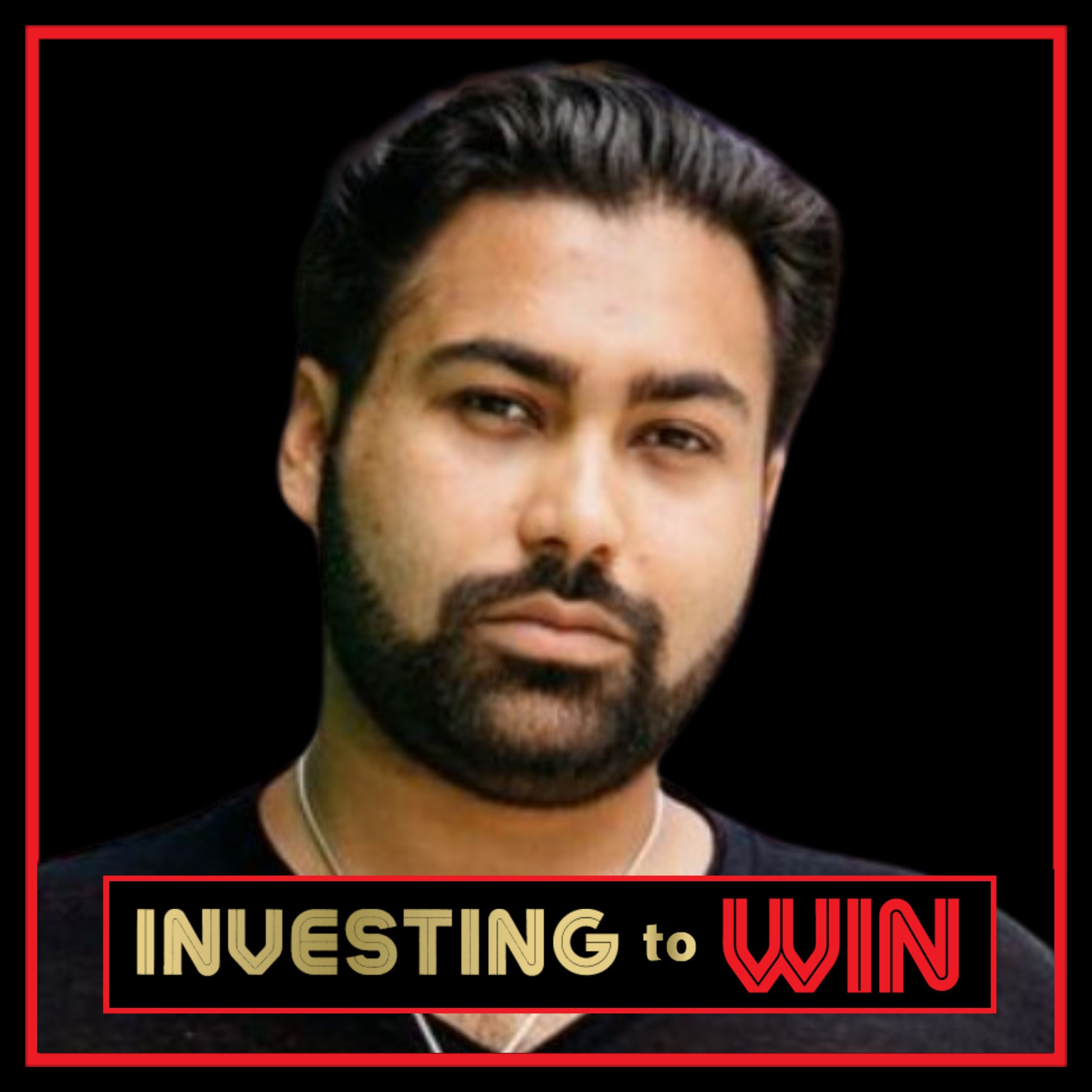
Investing to WIN #065 - Master Trading Psychology to Build Discipline and Consistent Market Profits (with Anmol Singh)
Most traders don’t fail because of strategy—they fail because of poor decisions under pressure. This episode breaks down why mindset, not knowledge, is the real bottleneck.
Anmol Singh explains how discipline, risk management, and emotional control separate consistent traders from those who burn out. Learn the one shift that changes how you approach every trade.



Duration: 47:00
Date: Aug 6, 2024
Guest: Anmol Singh - Trading Psychology Consultant and Market Coach
WATCH THE FULL EPISODE:
Want the full experience? Watch directly on YouTube to support the channel and get recommendations for similar episodes.
What You’ll Learn
• The difference between trading for income and investing for long-term wealth
• How to define exit rules before entering any trade
• Why most traders lose despite having the right strategy
• A practical system for managing risk and avoiding emotional decisions
• How to scale trading size without breaking your psychology
• The role of integrity in executing profitable trading plans
Memorable Moments
"I’d rather be out wishing I was in than trapped inside."
"Hope is not a strategy in the markets."
"Do what you said you would do—every single time."
Episode Summary
This episode tackles one of the biggest misconceptions in trading: that success comes from finding the perfect strategy. In reality, most traders already have enough information—but lack the discipline and mindset to execute consistently.
Anmol Singh explains why psychology, not technical knowledge, is the true edge in the markets. From cutting losses early to resisting ego-driven decisions, he outlines the behaviors that separate professionals from amateurs.
This conversation is especially valuable for new and intermediate traders, as well as entrepreneurs entering the markets. You’ll walk away with a clearer framework for decision-making and a more disciplined approach to risk and execution.
Chapter Timestamps
[00:00] – Introduction and Anmol’s trading background
[02:57] – First experiences in the stock market and early losses
[06:51] – Trading vs investing explained simply
[10:09] – How beginners should start investing
[11:35] – The role of psychology in high-stakes trading
[19:13] – Setting exit rules and managing trades effectively
[28:50] – Building Live Traders and coaching philosophy
[40:22] – Top habits for success in trading and life
About Anmol Singh
Anmol Singh is a stock market trader, investor, and trading psychology coach with over a decade of experience.
He works with individual traders and hedge fund managers to improve performance through discipline and risk management.
He is the co-founder of Live Traders, an education platform focused on real-world trading execution.
Anmol is also the author of “Prepping for Success,” where he outlines principles for achieving consistency in business and life.
Full Episode Transcript
Garret (00:04.119)
And well, welcome to my podcast.
Anmol Singh (00:07.0)
Thanks for having me. Looking forward to chatting with
Garret (00:09.237)
Absolutely. So rather than me reading out a big, boring bio, I want to actually have you introduce yourself and then we can sort of get into the topics at hand. So why don't you give us a
Anmol Singh (00:19.854)
Yeah, definitely. So I'm a stock market trader and investor in the financial markets. I've been doing that since the last 14 years. And then, you know, I got into trading psychology because I realized that's an area that a lot of people lack or that's one of the reasons why most people don't make it. now I'm also a coach. I help different hedge fund managers and other traders and investors dealing with their psychology and behavioral issues that come on the line when they're risking high amounts of money. And also author of the book, Prepping for Success, 10 Keys for Making It in Life.
Garret (00:50.957)
Very nice. Okay. I think this is super interesting because as you know, the investing twin podcast, we have had crypto on here, obviously a lot of real estate, really interested to hear about your take on the markets, but let's go way back here. I know that through your bio, I read your one sheet, maybe share a little bit about your early life, like right back to, know, Delhi, India and what initially drew you to even going to school in London.
Anmol Singh (01:20.94)
Yeah, so you know, I grew up as a very like sort of shy introverted kid, you know, sort of just sticking to myself with my Xbox and you know, doing that for like a pretty much all of my teenage years. But then I always kind of had a desire to, you know, do something and be something, but I always felt like I didn't really fit in or I belong, you know, in India. So for me, it wasn't that I wanted to go to London. I just wanted to get out from where I was so I can just start somewhere fresh. know, nobody knows me. I could be whoever I want to be.
I can create my identity. So that was partly one of the reasons that I wanted to move out. And I wanted to actually come to the U .S. first, but then, you know, there was like SATs and all these requirements that you had to meet. whereas England, you don't have a lot of requirements. If you can speak good English, you know, you're good. So I got in there and I used that as an opportunity to sort of, you know, work on myself, on my communication skills, to meet new people, just put myself in a different culture, you know, outside of my comfort zone. I think that was partly the reason that I moved
And being an introvert, stock market was a great thing because all you had to do was just turn off the Xbox, turn on your laptop or computer, and you could still be doing your introverted things on the computer. So I always wanted to find a way where I can make money on the computer and I don't have to deal with office politics and all the corporate jargon and all these people, office politics, I didn't want to deal with that. So I think that's why I took really early on to the stock market and got really curious about it, got really fascinated with it. Why do stocks move up and down the way they do?
What controls that? What causes that? I think that's what really drew me into this market.
Garret (02:53.433)
How old were you when you started even thinking about the stock market?
Anmol Singh (02:57.614)
I was 18, I was in my dorm room, just sitting there and like, back in the day, there used to be these webinars and all these things I used to attend just to try to learn. But then pretty quickly I realized that a lot of it's like marketing. A lot of these people are selling programs and stuff, but they might not be trading. So a lot of my, I think first year of trading was just finding like the right style, right methodology or the right mentor. And I think, yeah, so I was 18 years old, just in my dorm room, started researching on the subject, reading books on
buying courses on this thing and I really got fascinated by it. I always wanted to figure it out, like a problem solving. Why does this stock does this? Why did it not do that? And I think that what really drew me into
Garret (03:39.289)
Okay. Well, I know when I was in university, I was living off craft dinner and instant noodles. how did you even get started? Don't you need money to invest in the stock
Anmol Singh (03:49.902)
Yeah, so I borrowed money from my dad. He gave me roughly $10 ,000. He's like, here you go. You're off to college. Do whatever you want with this. But this is what we're going to help you with. This is the extent of the help you're going to get. And now whatever you do with this is up to you. And then I told him, I'm going to start trading the stock market. And Indian parents are very conservative. So they were always like, oh, this is going to be a great lesson for you. You're going to lose all of it. Maybe a great lesson to not gamble in the markets. And I did lose pretty quickly. think half of that in my first
few months, I lost half of the money. And then I wanted to make more money. And I was just like, I got really good at like researching and writing and, you know, researching the markets. I just hadn't figured out my mindset or my psychology. And that's why I kept losing over and over. So I didn't have risk management. So I lost half of that money pretty quickly. But then I wanted to build that half back. So I started writing a blog online, just like my thoughts on the stock market. And back then, I wasn't even like actively trading. I just had a few stocks that I put the money in.
But I was writing articles on it and then I got hit up by like Yahoo Finance and all these people saying, hey, you're actually, your articles are pretty good. Do you want to publish for us? We'll give you, know, $500 or a thousand dollars per article that you published back then. And then that's where I started like building my capital by writing articles online and get my, money that I lost, build that back. And that's what I tell people, never read anything you trust on, you know, never trust anything you read online on Yahoo Finance or Motley Fool is probably written by a college person like me.
So, know, tell people don't read online articles because they pay, you know, college students like me to write those articles. And I wrote like, I was like, oh, if you're to pay me 1500 an article, I could write like 10, you know? So I wrote a lot of articles, got my capital back to 10 ,000 and then I started trading properly with that money.
Garret (05:34.457)
Okay, so you're doing research, you're becoming, I guess, more of an expert on this, and then you're still doing this within your dorm room. What were you studying at the University of London?
Anmol Singh (05:48.524)
I was studying business and management. So business degree, nothing to do with trading or investing. But then what helped me was in college, me and a couple of friends, we were really both really interested in the stock market. So we said, you know, there's a gap here. If you're an entrepreneur, there's like an entrepreneurship club you can join in college. If you're into basketball, you can join a basketball club. Any interest that you had, there was a club that you could get into. So we said, why don't we start like a trading and investing club? Like none of us know anything, but why don't we just meet up like once a week?
and chat about maybe a book we read or something we learned, just share ideas. And that's how we really started developing. And now like, know, 20 years later, it's still a thriving club in society with hundreds of members. And we started that back in the day.
Garret (06:31.415)
Wow. Walk us through for the novice because I've never, I think there's kind of two mentalities out there. At least I know I am. I mean, you either like to invest in real estate, bricks and mortar, things you can touch. To me, the stock market's scary. So why don't you demystify it for the audience a little bit? Like break it down to basics.
Anmol Singh (06:51.542)
Yeah, I think by the way, everybody should have like the one core, you know, style. So like a lot of people in real estate, they will have their real estate investments, but they'll also invest on the side of the stock market. But the real estate is kind of the main thing. So I do real estate too. I have like nine Airbnb properties. I have tons of other things involved in real estate that I do. But the main thing for me would be trading. And I make the income from that. And then I take a percentage of my profits and those get invested for like the long term in different stocks or real estate or things that I might do.
So trading and investing is a little bit different. When you invest in the stock market, you're typically hoping, well, not hoping, you're trying to get the market returns, whatever the SMP is up or whatever the NASDAQ's up, and you're not really looking at the day -to -day moves. If you are, you're investing incorrectly. As an investor, you should not care what the stock's gonna do tomorrow or next week or even next month or even next year, because you're holding it for five, 10 years, and the fact is, the stock market is always higher than it's ever been in every single 10 years. If you take any 10 -year period, the stock market's always higher than the last 10 years.
So if you just use that, then you know it's a great long -term investment that beats inflation that tends to even be at real estate for the most part. Alphabet Serious has its tax advantages and benefits that stock market might not afford you. But then trading is different. Trading is where we're looking to get in and out. We're trying to capture those small fluctuations. And we're typically doing a bit larger sums of money, but trying to capture these small moves because they end up adding up. Now, trading is an actual skill. That's like another job. So I don't recommend
to everybody, because it's not for everybody. It's like a skill, it's like another job. And just like any other job, you have to have a learning curve, you have to go through a lot of pitfalls, and you have to have a developed strategy and a system. Just like I wouldn't go in, you know, compete in the F1, first I'm going to learn how to do go -karts, right? So same thing with investing, is investing is something that everybody should be doing. Take a percentage of your income, take a percentage of your real estate income.
and just put it in the stock market, typically that would give you 10 to 12 % on an annualized basis over like average 10 year period. And that's a great way to invest. Because the traders were obviously looking to get way better returns in the market, but to get those better returns, we're also taking risks.
Garret (09:00.569)
Okay, so if I could draw some parallels to real estate, investing in the stock market is kind of like real estate long -term buy and hold. And then if you're talking about trading, like you said, very specific knowledge, it's kind of like flipping properties. You really have to know what you're doing, right?
Anmol Singh (09:16.238)
Yeah, absolutely. that's a great way to look at it. A lot of people who do wholesaling properties, fix and flips. Now that's a full -time gig. You need to know the after repair cost, market value. You need to know all those different things. You have to factor in your repair costs, your taxes. And that's a full -time thing where once you get out of a deal, you're looking for the next deal. Same thing with trading. When we're out of a trade, let's say we bought a Tesla at $106 or $120, goes to 300. We sold our profit.
that's like we got out of the property, now we're gonna look for the next property. So yeah, I think that was a great way to frame
Garret (09:51.609)
Okay, so for somebody who's starting out, mean, let's say that I just want to start investing. I mean, I'm assuming to my knowledge, I'm just going to try to find a broker or something or where do you recommend starting or maybe that's why where you come in for coaching, but go ahead.
Anmol Singh (10:09.262)
Yeah, so I think for investing, I'll tell you, nobody needs coaching for investing, right? Just don't even try to pick individual stocks. Open up a brokerage account that's similar to TD Ameritrade, Thinkorswim, Charles Schwab, know, Fidelity. There's so many different brokers. I personally use interactive brokers. So that's broker you can open an account. And then you just pick funds. So like S &P 500, QQQ, which is the NASDAQ, right? Or VTI, which is the Vanguard Total Market Index. Now that is a basket of stocks.
So that way you don't have to buy Apple, Microsoft, Amazon individually. You can just buy the NASDAQ, you're get the top hundred stocks. And basically it's almost like investing in Apple, Microsoft, Google, all together as a basket. So for most people, they should not be picking individual stocks. They should just be investing in the markets and getting your 10 to 12 % every year. And that's a great way to invest. Trading is when you do need coaching. You need to know what you're doing. You need to know how to read the charts. You need to know how to manage your risk. You need to know your portfolio allocations.
You need to know risk management and more importantly your psychology, right? Because when stock goes down, you should be getting out and taking a small loss as a trader, not holding on hoping it comes back because now you're going into an investment territory, which is what a lot of people end up doing. When the stock is going down rather than getting out and taking a small loss, they'll keep holding. Maybe it'll come back up and hope is not a strategy.
Garret (11:30.265)
Okay, so what is it that you specifically coach? Then you mentioned mindset.
Anmol Singh (11:35.48)
So I coach two types of people. One of them, obviously I coach them on trading and investing, chart patterns, analysis, technical analysis, options, how to use options in your trading correctly, and the different aspects that go into the technicalities of trading. But then with the hedge fund managers and my bigger clients, I help them with the psychology aspect, because they already know what to trade. A lot of them are way bigger traders than I am, right? So they don't need to learn how to trade. They know that. They just need to know how to manage themselves when they're in the trade, because when you're risking hundreds of millions of dollars on a position,
It could really affect you. And we saw that in the dot com bubble. We even saw that in 2020, 2022 when the market stopped 35%. A lot of hedge funds were down 60, 70%. They were taking tremendous leverage and they never saw that coming. So with them, I talked to them more about the risk management part of it, the systems building, knowing when to get out of the position and then not trading emotionally, not going on a tilt like they say on poker, like remaining calm in the position and following a system.
And that system has to be back tested over the last like 100 years. So you know exactly what to expect on that system. So those are the two types of traders that I coach. The retail people, which is like average day -to -day people, I coach them on actually how to trade and kind of make a living right off this as a career. And then with the hedge fund guys, I coach them more on systems.
Garret (12:51.203)
Okay. Speak to me about just the mentality, the fear. I mean, it's one thing to be investing your own money into whatever funds, but as some of these bigger traders, I mean, what goes through their mind when they've got, again, know, hundreds of people, thousands of people's money in their hands?
Anmol Singh (13:11.662)
Yeah, I mean, it's a lot. It's a lot of stress. It's a lot of emotion. And it's a lot of like, it brings out the best in you, but could also bring out the worst in you. Right. And I think a lot of people like this hedge fund, SkyBridge was, you know, there was 60 something billion dollar hedge fund that lost 60 % in 2022 when all the crypto went down because majority of their funds were leveraged in crypto. So for them, you know, what goes through their mind is obviously disappointing their investors.
right? Our investors always asking, how's my funds doing? They got to be answerable. They got to make investor reports. So it's a lot of stress. you know, I'm happy just trading my own money because it's like, hey, if it's stressful, it's only stressful for me. At least I'm not. There's a lot of element of disappointing because all these guys mean good. They're all well -meaning hedge fund managers, right? They want to do well. It's also competitive nature. They compare themselves to other hedge funds. They compare themselves to the markets. So if they're lagging behind, that could take an emotional toll on you as a person.
So for us, it's like, okay, let's look at the bigger picture. Let's not look at the badger that we've had. Let's look at how we've done over the last three years, five years, 10 years. And then that gives you a little bit of perspective on how we're actually doing. And if the last three, five years is still not looking good, then you got to revalue it. Your strategy. I think that's something that Kathy would have ARK Invest might need to look at
Garret (14:28.387)
So, you know, it's funny. I saw, I'd say my largest company right now that I have is the property management company. We manage a third party properties on behalf of out of town investors, call it a single family home. And if I don't collect that rent, obviously my investor, my client is very unhappy with me. But you know, that blame game, can kind of tap dance through that a little bit and manage those relationships. What kind of anger is there when a fund manager
has something that they've chosen through no fault of their own and then it tanks. What happens and what is the, how angry are people?
Anmol Singh (15:06.402)
Yeah, I think more than anger, like the thing that kind of destroys a lot of people is the ego of like not wanting to admit that you were just wrong, right? Because nobody's ever going to be right all the time. Even with properties, there's going to be some properties you're going to buy. You thought they're going to be a good flip, but they ended up not being a good flip. Yeah, or you bought a property and you discovered, this major repair that needs to be done on it. Same thing would happen with stock. You might have a thesis of an investment, but you're going to be wrong. And I think admitting that is the biggest thing for people.
Because hedge fund managers, make billions of dollars, right? There's an ego with it. Now this position is going to be great. This company is going to be great long -term. We've got to wait five more years. I'm like, but that's not fair to your investors. Wait five years because guess what? They're not getting paid. You're still going to collect your management fee. So also like bringing integrity into the business is another thing that I focus on is like, sure, you're going to collect your management fee, but what about the investors that trusted you? So if you're wrong on a position, you need to be able to take that ego out and say, okay, hey, we were wrong on this
And now, cause there's also opportunity cost. You might stay in a position for five, 10 years, maybe it'll come back. But what if that money could have been better used towards a different position? What if you took a small loss here and put it in something else that might have had a better opportunity cost over the next five years to make a comeback or return for the investor. So I think more than anger, there's a lot of the ego in this space, know, competing hedge funds too. Some hedge funds might be short a position betting against it. Some might be long against it and they get into this sort of ego battle. And what I coach them through is just like,
Let's remove, because market doesn't care. Market doesn't care about you. Market doesn't care about me. Market doesn't care about anything. Market has no ego. So you can't have or bring your ego into the marketplace. The market will humble
Garret (16:45.897)
Is it well received when a manager says completely transparent, hey, you know what? I made a judgment call. It didn't work out. How do you go about, like, does it really destroy the trust with all of those clients or does it come
Anmol Singh (17:01.064)
I think clients will more trust you when you're able to admit you're wrong in your investor report. So if you're just going to say, everything's printing a rosy picture, at some point, people are going to see the truth and they're going to realize that you're full of it. There's so many hedge funds out there that are on CNBC all the time, but you look at the actual returns, they're actually underperforming the market. So why are you going out there talking about this expert, like knowing everything about a stock or a company when clearly over the last five years, they're underperforming? So you got to admit that you are, you don't know everything. Nobody knows everything.
Nobody knows anything. Nobody knows what the stock's gonna do. It's all about building systems and you're having your statistics in your favor. So you gotta learn how to beat the casino. Like if you go to casino and you end up winning a massive hand, casino's not gonna mind. In fact, they're gonna be like, here's some more free drinks, keep playing. Because they know their long -term edge, the more you keep playing, you're gonna come out ahead. So if investing is the same thing, is take your ego out, get into the next position, get into the next investment, get into the next trade, and let the odds play out over time. And I think that's
biggest thing to realize. And that's the same thing for individual traders too. Traders like me, traders like other people who are just trading for themselves, like knowing when to cut a loss, get out of a position, and also knowing when to cut out of a winner too. And I think a lot of people missed that point. Like in 2020, we saw all these stocks zoom at $500, Coinbase over 500, all these stocks like up five, 6 ,000%. And nobody ever sold any of those things. And now look at them, they're down
So learning how to get out of a winning position is also just as important as learning how to be in a wrong position because the markets always are ahead of what you think. So sometimes people say, I Tesla is a great company. It's gonna go to $500 a share over the next, let's say, five years. But sometimes it gets there within one year. Market runs it, gets in a year period. Now, don't say it was a five -year investment, so I'm gonna hold it. If it hits your target, you should be taking profits. And I think people miss that.
big time in 2020, where these funds were up a huge amount of money, but they never sold anything. And now those positions are back down and they're down 90 %
Garret (19:03.501)
But I mean, how do you know? I mean, for me, I would go, I'm going to trust my gut. Well, I mean, that never does me well in real estate. what do you do? How do you know when to get
Anmol Singh (19:13.806)
First, before you get into any trader investment, you should already have your exit points defined. If I buy Microsoft, let's say at 100, if it goes down to 90, I am wrong, I'm gonna get out and take a loss. If it goes to 150, that's my profit target. And when it gets to the profit target, not second guessing yourself, maybe it's gonna go higher. Maybe it'll come back up following your plan. So whenever we put a plan in place, we gotta have integrity in that plan, meaning do what you said you're gonna do, do it when you said you're gonna do it. So having the exit points,
Predefined so when it actually happens, there's no thinking involved because problems with any investment happens when your thinking is involved Right, so eliminate that by already setting parameters beforehand That's number one and number two learning how to read the charts charts are the charts are the charts They always foreshadow what might happen now. You might be a little bit early. It might be a little bit late You're never gonna pick the top or the bottom But as long as you get out of the right point at least you're gonna eliminate that meat of the down move or the meat of the up move so I
Chart reading is extremely important. We could go back and take a look at multiple charts from 2020 and they all look exactly the same. And those are the patterns that we've been studying for the last, like, you they've been around 50, 100 years longer than I've been
Garret (20:23.353)
Okay, so you're really turning an art into a science.
Anmol Singh (20:26.478)
Yeah, it's a mix of art and science. It's never fully scientific, but there's an art element of it, but then you add odds to it. Like I already know if I take, let's say 10 trades, I'm gonna win, let's say on five or six of them, and there's gonna be four that I'm gonna lose, right? But what I try to do is I make my winners bigger than my losses. That's how this trading thing works. It's like I could, let's say take 10 trades. I could even lose on six of them. So let's say I lost on six of them, but I win on four of them. But the four of them are, let's say, twice the size of my loser.
net -net, I'm going to come out ahead. So for me, it's just about churning and taking more trades because I know at the end of 100 of them, even if I win 50 -50, but the winner strikes the size of my loser, statistically it's impossible for me not to make money. So I think that's where the science part of it would come
Garret (21:11.833)
Okay. And then obviously not having regrets because you got out of Microsoft 20 years ago and it keeps going up and up, right? Do you just have, you have to be proud that you made that decision and you stuck with
Anmol Singh (21:21.902)
100%, like I got out of Nvidia, like, you know, beginning of this year. I wish I was holding it, but that's part of the strategy because, you know, I've utilized that money towards other positions and other trades. know, so you can never, never pick, you can never pick the top. You can never pick the bottom. You might pick it once in a while, get lucky on it, but it's not a long -term strategy. And yeah, you should never have fear of missing out. You should never have regret of missing out. And I, as I always tell people, it's like, I'd rather be out of an investment wishing I was in than being in and wishing I was out.
Garret (21:52.393)
True and otherwise it truly does feel like gambling and racetrack type stuff,
Anmol Singh (21:57.698)
Yeah, there's a very fine line within trading, investing and gambling. There's a very fine line, intelligence, speculation, and you got to walk that very tightly because emotionally, if you're not in a good place, it's very easy to tiptoe into that side and start risking more money or risking beyond your means and not having a risk management.
Garret (22:16.737)
Okay, long -term and short -term, one of the questions I had prepped to ask you was about how you prepare for the differences between, you've kind of already answered long -term investment and then trading. I mean, would you classify that statement of short -term investing as just trading or are there other aspects to
Anmol Singh (22:36.93)
There three different styles for me. there's one, actually two buckets and then there's three different styles. So two buckets are income producing and then wealth building. So income producing is where we do the trades, right? That's actively trading in and out. The goal is to make an income, right? And then there's wealth building style. Wealth building style is where we're investing for the long haul and we're typically not looking at our stocks every day. And what I also do is I merge those two buckets, meaning, I'll trade every day. I'll trade for an income. That's what I live off. That's what I pay my bills.
Because investing is not going to pay my bills because that's long term. So trading pays the bills and then you take a percentage of your trading profits and that you invest for the long haul on something you might believe in. And then there's three different styles to it. So one is day trading. That's an income producing style. That's where we're getting in and out of stocks every few minutes. I might be in it today. I might be out like 10 seconds later capturing those smaller buckets of moves. And that's day trading. That's a skill. That's a profession. That's not for everybody.
And then there is another style, which is a fine balance between trading and investing, which is swing trading. Swing trading is where I might buy a stock today, might sell it next month, or might buy today and might sell it next week, capturing the smaller pockets of moves, capturing those swings. And that's why it's called swing trading. And swing trading can be both income producing as well as wealth building, right? Because it's typically longer than just getting in and out of every day. And then there's investing where you might hold a stock to five, 10 years.
So that's the three different styles that I utilize.
Garret (24:02.613)
Okay, no, that's great. You know, just going back to your university days, you're writing for all these publications, probably feeling pretty good about yourself and this, you know, probably being very successful in your trading as well. What did that play towards your term ego and did it help or hinder you as you started to expand your portfolio?
Anmol Singh (24:23.502)
No, my first year was extremely challenging. I lost money my whole first year of trading because it's like I had the systems down. I just wasn't following it. It's a saying, right? If you give a man a strategy that is sure to make him a millionaire in 10 years in the hopes of getting there in one year, he's going to tweak it, optimize it, mess with the strategy and not get there even like 10 years later. So for me, a lot of the first year was just me getting out of my own way, realizing that cutting my ego, nobody knows anything.
There's no holy grail to trading. There's no thing that's going to work all the time. Because the first year, we all think we are smart. There's a trading robot I could buy that might get me the returns. Or there's a guru I can trust if I just follow his stuff, newsletter, I'm going to make the money. So first year is a lot of making those mistakes and realizing nobody has the answers. So the second year is when I turned the corner and when I finally found a good mentor, he taught me how to get involved in markets and I started trading for a prop firm.
in New York City, even though I was still in my dorm room. So the prop firm gave me a lot of the good fundamentals because in the prop firm, you're trading the company's money in exchange. They take 30 % or whatever off whatever you make. Now I work for them a long time and they had forced risk management, meaning if I lost an X amount per day, my platform would just lock up. wouldn't even allow me to trade anymore. So that I think was great because when you're losing is when you make the big mistakes and when you were losing, they just cut you off. Come back tomorrow. Or if you have a max loss for the
He had a max loss for the week, you can't trade anymore. So even if you your max loss on Monday, you got to come back next Monday. So I think a lot of those forced risk managements is, I think, what I attribute a lot of my success to because I built good habits and I never got to a stage where, you know, like a lot of the horror stories you hear of people losing money, you blowing up their account, having to start all over again. For me, a lot of that was eliminated by trading for another company and having that forced, you know, risk
Garret (26:17.337)
Is there anything yet you can do as a single individual to turn on that type of forced risk management?
Anmol Singh (26:23.18)
Yeah, put it on yourself, right? Put it on yourself. Say, hey, this is my loss limit, right, for the day. If I lose that amount, I'm done, right? This is my loss limit for the week. And same with also having profit targets, right? Because if you don't have a target, what are you working towards? How do know you're gonna get there? And then when you get the profit target, be disciplined enough to say, that's enough. I don't have to sit there and just keep turning it away. Knowing when to stop is a big thing. And you know,
The reason most individual traders struggle in this business is because they don't have the accountability. They don't have the consequence system, right? Because if you're trading for a company, there's consequences. If your boss doesn't tell you what to do, right? If your boss tells you what to do and you don't do it, guess what's gonna happen? Consequences. You could be fired, you could be let go, might even be dock your pay. There's a lot of consequences that can happen. And that's how we are brought up. Growing up, our parents are telling us what to do.
Then we go to school, our teachers are telling us what to do. Then we go to college, our professors are telling us what to do. And then we get a job, our managers, supervisors telling you what to do. When you're an entrepreneur, when you're a trader for yourself, nobody's gonna tell you what to do. You have to tell yourself what to do. And that's the reason most entrepreneurs, even business owners, small business owners and traders don't make it, because nobody's gonna tell you what to do. You gotta tell yourself what to do and having that discipline and that accountability and a consequence system. An example of a consequence system is again,
Please don't get offended by this, but I had a client who was like this, know, extremely devout Catholic, right? Like extremely devout Catholic. And he kept breaking his trading plan. I'd give him a plan to follow and he just not follow it, kept breaking it. So to him, his religious beliefs were really important. So I created a consequence system. said, hey, every time you break your trading plan, you're gonna donate say $200 to like Planned Parenthood or something like that, right? That was enough for him. He's like, oh no, that...
belief is way more stronger for me. And he never broke his plan again, because there was a consequence attached to that that meant more than breaking his trading plan, taking a quick profit or a quick loss. So you got to set that for yourself in your own life. then cross the board, this applies to entrepreneurs as well. You how many people before 2020 used to say, I want to start my own business, I just don't have the time. And for the whole year, everybody was locked. You had all the time in the world, you didn't do anything even then, right, because you had no consequence system in place.
Garret (28:41.965)
Yeah, no, very interesting. I like that story. Why don't you tell me a little bit about live traders? I'm curious. What do you guys
Anmol Singh (28:50.158)
Yeah, so Live Traders, started that back in 2015. So I was five years into my trading career. I was a successful trader at the prop firm and I was working for them. I would coach all the new hires that they had, coach them through how I got to where I was. And then 2015, that firm got bought out. So I hit up my mentor, who's my business partner now. I hit him up and said, hey, know, are you going to join the new company that's going to be bought out? He's like, I don't know. I think I'm good. I might just retire, blah, blah, blah. I said, why don't we team up? Like, let me handle like the online, the business part of things.
And you teach the people just like how you taught me and why don't we start this thing? And we started LiveTraders in 2015. That is now one of the top trading education firms out there that people come to. And we teach them the realities of trading, not the sugar coat marketing stuff that a lot of you see online. You know, like I get really annoyed with the industry when I see ads like that online. Learn how to make a living with trading. mean, first year, everybody's going to lose money. I think that's why people like us, because we give them the truth. Okay, it's going to be the
challenging thing you've ever done in your life, right? But it's a rewarding business if you do it the right way. But just like anything else, there's going to be a learning curve. So we coach and train traders through that. But then also we show them exactly what we're doing in real time. So like just before coming on the show, I was live streaming. I live stream every single day of me trading. Win or lose, people get to see my account in real time. And the reason I do that is A, not only does it make me a better trader, knowing that there's people watching, I can't do anything bad, right? It makes me a better trader. But then to
they get to see what I'm teaching them being applied in real time. And I think there's a great tremendous value to that because these days, prop firms don't exist where traders would sit together and trade together, but we try to create that environment online of us live streaming. So some days I lose and I think that's the best way for people to see me on how I handle myself and I lose. There's a lot more they can learn than watching me make tens of thousands of dollars every day. There's more to learn when I lose. And I think we try to coach them through
Garret (30:47.095)
Wow, no, I didn't know you were doing that. It reminds me of that GameStop movie thing, right? So that's really cool.
Anmol Singh (30:52.334)
Yeah, yeah, we've been doing that since 2015 and that's where we got the name live traders. We'll just trade live. We don't lose. Let's just let people see
Garret (30:58.413)
Yeah. Okay.
So what's your approach to mentoring these aspiring traders? Like how long does it take for somebody to gain a so -called education before they're confident enough to even start trading? And then part two of that is maybe even take a shot at making a living at
Anmol Singh (31:19.01)
Yeah, so you, mean, most people can start trading like right away. But when I say right away, that doesn't mean you start risking your money right away. You you start with a simulated account. You start with a demo account. Kind of learn how to place your orders, how to get in and out of a trade, get in and in, out of it. Like learn the platform first. But then when you learn the platform, you don't need to wait too long to start rating real money. You just got to risk small amounts of money. And I think a lot of people have this misconception that, you know, if I buy stocks, I'm going to lose all of it. No, you can determine exactly what you're going to lose.
Example, let's say you get into a trade, you're like, I wanna lose maximum $100. I don't wanna lose more than that. And let's say you buy the stock at $100. So now you know that if it goes down to 99 and you wanna get out, that's your loss point, then you know you're gonna buy 100 shares. So if you buy 100 shares, it goes down to 99, you get out, you're gonna lose exactly $100 that you already planned for. So we teach people how to start with as low as like $10 risk, right? Just buy 10 shares.
Right, you buy 10 shares at $100, it goes down to 99, you get out, you lose 10 bucks. Big deal. Start learning with the small money and then you earn the right to risk more money. So as you gain consistency, you give yourself a target. I'm gonna risk $10 per trade. When I make $200, then I can go to $15 a risk. And you will slowly work your way up. Typically, it takes at least what I've noticed from at least my students, it takes about a year for people to fully get to a level where they're making anything substantial.
Because the first year is going to be extremely small amounts of money, make 20 bucks here, 30 bucks there. Because we're only trying to build your consistency and getting your psychology to adapt as you scale up. Because you never want to scale up from here to here. Your psychology and your mindset is not prepared for that. So when you see your swings in your account, it's going to do something to you psychologically. So we've got to stair step your way up. And typically that period is about a year. But the learning part doesn't take that long. have our course. It is a long course. It's 20 hours of video lessons. It's a 600 page manual.
But that's got everything you need to know from A to Z of the markets, from beginner all the way till advanced. And most people can finish that course in like a weekend, right? People spend like Friday, Saturday, Sunday, they finish the 20 hours. Now they got the information. Now the whole year is gonna be about you applying it, asking questions, tweaking it, optimizing it. But yeah, some people get it really quickly. But for most people, I would say it's about a year mark before they truly get to any level of to talk
Garret (33:41.515)
Okay, if you were to give a brand new person some advice on how to get started, what would it
Anmol Singh (33:47.648)
First thing is you got to determine what style of a trader or investor you want to be. Because as I said, not everybody's cut out for day trading. It's just not. It's the truth. So you got to determine based on your psychology, how good do you feel when you watch stocks up and down every day? What's your personal mindset like? Are you more of a, I'd rather get into a trade today, get out of it next month, next year, or am I cut out for being in front of my computer every day and doing the short -term trading? So first thing is determining
and your time commitments. So like a lot of people that swing trade with us, they already have a job. They're doctors, they're lawyers, but they can take a trade here and there and hold it for a week or two months. That they can do alongside their job. So that's great. Day trading is for people who either don't have a job, this is their full -time thing they wanna learn how to do, or they live in the West Coast or different times when like a lot of our students, they actually have a job, but they'll trade in the morning from like six in the morning to like eight in the morning. They'll day trade and then they'll go to their actual job.
which is a great way to do it, because then you already have an income coming in from the job. So doesn't put pressure on you to make your living from trading right now. Where somebody who quits their job and goes to day trade full time, now you don't have any income coming in. Now you get all this pressure at you to make a living from trading, and that's gonna cause you to make incorrect decisions. answer long question, but the answer is learn, first determine what kind of psychology you have. What kind of time commitments do you have?
And also the money you're coming into the markets with. The FINRA regulation says for day trading you need to have at least $25 ,000. So if you have less than 25, well you can day trade. Focus on swing trading, focus on investing. If you have more than 25, and I would say more than 30 really, then you can come into a take a shot at day
Garret (35:32.537)
Okay. Are there any mindsets or particular skill sets that you find in your students that you can kind of see that point towards the more successful?
Anmol Singh (35:41.902)
So a lot of our successful students have either been like ex -pilots, ex -poker players, engineers, IT guys, they make for really good, and doctors, they make for really good traders just because when you give them something to do, they just do it, right? The hardest people are like entrepreneurs and business owners, because we always try to find a different way, there's a faster way to do it, and that's just the mindset we're cut out with, whereas the pilots are so good with like checklists, right? No matter how many times they've flown the plane.
Every single time they'll still go through the checklist. And that's what a good trader does is go through our pre -trade checklist every day. And then engineers also make for good, software engineers make for good ones too because well, software, if this happens, then that, right? If this, then that scenarios. With traders, it's the same thing. If this happens, we get out. If this happens, we take a profit. So they're very good with following their plan. I think the hardest one are like business owners and entrepreneurs, because we're rebels. We try to do it our own way. We try to find a better way.
And again, it can be learned, it's much, it takes a little bit more time to work on the psychology of
Garret (36:45.411)
I could see that. think most entrepreneurs are eternal optimists, right? We're always trying to think that we can turn the best situation out of those types of things. So yeah, I can definitely see checklists and that type of mentality. Looking ahead, what do you see merging trends or anything different in the way things are being traded in this space?
Anmol Singh (37:06.734)
Yeah, I think obviously we're seeing a lot of, we saw an influx of retail traders. So back in the day, hedge funds pretty much caused the market moves and all of them, the softwares that they had, they created a lot of these market moves. But now since 2020, there's been an influx of retail traders. So that's caused a lot of opportunities for smaller investors like us, because back in the day, we wouldn't have the money to purchase these expensive trading softwares, right? We would have to call our brokers.
to place the trade. Or we would have these outdated softwares that used to cost thousands of dollars a month to be trading on. Now, the playing field is completely leveled. You have access to the same softwares that institutions do for like 20 bucks a month, and some brokers even give it away for free with an account. So the playing field has been lowered, it's leveled, and individual traders have the same advantages, if not more actually. Individual traders actually have more advantage than hedge fund managers, despite what people think, because hedge funds,
cannot turn on a dime and decide to get out of a position. They got billions of dollars off a stock. They can't just be like, all right, I'm taking my loss. I'm getting out of it here and just dumping billions of dollars because they're going to cause the markets to fluctuate. Whereas individual traders like you and me, we're getting out of our shares. It's not even going to cause a blip in the markets. So we can decide on a dime to turn our bias. You know what? I don't like what the stock is doing. I'm getting out. And we could just get out of all of it and get into something else. So we actually have an advantage. We're actually faster and more nimble.
than hedge fund guys, because for them to wind down a position takes months or years to completely sell off their positions. So I think that that's the trend that I'm seeing is that hedge funds and money management firms are going to start to go down more and more. And people are going to start to take control of their own finances and start to do it themselves. Because if you really take a look at the hedge funds, 90 % of the hedge funds underperform the market. You're better off just buying the S &P yourself and getting a better return than most hedge funds. Because hedge funds not only will they underperform the market, but then they're going to charge you fee on top of that.
She actually getting less money. And I think that's the trend that I see is that more people are gonna stop moving away from the funds and learning how to do it themselves and not having to give the hedge fund managers those fees and those profit shares.
Garret (39:12.505)
Well, I think it's also accessibility, right? mean, 20 years ago, could you even go on the internet and start opening an account and trading? I mean, you'd always have to go through a third party,
Anmol Singh (39:22.188)
Hmm, absolutely. And the software is just as fast, if not more faster than, you know, like back in the day, people would have servers outside the stock exchange to get the fastest, you know, execution on a trade. But with traders now, we have the same exact tools on our phone, right? On our phone. Like I was traveling, I was in Portugal last month and I was in a position and then, you know, Tesla finally went up and I was on my phone and Uber, but I was able to just click, click, click, exit the position right out of my phone. And I think that was not available beforehand.
I think so these are all things that are going to make it more accessible for people. And now they're talking about making the stock market 24 -7. I hope they don't do it because I'd never get any sleep. But you know, but I I but they're trying to do that now, which is going to make it even more accessible to the people who have a job. They can still come home and still do all those things.
Garret (40:03.042)
Ha
Garret (40:11.523)
Right, right. Why don't you give me the top five things that you would recommend for success in trading?
Anmol Singh (40:22.146)
I think the biggest thing which applies not just for trading, but like across the board in your life with entrepreneurship as well is like being a person of integrity, being a man or woman of integrity, which is do what you said you're going to do and then do it when you said you're going to do it. I mean, just think about how much our quality of life would be better if we did every single thing we said we're going to do and we completed it when we said we're going to do it. That's the biggest thing. We're trading investing is the same thing. A lot of people say, yeah, you know what? I should be investing. I should be getting into the stock market.
but they never do. Or yeah, next year I'm gonna start to invest and then they never do. Or I'm gonna get out of this position when it gets to $100. Now it's at 100, maybe it'll go higher. Or if it goes down, rather than getting out, maybe it'll come back up. So you have no integrity. You said you're gonna do something and you're not doing it. And entrepreneurship is the same way. So many people, as I said earlier, in COVID, they would say, oh, I wanna start my business. And now for whole year, you had all the time in the world and you didn't do anything.
So the only way to move the needle in your life to make progress towards your goals is to take action. Like one of the goals that I had was I want to have Airbnbs, want to have rental properties, I want to have all these things. But if I never bought the first one, I would never have the ninth one. So you got to do it. You got to set deadlines on things. You got to set calendars on things. You got to have a goal. You got to measure your progress. You got to do all those things to move the needle in your life.
Garret (41:48.331)
Okay, that would be so integrity is one thing's on the top five. What other can you bang off maybe four
Anmol Singh (41:54.188)
Yeah, the other couple I would say is like, don't get stuck in the learning loop. You know, the learning loop is what I see a lot of people stuck in, which is they move from one concept to another, one shiny object to another, right? They might listen to this podcast and they might go watch another podcast. They might read one book, then they go to another book. So their mind, they're feeding themselves that, I'm doing something, I'm learning more. But your life doesn't demonstrate you doing any of that. So rather than moving from one book to another book or one podcast to another podcast,
What can I apply just from what I've just heard? So I talked about integrity, we talked about taking action, not getting stuck in the learning loop, we talked about getting involved in the stock market. Now before you move on and read another book or learn more information, why don't we execute? think taking action, executing on what you've learned is the biggest thing. Because so many people brag these days, I read 10 books this month. I'm like, but your life doesn't demonstrate any of that. You haven't taken action on any of what you've read.
So you don't have knowledge, you just have a lot of information. And a lot of people have a lot of information, but true knowledge is applied knowledge. And when your life can demonstrate that you've applied it. So those are the couple of things that I think can move the needle in anybody's life is taking action, not getting stuck in the learning loop, having deadlines and scheduling those things. Scheduling the things that are important to you in your life. So I schedule every single thing, right? From my trading to being on this podcast to, you know,
Recently, I've been starting working out. That's gonna be scheduled. When I wanna play golf, go to the driving range, that's gonna be scheduled. Or if I wanna work on this part of my business, team call has been scheduled. So I go from schedule to schedule to schedule because I know if I keep doing that, the needle's gonna keep moving forward and forward in my business and in my
Garret (43:38.103)
I think that's a consistent theme. I've interviewed a lot of successful people and I think the most successful already know what they're doing tomorrow. By the time they go to bed, they've already written it down. It's all scheduled out in the calendar, including reading the paper, taking the dog for a walk and working
Anmol Singh (43:54.01)
Everything yeah, because if you want to invite like Jordan Peser talked about it you schedule what your ideal day should be like Right. What is the ideal that if you did that day you'd be super happy with yourself Great. You wrote that down great now schedule exactly those things and you're have that ideal day the next day So one of the things that in my success journal that you're gonna see here a Success journal the journal that I created that actually walks people through that because a lot of people don't journal they buy a journal They don't know what to write on it and most entrepreneurs
Right, it's another job writing a journal. So this is like a journal that you takes like two minutes to fill out in the morning, two minutes in the evening. So, and one of the things in that journal that I do, and again, you can do that on a piece of paper, you don't need to get the journal, but you can write down what are the six things, I call it the critical six, what are the six things that you do tomorrow that are gonna move the needle in whatever part of your life you're trying to move the needle in. But you write that the evening before. So when you wake up, you're not running around figuring out what am I gonna do, what's today's task list.
Those are the six things. And I don't add anything new to my plate until I've done those six things. Those come first before anything else. So first I do those six things and then I can think about if there's an additional time to do anything else. But if I keep doing those six things every day, I mean, at the end of the month, I'm way far ahead than a lot of people that are still thinking about when they wake up, what am I gonna do today? I don't wanna do that. I planned it the night before and that's part of the journal is in the evening, you write down six things that are gonna cause them a needle in your life. And then next morning, that's your only goal.
is just do those six things.
Garret (45:25.557)
Amazing. No, I practice that as well. And like I said, most successful people are doing exactly that. So before we cap this off, I'd like to ask you a question. my guests know or sorry, my audience knows that I always ask this question of all of my guests. So this is the investing to win podcast. How do you define success and what does winning look like for
Anmol Singh (45:48.974)
So my definition of success has evolved and changed over time, but the way I define it now is having success in all areas of your life, health, wealth, love, and happiness, and having harmony within those areas. And more importantly, you personally, deep down being okay with where you're at in each of those areas. If you're happy with where you're at in each of those areas, that is what I consider true success, because for the longest time, my definition of success was financial success. And then I got there, but what good is financial success if your relationships are a mess? You can't even get along with people.
What good is it if your health is a mess? Is that really success? Probably not. So now it's like about having harmony in all those areas and more importantly, you personally being comfortable with where you're at in each of those areas. I think that is true success
Garret (46:31.577)
Well said. Well, great place to stop. Thanks so much for enlightening our audience about your system, your company, and just, I like the mindset stuff. I mean, I think that's not only for trading, but business in general and in life.
Anmol Singh (46:45.088)
Absolutely. I think that's the foundation of anything, you
Garret (46:49.421)
Yeah. All right. Well, thanks for stopping by and we'll put everything into the show notes so people know how to get in touch with
Anmol Singh (46:55.532)
Awesome, thanks for having me. It was great chatting with
Garret (46:58.551)
All right, thank you.
Want more episodes like this?
Join my email list and I’ll send the best insights from real estate + business + investing.