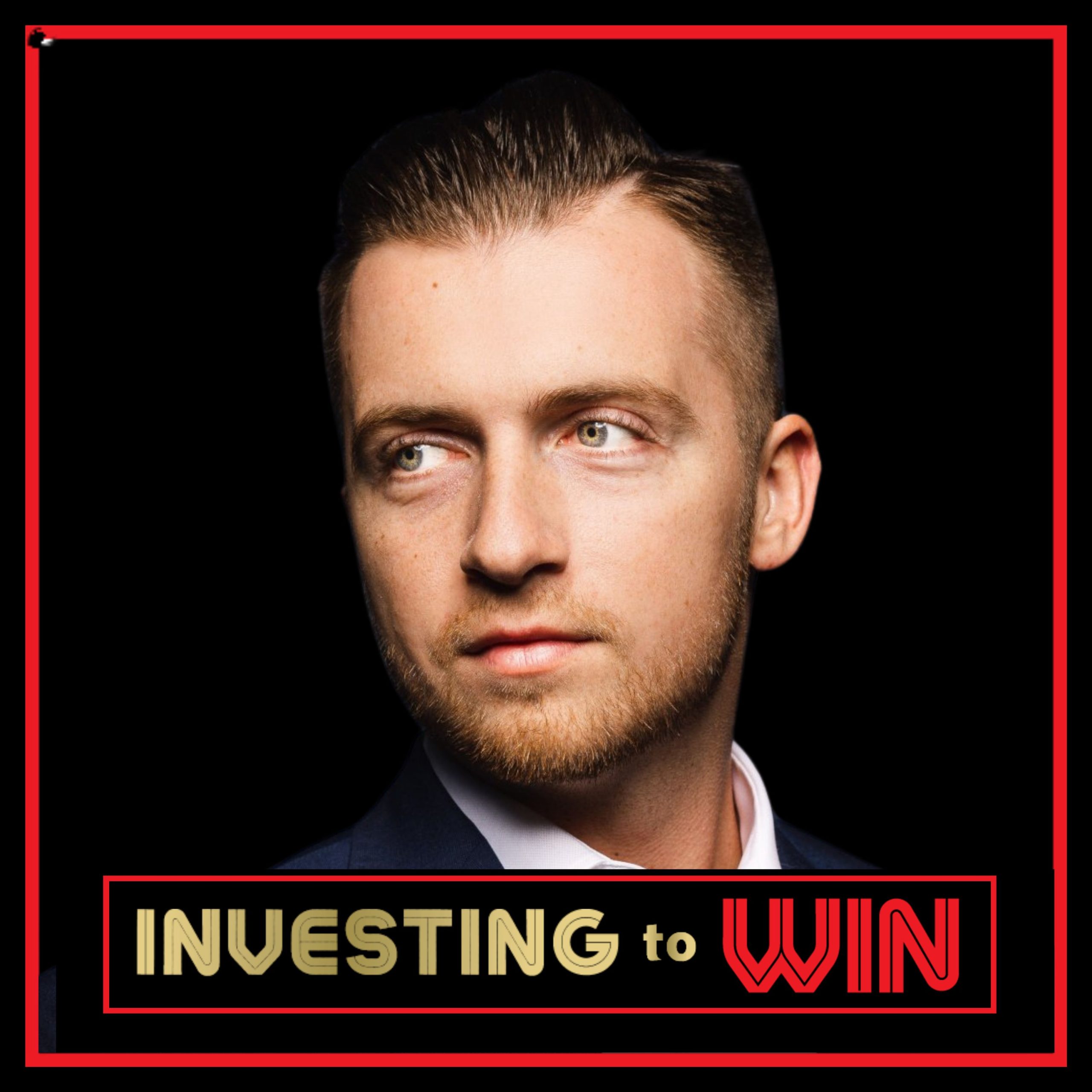
Investing to WIN #066 - How Austin Zelan Builds Passive Income Through Alternative Investments (Austin Zelan)
Most investors chase traditional paths—stocks, real estate, or small business ownership—without understanding how to create true passive income. This episode breaks down what it actually takes to build income streams that don’t rely on your time.
Austin Zelan shares how he transitioned from corporate consulting to building a portfolio of automated and alternative investments. He reveals the thinking behind high-leverage decisions, and how to evaluate opportunities most people overlook.



Duration: 42:00
Date: Aug 13, 2024
Guest: Austin Zelan - Founder of Zelan Enterprises and Alphanance
WATCH THE FULL EPISODE:
Want the full experience? Watch directly on YouTube to support the channel and get recommendations for similar episodes.
What You’ll Learn
• How to evaluate alternative investments beyond traditional real estate and stocks
• The framework behind using credit strategically to fund investments
• Why most “passive income” isn’t actually passive—and how to fix that
• How to identify businesses you can acquire with little to no upfront capital
• The role of systems in building scalable, sellable companies
• How to think about risk when using leverage in investing
Memorable Moments
"I blew my trading account over 20 times."
"The business is a system, not just an idea."
"You only see opportunities you believe you deserve."
Episode Summary
Many investors believe passive income comes from traditional assets like rental properties or index funds, but this episode challenges that assumption. Austin Zelan explains why most approaches labeled as “passive” still require significant time, effort, or expertise—and how to rethink that model.
A key insight from the conversation is the shift toward alternative investments and automation. From Forex trading systems to private jet ownership structures, Austin shares how he evaluates opportunities based on scalability, delegation, and systemization rather than familiarity.
This episode is for investors and entrepreneurs who want to move beyond active income and build scalable systems. After listening, you’ll think differently about risk, leverage, and how to structure income streams that support long-term freedom.
Chapter Timestamps
[00:00] – Austin’s transition from corporate consulting to investing
[02:30] – Automating Forex trading and scaling with leverage
[04:40] – Low-income housing strategy and cash flow breakdown
[09:15] – How business credit and 0% financing strategies work
[13:00] – Inside the Financial Mastery program and investment approach
[15:00] – Private jet investing and passive income structure
[21:10] – Acquiring businesses for little to no upfront cost
[31:40] – Mindset shifts, risk-taking, and defining success
About Austin Zelan
Austin Zelan is the founder of Zelan Enterprises and Alphanance. He began his career in corporate consulting, working with major companies like Microsoft before transitioning into full-time investing.
He focuses on alternative assets and building passive income systems across industries including real estate, aviation, and digital assets. Austin is known for testing investment strategies himself before introducing them to his network and clients.
Full Episode Transcript
Garret (00:01.631)
Austin, welcome to my podcast studio.
Austin (00:04.558)
Thank you so much for having me. I'm excited to be here.
Garret (00:07.135)
Yeah, lots of diverse topics we have on the schedule today. Why don't you start by introducing yourself to my audience?
Austin (00:13.902)
Sure. So my name is Austin Zelen. I live in Seattle, Washington. I come from kind of a corporate background. As you know, here we have Amazon, Microsoft, all these big giants. And so right out of college, I went kind of on a marketing path. And so took that all the way up to Microsoft and eventually was doing some business consulting for Microsoft in a specific sector of their company. And so we were able to grow that very aggressively, but
During that time, I realized that I wasn't feeling fulfilled. This had kind of been my dream and I was like, hey, when I make it here, when I'm finally going to work at this big corporation, I'm just going to climb the corporate ladder and blah, blah, blah. That was like my dream. And I thought, okay, I'll have the nice car, the nice house, all these different things. It's going to be comfortable benefits and it is comfortable. Don't get me wrong. But I knew that I wanted to achieve more with my life. So I was thinking, how could I possibly make this kind of money, which wasn't even that crazy, but I was like, how did I make this kind of money?
and not have to show up to the office every single day. Is there anything that I could do on the side maybe to do those things? And so during my time there and even previously a little bit, I had begun trading. I was day trading on the foreign exchange market. And so I was trading different currencies from around the world. And the cool thing about Forex is that you can have really high leverage accounts. So sometimes my deposit would be like a thousand dollars and I'm just like, hey, let's see what happens, you know, and then sometimes it's
40, 50, $100 ,000 deposits. And so because of the leverage, you're still able to trade and you're still able to generate some sort of income. So my first year was horrible. Just lost a bunch of money. I probably blew the entire account over 20 times. I don't know exactly how many. It's probably more than that, but 20 that I can remember. And so from there, I was like, how can I potentially make this into something consistent? So I kept going at it, kept going at it. I would see these traders making money and I'm like, how can I do that too?
So after thousands of hours sitting in front of the charts, I finally got consistent and I'm like, okay, great. This is going to be perfect. I could possibly leverage this. But the only problem is that you have to trade all night in Seattle. Trading hours start around like 11 p and they end at like 8 a So it's literally all night. And so it's very difficult to do unless you automate it. So I started researching ways that I could automate my strategy. I found some developers.
Austin (02:32.014)
I gave them my trading strategy and I asked them to put it into code so that it would trade automatically. Even while I'm at work at Microsoft or sleeping or whatever, it would just be trading 24 hours a day. So they were able to do that. And the cool thing is that I didn't even have to use my own money for it. So I was a little bit scared to put my own money in there. So I got a bunch of credit cards from the bank and I'm like, what can I do to like minimize my own risk? And so I kind of weighed my options. I'll get all these credit cards. I'll take the money out, put it into the account.
Worst case scenario, I'll have to default on the credit cards, maybe file for bankruptcy or best case scenario, I make a bunch of money. So long story short, that ended up being very, very successful over that first year. Made a ton of money with that software. And now I was obviously like left Microsoft and all those things. And so now I'm thinking, how can I now protect this wealth or protect the status as an investor? I never want to have to go back to corporate. So I started building like a financial moat around myself.
and I was looking for different passive income investment opportunities because, and like for context, like for the Forex bot is 100 % passive. So I didn't want to go into something that I would have to do work in. Like for example, fixing flips wasn't very attractive to me because I'm like, I'm going to have to go like swing hammers and stuff. Like, my God, like even door knocking for deals. Like I didn't want to do that, but I was looking for things that were 100 % passive because that would preserve my ability.
to have this freedom that I had just found. And so long story short, ended up investing into a bunch of different things, starting with like oil wells, crypto mining. Then we went to like online stores and exotic car rentals. And now we buy jets, charter those out. We have some real estate things that we're doing, but the goal is to be as passive as possible. And if it's not passive, then you hire somebody to manage it for you.
Garret (04:27.455)
Wow, well, they always say it takes money to make money, but what does that really mean once you have it, right? Cause you don't want to go backwards. What an interesting, interesting story. Why don't we, why don't we start, I mean, there's so many different directions with passive investing. I mean, what does that, what does that mean? Low income housing investments, let's say.
Austin (04:34.83)
Exactly.
Austin (04:48.462)
Yeah, so we'd have some low income housing, specifically in Pennsylvania. I am not like just in general, I'm not a huge fan of low income housing. I know people by the way, who made hundreds of millions with low income housing. And so I know it's possible, but it's just not really my cup of tea. Like I don't really like it. But there are very, very specific markets. Like if you hyper target some markets, I'm okay with it, because it's like a weird anomaly in the United States. So we have some in Pennsylvania, I won't tell you where. But
In Pennsylvania, we have this nice little pocket that we found where we're literally buying houses super cheap. Like, let me tell you, the last house I bought there, I put 20K down. It was a $50 ,000 house, 20K down. The owner financed it for me. So my payment's like $330 a month or something. And I am collecting 1200 bucks a month in rent or like $1195 to be exact.
So on my 20 K that I put down, I'm collecting 6 % a month in profit. Like the cash on cash return is insane. However, it is low income housing. I'm not really expecting a ton of appreciation. Although we did like fix up the house a little bit. Now it's worth probably a hundred K, 120. but again, this is very low income housing. It's interesting in that sense. but other than that, I'm not a huge fan of it. I do prefer to have very, very high quality assets.
like, you know, a class A property or something like that. Because they hold their value well, first of all, and secondly, they tend to do well in times of inflation and stuff like that. They tend to appreciate aggressively and it's like a great store of value. That's kind of where I find myself building generational wealth versus passive income. So I think you need both. But like right off right out the gates, I was not like running to real estate.
Garret (06:41.983)
Yeah, so speak to me about the owner financing part of it because I mean I have a pretty big real estate investing audience here I think they'd be interesting interested to know how you how you approach that situation
Austin (06:55.086)
Yeah. So this is all part of my program. I have like a coaching program. And so this is a vendor that we use there. And so like just to explain how it works, I go out and I try these investments because remember, I'm this dude who like made some money. Now I don't want to go back to corporate. So I'm trying different things. And this is just something that I tried. Met this guy. I don't remember where I met him. I think at another event somewhere. Met him at an event. Then I'm like,
this guy has something really cool. Let me fly out there and check it out. So I went out there, checked it out, looked at all the houses. He gave me a big tour. I bought one myself and I was like, let's see what happens. Worst case scenario, I lose 20 K, but it turned out well. So I'm like, okay, now that this worked out, let me connect all the people in my program to this guy as well. and so then he's negotiating on their behalf. He's kind of like his role where he makes money is he's a wholesaler. So basically he's sourcing all these deals.
He makes sure that it but like it's a wholesaler plus it's like the best wholesaler you've ever met in your entire life because he's not just sending you the deal. He's like sourcing the deal. Then he makes sure that it's profitable because after you're closing on it, he does a little negotiation after you've closed on it. He manages it for you and then he charges like a little fee. I don't remember what it is. I think it's like 10 15 % or something. But anyways.
Garret (08:11.967)
Mm -hmm.
Austin (08:13.422)
Very nice because I don't do anything. I literally just get paid. I've not lifted a finger for this house. Put in 20K, that's it. And I'm collecting 1200 bucks a month. So very, very streamlined and straightforward. And so he negotiates the owner financing. And if it's not possible to do owner financing, he has some private investors who he brings in on the deal. So I've had some clients go to him where the owner wasn't willing to owner finance.
And so he has like a private guy that's like, okay, I'll back the house. Cause again, like you're putting a pretty significant amount down, you know, like 20 K on a 50 K house. So that's almost 50%. and so they're very comfortable lending based on the asset.
Garret (08:53.247)
Okay, wow, no, I think it's really important to have those types of networks. That actually transitions into my next question, sort of on that theme with no money down type of things. In your bio and your program, you've referenced accessing business credit. Can you maybe elaborate on someone can get access to whatever it is? And I think you even mentioned 0 % in some cases.
Austin (09:19.342)
Yeah, definitely. Yeah, so it's basically like a three step process. Step one, you got to optimize your own personal credit. So there's some things that banks look for. And you got to remember, banks don't make money unless they're lending money. If your money is just sitting there, they might make a little bit of money. But where they really make money is when they give you a credit card, or they give you a loan and like all these products were created to make money for the bank. And so
when this happens, they look for their ideal clients, they're not just lending to everybody, they're not giving everybody a credit card, but you have to remember that they need you. So we kind of did the homework and we look backwards working back from there, who would be their ideal client? What do they look like? How much money do they spend? What kind of income do they have? What kind of business do they run? And so we help the client optimize their own personal credit and basically create an application strategy for them to move forward to this. And that includes like
the name of the LLC, the industry, what does it do? Like, for example, consulting and stuff like that, like that industry specifically has the highest repayment rate to the bank. So when you come into the bank and you have a real estate investor or a consulting agency, a real estate consulting agency that's applying for the same credit card, the real estate consulting agency is most likely to get approved while the real estate investor is most likely to not get approved because
they don't have as high of a probability of paying the bank back. So they look at little things like that. And so even what the name is and where it's based and how long it's been open and like all these different things. So we help the client optimize that. Then secondly, we create a strategy of which cards to apply for because they all pull your credit report from a different bureau. And sometimes it's one, sometimes it's multiple, sometimes it's all three. And so when you have
the banks pulling your credit, it's an inquiry. And if you have too many inquiries, banks will stop approving you because then they see all the inquiries. So we create a strategy of like which bank to apply to first and second and third. And you have to specifically follow that order in order to maximize the amount of credit you're gonna get. So that's step two, create the strategy. And then thirdly, we introduce you to the people that we work with at these banks. So we're not just sending you to a website like good luck.
Austin (11:40.078)
We have relationship managers at these banks. Like at Chase, we have a senior vice president that we work with. And we work with him directly where he's the one helping you submit your application. So underwriting really does look at it. It's not just an algorithm on the website. It's the underwriting team that handles your file, like person to person. So it's a much higher success rate. And of course, you can always request credit line increases and stuff like that. Like if they approve you for 50K, but you needed 100, you can ask for 100.
And you can a lot of times get that bumped up. So anyways, yeah, that's kind of how that works. And we're targeting zero percent interest credit. So almost every single one of these cards is zero percent interest, at least for an introductory period. So that can be, I mean, depends on the card could be like six months to two years. So just depending on which credit card it is. But you can always increase that to three, four years. And there's a couple of strategies that we have to increase that zero percent interest.
period to a longer amount of time.
Garret (12:41.823)
Okay, I think what I'm gonna do is have you back up a little bit because I have all these questions prepared, but to the listener, it's gonna look like I'm just jumping around from asset class to asset class. Why don't you outline for the audience what your programs are and what you achieve for your clients?
Austin (13:00.142)
Yeah, so the main program is called financial mastery. So we help people optimize their credit. So we get them access to all the 0 % credit like I just described. That's the first thing they do. We clean it up for them. We have partners that do that. We have our relationship managers. Now we help them get all this credit at 0 % interest that they can use for different things. So now they're like, okay, great. I have this money. Now what? Well, the second thing is that they go into the main part of the program.
where they're learning about all these things that I'm investing in, including the stuff in Pennsylvania, like the low income housing, these deals, how are we making 6 % on real estate a month? Like that's ridiculous. How also, how are we investing into private jets? How can you own a part of a private jet for only 50K? How can you drive an exotic car and rent it for 10 days a month and make, you know, 50, 60 % a year return on it? Like, how's that possible? So we walk them through all these different things.
We show them how we do it specifically so that they don't do it wrong. And then we connect them to the people that I've already done it with. Because at the end of the day, like we're kind of like a review site. Like it's kind of like Yelp for investing. I'll go out there and I will try these different things because I'm going to do it anyways. And then other investors, they can go out and try and lose money and spend a lot of time figuring it out or just learn from what I did. You know, it's kind of like it's a shortcut.
I review the different investments that I did. And to be honest, like across my entire portfolio, I'd say only about 60 % of my investments, 60 to 70 % have ever worked out. So that means there's still 30 to 40 % of investments annually that I'm losing, and I don't put the losers into my program. So I'm kind of like weeding those out and only putting the winners into the program so that they can also win.
Garret (14:47.103)
Okay, no, I think I'm starting to get it now. Okay, so if I ask my next prepared question here about alternative asset investing, something that you promote, why don't you explain what that is?
Austin (15:03.246)
Yeah, so that's in the main part of the program. It's me going out and trying different alternative investments and sharing them with other people in the program. So for example, the private jets, there's nobody else that's doing this with private jets. We call it private jet automation, where a person comes into the program, let's say they have $100 ,000, they can put $100 ,000 into the jet, they own approximately 10 % of the jet. So just to kind of run you through the numbers.
A starter jet would be maybe like 5 million. So we put 20 % down on it, which is a million dollars. So if they put a hundred thousand, they would own approximately 10 % of it, just kind of depending on the deal. So if they own 10 % of this jet, and this is a long game, it's not just one jet. So bear with me here. So they invest. This jet would likely produce between 300 to $500 ,000 in net cashflow a year.
Plus on top of that, you're also paying off the jet another maybe $300 ,000 a year. So even if we take the minimum that they made 300K net and then 300K was paid off on the jet, they're basically making around 60 % in that scenario a year on their cash. They're not getting it all upfront, but they are technically making that money. Now, once the jet is paid off, we have $5 million cash. So now we can take this jet and invest that money into another jet, a larger one.
So now if we invested 20%, it would be a $25 million jet. So there, they would still own the 10 % of course. So now they would own 10 % of a $25 million jet. And, you know, essentially, even if they made no money, month after month, that jet would get paid off and they would get their 2 .5 million. So their 100k becomes $2 .5 million, no matter what, even if there's no net cashflow, which there is.
So that's one example. Another one is like watches, like we buy watches all the time and we flip them. I have a guy literally full time on staff. He sits there and finds fire sales. Somebody who ran out of money needs to sell his watches quick. We buy them at a very steep discount off market. And then we're reselling them on the main market for a nice profit. So a typical deal could generate 20, 30, 40 % for an investor. And then he takes a cut for managing that whole thing.
Austin (17:20.366)
we do the same thing with exotic cars. Like my last Lambo I bought, 20 K down. yeah, like literally just 20 K down and that thing can rent out for 15, 1600 bucks a day. So if I rent it out for even five days a month, my payment is more than covered and I'm cash flowing on top of it. So stuff like that, it's very alternative. Not very many people are doing it. but we're able to make passive income with it. Another one is my Forex software. So the same one that
allowed me to leave Microsoft is the one that we're licensing out to clients right now. So they're able to take that software and make good money off of that. So.
Garret (18:00.671)
Okay, so if I'm reading your story correctly, you are obsessed with trying to have passive sources of income. But instead of just teaching people how to do that, you're actually going out testing it, bringing inside your networks to the benefit of your students.
Austin (18:16.398)
Yeah, I mean, and honestly, it's kind of, you know, I'm gonna do it either way. Like whether people do it or not, I'm already doing that. And that's what I realized. I was doing it for several years before anybody asked me to mentor them. And then they're like, dude, like you already went through this process. You lost millions of dollars trying things out that suck. Can you just tell me which ones are working for you? And so that's kind of how this whole mentorship program was born because I started just sharing with one person. It was a one -on -one client.
He hired me, he paid me 20K just to show him all the things that are working for me. And now he's making a ton of money with it. But like, for me, I was like, okay, well, maybe I can help other people as well, because I'm going to do this anyways. I don't want it to go to waste. Let me go out there, do the research and share my findings with you.
Garret (19:01.695)
Let's take a step back to the private jets, because that's pretty interesting. When you, I mean, okay, I understand, you know, putting a down payment, owning part of it, I'm sure there's lawyers agreements and purchase sale agreements, those types of things, obviously there's financing, but speak to us about the nuts and bolts of the industry. Like, is there a market for leasing out private jets?
Austin (19:26.478)
yeah, it's huge. Yeah, like our typical jet could do 700 to 1000 hours a year in use. And so there's a lot of like, well, we work with a charter company. So we're not just like a free agent leasing it out. Like there's a charter company that I've been working with for a while now. And actually, I bought part of it as well. So it might be renamed Zell and aviation soon. So keep your eye out.
But anyway, so we work with this company we we buy these jets and then we give it to them for charter So they have a whole operation they operate anywhere in the world. They have a very prominent certificate for that Multiple bases across the country and so they place the jet where it's gonna be most used and then they're chartering it out I mean just about every day like the just are always moving around and I know I was there last week and we wanted to take one somewhere and it wasn't there and then the next day was so
Like it's, they're always moving around and we have a great sales team that's making sure that there's a lot of demand for these jets.
Garret (20:28.191)
And then in terms of crew and maintenance and all those types of things, I mean, that's not exactly the charter company. So do you have to have that operation in place as well?
Austin (20:37.278)
no, no, that's a charter company. They do everything. They do all the marketing, all the sales, all the pilots, the pilot training, the maintenance, the crews, like everything, insurance, parking. They make sure the loan is paid on time like it's a full 100 % passive operation. Somebody invests. The only thing that they do is on the 15th, they get a statement and on the 20th, they get a payout. That's it.
Garret (20:39.007)
it is. Okay.
Garret (21:00.287)
Beautiful, very interesting. All right, so one of the other assets that I read about is acquiring businesses, but possibly for free. Speak to us about that.
Austin (21:14.862)
Yeah, so one of the other programs that I have, it's called equity boardroom. So it's a bit of a higher level program than financial mastery. But if people also want the ability to invest into a business, they would join that program. And so that's where we get together and everybody gets the opportunity to pitch their own deals. If they want me to review a deal that they're doing, like we do all of that one on one with them.
There's a lot more one on one time. And the other thing that we do is we buy businesses. And so we find deals that we want to purchase. And one strategy that's been doing extremely well, at least for me and our group, is finding people who are very likely to sell their business or shut it down. And so here's what I mean by shut it down. There are approximately 10 ,000 people every single day that are retiring. And so
Today, like, you know, by the end of the day, by 5pm or midnight, 10 ,000 people will retire. They're like, hey, I'm not going to work anymore. 19 % of those people are business owners. So that means that 1900 businesses a day are going to be shut down. 70 % of them, they may have some sort of plan for how to do this, but about 30 % of them have no idea what they're going to be doing with their company.
and how they're going to, or sorry, sorry, it's the other way around. 70 % don't know what they're gonna be doing with their company. 30 % may have some sort of succession plan. So the 70%, you know, that's like 13, 1400 businesses every single day, they're just going out of business, they're just shutting down, they're just closing their doors. So what if instead we could approach these companies and talk to them and say, hey, you know, I see you're gonna shut down your business soon.
What if I just took it over? I keep you on as an advisor and I give you a nice little retirement package and give you 20 % of the revenue for the next three years, something like that. You also have companies where maybe they're not quite ready to shut down. They're not quite ready to close their business, but you can come in and again, same thing. You know, instead of buying your business, let me take it over. Let me continue running your family business here. I know I can improve it. I know I can make it more profitable, but I will leave you as a part owner.
Austin (23:30.894)
of this company, I'll give you a nice retirement package or whatever it might be out of the profits that I'm making with this business. So we're literally coming in and we're able to take over a business for one dollar. You need to have some sort of consideration in the contract. But we're able to do that in order to keep that person on or give them a nice retirement package and still take over what they have going on with the business.
Garret (23:54.591)
Okay. So when you're looking at some of these, any criteria, I mean, a lot of businesses aren't profitable. Will you target one and think that you can turn it around?
Austin (24:05.006)
No, we don't try to turn around businesses necessarily. We look for ones that are already profitable. I will stay away from like restaurants and stuff like that. I don't like alcohol, tobacco. It's just not my wheelhouse. I will take on any company that's doing between two and five million dollars a year as long as they have a great product. So it has to be something that's like really, really good, not something that everybody has. Secondly, I need them to have a competitive advantage.
So either they have a competitive advantage, like, you know, a Seattle seafood company is going to do much better than one that's in Kansas or something like they're good, they just have the competitive advantage of having seafood. Or I have some sort of competitive advantage. So for example, it's a tech company, and they have AI products. Well, we have an AI company ourselves. So I know how to operate that business, I have the network in the AI space.
probably bigger than most people. So I could probably take over that business and leverage my network to grow it. So I have a competitive advantage there. So that's the second thing. And then thirdly, we need to be able to find a good operator or have a business owner that is willing to become an operator. Sometimes these guys, they're not quite ready to leave, but they don't want the responsibility of owning the business because
They are the entrepreneur. They have the ideas. They have all these different things and they want to be in the business because that's their baby, but they don't really know how to run the business as a business. And so that's where we come in. We bring in the structure. We help them grow. And then they're creating and doing what they're really good at while we're running the business for them.
Garret (25:46.751)
Okay, when you're targeting some of these non -conventional assets, how are you determining if it's going to be feasible because you don't even know the industry? Are you doing some kind of back of the napkin math or something like that?
Austin (26:02.19)
You mean as far as these businesses that we're acquiring?
Garret (26:04.863)
Well, in any any industry, because it seems like you're just kind of going wherever the passive income is and evaluating. I'm sort of asking to see, you know, how do you how do you approach that?
Austin (26:16.014)
Yeah, so I mean, again, we're looking for some sort of competitive advantage. We're not just going blindly into things. If it doesn't make sense, if it's not a good product, if there's no competitive advantage, and we don't have a good operator, I'm not interested. And maybe that's wrong, you know, but that's how I've been doing it. And it's been working for me because
I think you need to have something special in your business. I don't want just another boring business that everybody has and there's no, you know, there's a bunch of competition and it's a saturated market and we're barely staying afloat. Like I don't want a business like that. I want something that's special because when it's special, it's special. Like people know and your customers know that and they love you for that. So I don't really see competition as a bad thing because I don't think there is any competition at the end of the day.
you are running this company that has a special product and whether it's more expensive or less expensive or whatever, people will still come to you because they like your product specifically, they like your business. And so our job is to like really bring that out in people and make them uniquely who they are and their company uniquely what it is, because that's what attracts people. So yeah, it's not like it's not fully numbers based.
if that's what you're asking. It's very much so based on the operator and the idea. If it's a good idea, it's a good operator, I will definitely do the deal. Even if the numbers aren't quite there.
Garret (27:44.639)
What about an exit though, right? Cause I mean, an operator, obviously you just mentioned people who are ready to retire. What's your exit then, or for that of your students?
Austin (27:55.054)
so the goal is like my personal goal is to acquire as many companies as I can. if some of them exit, I leave it up to them. like in, in that case, it would be me consulting a company where I come in as like a, let's say a 50 50 partner with the current owner. They're still running it, but they want to retire within five years. So we help them grow it and they exit. now if the plan was for us to take it over completely, like you're saying for $1, in that case, we hire an operator.
we allow them to kind of see what they can do to grow it. And by the way, part of the deal we usually negotiate is for the previous owner to help us hire the operator, because they understand the business, they know what it takes. So that's kind of part of the negotiation. Now, once we have that person in place, and that person is running the business, our goal is within 10 years to exit, whether it's, you know, we grew it just a little bit, or we grew it a ton.
Garret (28:34.719)
Mm -hmm.
Austin (28:49.006)
we can still make that business more profitable. And if it's three years, five years, seven years, 10 years, whatever, we're able to exit that company, usually to some sort of like small private equity firm. Once you get to about 10 million, that's when they start getting interested in your business. So the faster we can get there, the better for everybody.
Garret (29:10.175)
Can you explain that part about private equity firms? I just was at a workshop a few weeks ago and they just introduced that concept and apparently some of these private equity firms are quite interested in some of these assets.
Austin (29:22.926)
Yeah, I mean, they have a very interesting business model. It's like, they do roll ups, right? So they'll buy a business for like, they're kind of doing the work on the front end for somebody else to save time, and they're getting paid for it. But because they're dealing with so many 10s of millions, they end up catching a couple million here and there. So it's like, okay, we're buying 10 companies at, let's say, $10 million each, just to make the math really easy.
10 companies for $10 million each. But because we did all the work on the front end and we kind of rolled them up into one big company, we're going to resell it for $120 million to a company who's collecting $100 million companies and they're buying 10 $100 million companies. So because that company spending a billion instead of us spending $100 million, like $20 million to them isn't that much. You know what I mean? It's like it's much less significant. And I'm kind of exaggerating the numbers, by the way. But like they'll do a couple extra million and that's good.
Right? So that company is collecting all these $100 million roll ups and rolling it into something bigger than they're selling it for a billion to somebody else. And then that company is buying billion dollar roll ups and they're buying 10 of those. Now they're worth 10 billion, but they're a publicly traded company and they just needed to get rid of their competition. They're making so much more money by getting rid of these companies that it doesn't matter to them. Like that's kind of how they operate. And there's like some people will literally start, I call it a nuisance business.
Like, let's say there's a big company that has a lot of money, they'll start a business that's a direct competitor to them and be like aggressively competing with them just to get that company to buy them out and just dissolve them. And I've seen it happen. And it's interesting because like, there are companies that are willing to do that because they are so profitable and they're making so much money, they can't afford to have competition like that. And it just messes up their business. So
Garret (31:14.719)
Okay, very cool. You know, in the spirit of you, obviously, both of us being entrepreneurs, I'd like to ask you a few questions just about work -life balance and stuff like that, personal growth. You know, like throughout your journey as an entrepreneur, can you name maybe a pivotal moment of personal growth or some kind of, you know, aha realization that significantly changed your perspective in this business?
Austin (31:41.614)
yeah, I mean, like, when I first went into business, I was very afraid to do something wrong. I was like, well, what if that's, you know,
What if I get a bad review or like, what if something bad happens or what if it doesn't work out or what if I take out too much leverage or what if I don't take out enough leverage? And so I find that that fear just caused me to like grow slower. and I think that it's not healthy for a business to do that. Yes, I think you should care about those things and you should consider them, but you can't do that in fear. The only emotion that you should be feeling in business is excitement for the future. And if that's not what you're feeling, something is wrong and you need to fix it.
So realizing that was a very pivotal moment for me because I was like stressed about my business. I was like, I don't know. I need to work more. I need to do more of this. I need to do more of that. But in reality, if you set everything up correctly as a system, those things in the long run don't matter as much.
It's not one thing that's going to break your company. Like there's not like, you know, I had a bad day or an angry client and now all of a sudden you're out of business. Like that doesn't really happen if you have a solid system in place. So it's all about creating a system. The business is not an idea. It's not the people that are running the idea. It's a system and you need the idea. You need the people. You need all those things to make the system work.
But at the end of the day, like if somebody comes in and they're gonna buy your business, they're buying the system, not the idea. And so realizing that made a huge difference for me because it allowed me to take more risk and be more confident and understand that there's gonna be bumps and bruises along the way, but that's just to perfect the system and to kind of get you back on the right path to have that system work correctly and smoothly and have longevity.
Garret (33:33.311)
Okay. I mean, it's such a typical question, almost like a job interview, but if you could, if going to give some advice to your former self, what would, what would that one thing be?
Austin (33:43.342)
Yeah, I would say to take more risks for sure. Because and like, by more risks, I mean, like shoot for higher targets. Because what I realized is that everybody is on the same playing field. But the weird thing is nobody feels like they are. And that's like the most fascinating thing to me. I've thought about this so much. Where if we have let's say
somebody's trying to make their first $100 ,000. They're going from here to here. But then you have the person that's on the next plane above them. He's going from 1 million to 10 million. The person above them is going from 10 million to 100 million. And they're all traveling the same distance. But because their targets are different.
they're literally in different planes, like they don't even see each other. It's like you're on the highway and you're on your own little lane, but you're traveling the same distance. It's the same amount of work. It's the same amount of time. Everybody can do it in let's say one year or two years. Everybody can do it in the same amount of time and the same amount of work. But because you're traveling towards a different target, you're seeing different opportunities. So for example, opportunities don't just like, like opportunities are plentiful, I would say.
They're everywhere. But your ears are tuned to hear the opportunities that you believe you deserve and that you believe you're moving towards. So if I'm looking for $100 million opportunities, when I changed my mindset to look for $100 million opportunities only, you'd be surprised the amount of opportunities I began to see. And it's not that they weren't there before. They were. But I was just like, that's, you know, that's not really what I'm focused on right now, because I'm focused on this little $100 ,000 opportunity right now. Or I'm focused on this $1 million opportunity right now.
And I just want these $1 million deals, but I was missing all the $100 million deals and I'm still working on it because I want to get to the billion dollar deals. Like I wonder how many billion dollar opportunities are like, coming my way each day or maybe each month. And I'm just missing them because I'm not even looking for them. so a lot of it is a mental game and a lot of it is getting yourself to see the target that you deserve and to shoot for bigger things, you know, as cheesy as it sounds like.
Austin (35:49.422)
that really does make a difference because if your targets are bigger and you reach for bigger things, you're going to start to see the opportunities that are going to take you there.
Garret (35:58.143)
I'm in total agreement with you. I've recently gone through some, I guess mindset shifts as well. And I believe goal setting and really big goals is paramount to business success. Otherwise you're just gonna sort of stay working in your business and on your business. So they say, right? What are your views on health? Being a busy entrepreneur.
Austin (36:14.606)
Yeah.
Austin (36:21.422)
I think it's very important to be healthy. I think it improves every part of your business. And, you know, if I see an entrepreneur that is very unhealthy, I kind of, I struggle to think that they're disciplined in their business because they're not disciplined with their own health. Because like the thing with business is you can make it look all nice and pretty and everything is great and you have sunshine and rainbows, but you can't do that with your own health. You really got to put in the work.
and you know, and it sucks sometimes like this morning, I didn't want to go to the gym this morning, but I still went because that's my discipline that I'm building and continuing to build. And so for me, it's very important. I think at the minimum, you don't have to be like a bodybuilder, but like to stay in shape because not only does it show your discipline and your commitment to your craft, whatever it is. I think it also does make a difference like mentally and like the way you feel throughout your day. I think it.
has a huge impact on them. And I think it creates more success. If you can start your day off with a win, you went to the gym, you ran, you worked out, now you have a win under the belt and that can start a whole series of wins throughout your day.
Garret (37:33.823)
I would agree with you. I interviewed a lot of successful entrepreneurs. And I think the one constant is that they always promote that. And they say the same thing you did Austin. I don't like to go to the gym. I don't need to be a bodybuilder, but I put the reps in. I just go there because I know I need to and it's discipline. And every single person talks about that mental acuity, that clarity, you know, that resistance against stress and just being able to deal with all the things that fly at you every day.
compared to being unhealthy.
Austin (38:05.646)
Yeah, exactly.
Garret (38:08.159)
So before we wrap up here, I like to ask every guest this question and I wanna hear what you have to say, especially since you talked about winning. So this is the Investing to Win podcast. How do you personally define success and what does winning look like for you?
Austin (38:25.646)
I think the biggest value of success for me is freedom. And I've thought a lot about this, like, the money's cool, like, there's nothing wrong with it. I would much rather be rich than poor. There's no question about that. I would much rather live in a nice house and drive nice cars and all these different things. But like,
Let's just kind of on the side like that's not really life. You know, at the end of the day, I find myself having a nice house having a fleet of nice cars that I never even even end up driving because I'm out busy doing the things that I love to do, which is traveling, which is working with a few nonprofits that I work with mentoring others. There's many people that I mentor and like, coach absolutely free just because I like them and I see the hunger that they have to grow and like, that's what I enjoy doing.
And yeah, I'll come home and I'll drive the cars and I'll be in my house and all these things and enjoy it. But like that it's not fulfilling at all. Like it's just a part of life. It's like, okay. I used to drive a Honda. Now I have a Lambo. It's like, okay, cool, whatever. But it doesn't make a difference at all. You get used to it very quick. and so I really found that my definition of success is freedom. If I want to leave later today to go to, I don't know, France or something, I can.
and I can do it with the people that I love and I can take my family on vacation there because I can afford to do that. And so I find that those things are much more motivating for me and being able to have that freedom to do what I want because I think most people, I think everybody actually is a creative being, whether they realize it or not. And I find myself to be especially creative. And so I always have these different things that I want to create, whether it's an experience or whether it's
creating a better life for somebody, helping a young person grow, helping them in business, like doing all these different things. I love creating, but you can't create unless you have money. And so the reason that I am pursuing all these things, but specifically in a passive way is so that that doesn't take away from all these other things that I'm doing. It just allows me and like enables me, empowers me to do all these different things. So that's a huge motivation of mine. And the more I think about it is like, you know, you
Austin (40:38.446)
As long as that's not taken away from me, I'm good. I like that freedom and I like being able to do what I want whenever I want, wherever I want with whoever I want.
Garret (40:48.287)
Well said, great place to stop. Well, thank you for enlightening us with all of the different investments and the different programs you have. I'll throw, of course, all of your information into our show notes so people can reach out. And thank you once again for coming today.
Austin (41:01.742)
Yeah, thank you so much for having me, man.
Garret (41:04.511)
Okay, take care.
Want more episodes like this?
Join my email list and I’ll send the best insights from real estate + business + investing.