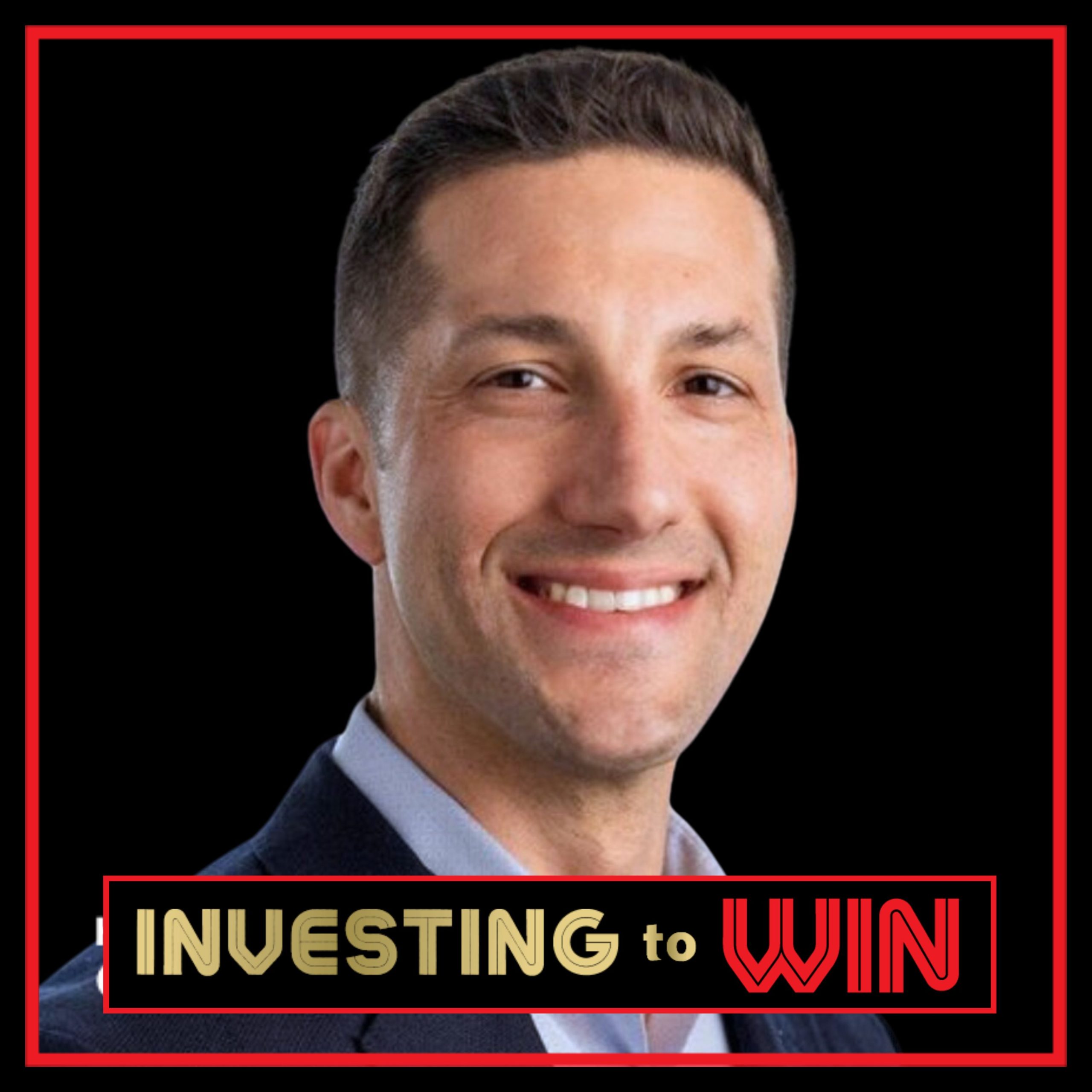
Investing to WIN #068 - How Dan French Builds Scalable Real Estate Platforms Without Losing Capital (Dan French)
Most investors chase unit count, growth, or the next hot market without fully understanding the risks behind those decisions. This episode breaks down what actually matters when building a durable real estate portfolio.
Dan French shares how disciplined investing, not aggressive scaling, drove billions in asset growth—and why today’s market demands a contrarian mindset. If you want to understand timing, risk, and long-term wealth creation, this conversation delivers.



Duration: 49:00
Date: Aug 27, 2024
Guest: Dan French - Chief Executive Officer (CEO) of ResProp Management
WATCH THE FULL EPISODE:
Want the full experience? Watch directly on YouTube to support the channel and get recommendations for similar episodes.
What You’ll Learn
• Why “never lose capital” should guide every real estate decision
• How contrarian investing creates long-term advantages in crowded markets
• The operational realities behind scaling to 15,000+ units
• What most investors overlook when underwriting multifamily deals
• How to transition from owner-operator to third-party property management
• Why market timing matters more than constant deal flow
• How to evaluate property managers and protect your investments
Memorable Moments
"I wanted to build future wealth for my family."
"The goal is never lose capital."
"We want to be contrarian investors."
Episode Summary
Many real estate investors focus on growth metrics like unit count or deal volume, but this episode challenges that thinking. Dan French explains why protecting capital and maintaining discipline matter more than scaling fast, especially in uncertain markets.
A key insight is the power of contrarian investing. While most investors rushed into hot markets, Dan and his team exited at peak pricing and waited for better opportunities. This approach requires patience, experience, and the willingness to go against the crowd.
This episode is especially valuable for investors, operators, and property managers looking to build sustainable portfolios. After watching, you’ll think differently about timing, underwriting, and how to align long-term strategy with market cycles.
Chapter Timestamps
[00:00] – Dan French’s background and entry into real estate
[04:46] – First property deal and early operational experience
[08:31] – Scaling to 17,000 units and $2B in assets
[12:40] – Capital raising strategies and deal structures
[15:26] – Transition to third-party property management
[30:43] – Why contrarian investing drives better returns
[36:41] – How deals are sourced, underwritten, and closed
[41:14] – Deep dive into due diligence and risk analysis
About Dan French
Dan French is the CEO of ResProp Management and a seasoned real estate operator with over 20 years of experience.
He has helped build and scale platforms managing more than $2 billion in multifamily assets.
Dan specializes in vertically integrated real estate operations, combining acquisitions, asset management, and property management.
He has led investments across major U.S. markets, including Florida and Texas.
Today, he focuses on disciplined, contrarian strategies through both operations and acquisitions.
Full Episode Transcript
Garret (00:00.046)
Okay, we're live now. I'm just gonna basically give me two seconds.
Garret (00:08.696)
Dan, welcome to the podcast.
Dan French (00:11.125)
Garrett, thanks for having me on. I'm excited.
Garret (00:13.228)
Yeah, really looking forward to this. Yeah, me too. I'm super excited. You have a lot to offer, trying to pick topics as we were talking about in pre -show. I think we're just gonna kind of let the conversation go where it goes, but let's back up a little bit. Why don't you start with a little bit of an intro about yourself and tell the audience how you came to be here.
Dan French (00:32.939)
Yeah, thanks. Look, I've been in real estate investment and operations for 20 years. kind of exciting. I've been with the same business partner for the whole 20 years that I've been in business. So it's been a really wonderful partnership. I didn't expect it to be so fruitful and so long in duration, but he approached me all that time ago with, basically his brother was really his first partner. So I became his second partner.
And at that point, it was pre great financial crisis is like four or five. And the idea was to go buy small deals, like four unit buildings and, whatever, you know, two unit buildings. I didn't real multifamily in the U S right. And multifamily is five units and above. So that's where we had our entry point. And the reason why I said yes was because I wanted to build future wealth. You know, that, was my idea at the time. It was like, I'm in public service. That was my, backdrop of all this.
After 9 -11, I felt compelled and called to be chasing more of a vocation around public service. And some of my friends went into the military. I decided to run for public office in my hometown, where I happened to be unexpectedly. My dad passed away, so I'm back in my hometown. I'm doing a public service career. I wound up getting elected and serving for seven years. So against that backdrop, I knew I wanted to have a pretty big family.
God is good, gave me four kids, so I had that going for me. I've been married for 12 years. Yeah, it's wonderful, but you know, everything costs money, man. And that was my initial idea, was like, hey, I wanna serve my future family. I wanna create wealth. So that's how I started.
Garret (02:03.306)
Nice.
Garret (02:19.318)
Okay, real estate seems to be a precursor to a lot of big ideas and big things. Why don't you tell me about, I like to really dig down to the beginning. Tell me about the first time you thought about real estate, what you bought or what that looked like.
Dan French (02:36.799)
first time I thought about real estate was probably as an undergrad, living in one these areas they call like a college ghetto. I went to school in New York, a state school in New York, and it was serviceable. There was a roof over my head and things were generally working, but I couldn't really get ahold of my landlord if something went wrong. The service level was so subpar.
It made me think somewhere in the back of my head, hey, if I ever get the chance to do this, I could do it better. And this might be a really great way to do something in the future on the side. so that was my idea was like, into some passive stuff. So when Pete, my partner, presented me with the idea to kind of like operate as a passive partner on some of the stuff he was being more active on, I was all in.
Garret (03:30.222)
Okay, so you and Peter were, like you said, business partners for 20 years. That's, I almost feel like if I even ask the question, we're gonna go down a rabbit hole because business partnerships are very rare to go that long. But so he was already involved in real estate.
Dan French (03:35.658)
Yeah.
Dan French (03:48.243)
No, he was getting his start as well. So he's actually one year younger than me and he was a year behind me in undergrad. So he got out and decided that he felt called into business. he is someone who just reads a ton of books and decided, hey, know what? Real estate is a great entry point because there's a hard asset behind it. So even though he didn't have a lot of experience, he can go, or we can go.
Garret (03:50.913)
Okay.
Dan French (04:15.255)
raise capital because even if you don't have experience sometimes there's a deal and you can point to the deal and say hey this is a wonderful deal just check it out you can go actually visit it you know so it's a unique thing that you know in many other facets of business it doesn't operate that way.
Garret (04:32.044)
No, for sure it doesn't. Well, in my online rental community, I have a saying there, you never forget your first and we're not talking about our first love necessarily, but the first property. So tell me about the first property you guys did together.
Dan French (04:46.687)
Yeah, it was a deal that went pretty well actually for a number of years. so it was, I was going at that point for my master's degree again in New York. And we saw I was living up there most of time, right? I was kind of commuting back and forth and doing this public service thing in my hometown and then going to school as well, taking classes during the week. So was pretty busy time.
But additionally, on top of that, was basically running this deal that we bought, which was really close to my university that I was attending at that point. And so that's why I know, you know, know property operations in my gut because I was doing leasing. was doing, unfortunately, if there was evictions, would go stand in court. I wouldn't even use a lawyer to save money. Maintenance, know, capex work. I was there on site doing an overseeing.
pretty much all this small building, Things don't happen every single day. So very hands -on, but that was smooth sailing from let's say, 05 to the great financial crisis. then once we hit the great financial crisis, things started getting real tight. So we got in some trouble pretty quickly.
Garret (06:06.7)
Yeah, before we get into that, really, think a lot of our listeners are thinking about doing the first deal. Like it's quite funny. You say master's degree and you, you know, I was also, I did my very first deal when I was in my PhD and with a college buddy as well. But ours was this really run down class C duplex in the worst part of town that had no plumbing. We actually bought it for four and a half thousand dollars, if you can imagine.
Nobody wanted it. So it sounds like you went. Yeah, it sounds like you went into multifamily right away Like what can you are you comfortable telling me about a little bit about the project?
Dan French (06:38.507)
That's wild.
Dan French (06:48.713)
Yeah, it was a four unit deal. But it was operating. It was basically a business, if you will, that had cash flows. it wasn't, I would say it was in a marginal part of town. wasn't like I would not feel uncomfortable being there at night. But later on down as we kept growing, unfortunately, we bought in those areas where it's like, man, it's getting dark out. I'm probably going to pack up and get out of here.
Garret (06:57.646)
Okay.
Garret (07:14.958)
I've been there.
Dan French (07:16.427)
So I'm very familiar with those neighborhoods, but look, that's some of the things you'll learn, right? The first deal, it went a lot better than the later deals because we kept trying to find a way to make the deals work and get a portfolio going. And so I think if you're not a disciplined investor, you say, all right, well, we have a goal. Let's go hit the goal. The goal is to buy more units. But the goal in real estate should never be that, right? The number one goal is never lose capital.
And the number two goal is never forget number one. So that's like a Buffett rule, like never lose capital. And then later on.
Garret (07:54.03)
Well, it's like in property management, right? We're always, or at least I go to these management conferences and it's all about how many doors do you have? What it really should be asking is how profitable per unit are you, right? That's really what it is.
Dan French (08:04.8)
Yeah.
Well, I think every industry is probably like this, but especially ours, man, so many vanity metrics that people have and the ones that do really well, the best in real estate, I think are more quiet. more long -term oriented, compounding their play over many years. And they prefer to be long -term holders because the transaction costs of trading in and out of real estate are very high.
Garret (08:31.278)
Okay, so let's jump forward like 20 years almost. What does the operation look like today? Just so the audience can get a bit of perspective.
Dan French (08:43.113)
Yeah, so coming out of the GFC, the great financial crisis, we bet on Florida. So starting off, really, it was a thematic bet that Florida would come raging back after the GFC. It had been really crippled in many ways, especially that state in the US was kind of devastated. There were some neighborhoods that had been completely left for dead, like blighted. So we were one of the groups that was like the first capital back into some of these neighborhoods.
revitalizing properties. So everything was harder to do, right? It's harder to raise capital, but we were able to do that. And we stood up a vertically integrated real estate platform. So for the listeners at home, it's like being an owner operator, right? You're doing all your property management. You're doing all your construction management. And then you have all the private equity machinery in one shop. That's how we built that business.
And so between 2011 and 2019, we bought $2 billion of total asset value, pretty much all in Florida and Texas. So very quickly, we kind of hopped over to Texas and continued our thematic bet that, you know, people in the U S would continue moving to these business friendly States that have great, they tend to have much better government policies and, and the economies were becoming much more dynamic.
because no state income tax, people want to live there, the quality of life is super high. And the relative cost of living compared to the coastal markets was incredibly lower. mean, some of that gap has kind of been erased a little bit, but especially in like 2011, 12, 13, there was this mountains of people moving down there and there still are.
That was the, so that firm bought $2 billion of total asset value, 17 ,000 apartments. In 2019, we sold much of the portfolio because we recognize there was a ton of froth in the market. So out of a discipline strategy, we started to sell aggressively. So we sold about 1 .5 billion of the portfolio before the Fed did their thing here in 22. So, and then now we are...
Dan French (11:01.215)
Just to complete the story and then I'll shut up. So ATX acquisitions is a new shop. It's a market -based initiative or timing based on all the distress that we see coming. And we're starting to see this already, right? With some foreclosures starting to happen. The US real estate industry is definitely off balance. Pricing's down. Great time to buy. So that's why we stood back up a new private equity firm. And we've done three deals so far with that firm.
And then ResProp grew out of the prior, a vertically integrated play. So instead of letting that property management business glide off into the sunset, we actually, we repositioned the company to go after third party owners and started winning deals for owners who were not ourselves, right? That was not our, that was a pivot from a business model standpoint. So.
Now we've grown that back up to 15 ,000 apartments. So that's over $2 billion asset value that we manage. And again, let's say 80 % plus is for other owners. So I'm going to pause there and let you tell me where you want to go with.
Garret (12:12.783)
That's all good. That's all good. No, I'm writing tons of notes as people who are tuning in on YouTube can see. Wow. $2 billion. That's a billion with a B. Okay. So much I want to dive into here. Tell me about your typical, this is pre 2019 before you sold off some of that stuff. What was the typical model? Are you doing syndications? Were you guys doing this privately with capital raising? How are you doing it?
Dan French (12:23.445)
Yeah.
Dan French (12:40.117)
Yeah, good question. So we started off with a big pool of discretionary capital that we were able to deploy really fast and buy deals all cash. So much of this credit goes to Pete, my business partner did such a great job founding and leading that company in the early days and raising their early capital. And so we had a big advantage. So we're buying deals all cash many times right in the early days, some of it from bank.
you know, directly owned by the bank. it's like REO, it's called in the business, like real estate owned assets that the bank doesn't want on their balance sheet. We would buy it, you know, and just take it back to life. And then over time, it became a little bit more traditional private equity model where we'd have a fund, like a GP fund or general partner fund. And, and then we'd syndicate every deal as we went. And, and so the syndication sometimes was all high net worth, like pass the hat type of money.
for our investor network. And then we've also done some JVs where the GP fund would be 10 % or 20 % minimal number of direct investors, but you'd have this one 80 % check or 90 % check. So we've done some of those joint venture type partnerships on deals. And that was the model. And that took us all the way to two billion asset value.
Garret (13:59.819)
Okay.
Garret (14:04.898)
So a lot of that is not like medium term fix and flip. It's basically the buy and hold model. And then I guess the investors start to participate in cashflow. Am I correct on that?
Dan French (14:16.681)
That's right. Yeah. Many times we would we would refine and return all the capital on a lot of those deals. And then so our mentality is definitely like the Buffett strategy, which is long term compounding growth for, you know, for our investor network, of course. And then we make money when we align our interests with them and we do well. They or they do well first and we do well. So that long term approach is how we that's our ML. But
our average hold period during that time was like 4 .5 years. So if that, I don't know, we did like 100 deals, we've sold about 90, so 4 .5 years.
Garret (14:55.31)
Yeah, no, that's, so you mentioned property management. That's very interesting because third party property management, obviously is one of my main businesses here up in Canada on a much smaller scale. But third party, like tell me about going from owner owning and operating, I believe you said 17 ,000 apartments to building back up to 15 ,000 with 80 % third party. It's a completely different animal. Would you agree?
Dan French (15:05.439)
Mm
Dan French (15:26.859)
I would completely and utterly agree. It's so different and that's why business is so experiential, right? It's like, I would have never expected that it would be this hard to pivot a strategy and because we know very deeply how to do property management, right? Yeah, you think you do. And under the old model, you pretty much, we did. So we executed well across many deals.
Garret (15:47.398)
You think you do.
Garret (15:53.518)
Sure.
Dan French (15:56.693)
But that's the old business model. I really personally, I think I know I underestimated how hard it would be to pivot because, you know, the owners are like snowflakes, if you will, like everyone's different. And so they want to see things differently. Some are more active than others. want different reporting, somewhat different GL structure. They just have different needs. So you really have to pivot the mindset of how to service that owner instead of
just being like, all right, well, we're going to do it one way. It's cookie cutter. We're the owner. We only do it this way. We only have this tech. We only have this strategy and we're approached to have CapEx and asset management. know, so reconfiguring, rebuilding the machinery, I think was, was super difficult, but, but I think clearly we've done it because now the last couple of months, it's been like a thousand units of new unit, organic unit growth that's been happening.
So it's really starting to snowball.
Garret (16:57.484)
Yeah. I mean, I'm, I'm an operations and process guy and I can tell you it is difficult. Like I'm in a lot of single family home space. So one, one owner, one house, but it really doesn't matter. Like you said, one owner wants a GL certain way. One owner wants distributions on the 10th, 12th. Like how did you, where is there a middle ground there or did you literally customize per portfolio?
Dan French (17:21.963)
Well, there's some customization, of course, that we've done, but I do think there's a middle ground, which is for right now, we only use, and we're starting to change this by the way, but we only use one property management system. So that could be one example. If you go to one of the bigger shops that are 300 ,000 units plus nowadays in the US, they're gonna say, all right, if you wanna use Yardi, I have Yardi. That's fine, because maybe that's how you use the senior reports.
Yardi generates them a certain way, but some other group might say, own them on real page. So we've lost some business in the past when we said, Hey, we actually are, we're on resmin, which is one of the, a little bit more tech forward, smaller property management system, companies that are out there. And some groups are like, you know, when you, when you use Yardi, let us know. So now that we're back at, we're back at like, I think a really good scale number, which is 15 ,000. We're still, we're going to start opening up, at Folio.
yardy, real page that way. So I don't know, I don't know if you want to double click too much on that, but that's one example of like, Hey, yes, we want to be bespoke to your needs, but we also need to have a platform that makes sense for us to run, you know, because if you have, if you're supporting four different PMS systems, just as one example, the mind share costs of your IT team, your training costs, your personnel stuff, really difficult, unless you have bigger scale.
Garret (18:51.27)
It does. Tell me about the employees. How many team members do you have?
Dan French (18:56.427)
I think after this new wave, we're going to have like 425 total after we bring on the next, you know, a couple thousand units here. So yeah.
Garret (19:01.23)
Okay, 425.
Garret (19:06.408)
Sure. Multiple markets, right?
Dan French (19:09.941)
Correct, yeah, all through Florida, all through Texas and South Carolina we have Charleston and we have Columbus.
Garret (19:18.318)
Okay. So boots on the ground versus I don't want to get too deep into the weeds here, but I think it's a very interesting business discussion, even for those PMs that are listening here, because I've always found that PM company, at least in like NARPAM, single family type space that might have whatever six, eight, 10, 12 ,000 units seems to be made of little micro companies that might be in, you know, dozens of different
markets, but only with 250, 300 units, which might have an owner operator that might have stayed behind a couple, a couple of PMs that are helping that person out. How are you doing this with multifamily and multiple markets? Do you have a headquarters? Do you have VA's? Like, what does that look like?
Dan French (20:04.885)
Yeah, it's a good question. always, I don't know if everyone looks at the business this way, but we and myself included, I look at the regional property manager as the linchpin for that region. They really need to set the tone from a people standpoint, know, servant leadership, to find a way or make one attitude, just being diligent, being honest, being frugal, and being like thinking like an owner.
All that really trickles down from the regional because you can have a regional vice president at our size. We have multiple RVPs, regional vice president. So a regional manager in the multifamily space that we serve is like, let's say they have eight property managers on average, let's say six to eight. So they would have six to eight sites, six to eight property managers.
And they're really set in the tone. They have to visit the property. They have to get their teams together, celebrate victories, but then hold people accountable. So I've always viewed that as it's not really a franchise because they're, they have to do, you know, they to kind of fold into our program. But, you know, the culture really kind of has to be trickling down from them.
Garret (21:20.534)
So is this bricks and mortar in each of those, the regional VPs? Are they like going into an office? have team members there.
Dan French (21:27.121)
No, typically we've done like a very low cost model. RMs will work from home. They'll have like an admin day or two, but then we want them on sites. You know, we want them pressing the flesh and, you know, we're meeting with different ownership groups that we're trying to grow the portfolio with them. They have other deals in that market or a new market. So they're trying to serve the owner that way, or they do client development as well. So.
Garret (21:39.618)
Okay. Walk in the properties. Yeah.
Dan French (21:56.489)
Yeah, they're busy.
Garret (22:00.086)
Yeah, I find a lot of the issues I've had in the past and we're starting to get to the end of that now and hiring some really, really good team members is what I call people issues, right? How do you engage your staff, I guess, even at the regional level and how did they engage, you know, the support staff, the clerical staff, the people who are showing properties?
Dan French (22:21.195)
Yeah, it's a ton of different things we do. Honestly, one is called the Daily Huddle. So we try to have them do a Daily Huddle. It's modeled off the Ritz -Carlton idea, which is like, every day you get together, like what's your maybe celebrated win. But then most importantly, like who's moving in today? You know, why is this work order more than 48 hours old or 24 hours old? Are we doing the breeze ways today? You know, like whatever's happening.
It's a time for the in -house team and out -house team or whatever, know, in and out. Like they call it the sales team, which is like the property management, you know, focusing or the sales focus people. And then the maintenance people, sometimes you don't have a daily huddle. They're just not talking. They're just grabbing their work orders and then kind of getting on their carts and leaving. So you have to have that, that thing that, that, that creates a team oriented approach to the property.
And then we have like all kinds of, you know, we have socials that happen within the regions. have quarterly town halls with, with awards that get out to people who have done the best in their region. So it's, it's a lot of different culture building stuff because the attrition in our industry is, is one of the biggest problems as you know, it's brutal. So even if you're, I think the average is like 70 % turnover per year, which is absurd.
So we're below that, and we track that pretty closely. look, you're have some people leave, or many people leave. So you're on a fast track. So you have to become known as a place where people, they love what they do. They're attached to great meaning in their work and that they find joy in what they do. They're celebrating when they have a victory. They have friends at work that they love and admire. So it's building community, building friendship.
and I think winning too, man, it's like, we've been part of a team where we have, were shedding unit count and that is a completely different value prop to, to a teammate, an oncoming teammates. Like what's your unit count? Well, yesterday it was 7 ,000, but we sold a couple of units. Now we're at 6 ,000. They're like, okay. But today we're like, all right, you know, look, we're at 15 ,000. We're going to go to 50 ,000, you know, and because they're clocking in their minds.
Garret (24:40.397)
Yeah.
Garret (24:45.123)
Yeah.
Dan French (24:48.651)
How is this gonna impact my career? So, you your career's gonna have a good run. you're absolutely killing it, you're an A player, and you're on a team with 15 ,000 units, and that team goes to, let's say, magically 100 ,000 units, well, so much opportunity opens up, you know?
Garret (25:08.664)
Okay, so you mentioned organic growth, Dan. When you talk about that, is that like typical biz dev going after units, taking over buildings at a time?
Dan French (25:19.115)
Yeah, now we do have a biz dev team, but I think by organic growth, what I mean there is like, sometimes an owner will get in with us, they'll say, hey, we want to entrust to you this 250 unit deal. It's in Dallas, right? And let's see how you do. But by the way, we have, you know, thousand units, a thousand more units in Dallas. And then we also have 500 units in Austin, Texas. So to me, that's kind of organic growth. That's a pinnacle of
organic growth because you're gaining the wallet share, if you will, of that customer because you're just killing it. then of course, referrals will be organic growth as well. Like our client development team didn't have to call this new owner. They found out about our team from someone who loves us.
Garret (26:08.837)
I think that's very prevalent in our industry. think people, investors of any size, I think it's a fair statement to say the property management industry is challenging and I've been doing it for 25 years and we've been bad. We've been good. We've gone through our cycles. So I don't want to put down any other company because it's just, it's just so hard of an industry. It's so difficult of an industry, but
Dan French (26:27.787)
Mm
Garret (26:35.094)
I do see that you have investors that will give you one property just to try and they're kind of keeping, or they might be with four or five other managers just because they're trying to see which one is going to do the best. think that's just part for the course.
Dan French (26:48.139)
Yeah, 100%. Yeah. And in the U S there's been on the multifamily side, a lot of consolidation, which is kind of fascinating to see. so, you know, now you're seeing the top companies and the top five are, are at these massive unit counts, like 300 ,000 units and above or 200 ,000 units and above. So they have, they have massive scale, but what's happening, is that where the owner that brought them there,
You know, in the beginning part of their journey is not who they're serving today. So a lot of that old owners are getting forgotten about. They're not getting the level of service anymore. And that's where we've had great success because we come in with new energy. We're like, no, you matter to us. Mr. Mrs. Owner, like you. Yeah, you're so important to us and you're going to remain important to us even when we're bigger, but they forgot about a lot of their customers or, or, or they're so busy with &A.
Garret (27:33.93)
The relationship, yeah.
Dan French (27:46.463)
like buying other property management companies that they don't have time for deep operations. Because how can you do both is really, really difficult. So.
Garret (27:55.33)
Yeah. Have you expanded using the &A model at all with the unit count?
Dan French (28:00.071)
No, not at all. no. And we haven't even put any focus on it because I do think there's a couple of reasons. One is that's expensive. What people want to get paid for for their units. And you get so much attrition anyway, once I think you take over, you're going to get a trip because the owners are like, signed up with some other team. Who are you now? But also, I think really forced us to be super disciplined in
Garret (28:03.831)
Interesting.
Dan French (28:28.331)
and getting, you know, winning on excellence, number one, but then also like appealing to clients because it's so competitive. You know, the, you've been in it for 25 years, so competitive. There's new entrants all the time. There's someone's really good in a particular market, you know, or, or a class C deal or class B, like that's our niche. It's, it's really hard to beat out the competition. so by forcing,
Garret (28:56.908)
Yeah, I haven't done any acquisitions yet. Mine's also been referral and organic.
Garret (29:07.966)
I'm still rolling. You can refresh if you want. I'll just make a note of the time, but my, go ahead and refresh. Yeah. Sure.
you
Dan French (29:32.245)
Yeah, hoping it doesn't lose anything there, but...
Garret (29:35.756)
I don't know. Like I said, it's the thing with Riverside is it it records locally and then it uploads after. So I guess I guess we'll see.
Dan French (29:42.297)
Mm
It says 80, no it says I'm on 90 % uploading, 95, 99.
Garret (29:50.274)
Yeah, that's your other track probably. it's, I'm pretty sure, it says here, something went wrong and they're not being recorded anymore. Everyone's still being recorded, ask Dan to refresh and rejoin. Okay, so I did that. Okay, well, I just made a note of it. We'll pick it up as we see it. Okay, so let me just think of a good transition question here.
Dan French (29:52.152)
Okay, yeah.
Garret (30:18.094)
Okay, we're talking about acquisitions in &A. Okay, so let's transition a little bit into ATX. I think it's kind of fascinating the timing that you guys kind of sold off a lot of these assets and now you're getting back into it. Tell me a little bit more about the idea and the opportunity that you guys saw.
Dan French (30:43.632)
Yeah, I think it does come from certain like first principles that we try to always have as investors. And that's how we look at what we do, right? It's investing. It's not just some GPs, I think, forget this. They either go through, go for the vanity metrics or they just have a perpetual machine. And it almost doesn't matter what's happening in the market. They just want to grow. Whereas we want to, you know, be more contrarian because we think we've
believe that's how you have more alpha in our industry, right? If you're just deploying continuously with everyone else, how do you really have any alpha? Maybe on the execution side, maybe some relationships you have, who knows? But for us to be contrarians, that was, look at our history, right? 2011 was when we sized up and formed our $2 billion platform. And that was a contrarian move.
Right? The capital markets were completely frozen still after the GFC. Very difficult to put together deals. Many people forget about this, but Florida was, you know, some people were saying it might be a lost decade because it's so tourism based and people will people keep moving there. And it's like devastated. So, you know, we went into this thematic bet on Florida and Texas, and that was a contrarian play when we started. Now, the opposite became true. 2019.
Everyone had rushed into the same place. So many new entrants coming after the value added space or even just market, apartment market generally. So that's when we pulled out. but now same thing, right? Like the contrarian move is actually to go in and do deals because even though everyone can read the Wall Street Journal and say, Hey, know, pricing is down. It's still extremely difficult to find good deals. So.
That's our mindset. We want to be contrarian. And now is it with more, but the market dislocation has happened because of the fed. Now it's time to reform the team and go snipe like rifle shoot the best deal as possible.
Garret (32:51.246)
So if I could summarize that for the listener, you're basically staying half a step, two, three steps ahead of a curve that because of your extensive experience, I mean, they always say, right, you want to buy when it's low, you want to sell when it's high. And when you say all these people are rushing in and trying to do what you guys have done and what others are doing, I mean, know what 2000, I mean, that's the space I'm in right now. Everything's high, everybody's going in. That means demand is higher. That means prices are going up.
So you guys are basically like, okay, we'll divest right now. It's a good time to get out and we'll start looking and waiting for the market to turn, which of course it did with the current climate. And now there's opportunities for those who are cash rich.
Dan French (33:35.331)
Yeah, thank you. Good summary. That was helpful. That was quicker than I said it. So, you know, I appreciate it.
Garret (33:37.774)
That's what I do here.
Garret (33:44.77)
Yeah, no, all good. All right, so ATX Acquisitions, you say it's a new shop, but I guess it's really new only in name. You guys have like decades of experience.
Dan French (33:54.927)
Yeah, it's exactly. So the team tracker could really goes forward with Pete Rex, my business partner and my, and really consider myself right there as well. Part of that, part of all that activity and the great, the great returns that we've provided to our investment partners. And another example is our CFO. name is Rachel Ridley. She's based in Tampa. She's been with us for 11 years and she's wonderful as well. Big, big Ford background, PWC.
And she's amazing, private equity genius, know, has done a lot of different, including Canadian helping to help different Canadian groups invest in our type deal. So that's, that's something we can, if anyone's interested out there, they can talk to Rachel, but, but she has done 10 31s as well. Like, you know, so we have a, we have an established team. know how to do this stuff.
Garret (34:49.58)
Okay. So what's, what are the targets set out? Are you looking at different States? I'm still staying South. What does that look like? What are you seeing out there in the future?
Dan French (34:59.671)
Yeah, we like, you know, DFW definitely within Texas, DFW and Austin. DFW is kind of the current darling right now. So it's, it's very competitive. But I think Austin has been shorted for the moment. And I think that's going to evaporate soon because people are just going to say, you know what, man, if you blink your eye, it's going to be all that new supply is going to be absorbed really fast. And it'll be back in balance and people.
people will say, you know what, kind of missed the boat there for the last six or 12 months, but now we're back at looking at Austin. So I think it's a good contrarian time to buy Austin right now. So we're trying to find deals and there's not that much transaction volume. But then all Florida, Florida is especially Jacksonville where we just completed our last deal on Friday, it closed on today's Monday. So that was a real strong deal. And then Tampa and South Florida.
I think Orlando, haven't seen much that we like recently. And then besides that, if something really pops out that's extremely attractive, we'll look at it like Phoenix, a couple of deals in Phoenix that we got close on. South Carolina is interesting, but our base of operations is where we typically stay, which is Florida and Texas.
Garret (36:12.64)
Okay.
Garret (36:17.782)
Okay, for those people who are listening, might be accredited investors, not exactly sure the terminology we're using. Can you kind of walk through the timing of a typical deal from tying something up under contract to actually reaching out to the investors, closing, and then what the holding period kind of looks like? Maybe outline that for the audience.
Dan French (36:41.495)
Yeah, so briefly, would be like for from our side, there might be a lot of a lot of chase time, right? But let's just talk about like, so we've, we've looked at it, you know, maybe it's off market, maybe it's marketed, we've underwrote it, and we've, we've pressure tested a lot of different things about the that sub market and the deal itself. Tons of analysis. And then we get we submit an offer. So that's called a an LOI or letter of intent. It's it's non binding, but
Then there's a typical process that happens with the seller and their broker will probably have like a best and final. So they might have three to five different groups depending on the size of the deal in this best and final round. that's where opportunity for someone to step up more in price or think about better terms and try to secure the deal. And then they're going to award it to one of those groups. And sometimes it's not the highest price. It might be the best track record or a certainty of close or
seller has worked and transacted with this group before, so they're going to select them. And it could be a handful of reasons. But then once our team or someone like us gets a deal under control, is what we call it, like it's been awarded, then you to go back and forth on a PSA. So purchase and sale agreement. That's when some lawyers get involved and you have to iron out some details about many different things about how the deal will transact. Then you have a
Once that's signed, have a beginner DD period, so due diligence, and that might be 30 days. we of course, we're on site day one, you know, with our team, ResProp team. ResProp management is our property management team. So, and we'll get right after it. And at this point, once we secure a deal, we're almost certainly showing it out to our investment partners and saying, hey, here's the profile of the deal. Here's what it looks like. Here's the terms. You know.
Garret (38:14.412)
Mm
Dan French (38:39.119)
Please let us know if you're interested, it's gonna go fast, whatever. So that's how it plays out. And typical terms will be closed within 60 days and you have a couple of periods of extension periods that you can execute if you need them.
Garret (38:54.702)
Okay. Yeah. No, amazing. think, do you see any challenges in starting with a new name and yet with, you know, the old shops to, you know, 2 billion, 17 ,000 apartments? How do you tie those two together for your investors?
Dan French (39:14.479)
That's been tough. I can't lie here. I gotta admit, we had a really, really strong name. It was called the Vesta by the way, but that team had a wonderful reputation in the marketplace among people who own deals and sold to us, brokers, and then investment partners. then taking such a long pause on the buy side is difficult, especially for your investors because...
If they like, let's say they love to just allocate the real estate, they have a certain number in their, in their mind or percentage of their investible cash. That money is probably going to continue going to real estate. So if we didn't have anything to show them for like three or four years, they've oftentimes gone elsewhere. So then you have to win their trust back and say, Hey, remember that we, we had these wonderful returns and it was a good ride and we're back at it and we were disciplined and
So we're getting a lot of folks reactivated and they already have been, but you know, but yeah, good question. It's a journey. It's a journey.
Garret (40:19.128)
Well, yeah, well, I was just even thinking on the broker side, because you spend so much time building those relationships, getting those off market deals, even changing a name, email address. I mean, it almost feels like starting over and yet you guys have all this experience.
Dan French (40:31.065)
you
Dan French (40:36.983)
Yeah, you just have to tell the story and say, you know, same founder. That's a key, right? Like one of my favorite quotes is success has a thousand fathers, but failure is an orphan. Like everyone thinks they built our prior company at Vesta and everyone, everyone thinks they were the key person. It's like, I was there. I know who the key person was and he's still, he's still the founder. So.
Garret (40:51.703)
You
Garret (41:02.776)
Yeah. Yeah.
Dan French (41:06.605)
And there was many key people, not taking anything away from people. We had a wonderful team, but you know how things go.
Garret (41:14.338)
Yeah, no, I think what I'm hearing from here and I want you to actually expand on this is the due diligence. I know that what from an investor sees is just, here's this wonderful new property. We're gonna be doing A, B and C to it. The value is gonna be this, this and this. We're getting it for so much under market value. Walk us through the amount of due diligence that goes into every deal underwriting before you even
click send on the next webinar and things like that. Cause I think that's really where your experience is going to shine when you're trying to build up ATX.
Dan French (41:53.345)
Yeah, I mean, there's a lot. clearly. everyone uses an Excel model, some version of a model. But so the DD that we're going to focus on most likely is going to be, well, all the time, Is like, what's your operational inputs? so that should be, did you get an insurance quote? What can we run the property? What kind of staffing plan can we run the property for or with?
So we really leverage our ResProp team to tell us that. And then of course, the rent growth metrics are extremely important. So we have a big thing called CoStar. It's got basically property level information from every US large real estate deal in the markets that we have. we're checking that. We're seeing what are they projecting for the future rent growth. And we kind of stress test it against our own view. And then we're looking at
a Cat -Bax program almost always, right? Because these are deals that deteriorate over time, even if it's brand new, you have to wonder in five -year hold period, which is our typical hold period, right? Or what we underwrite to over that five years, what does a Cat -Bax plan look like? So if it's a newer deal, 2019 and newer, that's more simple. If it's old, all right, well, are you replacing roofs? Do have to do an exterior paint immediately? Do you need to replace HVAC units? How's your plumbing?
Later on, you're to really tighten up on all of that once you get on site and get contractors out to bid it. Maybe doing video of some of the plumbing lines. I mean, we're going really super deep. But even before you get to that getting awarded the deal piece, we're also getting a debt quote or multiple debt quotes to see what kind of debt we can place on the deal. And getting a real live insurance quotes or many of them, two or three typically.
you know, because in Florida and Texas, it's it's been such a bloodbath. And then you're checking, but you're also checking like, am I bumping up against metrics that I don't, I want to be careful about. So household income, understand the sub market, new supply, what's coming online the next, let's say two years, at least, you know, what was happening next three, four, CoStar has all that information. And that's going to impact.
Garret (43:53.454)
Yeah.
Dan French (44:18.607)
It's baked into the numbers that they're going to show you from rent growth, but you also have to take your own analysis and say, well, we're in a sub market that's going to have 2 ,500 more units. It's going be hard. know, rent, household income divided by rent. You know, what's a wallet share that people have to use to pay for their rental, you know, rent costs. So if it's too high,
Garret (44:31.608)
Yeah.
Dan French (44:47.663)
That's scary. Maybe we're not even doing that deal. But then even after the rehab program, let's say a capex program has increased expected rents by $250. I'm making it up. Well, now what's that new number? What's the household income divided by that new rent number? So are you bumping up against that number that doesn't make sense for you? It's not downside protected. So these are a lot of things. Replacement costs too. What does it cost to replace? Build a brand new structure.
Garret (45:00.11)
Sure.
Dan French (45:16.973)
in this area, and something we look at too.
Garret (45:22.05)
Yeah, no, I think the groups that I've worked with and a lot of the due diligence is, mean, nobody has a crystal ball, but you kind of have to operate like you're, mean, it's just analysis, prediction. Like you said, technology, what does the industries look like? What's moving? Big companies moving in and out for different sectors, right? It's not just about the building. think groups that are not going to be successful when they're going to maybe
Dan French (45:39.225)
Yeah.
Garret (45:49.4)
put their investors money at risk or they're not looking at those bigger factors.
Dan French (45:53.517)
Yeah, exactly.
Garret (45:56.406)
So in terms of the management portion of it, are you going after, like using local managers? Are you at a size now where you can just have your company come in and manage the asset? And that's kind of your, cause that's what I do, right? That's something like we're completely remote. We can manage almost in any market. And I actually like to go in and learn the different states and provinces where we're going to be expanding into. What is your view on that?
Dan French (46:24.803)
Yeah. So, prop is technically an affiliate of ATX acquisitions, but we know the business so well that, and we trust them so much. think they're best in class. So if it's a property in Florida, Texas, or South Carolina, they're almost certainly going to win that deal with us or be with us from day one. But let's say randomly, we get a deal in Bellevue, Washington, and we have no other deals there. So we have a case in point B, we actually do have a
deal in Boise, Idaho, that res prop does not manage. It's a one -off, know, a hundred unit deal. We bought it at a great basis, like a while back in 2017. And we just never decided to open up a res prop channel out there because we didn't see any pathway to get, to get size. And I think in our business, it takes a thousand units in an area to actually make sense because then you could pay for a regional manager that's in market.
Garret (46:56.758)
Okay. Yep.
Dan French (47:22.585)
So that's how we look at it. If there's no path to a thousand, we're, we're just use someone else.
Garret (47:29.036)
Okay. And how have you found that with all of your experience? You know, they always tell the investors to manage the manager.
Dan French (47:35.693)
of being a manager of other property managers. get to, you know, I get to tell them how bad they are. It's wonderful. No kidding. No, it's, it's, yeah, it's been very enlightening actually, because you get to see some of the inner workings of how other big, you know, big, big type shops do it, which has been helpful, honestly. And, you know, you have to have great humility in our business because man, there's so many different ways to do what we do and to improve.
Garret (47:38.53)
Yeah.
Garret (47:45.663)
Ha
Dan French (48:05.987)
So we like to just be like admirers and say, all right, well, look what they're doing over there. That's kind of unique. Let's do it that way. So it's been helpful.
Garret (48:16.194)
Yeah, no, like I said, that's why I do these podcasts, always, always learning. So before we wrap up, I'd like to ask all of my guests one question, same question. I wanna hear what you have to say. So this is the Investing to Win podcast. How do you define success and what does winning look like for you?
Dan French (48:19.651)
Mm
Dan French (48:37.027)
Well, I like to define it like, man, the people we serve are doing extremely well. primarily on ATX side, that's investors, right? They're doing extremely well. They're sleeping really well at night, knowing that we're stewarding their capital in a way that number one, our top goal is never lose capital, never lose principle. And then after that, long -term compounding growth of their capital. So that's our mindset. I want to see...
you know, if we're serving them extremely well, then we're doing well. Same with ResProp, the key customer is the owner. If the owner is like, man, I can go on vacation finally, I can have to, you know, be 24 seven on this deal that was like stuck in the seventies or eighties percent. We've heard these stories, right? And ResProp comes in and they have ultra transparency and they're thinking like an owner and they're serving them extremely well. Like that's wonderful. And then that person can go chill out for a bit.
and know that they're in good hands. And then I think, look, our teammates too. I've seen so many people do really well in our businesses, like from a career standpoint and financially too. So I'd love to see it, man. I'd love to see people grow beyond what they even thought they were capable of, just because they did the work, but they took a ride too. You know, they took a ride with our business.
Garret (49:58.658)
Yeah, one of my favorite quotes is, businesses don't move people, people move the business.
Dan French (50:03.745)
Amen. That's huge. Yeah.
Garret (50:05.794)
Yeah, it is. Well, Dan, thanks so much for the insights. I'm going to be putting all of your information into the show notes. So if there's any investors that are intrigued by what they've heard here today or want to know a little bit more, they can reach out to you. And again, thanks for coming on the pod.
Dan French (50:23.097)
That was a lot of fun. Thanks, Garrett. Appreciate you,
Garret (50:25.752)
All right, yeah, catch you later.
Want more episodes like this?
Join my email list and I’ll send the best insights from real estate + business + investing.