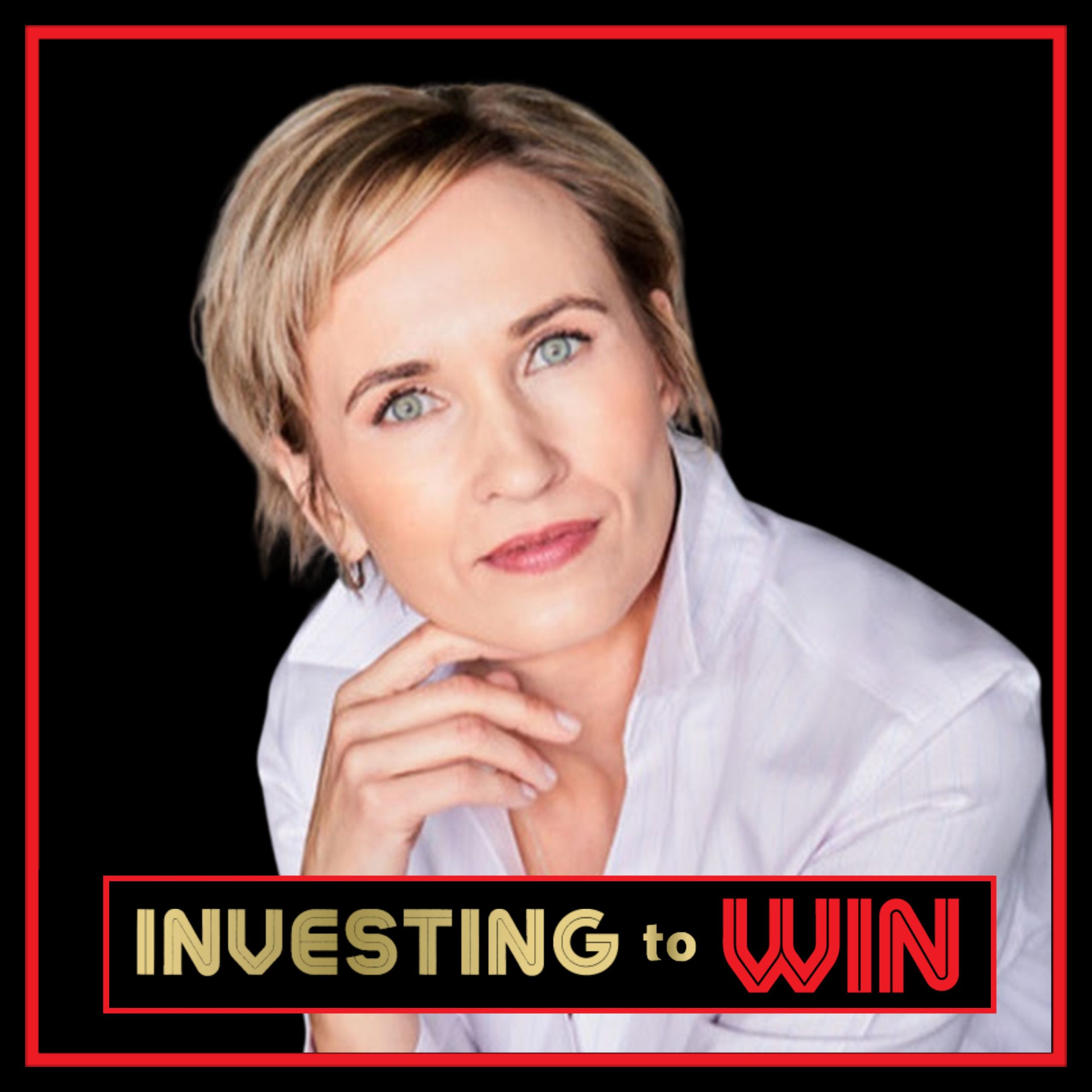
Investing to WIN #071 - How Leaders Use Storytelling to Build Trust, Clarity, and Authority (Loreta Tarozaite)
Most business leaders think communication is just sending updates, posting content, or explaining what the company does. But when the message is unclear, disconnected, or overly corporate, employees disengage, customers lose trust, and opportunities get missed.
In this conversation, Loreta Tarozaite breaks down why storytelling is the foundation of strong leadership communication—internally and externally. From executive presence to on-camera confidence, she explains how leaders can turn scattered messaging into clear, trust-building communication that actually moves people.



Duration: 54:00
Date: Sep 17, 2024
Guest: Loreta Tarozaite - Executive Alignment Architect
WATCH THE FULL EPISODE:
Want the full experience? Watch directly on YouTube to support the channel and get recommendations for similar episodes.
What You’ll Learn
• Why most companies create messaging chaos without realizing it
• How executive storytelling builds trust faster than corporate messaging
• When video communication is worth the time inside growing companies
• How to communicate company changes without losing employee buy-in
• The difference between “just hitting record” and building authority on camera
• Why technical founders struggle with storytelling—and how to improve
• How customer pain points should shape your brand communication
Memorable Moments
“Communication is the premise of everything that I do.”
“You can’t be stiff. People will not want to watch you.”
“The story is what resonates, not the production quality.”
Episode Summary
This episode explores one of the most overlooked business growth skills: communication. Many leaders assume their message is clear because it makes sense internally, but Loreta explains how unclear communication creates confusion across teams, weakens trust, and limits business growth.
A major takeaway from this conversation is that storytelling is not just for marketing. It is a leadership tool. Whether you are speaking to employees, investors, or customers, people respond to stories because stories create emotional clarity. Loreta explains why mission statements often fail while personal stories create connection.
This episode is especially valuable for founders, real estate investors, and executives who want stronger brand authority, better employee alignment, and more confidence on camera. After watching, you will think differently about how you communicate and how that communication shapes your company’s growth.
Chapter Timestamps
[00:00] – Introduction and Loreta’s background in communications
[02:35] – How journalism shaped her communication style
[12:19] – Moving from Lithuania to Silicon Valley and reinventing her career
[16:11] – What an Executive Alignment Architect actually does
[18:41] – Why internal communication matters more than leaders think
[29:47] – The difference between casual video and authority-building content
[36:02] – How storytelling creates emotional connection in business
[48:37] – Where leaders should start when they feel disconnected from their audience
About Loreta Tarozaite
Loreta Tarozaite is an Executive Alignment Architect who helps businesses turn communication chaos into clear, structured messaging. With a background as a television journalist and news anchor, she brings deep expertise in storytelling, executive communication, and brand positioning.
She has worked across startups, corporate teams, and leadership environments to help founders and executives strengthen their presence, improve internal communication, and build stronger trust with their audiences.
Full Episode Transcript
Garret (00:02.128)
Loretta, thank you for coming. Welcome to my podcast.
Loreta Tarozaite (00:05.474)
Thank you, Garrett. Happy to be here. Thank you for inviting me.
Garret (00:08.538)
Yeah, absolutely. I'm really excited about the content that we're going to be discussing today because it's about content. But before we go there, I'd like you to maybe introduce yourself to the audience, a little bit about your background, and then I'll kind of dig in from there.
Loreta Tarozaite (00:24.716)
Okay, wonderful. Thank you. I am a chaos fixer for marketing and communications functions and organizations. And what that means, it means that a lot of times when I work with organizations, they don't really quite understand what marketing communications entails and they do sporadic work, right? Especially when they are just starting the companies, they're not sure what they're doing and they need some type of stream, most streamlined process and
strategic look at things. So that's where I step in. I come in, I do a little bit of the audit, I assess what the situation looks like right now. And at the core of everything for me is communication. So I look at everything from messaging flow perspective, from story flow perspective, internally and externally, and then I utilize marketing as a vehicle to get those stories out. So by doing that, we elevate the visibility, the authority of the company, its leaders and so forth. So everything to me stems from storytelling,
along with visual aspect of it. And that comes from my background as a former TV journalist, TV news anchor, where TV always comes with visuals. It's not like radio where you sit in front of the microphone and you read newspaper or you read some type of news and you're just assuming that people will build some type of image in their heads based on the information that they hear it. With TV, it's always a word and a story, visual story that comes with that word. So that's why...
the communications in my world is the premise that everything that I do and how do we visualize those stories? How do we up level that company's presence and authority and reputation externally through that storytelling?
Garret (02:01.456)
Thank you. Now the listeners might be wondering on a real estate business podcast why I'm having somebody come on who's been a previous TV journalist anchor. And the reason is, I mean, I'm here on video, I'm doing social media. A lot of my listeners are budding entrepreneurs and real estate investors and it all starts with realist, or sorry, it all starts with visuals to being on camera. Let me back up a little bit. You mentioned journalism.
Tell me a little bit about that. How long have you been interested in journalism? What drew you to it?
Loreta Tarozaite (02:35.382)
You know, it was very interesting. I don't know if it was more so intentional that I went into journalism knowing that this is what I'm going to be. It's kind of a lot of things that came into fruition through my life. As a child, I've watched nightly news on television with my parents.
And I would always tell my parents one day I will be that news anchor sitting in television and spreading the news, right? And delivering the news to the audiences. I've always had that because it was one news anchor that I really admired. She was so beautiful and she was so well outspoken. And I thought I just want to be like her. And then as I, and that was probably, was probably about 12 or 11 years of age. Obviously my parents didn't pay any attention to any of that. But as a child forms, as you grow into young adult,
you start identifying these skills that come naturally to you. And to me, communication...
verbal communication specifically was very natural. And I was always naturally curious about a lot of things. I would always ask questions. I would always be investigative. know, well, you will use this word over here in answering this question to me. Let's dig deeper a little bit into that word. Is that what you meant? I would always pick up on the nuances of the word, of the spoken language, and that would spark my interest to further investigate what that actually story is. know, if you're somebody, if somebody's not communicating clearly, you know, I would tell them sort of verbalize.
what that story that they want to tell that's not coming out of them. So that was a formation of over like discovery I said, know, over a course of time that when I was ready to actually study at the university, I was considering English language as a translator. You know, at that time I was living in a post -Soviet country, Lithuania. So...
Loreta Tarozaite (04:30.572)
that because I excelled at English language from the first grade, was learning it from the first grade, languages have always been something that I excelled at. I thought, I imagine in my world, know, languages, I translate, could travel the world and I could be translating from English to Lithuanian, you know, in the politics and the business environment. But somehow, you know, my mom noticed a different aspect of me and she said, you know what, Loretta, maybe you should consider journalism. And that was my kind of secondary option as a journalism.
It was not my primary. But then the more I thought about it, the more I was like, you know what, maybe I should pursue that. Because in a way, journalism also had an aspect of travel, had an aspect of international communication to it. So that's how I ended up in journalism. And when I studied journalism, again, early on, know, of the first year and the second year, you have to do these internships, right? And the first year, you kind of study what is the published media of the journalism.
And then you go and at the end of that school year, you do a published media type of internship somewhere in the newspaper or in a magazine. So I did that. I realized I hated it. I've always hated writing. So that just came to more, know, realization that I will never be a writing type of journalist. Second year was radio. And I remember I was doing an internship at some radio station and I had to come in early in the morning and read a newspaper, you know, overview.
back then, which was what, 20 years ago or something, you know, it was still a thing where, you know, you had to sit in the dark studio, I remember, with just a microphone in front of me. And I just had to flip through the pages and give an overview of the newspaper. And I remember thinking, like, who's even listening to this? Who are the people out there? You know, what are they understanding from what I'm saying? So to me, it was a little bit isolated, the radio environment. So then again, that was a discovery to me that it's not the right fit for me. And then when I ended up having an opportunity to do
to host a business show on a national television. It was a newly developed business show. They were just introducing this to a national television station and they needed some news anchors. So one of the prominent news anchors back then, she was one of my professors in the university. She said, hey, Loretta, you should try out there as a news anchor. And I didn't know, I didn't quite know what that meant. I just went into out of the entertainment and...
Loreta Tarozaite (06:50.976)
And I sat into that chair, they prompted the teleprompter with whatever script it was, I don't even remember right now. And I just flew through it. And that environment, you know, I stepped away from the chair and everybody was like, you're a natural at it. I'm like, really? I didn't even know that. So, so to me, that's how I landed in that news anchoring chair. was, you know, in a way manifested, you know, because I thought I will be there one day.
when I was dreaming about it as a child. And in a way it was through self discovery of what I felt was good. What media was feeling good for me as a journalist. So does that answer the question?
Garret (07:30.564)
No, it absolutely does. What a fascinating story. cause you would think as a young girl, you're like, I want to get there and you keep struggling. Like I kind of have to expect you to say, tried this job. I tried that job. I didn't get it. I tried, I tried, I tried. And it's kind of, no, it was just through almost luck that somebody puts you in the chair. Otherwise you wouldn't have realized that you had this, this calling if you will.
Loreta Tarozaite (07:52.63)
Exactly. I totally connect that through manifestation and being in the right time in front of somebody who was looking at that moment for some new faces to host that particular show. So it just kind of came everything into that fruition. But I did try other aspects of TV that I realized that were not my thing. Documentary style, for example, is totally not my thing. It's very...
It's like filling out the article with words on the blank sheet of paper, same with documentary, long form documentary, I should say, where you have to really develop a story with inflections and drag it out to 60 minutes or 30 minute length. That was not my dynamics at all either. I tried it and I realized that I'm failing at it. It's not me. So for me, anything that's more dynamic, which was news, news is where I thrived. I'm a quick thinker. I can sort of distill the information.
quite quickly from all the sources of information coming in, I can see the patterns and I can sort of connect the dots very easily. And that comes in handy when I work with companies and executives, you know, I can really distill the story very easily because I have listening ears, you know, I can edit on the spot their story or I can really pick up on the cues without even knowing the business very well. I can kind of guess and anticipate where they're heading and help them hone in a little bit more further, you know, through the words and through the positioning of what they have challenges in achieving themselves. I help them sort of streamline their thoughts.
into a concise soundbite.
Garret (09:20.07)
curious about something, just my own naivety. If you're delivering the news on TV, how much of that is recorded? Is there a delay? How much of it is live? And I don't mean just your particular job, but the industry in general.
Loreta Tarozaite (09:30.883)
Hmm.
I can't speak to American TV environment at all. I have not had my experience in America, in the United States, I should say. All of my experience goes way back in Lithuania, 20 something years ago. And back then...
A lot. I specifically was in a live type of broadcast environment. so nightly news was a live broadcast. The only pieces that were recorded pieces were, let's say, if the reporter goes to the field, they need to bring in the story of the day. They need to edit it. And then the news anchor usually kind of has the the intro to that story piece that has to be scripted and sort of put into the teleprompter. And then, you you introduce that piece, you go into the recorded, pre -recorded version of it. Obviously, there's also live interviews in the studio that happen as well, which you have to prepare for. have to.
kind of understand what the, what the, okay, stumbling on the words in English right now. What, what the news of the day is, you know, that would require you to do a live interview with either a politician or some sort of other, you know, expert in that field that would add some flavor, you know, into, into that nightly news show, sorry, minute show.
Garret (10:43.748)
No, the reason I'm asking that and I'm digging a little deeper is I'm guessing that your love in front of the TV lens and your ability to think on your feet is probably why you didn't like doing documentaries with the, I don't think you even spend much time. I imagine that's a lot of narration versus being on camera speaking into it. You might have an intro and an outro or things like that, but a lot of documentaries that I've seen
is a lot of B -roll, a lot of things like that with the narrator's voice going on in the background.
Loreta Tarozaite (11:17.13)
Yeah, it is a lot of drawn out story, right? And you have to spend more time in investigating that story. Even though I have the natural curiosity and the investigative aspect of it, for documentary style, for me, I would lose patience. It's taking too long. I just went to get to the point really quickly, really fast. What's the actual premise and gem of the story? Let's just get right there. And that's what news environment brings. You just get to the point very quickly because live air is very expensive.
You can't elaborate too much. have, with an interview, let's say a live interview, you have two minutes and you have to figure out based on the answer that somebody is giving you where to take that next question. Do I even ask those three questions that I have going on or did they already answer that? And you have to think on your feet and either end the interview or add some clarification points on the spot.
Garret (12:04.56)
Mm -hmm. Okay. So speak to me about the transition then from Lithuania to, and I obviously did my research on your bio, but I'm curious to Silicon Valley. Tell the listeners about that.
Loreta Tarozaite (12:19.214)
Yeah, so I lived in Silicon Valley for about 17 years. I moved there in 2003 and now I live in Las Vegas. It's been four years since I live here, but the majority of my career and sort of professional environment was formed in Silicon Valley. So when I moved here, I could not work legally, so I had to sort of figure out how do I adapt my journalism skills into something that's sellable? Because obviously I did not imagine myself going to television station and becoming a news anchor here in the United States. It was just not part
of my mix my cards because I when when I moved here I realized quickly that you know there's a lot of history when it comes to anchoring the news in the United States you know there's there's all these historical artifacts not artifacts facts that you know the anchors know that I'm not aware of they are able to carry the conversation you know in a very natural manner and the type of new the style of news delivery here was very entertainment like and I came from a very conservative type of training you know where you cannot show the emotion you cannot you know
raise your eyebrow if you agree or disagree with something, you really had to be very, very neutral and show both sides of the story. So my training was complete opposite understanding of what the news is than what I was observing in the United States. I didn't know what I would do with journalism. I thought it's a dead thing. It's gone. I have to figure out.
the next chapter and I studied MBA remotely and did a little bit of that business aspect. I started volunteering and only through these interactions and networking, that's what I started seeing and understanding where I might fit because people started pointing out to me what they've observed of me. And when we talk to people in a way that's natural to us, sometimes we don't think about how these skills could be applied. But others started pointing out, they're like, hey Loretta,
You were on television, you're a communicator. I like how you express your thoughts or I like how you're asking these questions. And I started paying more and more attention to that. And one of the ways, one of the opportunities that actually, that pushed me into the direction of where I started my freelance and career as a video producer was when somebody in marketing field was kind of foreseeing that YouTube will be a big thing in the future.
Loreta Tarozaite (14:38.07)
And she wanted to incorporate the video aspect to it into the work with clients that she was doing. And she said, hey Loretta, I have this client. Can you go and shoot a video with her? And at that point, I didn't know what that meant. I said, OK, I guess I can do it. I kind of understand the video environment. I invested in bare minimum lighting, bare minimum camera setup. And when I went and started interviewing that lady,
I quickly realized that this whole camera thing, this whole lighting thing, worrying about audio and all this stuff is a distraction to me. What I was really liking and enjoying the most is literally helping her get comfortable in camera, know, crystallizing, helping her crystallize the story, the message, you know, bringing clarity to it. And that's when it was like, ba -bam, a light bulb just, you know, came to me. It's like, this is what I should be doing. That's how I can translate journalism.
into telling business stories, humanizing businesses through the founders, through the executives, through the people that actually are behind those companies, telling their stories, show their faces, and using video as a medium to do that. So that was that transition, that connection, that it didn't come to me naturally. I really was struggling to figure out, OK, now I have an MBA. What do I do with that? It literally took somebody else to see something, pointed out to me for me to start paying attention.
that there is an opportunity. Those skills are transferable.
Garret (16:06.724)
Okay, so define it for the audience and what is your core business as it stands today?
Loreta Tarozaite (16:11.844)
right now it's branched out broader. as I mentioned earlier, at the premise of everything for me is communication. So video was one part of that medium of communicating the story, right? So that's why I started in as a video producer, video storytelling, visual storyteller. So I was a director, producer, kind of understanding what the story needs to be about. I was an editor. So I was doing a lot of things when it came to video as a medium.
And then as I was learning marketing, or as I was working in corporate environment, I started learning a lot about the marketing as a bigger mechanism and where video was playing a role in that bigger infrastructure of marketing. So I started learning a lot of it myself through observation, even being in larger teams in the corporations, through going to conferences, spending a lot of time and money and learning things that I was not.
I'm aware of, guess, just educating myself to understand that bigger picture. And that's how I expanded more into this corporate marketing communications department sort of function role where I come in and I can, you know, sort of at a high level, help companies structure the department, manage the department, you know.
streamline the processes inside the organization. If it doesn't exist, I establish those processes. Kind of get that level of understanding for them what that corporate marketing function is to begin with, because a lot of them just don't know. And a lot of them, should say, younger organizations who are aspiring to be those corporations that we imagine in our heads as a stereotype. And a lot of that.
aspect also comes with leadership roles, humanizing the companies through showing the executives, through showing the leadership people, through showing employees through video, again, video being as the visual storytelling piece of it. So a lot of that elevation comes together for me, people plus organization, they just one bucket for me, two pieces of the same.
Garret (18:17.168)
You know, something you just said there because I've just reorganized my entire company, rehired a bunch of people, taken some training before I did that. And what you said there really resonated with me, which is making videos for the employees as well. Tell me a little bit more about that and why it's important for leaders in a business to be able to communicate whatever it is to the employees.
Loreta Tarozaite (18:41.216)
You know, that became even more prominent in post -COVID world, right? Even though it was one of the larger organizations could afford this type of medium to produce content and video, to distribute that internally through internet, through video. I think in post -COVID world, when everybody became remote, it became the medium of communication. And the importance here stands in that.
Sometimes when companies grow or when they restructure in your case a lot of message gets lost Why did we do that? You know, so if you let's say if you have a larger organization, they just sometimes just follow the lead They don't question they don't ask the question like okay. Well, we're just told to do it So we're just gonna do it but it's always important You know if you want those people to believe and to continue being passionate about what they do within your organization to communicate Your passion to communicate your why why did you do this to bring that clarity?
To me, clarity is key. If people function in this confused mindset, they are not sure why they're there to begin with, why it is that they're doing what they're doing if they feel they're not moving the needle. So that communication, regular communication with employees is crucial, in my opinion, especially when company is going through a transition or some changes that you make. It's important to communicate why this was done, how is it going to help the business.
you know, how each of you or employees, you know, going to be affected or not affected or improves things could be improved, you know, because of that. So communication is key and that internal communication sometimes gets neglected even in larger organizations because people think, you know, we hired people, everybody knows what we're all about. The brand is established and it's good, but now it's not, especially in larger organizations when there's multiple departments and each of them build their own stories about, you know, what the, the company is all about.
And when there's no overarching message where everybody has to follow the same goal, the same vision, a lot of that story gets lost and confused and confusing.
Garret (20:47.472)
Yeah, I mean, I'm so let's say I have my president's leadership hat on. Loretta, I'm just going to send an email. I do it all the time and I can almost, you know, we're grinning here because you, the use of video and storytelling. So I, my resistance to this, I'm could almost feel it right now is time, maybe money. but mainly just time, like how, if I want to communicate to my staff that we are.
whatever the goals are, or I want the staff to see what this department is doing and that department's doing, putting that together on video could be time consuming, could it not?
Loreta Tarozaite (21:24.142)
yes. Video is always, as we know, and we just talked before in the green room, right? It takes time if you don't use AI and if you want a good quality output, right? But look, the way I look at it is this. There's nothing wrong of using multiple mediums to communicate. What video brings to the table is that additional connection to you.
Garret (21:34.396)
Sure.
Loreta Tarozaite (21:46.282)
as the leader of the organization or other department leaders of the organization, especially if your team is dispersed. And I don't know if it is or not. So I'm just assuming that it might be for the most part. And you don't have to do it on a daily basis or weekly basis. It can be once per quarter, you know, where you just allocate the time once per quarter. Regularly, you get a video message out. You know, maybe you do a town hall where everybody comes together and there's a presentation, you know, one hour.
or two hours, whatever, that sort of structured environment as well. I think, and again, it depends on the size of organizations. Sometimes when organizations that have good internal infrastructures, it could be easy if the founder or if the CEO, the leader of the company is open to it, to just record on the go ideas and thoughts or observations, right? There's sometimes that, how you say?
Sometimes when we think about a corporate structure, at least in my head, I should say, when I think about the corporate structure, to me, corporate equals cold. know, so how do we? Yeah. So how do we make it more warm? Who are the people inside that corporate structure that could make it warmer? And how do we connect that to that warmth, to that human aspect of it? Right. And video is just a great medium to do that because
Garret (22:57.274)
Yep. Fair. Yep.
Loreta Tarozaite (23:13.99)
You know, it's multimedia. see the hand gestures, you see facial expressions, you know, you see the vibe of that person. I can give you an example. And because I'm visual, that's why. But the reason why video works is because you can read the person's energy, you can see what state of mind they're in, how they communicate, and just feels like you get to know them better. You know, there was in a corporate environment where I worked, there was one...
executive leader. And it's not related to video, but just to illustrate, you know, that human connection, how impactful that is. You know, he was walking, he was walking, had my cubicle was kind of overlooking this glass wall. And he was walking behind that glass wall and he was all thoughtful in his mind. He was, I could read in his presence that
He was preoccupied with something. And I knew from business perspective, that organization was going through some type of acquisition in the background. I was hearing rumblings or some sellout or something. I don't remember exact details. And as he was walking back, I walked around that glass wall. said, hey, I see you're going through something. Did the acquisition go through? And he's like, how did you know? I said, it's in your face. It's written on your face. So that human aspect is always that connection through the eyes.
the how you talk, how you express yourself. It just helps with building trust, transparency, and just connecting everybody who is there for the business.
Garret (24:47.868)
You know, I've been doing some work with Cardone Ventures down in Phoenix and Miami. And like other organizations, they also went through COVID. They had a bunch of people that were working remote. So to answer your question, we have 20 people here. About one third, not quite half are at our home office, but everybody else is dispersed either in the same city or like working remotely or Mexico, Philippines, that type of thing. I've always...
taken the extra step to try to have and foster engagement, whether it's, we call them Google parties, or we're gonna do, like we have Halloween coming up and literally all my staff, whom I've never, a lot of I've never met, are dressing up and things like that. But what I found with Cardone Ventures is they are trying to foster, they just said that it's almost impossible for them to have that energy, that excitement remotely. They can try and if they're forced to, but there's nothing that beats in person and.
Loreta Tarozaite (25:21.464)
Hmm.
Garret (25:45.52)
Now from what I'm hearing from you, if you can incorporate video to bridge that gap, no matter the cost or the time, sometimes it's worth it versus losing somebody because they're not engaged, because they didn't get that energy from that message.
Loreta Tarozaite (25:45.537)
It doesn't.
Loreta Tarozaite (26:00.91)
Yeah, and to the aspect of bigger events, I can relate to it being difficult to translate through virtual environment, where you gather people and you have, let's say, 20 in your case people coming onto the Zoom call or whichever other platform. It's difficult to engage them equally the same. So I would break it down like this.
If you want to foster the environment of transparency and the connection and continue sort of sharing of the goals, that's not in the written form, but more in a human form, once per quarter or however, whatever the cadence is doing that type of video connection is the way to go. Now, if there is a, I don't know, team leadership or planning meetings of some sorts, you know.
or some type of activity where you want team building to happen. That I think is really difficult to accomplish via virtual environment. For that, you really want to extend and move into the physical location. I'm doing that myself with my team, for one of the clients that I work with. We all are in virtual environments dispersed, in one location, a couple in the other location.
And I said, look, I want us to get together for the 2025 planning. I want that physical presence. I want that interaction because I'm the communicator by nature. I get energized when I hear somebody say something and I can immediately ask the follow -up question or we brainstorm on things, right? Or I can delve deeper into understanding their story when we're having dinner. So I'm that type of person.
And you cannot really build that close of a connection with 20 other people in a virtual environment, you know, because people might not be wanting to share their personal stories in that open sort of forum, you know. And when you're on one -on -one in that setup, it's still a disconnect, you know, it's still a disconnect. So, having those in person, especially right now when everybody I think is getting fed up.
Loreta Tarozaite (28:12.578)
with being in virtual all the time. And when having AI ingest in our brains all the time, that human touch is still a thousand times important. So don't deny that.
Garret (28:24.986)
Yeah, no, for sure. And one thing that I'm always trying to impress upon my staff, you know what? It doesn't matter what industry business is all about relationships. And it's very, very difficult to foster those relationships unless you can get in front of somebody obviously in a virtual environment, not bad, better than a phone call, better than an email. But to your point, one of the things we've decided next year for the first quarter is regardless of where anybody is,
Exactly.
Garret (28:53.722)
We are flying everybody up here. I mean, Winnipeg, Canada, not in winter. That's what my staff are saying. Although some of them perversely want to see snow, go figure. But no, all jokes aside, at least to be able to have a week where we're working together, have some dinner at night. I believe the cost is priceless because there's going to be people who are going to get energized by that either you're going to make it up by the work that they're giving you.
Loreta Tarozaite (28:58.571)
hahahaha
Yeah.
Garret (29:21.748)
or everybody knows if you're listening to this and you own a business that the cost of, you know, recruitment, training, you know, just trying to do all of that over and over and over again. And I believe young people these days are not staying past two years, three years in their jobs. So we have to do everything we can to foster that.
Loreta Tarozaite (29:38.84)
Mm -hmm.
Yeah, to foster that relationship and that connection, right? And again, loyalty by extension.
Garret (29:47.152)
Yeah, let's transition a little bit into camera. One of the things that I wanted you to speak about was, you know, we all hear it, right? And I think it's fine to say just press record when you're starting out. But for your clients who are talking about a corporate environment or maybe an established business like ours, I don't think hitting record is just enough. Can you speak to the audience about professionalism, what it takes to be on camera and have that presence?
Loreta Tarozaite (29:50.763)
Okay.
Loreta Tarozaite (30:15.596)
Yeah. So the only time when I say hit record is when I'm starting to coach somebody and where they have not done any camera work and they just need to get comfortable with that idea to just record themselves, not necessarily publish, but just record, watch back and look at yourself, understand your dynamics, understand your, you know, ticks that you do, that come out naturally to you, but the camera just picks up so much more heavily on, those types of things. Right. So that's the only time when I say just hit record because you have to start.
practicing. Otherwise you are not going to get better. When we transition to the world where, okay, we're at the level where we want to be seen as authoritative figure representing the business. That's when the full package comes into play. You can't really come across sloppy. You can't really come across like you don't know, you know, how to connect your thoughts together.
And that sometimes is very challenging for people, especially in tech industry to get through because a lot of times engineers, technical mind people, they like hiding behind different product features and service things and talking tech. They are not really comfortable in telling a story about that tech. And when it doesn't flow naturally, they get discouraged because
they get too much in their thinking, they get too much in their head because it's outside of their comfort zone. Nonetheless, if you want to be an authoritative figure or a spokesperson on behalf of the company, you will have to get that coaching. If it's in your blood, if you committed to get there, you will have to get that coaching, you will have to get better at it. And there's tips and tricks that you can do, again, practicing on your own and just trying to get comfortable with the idea of your voice, of how you look on camera, understand where to look.
when somebody is interviewing you or when you're addressing directly the audience through the camera, understanding these types of differences and also knowing the story and how to speak in sound bites. And that's the biggest challenge. Again, the communication, the premise of it is the biggest challenge because we tend to ramble ramble. And sometimes I do the same thing. I ramble and ramble.
Loreta Tarozaite (32:31.304)
instead of getting honed into the point. But when you have, again, short period of time to deliver the message, you have to know what that message is, what that company stands for, what do you stand for, and just be very to the point in delivering it so that when the journalist, be it a podcast or TV journalist, can just take it, put it into the report, and it's there. It's done.
So you don't want to give the journalists the time to build a story out of what you're saying and guess what you meant. You have to give them exactly what you want them to hear and fit and then they take that and fit into the story that they're building.
Garret (33:12.58)
In this day and age with the rise of social media and people just flipping through and swipe, swipe, swipe, what is your opinion on good camera work and getting messages out in a very succinct fashion?
Loreta Tarozaite (33:28.11)
You mean because of this short attention span? Yeah.
Garret (33:32.358)
Yeah, short attention span, all the, I'll say it garbage that you see out there, people, know, you have what, I don't even know what the stats are when somebody's swiping through Instagram or Facebook or even LinkedIn, that you have to capture somebody's attention. What would you, what are your tips for that?
Loreta Tarozaite (33:36.748)
Mm -hmm.
Loreta Tarozaite (33:48.469)
You know...
My belief is if your content resonates with somebody, they will listen no matter how long it is. Like your podcast is not short, you know, but there's people who are listening to it because it resonates. It speaks to them. Those who don't want to hear that information, they will tune out. So it has to speak. Right. And, and, and, and if, and, and if in that moment, in that fractional moment, a message lands into somebody's inbox or feed, you know, and if it resonates, they will listen to it no matter how long it is.
Garret (33:59.803)
No.
Loreta Tarozaite (34:19.446)
I'm not talking about, let's say, TikTok or Instagram, it's so inter-, it's just for entertainment. It's not for quality content. If you want your message to be quality, if you want your story to get through, yes, maybe there is to a degree a little bit of entertainment that you have to add to it. You can't be stiff on camera. You just can't be stiff. People will not want to watch you if you're not exciting to watch. So you have to know and learn a little bit of on camera.
Garret (34:24.988)
Sure.
Loreta Tarozaite (34:48.514)
body language tricks, inflections of your voice, practice in using that so that at least you're interesting to listen to and watch. But in terms of the length, there's all sorts of theories. I honestly do not follow any theories myself. Maybe I'm doing it wrong, who knows? But whatever is on the mind of mine, for example, that I share on LinkedIn, I just share it in that moment. I record myself and I just tweak and...
fix any edits or connecting pieces together if I see that I like that thought in this part of the segment and not that thought. And that's it. And that's what I published. But there's theory behind building the story arc and all of that stuff. I did not try it. There's people who train on that. I look more from, is your message clear? Is it relatable? Does it resonate with the audience that you're trying to reach? And how do you come across? How does your presence come across?
Do are you building that trust and authority by using this medium or are you damaging it? You know if this medium is not for you and you can't get over, know the tips that I give you and get there. You know with me then it might not be just your medium. Maybe it's your writing. Mine is not writing. Maybe yours is writing in that seat and then that sense that.
Garret (36:02.48)
Yeah, no, I couldn't agree more. And something that you keep, you mentioned several times during the interview so far is storytelling. Let's delve into that a little bit. Storytelling in terms of the message, but I would almost say storytelling in terms of the best way to get out the message versus just saying something, what would you, what advice would you give for storytelling?
Loreta Tarozaite (36:09.858)
Mm -hmm.
Loreta Tarozaite (36:27.798)
Yeah, you know, any company and all of us have stories to tell. It's a matter of uncovering them and understanding where they fit into the big picture of what we bring to the world. And that storytelling aspect to me is the humanizing aspect. OK, so let's say if I'm the leader of the company or if you're the leader of the company, you don't want to always hide behind the walls of that corporate message. You want to bring a little bit of your aspect.
of who you are as a leader, what you stand for, what your values are, how that ties to the company that you're actually representing, or how do you lead that company that you founded, because it ties back to those values. So to me, the storytelling is always the human aspect of it. Yes, when we go through the branding journey and when we define our company brand positioning and messaging and the audience segments that we're after, it's a different type of storytelling.
To tell a good story, requires a lot of investment. If you look on a brand level, way back when there was a Google Maps video, I'll try to remember the flow. It was about a girl, I think she was traveling to find her father. And you didn't even know that you were watching the ad for Google Maps. But in the end, that story.
tied it all back to the story of the Google Maps, how it had helped her to find the father. Or there's some type of connection to the human story angle of it. So those types of stories are very expensive to produce. To tell the right story about your brand, you have to have the right amount of budget, because it requires creativity, out of the box thinking, and finding the right verbage, the right sort of language.
parameters or even channels where you want to distribute that story. But if I tie it back to the human aspect of it, to people inside the company, there's so many avenues to tell those stories in a more organic way. Employee stories, customer stories, founder stories, experience stories. There's so many aspects of still humanizing that brand.
Loreta Tarozaite (38:43.104)
in a much lesser fraction of the cost. And with phones that we have going on today, really, people are forgiving these days in terms of the quality of the visual. As long as the audio is clear, sometimes people ignore the visual because it's the story that resonates in the end, the words that come out that resonate the most.
Garret (39:01.276)
Sure, sure.
You know, one thing that I always equate to storytelling is it really hits, it aligns with the emotion. And I know that if I'm trying to make a point through story and I can get aligned with that, listener's emotion, then they're probably going to get the point a lot better than just like you said, some cold corporate message. You can say it both ways, but the ears are going to be listening more when you can tie it into the emotion. Would you agree?
Loreta Tarozaite (39:32.832)
Yes, and you know giving examples of your experience. That's what that storytelling is. You know, I gave you examples from from my career and that's my story. You know it's resonate. It's to some it will resonate to some it will not, but that's my story. That's where I'm at where I'm at. I don't give my you know.
brand mission statements of why you should work with me. I'm giving you the flavor of me. What makes me different and unique? And that's my story. I'll give you another example. I was doing a little bit of the customer research on the startup side. I was interviewing a bunch of people in the early startup stages just to understand how to reach that market and to kind of crystallize the idea that market is even somebody I want to work with.
And there was this lady who was preparing for an investor pitch. And I had met with her. I started my sort of list of questions. We went through the questions and she's like, hey Loretta, so I'm preparing for this investor pitch and here's my pitch. You know, I said, okay, show me the pitch. She kind of opens the PowerPoint deck. The first slide, mission statement, you know, like very cold corporate approach.
And I said, is this for investors? said, what do they normally ask you when you go in? They're like, well, they're asking me for the story. said, and that's how you lead with with a mission statement. She's like, yeah, because that's my story. I said, OK, tell me why you started the company. Tell me the reason why you are doing what you're doing right now. And she wanted to give me this example about the soccer related, discovering the talent and how this is a market that
those talents could, she gave me a good story. I won't be able to reiterate, but she gave me a story and I said, that's your story. She said, but that's just an example. said, but that's the story. That's the example that investors are looking for. They're not looking into your corporate mission statement. You you can end with that, but you do not lead with that. When they ask you to tell a story, you know, it's not about the book that you have to write a book. You have that story of why you started the company.
Loreta Tarozaite (41:46.882)
So you just need to tell that because that's how they will understand how passionate you are about what you do, how much time you will invest in what you do. Everything ties back to you or why you're doing what you're doing and why you need this investment and why this investment will work and what will it help you accomplish.
Garret (41:53.212)
Yeah
Garret (42:02.78)
Well, we talk about inspiration of employees, investors, stakeholders. It's really all the same thing, but we're talking about, again, evoking emotion. You know, one of the things, are you familiar with left brain, right brain concepts? Okay, so left brain, no, I'm not. But no, I'm just going back to the, you said about engineers, very technical people, very left brain people versus right brainers who...
Loreta Tarozaite (42:12.674)
Hmm.
Loreta Tarozaite (42:17.858)
Yes, to a degree. Don't quiz me on that though.
Loreta Tarozaite (42:26.871)
Hmm.
Garret (42:30.672)
are very off the cuff, they're dynamic, they can think on their feet, they're not planners necessarily. And then of course you have in between. What is your advice for coaching if you had, again, an engineer or a technical person to try to get more right brain to, I mean, I'm a left brainer as well and I just can't be that dynamic on camera.
Loreta Tarozaite (42:43.832)
Mmm.
Loreta Tarozaite (42:53.738)
Yeah. And you know, sometimes you can't get through them. Sometimes you just can't. No matter how much coaching you do, to a degree it has to be a little bit self -motivational and career driven, right? If they reach the career path where it's like, okay, I've done what I could as an individual contributor and I want to advance into, let's say VP or senior level management role.
That's a motivation for them to get better at something that they're not good at yet. And without that underlying motivation, you can coach them as much as you There has to be a reason why they want to use camera as a medium. There just has to be a reason. If there is no reason, they don't land in my inbox. If there is a reason, then I can work with that. But extracting the dynamics of it.
It is, it goes back to your own understanding of yourself. If somebody, know, one way to assess, you know, how to extract that from you, from yourself on camera is to ask people, hey, when I talk on stage or when I communicate with you, what do you see? Like, what impression do I give? Just so that you can start hearing and being comfortable again with that idea that
actually, you know, I'm using my hands like this, or I'm standing like that, or I'm using a particular word and I'm pausing too much. Like, get intel about how others are perceiving you. Because what happens with camera is camera exaggerates things. It's either going to make you look really, really bad or really, really good. So you have to find the balance on camera of where you have to be with your extremes that you have in real life.
Like for example, I use a lot of hands. That's my dynamics, but I understand the distances of camera. I don't go forcefully, you know, like, like that into you, right? Because I would scare people. and I understand the distances. So I didn't understand where I should keep my hands, where I should not keep my hands, where I should look, where not to look. So those are the nuances that once we start honing into that body language and everything, you know, we, start, you know, aligning, I start telling, you know, we sort of, I have them present. They, we look at that.
Loreta Tarozaite (45:11.726)
we analyze and we kind of define the frame within which they have to function. So yeah.
Garret (45:19.664)
Yeah, no, one of the things that just came to my mind as you're speaking about how you're coming into these companies and really being the fixer. I know in your bio you had, meant to ask you this too, describe yourself as more of, I guess a Swiss army knife turning chaos into order. Tell me a little bit more about that. Maybe give an example.
Loreta Tarozaite (45:35.266)
Hmm. Yes. yeah. You know, that that reference didn't resonate to me when I first heard it. It was somebody else told me many years ago. was a startup company that it was the founder of a startup company that I was working with, and it was a blockchain startup company. And I had no clue about blockchain, let alone, you know.
cryptocurrency exchange platform build out, know, fintech kind of thing. And I remember I had no clue about the market, no clue about, you know, the product and I had to figure out and help them again with their messaging, their positioning, sort of understanding the customer behavior. Where do they fit in all this crypto trading market with their product? So,
Garret (46:07.941)
Mm
Loreta Tarozaite (46:30.688)
Where that Swiss knife came into play is I am, I'm very quick at seeing the patterns. Like I said earlier, seeing the, the, the gaps in things and tying all the dots together. So let's say if we're talking about communication, then I'm thinking, okay, which avenues are we communicating with? You know, are we, do we have a newsletter? Do we have a blog? What's our content strategy? If we're talking about operations, like, okay, payroll, blah, I can.
see through this whole system of different things. And that's why in my value add is, you know, there's three P's, people, process and presence. So people is important, process is important and presence. So it's like CCO, CMO and COO all in one. That's where this Swiss knife comes into play. I can really, without understanding the market, can, from that perspective, the lens that I view at everything, look at everything through.
I can connect the dots very easily without even knowing what the market is all about because they have a certain way of thinking and understanding how things connect. And then we build out a plan from that, right? It's like, okay, well, we don't know when our customers hang out. Okay, well, let's find out what the customers are hanging out. You know, well, we don't have a calendar through which we can manage our team work or meetings or planning. Well, what's the tool that we need to implement so that everybody can get on board and have the visibility? That's the process aspect.
right? And the people, right? So there were two founders and both of them, you know, had different perspectives. There were other people in the mix and it's like, okay, well, do you guys, how do you communicate with each other? You know, are you on the same, on the same, on the same, how to say, wavelength when it comes to the business, right? Let's investigate what the story is like from your perspective. How can we elevate your presence?
the company presence and your founder presence. What events should you attend in the industry? So all of that is where the Swiss knife comes into play, you know? And he said at one point, said, Loretta, you're like a Swiss knife. You know, I asked you a question, you know the answer. I asked you the question, you know the answer. So that's kind of where it came from.
Garret (48:37.016)
Okay, no, that's very interesting. was going to ask, you know, excuse me, you've had an opportunity to work with a lot of diverse industries and your seems like your message is going to be almost the same. But what would your advice be for those executives and leaders who feel disconnected from the audience or brand? Where, where is their starting point to try to reconnect?
Loreta Tarozaite (48:58.701)
Yeah.
Customers are probably the starting point. You have to understand the pain points of the customers and truly figure out where the missteps are, right? And how do you get in front of them? Yes, there's customer success teams and larger organizations, there's all these account managers. But if you yourself do not know the pain points of a customer, you can't really relate to them.
So I think customer is one of the key things where any leader can start with. If you don't understand what they're talking about, if you don't understand why they're working with you, then you can't really relate to them.
Garret (49:40.996)
Okay. In the green room, you were mentioning some kind of, I guess, assessment or something on your website. Can you tell the audience a little bit more about that? Maybe that's a great starting point.
Loreta Tarozaite (49:52.076)
Yeah, OK, well, thank you. guess that was the lead in that I didn't pick up on. But yes, I have developed this presence checklist and it involves all the three P's and all my sort of mechanics of my brain, how I look at everything when I work with people or companies. And it's a twofold. It's a checklist where you can take.
a self -assessment on a executive level or on a company level or both, depending where your priorities are. And then it gives you the scores, an interactive downloadable PDF. So it calculates the score automatically for you you can see which bucket you fall in. And then based on that, you can identify whichever answers you didn't answer in a way that you wish you could have. Those are your gaps. So that presence checklist you can download on my website, loretta .today, Loretta with one T. It's a free downloadable. All I ask is just an email.
from you and just out of entertainment. I think if you're curious enough to see where your gaps are, you're as an executive, or you are as a company, that's a good place to start and sort of see those gaps and see where you need them to fill them in.
Garret (50:59.632)
No, I couldn't agree more. I'll take your information there. I'll throw it into the show notes so people can have a live link to click on. But certainly I would encourage anybody out there who's listening to take the assessment because it's so difficult in this day and age to compete. And I think we need to get ahead. Final question that I'd like to ask all my guests before we wrap up. I'm really interested to hear what you have to say.
Loreta Tarozaite (51:18.199)
Yeah.
Garret (51:26.128)
So Loretta, this is the Investing to Win podcast. How do you define success and what does winning look like for you?
Loreta Tarozaite (51:34.68)
To me, the biggest win is when I feel I made an impact and when I feel the appreciation that comes from the people that I work with and I've impacted positively. That to me is the biggest reward. The biggest driver is when people come to me and say, Loretta, you made the difference. Without you, we couldn't have done that. That to me is the biggest reward.
Garret (51:56.174)
Okay. And then success for you. How would you define that?
Loreta Tarozaite (52:00.396)
Success for me is uncovering those layers that you bring to the table. It's like a journey. I thought I was one thing several years ago, and then I realized I'm not that one thing. I'm multiple things. And how do I package that? How do I bring that value to others to see? So the success to me would be somebody actually recognizing what I bring to the table and wanting to work with me.
Garret (52:25.308)
Okay, well, great place to stop. Thanks so much for stopping by. I learned a ton. And again, in my fledgling journey on how to come out of my shell, and obviously I'm on video here doing the podcast, social media, definitely I've learned a lot. So thank you very much for that.
Loreta Tarozaite (52:43.234)
Thank you so much, Garen, for inviting me.
Garret (52:45.212)
Okay, take care.
Want more episodes like this?
Join my email list and I’ll send the best insights from real estate + business + investing.